50 Greatest Movie Scenes Ever
23. Opening Montage - Up

Ask just about anyone, and they'll tell you that the rest of Up fails to live up to the opening sequence. And, well, it is true, but that's not the film's fault. The majority of Up is a superb adventure that soars like a house carried by balloons. It's just that the opening montage is ASTONISHING.
Showing us the relationship of Carl and Ellie, from their first meeting to their final parting, through all the adventures they didn't get to have and the ones they did, it's a gorgeous sequence that cuts to the very nature of romantic relationships, both the highs and the lows. Up invites you to laugh along as the pair fall in love, and to cry as they discover they can't have children.
Pixar is always at its best when it takes something very human - and very adult - and packages it into something that appeals to all generations, and there's no greater cross-generational appeal in animation than this cross-generational story. It's one of the fullest romances ever seen on screen, it's life and death and love and loss and every little thing in between, and it does it all in just a few minutes, without a word being spoken. If you're not a blubbering mess by the end of it, it's probably because you're already dead.
[JH]
22. T-Rex Attack - Jurassic Park

Jurassic Park’s first big action moment (apart from the prologue, of course) is clever on two fronts, as well as being some of the most stunning spectacle film-making of all time.
First off, it works because of everything Steven Spielberg learned from Jaws. The build is all about atmosphere and not showing something until a climax that makes the audience’s heart burst out of their chest. And yet, it comes after Spielberg did his big dinosaur reveal, so the very fact that it works as a SECOND “holy sh*t” reveal moment is even more impressive.
The scene is Spielberg’s threat film-making at its very best, dialling into innate fears and the fantastic at the same time. There’s just the right blend of heroism and human idiocy and as grizzly as it is, the one big death involved has a comedic note. Even decades on, the effects also stand up incredibly well, which is some going.
[SG]
21. Jack Rabbit Slim's - Pulp Fiction

Pulp Fiction is one of the defining movies of the 90s, so packed with amazing scenes and Tarantino finesse that it’s hard to select just one moment that can be attributed as ‘the best’ - but there’s one scene that has stood the test of time like nothing else.
The Jack Rabbit Slim’s dance competition is so bizarrely placed in a film about violence and drugs that it instantly grabs your attention as something special. Preempted with a conversation that expertly sets up a tangible tension between Mia Wallace and Vincent Vega, Mia’s demand to dance serves as a physical outlet to the pair’s electric ‘comfortable silence’, and offers a piece of indulgent respite for their bizarre situation of a coked-up mob wife being guarded by an armed criminal.
Bringing together a 50s diner, a 60s dance, and a very 70s John Travolta reliving his Saturday Night Fever heydey, there’s a strange sense of celebration for the washed up actor as he dances his way into the spotlight once more - using the physicality that made him famous in the first place as a meta commentary on his place in the industry.
There’s no words needed within the movie, and it’s as self-aware as it is a lighthearted moment of two souls connecting on a pre-packaged retro dance floor. That Mia and Vincent’s dance has lived on in pop culture for years, from songs to idle references to recreations, only serves to reinforce how delightfully poignant such a moment of humans connecting on a basic level can be. It’s all that’s needed.
[Ash Millman]
20. Singing In The Rain - Singing In The Rain
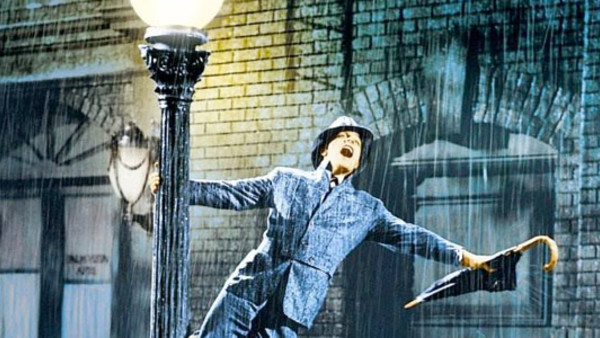
The centrepiece of one of the great musicals ever made, it's probably fair to say that everyone knows this scene, and with good reason.
Featuring Gene Kelly at the height of his powers, the rain-soaked sequence stands as one of the most infectiously charming moments to come from Hollywood's Golden Age.
A catchy tune, a brilliantly choreographed dance that puts the focus on just how good a time Kelly - and the audience - is having, and the dripping wet LA setting make for an indelible moment that no musical has ever been able to top. The sight of Kelly, umbrella folded, huge grin on his face, hanging off a lamppost in this torrential technicolour masterpiece, is guaranteed to leave you happy again.
[JH]
19. Beauty And The Beast - Dancing

Back when Disney was still making mostly hand-drawn movies, the Mouse House needed to diversify to catch up with the leaps in technology of other mediums. Their answer was to blend computer generated scenes to add more cinematographic dexterity and the ballroom scene in Beauty & The Beast was right at the forefront of the revolution.
So it’s an important scene, but it’s also one of the most glorious expressions of the ludicrous fantasy and irresistible power of romance. Listening to Angela Lansbury sing the titular track of the film and watching these two oddball characters thrust together is intoxicating magic.
Thank God for Stockholm Syndrome and Furries eh?
[SG]
18. Binary Sunset - Star Wars

Pretty much everything you need to know about Star Wars can be summed up in this one scene. The sight of Luke Skywalker, our young hero, walking across the desert and staring out at the twin sunset, as John Williams' score swoons around him, is still, 40+ years on, the most beautiful imagery in the entire saga.
It's here we get a taste of how Williams' music can elevate all around it. Where we get a sense of how this world is simultaneously familiar and different to our own, and that while the creatures and names might differ, so many of the struggles are actually relatable. At the heart of it all is Luke, the fresh-faced farm boy who is dreaming of bigger, better things.
In this instant, we understand who he is and what he wants. The binary sunset captures all of that longing and dreaming, all of that promise and potential, and takes us along on the ultimate hero's journey. This scene represents the power of Star Wars, and the nature of human life. 40 years on, and here we are, still staring at the sky, dreaming of something better, hoping to figure out our place in it all. If someone ever asks 'What is Star Wars?', simply show them this scene.
[JH]
17. Crop Duster Chase - North By Northwest

Unknowingly betrayed, Carey Grant's Roger Thronhill waits at a bus stop in the middle of nowhere to meet with the woman and confidante he's struck up a relationship with, while on the run from a bunch of goons who want him dead. She, of course, does not arrive, and what ensues is one of the most suspenseful, intense chase sequences in modern cinema.
Hitchcock sets the scene perfectly; Thornhill's growing understanding of what's actually happening, the silence and vacancy of the flatlands, leaving Thornill as vulnerable and isolated as he can get, and an ominous plane flying in the distance that seems to be getting closer. When the plane tries to ram him off the road, it's disorientating, soundtracked only by the propellor spinning ever closer to Thornhill's noggin.
Hitchcock was the master of suspense, and this sequence alone proves why. The director didn't need a bunch of visual tricks or gimmicks, just an inspired backdrop, a plane, an actor, and a death-defying explosion to cap everything off.
[JB]
16. Boulder Chase - Raiders Of The Lost Ark

The opening of Raiders of the Lost Ark is about as great an introduction to a new action hero as we're ever likely to see. From Indiana Jones replacing the golden idol, it's a thrilling, funny sequence that's bursting with character, and it only gets better once that boulder starts a-rolling.
Having survived the crumbling building and the poison darts, Indy hears a rumbling and turns, horrified, to see a huge boulder coming right towards him. The shot of that giant rock looming out of nowhere and coming right upon him, and us, is thrilling, and from there we get to see the hero lose any semblance of cool in favour of just running for his life.
It's not only exhilarating, but expertly sets up who Indy is: a daring adventurer like few we've seen before, but also someone who'll get by with the help of a lot of plain dumb luck too.
[JH]
15. Milkshake - There Will Be Blood

"I. Drink. Your. Milkshake. I drink it up!"
You'll be hard pressed to find a better on-screen duo than Daniel Day-Lewis and Paul Dano from the past two decades. The two elevate Paul Thomas Anderson's There Will Be Blood to a whole other level, with the toxic relationship between Day-Lewis' Daniel Plainview and Dano's Eli Sunday reaching boiling point in the film's bloody, violent final moments.
Returning to a broken, alcoholic Daniel in an attempt to con him out of money, Eli breaks down in Plainview's lavish bowling alley when he can't sell his land to the oil baron. In a bout of mental torture, Daniel forces Eli to renounce his faith, before berating him for the death of his brother, and acting out how he's stolen his last chance at prosperity right from under him.
The mental torture turns into physical torture, as Daniel, manic, throws Eli across the room and beats him to death despite his victim's pleas for forgiveness. By this point, Day-Lewis has become almost animalistic, shuffling along the bowling alley, frothing from the mouth and bellowing "I am the Third Revelation!".
It's a very easy scene to parody, but in context, it captures a whirlwind of intensity unlike anything else.
[JB]
14. Here's Johnny - The Shining

You know you’ve got a real winner on your hands when your movie is quoted endlessly out of context. And that counts doubly when the film is as non-mainstream as a horror movie fever dream made by Stanley Kubrick that was initially denounced by someone as powerful as Stephen King.
The “here’s Johnny” moment at the climax of The Shining is the cherry on the sundae of Jack Nicholson’s performance. For more than an hour, you watch him unravelling, boiled to furnace heat until he loses himself completely in a ballet of terrifying energy.
But it’s not just about Nicholson’s performance. We watch it from the perspective of poor Shelley Duvall (and not just her character because of the context of her performance), who had been tormented by her director to get the most authentic reaction to being terrorised by her on-screen husband.
It’s one of the single most horrifying, gripping sequences in modern film history and the strangest thing is how bloody rewatchable it is.
[SG]
13. Ending - Shawshank Redemption

Of all the movies to really grab tight ahold of your heartstrings and play them beautifully, Shawshank - despite being a prison movie involving gang fights, contraband and daily beatings - ends on one of the most lovely and uplifting notes in cinema history. Coming after main-man Andy Dufresne has broken out the titular compound and revealed his money-building masterplan, we then get a montage of his past efforts, and how they’ve improved the lives of everyone inside the prison.
The main event though, is Morgan Freeman’s Red trying to find Dufresne on a whim and a prayer, tracking down a buried tinderbox that then guides him to Zihuatanejo - a gorgeous, ethereally beautiful beach where as it happens, Andy is fixing a boat.
The movie ends with two people who’ve gone through hell hugging it out; cementing a genuine friendship from 19 years of incarceration. It's so oozing with positivity you can't help but shed a tear, and the final shot perfectly encapsulates their newfound peace, with just a dash of anticipation on what's to come.
[Scott Tailford]
12. The Richest Man In Town - It's A Wonderful Life

Accused of stealing $8,000 from his own company (in reality, it's been stolen by lifelong nemesis Mr. Potter), Jimmy Stewart's George Bailey has to be talked out of suicide by real-life angel Clarence in the climactic act of It's a Wonderful Life, by being shown just how much of an impact he's had on the people around him - and just how rich his life really is.
George returns to reality and rushes home to spend his final moments as a free man with his family, but then a genuine miracle happens. He's given up everything for this town, from career aspirations to even his honeymoon, and now its finally time to repay him. Just about every named character and extra comes tumbling through his door, donating money to help make up the deficit.
Hell, even Potter's men, ready to take George off to jail, waltz in, rip up the warrant, throw in some money and join in with the festivities. Auld Lang Sine is bellowed out by everyone in attendance, and Stewart delivers one of cinema's most iconic lines, "Atta boy, Clarence", after his celestial friend has finally earned his wings. Everyone gets not only what they wanted, but what they deserved.
[JB]
11. I Am Your Father - The Empire Strikes Back

The greatest twist in cinema history, The Empire Strikes Back's big reveal is also the turning point for the entire Star Wars saga.
Not only is it a complete shocker - especially for audiences back in 1980, unless you were in the same cinema as Homer Simpson, of course - but more so one of complete tragedy: following an intense, gorgeously-shot battle sequence, Luke Skywalker, our ultimate hero, loses his weapon, his hand, and with five words - "No, I am your father!" - his entire sense of identity.
His whole worldview is shattered in an instant; his hopes and dreams dashed, but still there's resolve. Still he has the will to keep on fighting. Still there is a glimmer of hope in the darkness. Star Wars, or A New Hope, was a GREAT space fantasy, but this is the operatic moment that turned it into a true epic, and things would never be the same again.
[JH]
10. The Tracking Shot - Goodfellas
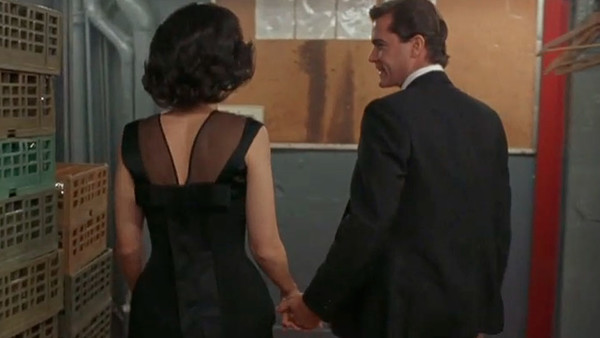
From a purely technical point of view, putting together a single, super-long tracking shot is a major act. It’s like juggling multiple balls while you walk down a corridor navigating obstacles as someone keeps throwing more balls at you.
That alone marks out the incredible tracking shot in Goodfellas as pretty great, but it’s the narrative importance that makes it really count. This single long shot is a distillation of everything that Henry Hill aspires to be. When he opens the film talking about his desire to be a gangster and says he saw it as better than being the President, this is the response to that fantasy.
We get to see a microcosm of his entire life: he breaks the rules by going in the wrong way, he’s treated like a celebrity or royalty. we see hints of the violence that defines it all (in the shadowy hulking figures dotted around) and it all ends with a simple lie of how he got it all. And then later when his life has fallen apart and he’s forced to be that worst of all things - normal - it’s this scene that he’s lamenting most.
[SG]
9. Hall Of Mirrors - Citizen Kane

It's been regarded as one of, if not the best film of all time for so long now - it was first named as such by Sight & Sound back in 1962 - that it's easy to take it for granted, but then you go back and watch scenes like this one and remember why it got there in the first place.
Orson Welles' direction here, in his feature debut no less, is nothing short of astonishing. The scene in question takes place at the lowest ebb of Charles Foster Kane's remarkable life; aged and alone, a man on the way out. It begins with him trashing Susan's room, a sign of the resentment and anger that has grown within him, and then we have the snowglobe, the crucial detail that neither Kane nor viewers can forget about.
We see the memory of it play on his face and mind as he pockets the globe before striding out into the hall of mirrors, which reflects the versions of Kane we've seen throughout the movie. He's not a whole but instead many fractured, fragmented parts. One person cannot be defined by a single word, action, or other person. Even the camera seems uncertain as to which one the 'real' Kane is, focusing instead on a reflection, and he himself chooses not to acknowledge the multiples.
It's not only a technically astounding shot, but one that, in a moment, encapsulates the entire ethos of the movie.
[JH]
8. Tears In The Rain - Blade Runner

Much like those tears, our very perception of humanity is washed away as Roy Batty extends his hand to save the life of the man, Rick Deckard, who considers his a defective abomination to terminate as administrative duty.
A cloudburst of rain falls over the hyper-industrialised techno landscape. The otherworldly, futuristic synthesisers so alien in their menace recede into the mix, replaced by tinkling piano classical in composition. Rutger Hauer, mirroring the autonomy of his replicant character, delivers _that_ improvised, iconic spiel aching in its beauty.
Sound; vision; the high watermark of acting performance: humanity supplants the artificial in something so moving it makes us question everything. Roy Batty redeems himself from eye-gouging horror to something more human than human, his soul visible behind the ice-cold blue eyes that so perfectly cast him as a replicant. Batty in this moment is every poor creature you have ever judged, and this scene, in its framing of another world and portrayal of emotional complexity, is the conclusive distillation of cinema’s magic.
“Time to die,” Batty says, pointedly. He does not use the “retire” euphemism, because that’s what it is, ultimately; a verbal means of obscuring the dark heart of the creator refused, poignantly, by the creation.
[Michael Sidgwick]
7. You Talkin' To Me? - Taxi Driver
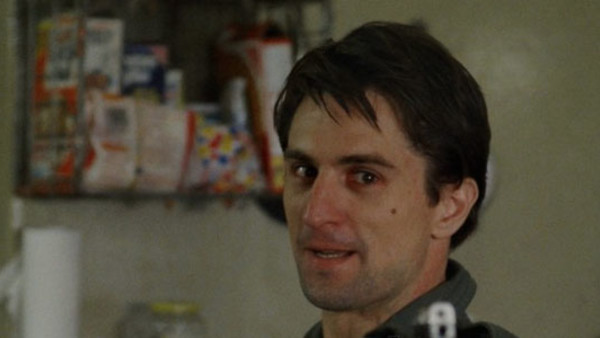
"You talkin' to me? You talkin' to me? You talkin' to me?"
It's become one of the most well-known and oft-repeated movie quotes of all time, but while it's an icon in its own right, it works much, much better in the context of the movie itself.
The mirror sequence serves as something of a bridge between the two parts of Travis Bickle; it's where we get to see the transformation from a man who is struggling to fit into the world, into a far more violent, bloodthirsty being, play out almost in real time.
It's a fascinating, frightening dive into Bickle's psyche, as he becomes "a man who would not take it anymore". It's some of the finest acting of Robert De Niro's entire career: from improvising the dialogue, to the unhinged delivery and increasingly manic expression on his face, it's no wonder it's become a pop-culture mainstay. It isn't so much memorable, as it is purely haunting.
[JH]