7 Alternate DC Movie Scenes We Almost Got To See
Oh what could've been...

Fittingly, as comic books themselves do so often, comic book moviesalways tend to contemplate the "What Ifs?" of the genre.
With alternate scenes aplenty - deleted, scrapped in an early draft or even lost to the cutting room floor - one of the main talking points whenever a superhero movie releases usually involves what audiences didn'tget to see.
And, as was the case with Marvel, films based on the worlds of DC Comics have undergone seismic changes during production. With directors coming and going, studios interfering and actors improvising, it's little wonder that this is the case, and though in most cases the finished product was better than the alternative, one can't help but wonder what some of these films would've looked like, had they taken a different route.
Irrespective of DC's current movie troubles either, the publisher's mythos was the first to be the subject of a big comic book blockbuster.
Every modern superhero film - at least partially - owes its success to Batman '89. They all share its DNA, and with countless other comic book movies to their name name, it's a case of anything Marvel does, DC probably already did a long time ago - especiallywhen it comes to alternate scenes.
7. Bane Receives His Mask - The Dark Knight Rises

The Dark Knight Rises is perhaps the most divisive entry in Christopher Nolan's Dark Knight Trilogy, with one of its most controversial elements being Tom Hardy's Bane.
Whitewashed in the adaptation itself - with the Bane from the comics hailing from the fictional Latin American nation of Santa Prisca - Nolan also gave the mercenary a brand new origin. Out went Venom (the drug used to enhance his strength and size), and in came training from the League of Shadows - the big twist obviously being that the character was Talia al Ghul's guardian when they were locked together in the pit.
There was, however, another scene that fleshed out Nolan's interpretation of Bane that ended up being cut from the film. It's also one we'll never get to see, with the director a firm believer in the the idea that if it's not in the final cut, it wasn't worth seeing anyway.
In any case, costume designer Lindy Hemming did let slip what this scene would've entailed. In a conversation with GQ, Hemming said that a sequence actually showed how Bane got his mask - a key piece of the film's iconography and probably something that would've been worth developing, had the running time allowed it.
6. Superman Returns To Krypton - Superman Returns

Superman Returns should've been the Man of Steel's big triumphant return to the big screen, but the finished product was... a mixed bag, shall we say.
It wasn't short on creativity though, and despite the fact that it was pretty much just one big homage to the Christopher Reeve films of the seventies and eighties, some new ideas did worm their way into production. One such idea involved having Superman travel all the way back to Krypton, which in this interpretation of the mythos, was still intact (albeit completely desolate).
The actual sequence itself is suitably atmospheric, as the Last Son of Krypton navigates the planet's surface, before discovering a toxic kryptonite core lying underneath.
Superman Returns was fairly long to begin with anyway, but the scene was a lot more entertaining than most of what survived the cutting room floor.
5. A Homage To Burton - Batman Forever
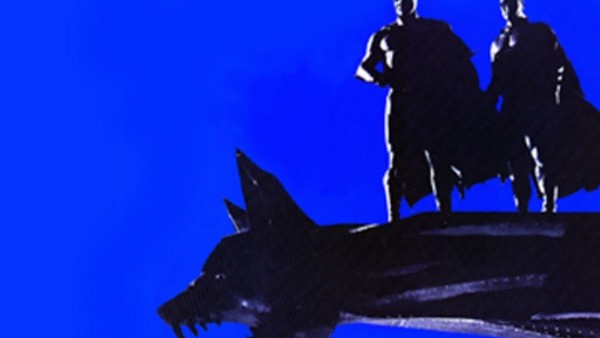
The process that eventually birthed Joel Schumacher's Batman Forever was a long and fraught one. To begin with, Warner Bros. had initially planned for the film to be directed by Tim Burton, but a backlash to Batman Returns' tone eventually forced the studio's hand, and they hired Schumacher to depict a brighter knight than audiences saw in Burton's movies.
The final product bore mixed results, and though Forever is still very much set in Burton's continuity, the links to the first two films were never really emphasised. One scene in particular was meant to carry on a trend established in both Batman 89 and Returns, but it ended up being cut instead.
The scene in question involved the Bat-Signal lighting up the Gotham skyline, as both Returns and 89 did, as Nicole Kidman's Dr. Meridian is driven away by Alfred. The original ending, however, featured Batman and Robin running towards the camera, and while it's not terrible, the alternate one may have been the more appropriate.
Also cut was an ending sequence involving Val Kilmer's Batman and Chris O'Donnell's Robin perching atop a gargoyle, an opening scene where Two Face escapes Arkham, and another showcasing Riddler's nasty side.
4. Joker Takes His Revenge To Another Level - TDK

The Dark Knight is considered by many to be the finest comic book movie ever made, and a lot of that is owed to the sensational performance Heath Ledger gave as the Joker. His portrayal of the character created one of the true all-time great movie villains, and though the lasting perception of that performance is of a twisted, dark and brutal Clown Prince, it was really the implied violence that created that aura.
The sequel to Batman Begins is certainly dark, but it was also a PG-13 movie. That meant it couldn't get away with certain things, but as with a lot of other films, the rating only enhanced the terror onscreen. This Joker gets up to some rotten stuff - particularly when he kidnaps one of the Batman impersonators - but the audience is never shown the true consequences of his horror.
That almost changed upon release though. In the money burning sequence that occurs late on in the film, Chin Han's Lau can be seen on top of the cash pile. It's heavily implied that he perishes in the blaze, but there isn't a shot of the character as the flames rise. Set photos have, however, shown Lau's corpse atop the pile as the money burned down, confirming that - during production - Nolan intended to show the grisly consequences of Joker's violence.
3. Max Schreck Is Penguin's Brother - Batman Returns

Tim Burton's sequel to the seminal Batman 89 caused a storm when it released in 1992, with its dark, grotesque depiction of Penguin representing a major departure for the character and Batman in the public eye, but the film also underwent a number of different iterations before filming.
One initial draft had originally seen Billy Dee Williams' Harvey Dent take on Schreck's position, but production changes saw the creation of Christopher Walken's character.
Then, in one particular draft, it was even revealed that Schreck was Penguin's long lost brother, who'd changed his name in disgust that his parents had abandoned his only sibling.
In the end, it's easy to see why Burton opted not to pursue this angle, as Walken's performance really makes the character a thoroughly unlikeable presence onscreen.
2. Harley Quinn's Wedding - Suicide Squad
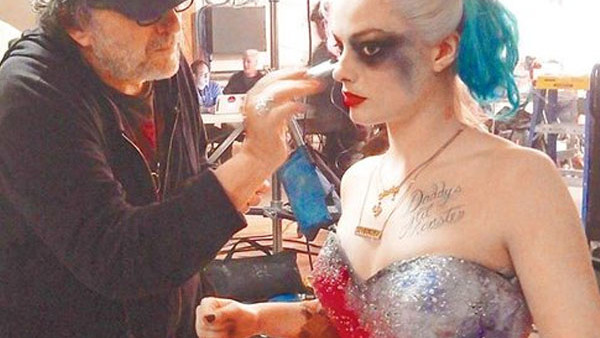
Suicide Squad's troubled production has been long documented by now, so it shouldn't be surprising to learn that there's a lot of unused footage locked away out there.
On top of all the different drafts and deleted scenes, set photos have provided an interesting look at one particular sequence. In it, you can see Margot Robbie's Harley Quinn all dressed up in a red and blue wedding dress. For what reason we don't know, but still, the image exemplifies the film's scattergun approach to production.
The main question here obviously is what was the sequence for? Were Joker and Harley going to get married at the end of the film? Was this a dream like fantasy Quinn had, or did this occur in one of those earlier flashbacks?
We're still waiting on an answer, but it's possible to appreciate the photo even without the added context, as the film's Oscar-winning makeup effects are placed front and centre.
1. Robin's Origin Sequence - Batman

Of all the Batman movies, Tim Burton's original feature perhaps went through the most alterations during pre-production. One draft famously featured Robin, who was meant to be played by Marlon Wayans, who himself was meant to appear in both Batman Returns and Batman Forever, only to be replaced by Chris O'Donnell midway through production.
Before Wayans' involvement with the project, young actor Ricky Addison Reed was actually considered for the part, who had only recently starred in A Return to Salem's Lot.
In light of that, Burton actually storyboarded a sequence where the character of Robin would be introduced. Years later, Batman: The Animated Series actors Kevin Conroy and Mark Hamill (who played the Dark Knight and Joker respectively), actually voiced the storyboard too - granting a level of authenticity to the scene that never really was, and providing us all with a look into what could've been a very different Batman movie.
Watch Next
Quiz: How Well Do You Remember Batman 1989 30 Years Later?
