7 Ways 2013's Biggest Movies Should Have Ended

Endings aren't easy to get right, as witnessed by some big 2013's movies. Here's what we'd change about 7 of them...
How many times did you walk out of the movie theatre over the course of 2013 to find yourself thinking: "Well, that's not how that movie should have ended. What were they thinking?" Given the nature of the endings we were branded with this year, the answer is probably something along the lines of "a lot of times." It's not our job to tell writers and directors how they should tie up their motion pictures, of course, but that doesn't stop us from doing it anyway. You know, just for kicks. Which is why we've decided to look at the endings of 10 movies from across the span of the year that we're pretty sure failed to get it totally right in the "wrapping up the story" department - it's not that all of the endings featured here are bad or completely ill-fitting (or that they didn't work, even), it's just impossible to escape the feeling that the associated filmmakers missed an opportunity to make them way more memorable and/or exciting than what we actually got. Without further ado, then, here are seven ways 2013's biggest movies should have ended...

7. World War Z

How It Ended: Realising that the zombie masses are only interested in people who are healthy (for some reason, they actively avoid anyone infected with a terminal disease), Gerry Lane (Brad Pitt) makes his way home to his family, who have taken refuge in Freeport, Nova Scotia, whilst a "vaccine" - created using deadly pathogens - is distributed around the world to deter the undead. We're treated to a glimpse of the human race fighting back, hope somewhat restored, as Gerry laments: "This isn't the end. Not even close. Our war has just begun." How It Should Have Ended: Well, the fact that the movie ends when the story is just getting interesting is rather frustrating. There was a far more interesting version of World War Z in script form that originally saw Gerry heading to Russia, becoming a soldier with an elite squad (fighting zombies in the cold, no less), before we saw him heading home to rescue his wife from the clutches of a sort of prison camp, where she's forced to "sell" herself to get by. Darker and way more interesting? Absolutely. Still, given the plot we were eventually saddled with, we should have found the cure at the movie's mid-point instead, and had the second half of World War Z dedicated to - yep - the resulting war against the undead. To end the movie where the "war has just begun" is an absolute cop-out - the full-on war is the one part of the movie that we all wanted to see! Maybe a sequel is actually necessary?

6. Pacific Rim

How It Ended: After realising that the giant Kaiju are coming to Earth via a giant portal beneath the ocean, Raleigh Beckett and his parter Mako Mori are sent on a mission to drop a bomb into the portal and sever ties with the alien colonists who are attempting to wipe out humanity. The mission goes wrong, however, and the bomb is unable to be delivered: improvising, Beckett and Mori eventually opt to use their Jaeger (read as: giant robot) as a bomb, and successfully manage to blow up the portal and return to Earth just in time to be rescued. How It Should Have Ended: Like so much of Pacific Rim, the ending was just generic as hell and a bit too cliched. The heroes close the portal and save the day, and... that's it? You'd have thought that writer/director Guillermo del Toro might have thought of a more interesting way to tie up the events of Pacific Rim, even if it was just the a tiny moment that offered up the potentials of a sequel - you know: something along the lines of a tease. That's to say, why not end on a shot of another Kaiju being bred, or another portal being opened at the depths of the ocean? Just something a bit more juicy than: "Our two heroes stare lovingly at each other." Sure, sometimes it's okay to end on a blockbuster on a happy note, but given the vast world that Del Toro created for the movie, it would have been interesting to get the aliens' perspective on the events in the final moments. A scene where they plan revenge on Earth after we managed to thwart them would have added some needed narrative bite.

5. The World's End

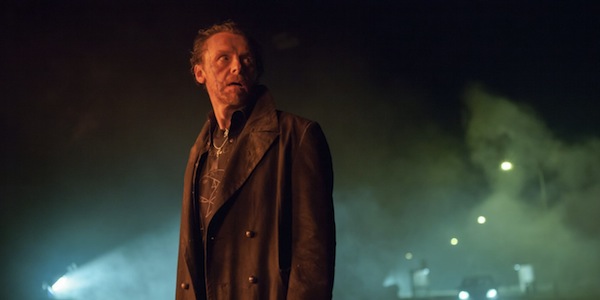
How It Ended: After learning that his home town of Newhaven is actually one of thousands of "penetration points" used by an alien race called "The Network" (who are attempting to take hold of Earth) once-popular loser Gary King (Simon Pegg) finds himself coming face to face with the powers that be: that is, a giant sentient thing voiced by Bill Nighy. He's given a choice: stay young forever, or let the world end. Alongside his old school mates, he decides that human beings should not be controlled, and the world is sent back to the Middle Ages. Admist the ruins of the planet, Gary becomes the leader of a band of robots - who all look like his younger friends - and declares himself "The King." How It Should Have Ended: According to writer/director Edgar Wright (and leading man Simon Pegg), the ending to this movie should be seen as a happy one: Gary is finally accepted again, and gets to spent the rest of his days in a way that suits him - surrounded by his old friends, who remind him of better times. But there's something inherently sour about this ending, as it renders Gary as a character who can't get a grip on reality, and is content to spent the rest of his life hanging with companions who just aren't real. It's a purposely controversial ending, sure, but it's oddly mean-spirited. A better - and more appropriate - ending, then? How about in the wake of the apocalypse, Gary is able to find strength as the leader of the last remaining humans? His experiences over the course of the film, and his coming to terms with his lot in in life, meant that he was in a good place to grow and change by the time the credits rolled. He gained some added respect from his former classmates and friends - it would have been nice for him to have been able to move on from the past, instead of purposely dooming himself to live on as an outsider.

4. Man of Steel

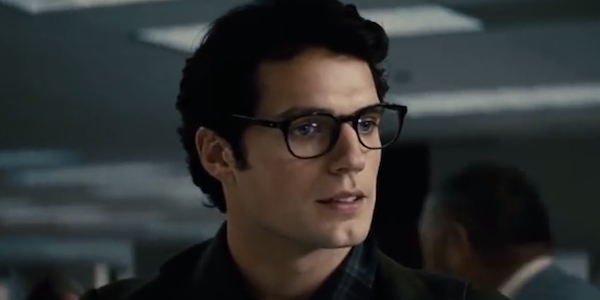
How It Ended: After the maniacal General Zod arrives on Earth with plans to terraform it into the new Krypton, Clark Kent is forced to become Superman and must battle with the only survivors from his home planet. After crashing through Metropolis in a showdown with Zod, Superman is eventually forced to kill the evil General in any act of desperation. Though Metropolis is very nearly destroyed, the clean-up operation begins, and Clark agrees to work with the government as a hero under his own terms, whilst nabbing a job at the Daily Planet alongside love interest Lois Lane. How It Should Have Ended: Yes, it's a classic part of the Superman story that Clark Kent works at the Daily Planet, but seriously? In this day and age, what with YouTube and rolling news channels, there's no way that Superman would be able to work at the Daily Planet without anybody realising that he looks exactly like Superman. It's just ludicrous to think that he takes a job there in order to not arouse suspicion. It might have worked in older, less-serious tellings of the mythology (and in comic books), but given the serious tone of the world in Snyder's version, it seems utterly barmy. What should have happened, then? Well, Clark could have jokingly suggested he got a job at the Daily Planet so that he was nicely embedded in a news organisation and therefore in a position to help people, only for Lois Lane to quip: "That's a ridiculous idea. How are you going to stop people from knowing its you? A pair of glasses?" As it stands, Clark Kent grinning at the end of the movie whilst nobody seems to realise the most famous man on the planet is standing right there in front of them is laughable. Seriously: Superman needs to work from home.

3. The Wolverine

How It Ended: After heading to Japan at the request of an old friend, Yashida, whose life he saved during the bombing of Nagasaki, Wolverine finds himself targeted by a mysterious organisation intent on making him mortal. Eventually, it's revealed that Yashida - now a terminally-ill old man - is behind the whole thing, and has spent his entire life trying to find a way to replicate Wolverine's healing abilities. Wolverine does away with Yashida, and begins a partnership with his hot new Japanese friend, Yukio, who vows to be his bodyguard. They jet off to an unknown destination. How It Should Have Ended: There's nothing particularly wrong with the ending that director James Mangold used, apart from the fact that it's pretty generic - especially when you learn that they shot another ending that involved the giving of an incredibly special gift. The scene in the plane is the same in this version of the ending, save for one thing: Yukio presents Wolverine with a suitcase which contains - brace yourself - his iconic yellow and black costume. And James Mangold decided not to leave this part in the final cut, as a courtesy to X-Men: Days of Future Past, which he didn't want to burden. So whereas it's understandable as to why this version of the ending was cut, we still can't help but feel like we wanted them to use it anyway. The current ending is a little lame (thankfully there's a post-credits scene that makes the dull normal ending more forgivable), but - let's face it - a scene where Wolverine receives his costume would have been totally and utterly badass, even if it wasn't entirely necessary.

2. Iron Man 3

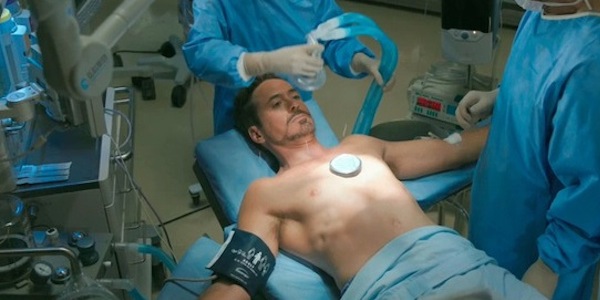
How It Ended: After going all espionage-y on us to try and thwart evil scientist Aldrich Killian's plan to take over the United States, Tony Stark and buddy James Rhodes find themselves battling against an army of goons, before Killian is finally defeated and the President is saved. Eager to devote more time to his love interest Pepper Potts, Tony destroys all the Iron Man suits and has the shrapnel removed from near his heart - declaring that he'll always be Iron Man, he tosses the now-defunct arc reactor into the sea. How It Should Have Ended: Actually, all of that stuff is fine, except for the fact that - out of nowhere - it's just made easy for Tony to have the shrapnel removed from his heart. How, all of a sudden, is it possible for him to remove the shrapnel from his body, when we've spent two movies highlighting the fact that doing such a thing was far too risky and was - for all intents and purposes - completely impossible? On a whim, without much explanation, Tony can have this operation done out of nowhere by some random scientists we've never even met? Which also begs the question: why didn't he just have it done before if it was so darn easy? Wasn't the arc reactor killing him in Iron Man 2? Wouldn't it have made sense to undertake the procedure at a time when it really mattered? Sure, writer/director Shane Black needed a way to show us that Tony was going in a new direction with his life, but this just seems lazy on the part of the filmmakers. Wasn't blowing up all the Iron Man suits enough of a gesture? The ending would have worked far better without the shrapnel-based addition.

1. A Good Day To Die Hard

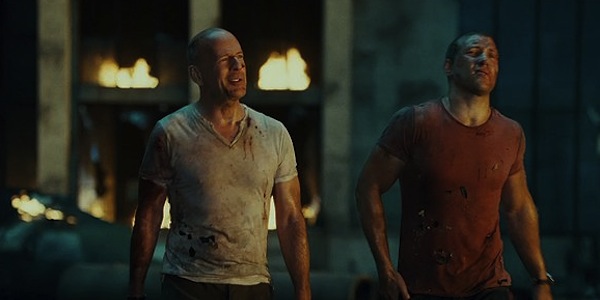
How It Ended: After battling corrupt Russian politicians in Moscow (read as: blowing everything in the city up in the most destructive way possible) and re-kindling his relationship with his estranged CIA agent son, veteran cop John McClane - famous for his exploits during the Nakatomi Plaza incident - returns home to New York City, where he does even more re-kindling with his daughter, Lucy McClane. There's a lot of re-kindling going on with this ending. How It Should Have Ended: The movie was called "A Good Day To Die Hard," and you know what? It really was a good day to die hard: we hate to say this, but this movie should have marked the end of John McClane as a living specimen. The screenwriter should have put the poor guy out of his misery, given how generic and ridiculous this sequel was in every way. At least a valiant, quietly-realised death scene at the end could have given it some added oomph: wounded from the final battle, John McClane takes a bullet for his son, who finally gains some respect for his old man. Sure, it sounded insane to suggest they kill off such an iconic character, but it would have also been bold and totally unexpected. Plus, he's super old. Note to the filmmakers behind the next Die Hard movie: kill McClane off at the end, an do what literally evey other action franchise in existence has always been too afraid to do. What better way is there for a movie studio to show it has some balls than to kill off such a famous character? Like this article? Got any suggestion of your own? Let us know in the comments section below.

Contributor
Contributor

Articles published under the WhatCulture name denote collective efforts of a number of our writers, both past and present.