8 Amazing Video Games With TERRIBLE Marketing
These great games were totally done dirty by their awful marketing.
Making a great video game is nothing short of a minor miracle, but sadly "just" making a banger isn't enough to ensure success - a game also needs to be marketed well to ensure it actually reaches the right people and sells enough to turn a profit.
And the history of gaming is unfortunately littered with brilliant games that were totally undermined by their marketing, perhaps to the extent that they ended up flopping in sales.
And if they didn't flop despite this, it was basically incredibly lucky.
Terrible marketing can of course come in many forms - perhaps the publisher tries something edgy that just falls totally flat, or the trailers simply fail to emphasise the game's best elements for whatever reason.
And then there's the absence of marketing, where a game basically gets sent out to die with a minimal marketing spend because the publisher clearly doesn't believe in it.
It's always maddening to see a great game fail to get the positive attention it deserves because of garbage marketing, where a terrific piece of entertainment is inexplicably made unpalatable to the masses...
8. Deus Ex: Mankind Divided

Let's kick this list off with a doozy.
It's no exaggeration to say that the brilliance of Deus Ex: Mankind Divided is basically inversely proportional to its utter dogwater marketing. Square Enix's incompetence with selling this game is so staggering it should probably be studied in universities the world over.
For starters, Mankind Divided swiftly received flak for using the phrase "mechanical apartheid" in its marketing to describe augmented humans being segregated from the rest of humanity, feeling that it trivialised the real-world system of racial segregation.
That was just the beginning, though - promotional concept art used the slogan "Aug Lives Latter", seemingly inspired by the real-life Black Lives Matter movement. Again, many found this tasteless and tone deaf.
And then there's the entire pre-order debacle, where Square Enix introduced a convoluted five-tier pre-order system and encouraged players to "augment" their pre-orders, with big spenders in the top tier being able to play the game four days early.
The backlash was so severe from journalists and players alike that the tiered pre-order scheme was ultimately scrapped, with all perks instead being made available to everyone who pre-ordered.
Yet despite how thoughtlessly the game was marketed, Mankind Divided is a mostly terrific follow-up to Human Revolution.
However it ended up underperforming commercially, and the avalanche of controversies could certainly have played a part in that.
7. Earthbound

First impressions count for a lot, and if you tell the general public that your game stinks, they're probably going to believe you.
That quite literally turned out to be the case with 1994's legendary RPG Earthbound, which saw Nintendo spend a mind-boggling $2 million on a U.S. marketing campaign focused on gross-out humour.
Though such humour was popular throughout the 1990s, promotional ads straight-up declared "This game stinks!" and dubbed it "the first role-playing game with B.O."
Furthermore, these ads had a scratch-and-sniff component, resulting in it becoming the most complained about video game ad of 1995 through sheer sensory repulsiveness.
And that caused Earthbound to basically get all the wrong attention, prompting it to flop so badly in the U.S. that Nintendo didn't even bother with a European release.
Even accepting that Earthbound is a profoundly weird game and never would've been a sales juggernaut, Nintendo totally whiffed it with a misguided marketing campaign that basically only generated anti-hype.
6. Doom (2016)

It's nothing short of a miracle that 2016's Doom reboot was a critical and commercial success considering how atrociously it was marketed by Bethesda.
For one, we didn't get to see that much of the single-player campaign at all, and what we did see showed off rather slow-paced combat encounters alongside the divisive inclusion of QTE-style melee kills.
Given that the final game had a ton of fun with the idea that the Doom Slayer is basically a boogeyman to the demonic forces he hunts down, it's baffling that the marketing barely touched on this at all.
Elsewhere there was a frustrating emphasis on the game's multiplayer suite, unaided by a poorly received open beta which caused many to assume the campaign would be similarly mediocre.
And to top it all off, Bethesda held back review copies until release day, which many took as a sign that the publisher simply had no confidence in the game at all.
So what a surprise it was, then, when strong reviews began to trickle in for Doom 2016 and word slowly spread that, counter to everything suggested by its marketing cycle, the game was actually bloody terrific.
Thankfully Bethesda approached both recent Doom follow-ups with considerably more promotional confidence.
5. Onrush

Onrush is one of the best and most unique racing games of the past decade, yet it came and went with so little fanfare - despite solid reviews - that you'd barely know it.
The game's fascinating hook is that success isn't measured by crossing the finish line first - instead the various game modes are team-based where victory is secured by metrics like boosting and destroying the other team's cars.
Despite this, publisher Deep Silver largely just marketed Onrush as a totally generic, by-the-numbers racing game, perhaps for fear that revealing its true nature might turn some genre fans off.
Yet that specialness was the game's biggest asset and could've actually helped it break out with a wider player-base, if only people actually knew about any of it.
Instead, for most people Onrush faded into the periphery as just another racing game.
As a result Onrush sold poorly, leading to layoffs at developer Codemasters, before the game's online servers were shut down in 2022 and a planned PC release was cancelled.
It's a crying shame, as to this very day Onrush still has a passionate legion of fans decrying how it wasn't even given a chance to succeed.
4. Prey (2017)

Prey is quite arguably one of the greatest immersive sims ever made, yet Bethesda marketed it so horribly it almost feels like an act of self-sabotage.
For one, the title doomed it from the get-go, as this led many to assume Prey was either a sequel, remake, or reboot of 2006's cult sci-fi FPS of the same name, when it had no relation to it whatsoever.
Game director Raphaël Colantonio has gone on the record that he hated the title, which was forced upon the team by Bethesda, and set the wrong expectations for the game right out of the gate.
Then there's the fact that publishers have a tendency to be strangely shy about marketing immersive sims as what they are, tending to sell them instead as broader-minded first-person shooters, and that's precisely what Bethesda did here.
Additionally, they also repeated the Doom 2016 gaffe by withholding review copies until release day, ensuring positive press didn't start doing the rounds until the days and weeks after the game's release.
As a result it was no surprise at all that Prey's sales were dire, ensuring this prospective franchise never got off the ground.
3. Bulletstorm

Bulletstorm is an unabashedly un-serious first-person shooter that's become something of a cult classic over the years thanks to its kooky tone and unique approach to awarding skill points to players for creative kills.
But the game was done a total disservice by its marketing, which was tongue-in-cheek to the point of obnoxiousness, spending far more time making fun of Call of Duty and goofing around than actually emphasising how legitimately fun it was to play.
Even the game's designer, Cliff Bleszinski, admitted that Bulletstorm was marketed wrong, saying, "promoting crassness was a mistake... Marketing latched onto it; people didn't see a cool sci fi game, they saw 'the d**kt*ts game.'"
This sentiment was later echoed by game director Adrian Chmielarz, who wanted the game to be sold as a pulpy sci-fi adventure, and whose pleas for a more serious marketing campaign largely fell upon deaf ears.
Though Bulletstorm enjoyed a modest resurgence with 2017's Full Clip Edition remaster, it's safe to say that with a less bone-headed approach to promotion, we might've had a couple of Bulletstorm sequels by now.
2. Dead Space 2
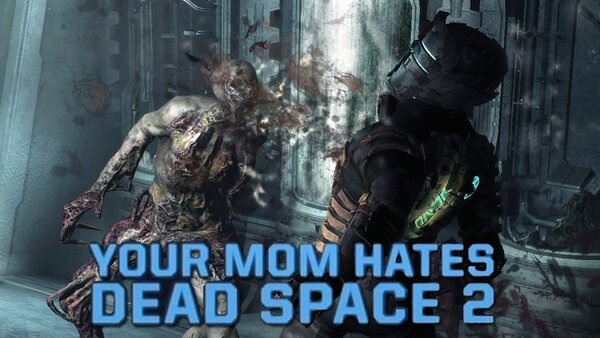
Despite the original Dead Space being a solid hit for EA without the need for edgy promotional nonsense, they decided to sell the sequel with an extremely groan-worthy marketing campaign intended to amuse teenage boys and few others.
The campaign was called "Your Mom Hates Dead Space 2" and featured footage from a focus group where hundreds of middle-aged, conservative women were shown gory clips from the game in order to capture their disgusted reactions.
Between the thinly veiled misogyny of the entire concept and proud declaration that "it's violent, revolting, and everything you love in a game," the marketing for Dead Space 2 basically played into every dated stereotype about gamers, while painting the game as an artless, brainless orgy of violence.
And then there's the fact that the marketing was clearly aimed towards adolescent boys above all others - the very people who weren't even old enough to legally buy it.
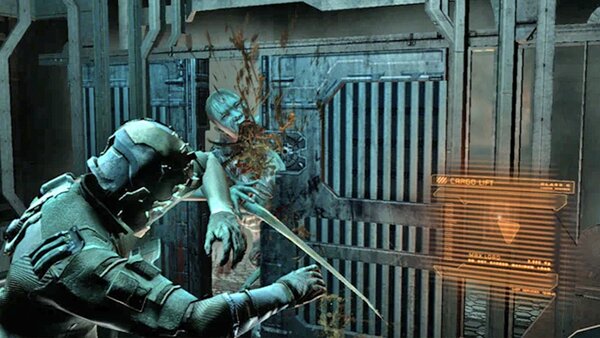
Thankfully what's best remembered is that Dead Space 2 is a phenomenally intense survival horror game, rather than the resoundingly lame way it was sold to players.
1. Ōkami

And finally we have Ōkami, a 2006 action-adventure game that's constantly brought up in lists of the most underappreciated games of all time, in large part because Capcom sent it out the door with only the most pathetically piecemeal of marketing.
That is to say, most people simply didn't know that Ōkami was coming out or what it was, and so though it received rave reviews from many prominent outlets, it just didn't have day-to-day visibility for the average gamer.
Sales were consequently poor enough that in 2010 Ōkami won a Guinness World Record for the least commercially successful game to ever win a major Game of the Year award.
Thankfully the game's enduring reputation as a visually stunning classic has allowed it to sell 4 million copies across various ports, re-releases, and remasters, enough that a sequel was unexpectedly announced at last year's The Game Awards.
Hopefully Capcom have learned their lesson and will actually make some sort of effort to promote this one.