10 PERFECT Monster Movies You MUST Watch
Creature features don't get much better than this bunch.
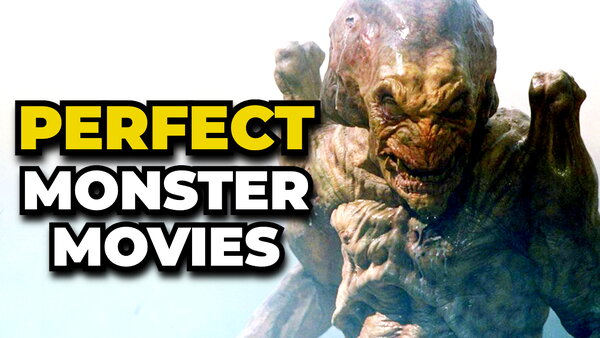
Monsters and horror cinema are a match made in heaven (or hell). Some of the earliest stories in human history fixate on an unnatural beast, highlighting humanity's permanent fascination with the concept.
For this reason, it's no surprise to see monsters playing a pivotal role in the early days of cinema. As can be seen from recent adaptations of Frankenstein, Nosferatu, and the upcoming Mummy remake and The Bride, monsters haven't lost one iota of their allure, and continue to put butts in seats even while other genre trends fade away.
As a result, it's nice to reflect on the genre as a whole and celebrate the creature features that resonate with the masses. Horror movie monsters come in all shapes and sizes and such stories can be approached and interpreted in very different ways. Whether it's a demon, a zombie, or a city-destroying kaiju, each of these critters taps into that universal fear of the unknown, not to mention the numerous other metaphorical elements they have going on as well.
Whether you're looking for something light-hearted, viciously violent, a bit of both, or something in-between, this list of the best horror monster movies should have you covered.
10. Pumpkinhead
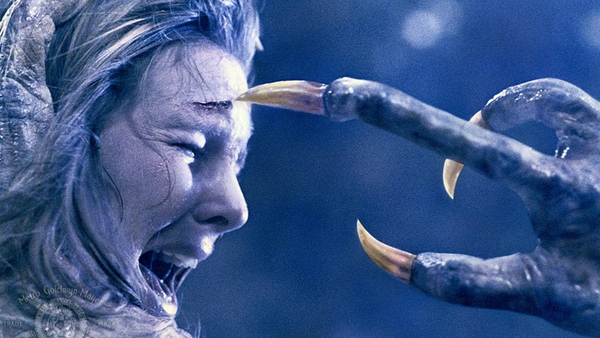
Special effects guru Stan Winston is revered for his work in such films as The Terminator, Aliens, and Predator. Because of this, his directorial debut, Pumpkinhead, was met with a real sense of anticipation.
The folk horror centres around a father, Ed Harley (Lance Henriksen), who summons a demon to exact revenge on the teens who murdered his son. Rather than being a straightforward monster flick, Pumpkinhead deals with how grief and vengeance can be misdirected and weaponised, leading to further pain. Ed sees through the demon's eyes, forcing him to bear witness to the destruction his actions have caused firsthand.
The titular fiend is strikingly unnerving, conveying immense power and evil every moment he's on-screen. Winston's impeccable use of lighting, sound mixing, and tight angles turns this already imposing demon into a truly soul-stirring villain. Even when Pumpkinhead is off-screen, there's a great sense of the gangly brute's ferocity and menace, accentuated further by the cast's performances.
Stan Winston didn't have much luck with directing afterwards (as can be seen in the dreadful A Gnome Called Gnorm), but there's no doubt Pumpkinhead is among his finest projects.
9. Black Sheep
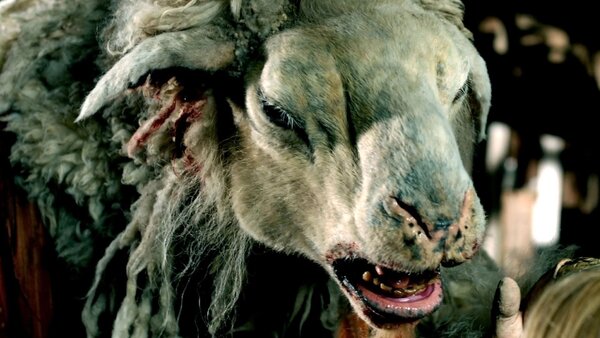
In this Kiwi horror, environmental activists release a mutated flesh-craving lamb, which ultimately leads to a herd of murderous sheep rampaging across the area. (Basically, it's the same premise as 28 Days Later... but with sheep.) As the woolly man-eaters terrorise the region, it's up to timid farmer Henry Oldfield to save the day, despite his debilitating sheep phobia.
Obviously, the notion that a sheep could behave savagely is beyond ridiculous. However, that's exactly why it's unsettling to see rams and ewes mauling their victims' faces off. Instead of using CGI, Black Sheep's ferocious farm animals are brought to life with elaborate prosthetics, animatronics, and costumes, making them look authentic and surprisingly scary.
With that said, Black Sheep is a horror-comedy at the end of the day. Watching the locals struggle to escape because their feet are turning into hoofs is just as bizarre as it sounds.
Though Henry's ovinophobia is initially played for laughs, it's satisfying to see the sheepish hero refuse to be shackled by his trauma.
And with a sequel in the pipeline, now is the perfect time to revisit this classic.
8. Tremors

In Ron Underwood's dark comedy Tremors, a pair of handymen, Valentine and Earl, find their quaint town being invaded by gigantic worms called Graboids.
One of the reasons Tremors has endured as a must-see horror-comedy is because it takes the monsters seriously. Unlike many films in the genre, Tremors never dilutes how much of a threat the Graboids pose.
Interestingly, this decision makes Tremors function better as a horror and comedy. After all, viewers let their guard down when a scene seems low-stakes, making it more shocking when the underground worms appear. All the characters are likeable in their own way, so it's actually upsetting when the Graboids makes a meal out of them.
In addition to this, the fact the Graboids are drawn to seismic vibrations is genius, since it turns ordinary actions into nail-biting risks. With that in mind, something as simple as walking or shouting becomes a potential death sentence. This doesn't just escalate tension but forces the characters to get creative to stay alive.
Taking all of that into account, it's clear why Tremors has maintained its cult-classic status and serves as a textbook example of how do a horror-comedy right.
7. Gamera: Rise Of Iris
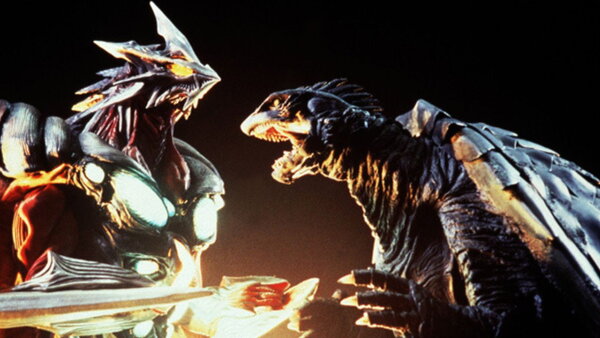
The success of the original Godzilla didn't just lead to a gargantuan 70-year franchise but a plethora of kaiju knock-offs, including Gamera: The Giant Monster. Centred around a gigantic fire-breathing turtle, the early entries were renowned for their unabashed goofiness. With each entry ramping up the absurdity, it seemed like Gamera would never be taken seriously.
However, the rebooted trilogy during the nineties elevated the quality exponentially, especially Gamera 3: Rise of Iris. This instalment takes matters seriously, focusing more on survivor trauma than skyscraper-sized behemoths wailing on each other. Gamera is reframed from a simple hero to a morally ambiguous force of nature, since he saves humanity, but at a cost. The darker tone and cataclysmic imagery gives Rise of Iris a dramatic punch that even the best Godzilla films struggle to convey.
At the same time, Gamera 3 fully delivers as a kaiju experience. Iris is an elegant but cruel beast, so there's immense danger and fear every time it's on-screen, especially during the sensational showdown.
In a nutshell, Gamera 3: Rise of Iris successfully ramps up the stakes to apocalyptic proportions while feeling more personal, ending the trilogy in a way that feels tragic and cathartic.
6. Scary Stories To Tell In The Dark

Despite being tailored for children, Scary Stories to Tell in the Dark is anything but kid-friendly. Andre Ovredal's supernatural horror opens with a group of teenagers reading from a mystical book, which unleashes dark forces upon their town.
Though Scary Stories to Tell in the Dark takes its time setting up the ensemble, the payoff is worth it. We get to know each of these teens thoroughly, so we should be fully invested when they're finally confronted by the monsters.
These creepy entities look and move in a subtly uncanny manner, which is sure to trigger fight-or-flight responses in viewers. Rather than being jump-scare machines, each monster approaches its prey slowly but purposefully, embodying subtle dread and inevitable doom. The Pale Lady appears wherever her victim is looking, making it impossible to run away from her, despite how slowly she advances. The Jangly Man can contort his limbs to fit into any opening, so escape is out of the question.
Despite what the PG-13 rating suggests, viewers of any age will find their blood curdling while watching this underrated gem.
5. Monsters

It's ironic how a movie called Monsters refuses to behave like a creature feature. Six years after aliens landed in Mexico, borders are militarised and citizens are uprooted from their former lives. Rather than dealing with the galactic intruders upfront, Gareth Edwards' sci-fi drama focuses on living with the aftermath.
The premise may seem anticlimactic, especially for those hoping for a more conventional monster saga. But with this tactic, every glimpse of the space invaders feels momentous, amplifying any down-to-earth conflicts significantly.
Instead of looking at the situation from the point of view of government officials, scientists, or heroic figures, the plot follows two travellers, Andrew and Samantha, who are trying to reach safety. As such, all the alien interactions are from their experience, making the narrative more personal.
Even when the extra-terrestrials aren't directly seen, it always feels like they're a stone's throw away, especially when Andrew and Samantha stumble upon mauled carcasses or hear about creature attacks through the grapevine. Because of this, viewers are left in a constant state of tension, even when things are quiet, much like how the lead characters are forced to live day-in and day-out.
4. The Blob

Even though the original Blob had a great premise, the special effects were poor and the alien goo rarely felt like a credible threat.
Fortunately, the 1988 remake fixed these problems. Rather than being a mindless creature, this incarnation of the Blob can think and strategise, so it can sneak up on its prey or corner them with the efficiency of a slasher villain.
Unlike the original, the remake (which was directed by A Nightmare on Elm Street III's Chuck Russell) shows what happens to anyone who becomes consumed by the amorphous mass... and the results aren't pretty. The Blob's acidic body melts its victims to paste, leading to astoundingly gruesome deaths. These grisly moments are brought to life with a mix of prosthetics, puppetry, and stop-motion, all of which look frightfully realistic.
Rather than following the original beat-for-beat, the remake goes in a different direction at the halfway point which, without going into spoilers, should blindside viewers. The Blob also explores thought-provoking themes, like religion, conspiracies, and institutional lies, which stops the film from feeling like a bare-bones "kill-the-monster" story.
There've been rumours of another Blob remake for decades, but it's unlikely any iteration could compete with the 1988 version.
3. Feast
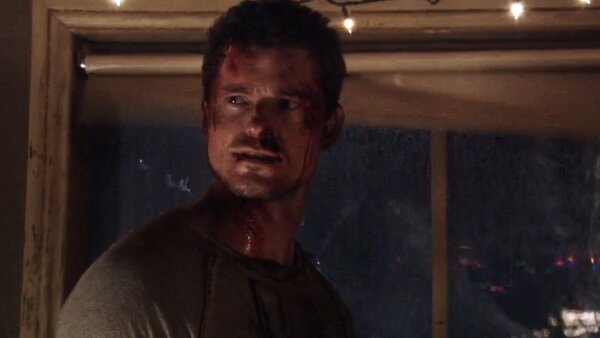
In Feast, a bar descends into anarchy after the patrons learn the building is surrounded by carnivorous monsters.
Though the grotesque monstrosities feature sparingly, their emergence is never without casualties, making each of their brief appearances impactful and horrifying.
However, it's not the monsters that defines Feast but how the story unfolds. The splatter indie opens with a stranger bursting into a pub, warning the locals of the monstrous threat that's set to besiege them. With the stranger's confident swagger, bulging physique, and the fact his name is just "Hero," it's safe to assume this guy is the protagonist.
But almost immediately after, he's decapitated by one of the toothy beasts, leaving the bar without a protector.
Although this opening could be gimmicky, it proves Feast is throwing all horror tropes out the window. Instead of sparing the kids, the child character, Cody, is among the first to die. Damsels and sidekicks suddenly turn into badasses, demonstrating how nobody's fate is written in stone.
With that in mind, Feast is nerve-wracking despite being a horror-comedy, since it's impossible to tell what's going to happen or who's going to survive.
2. Nightbreed

Clive Barker's Nightbreed is deeply refreshing since it reverses conventions, perceiving monsters as the heroes and humanity as the villains.
The dark fairy tale revolves around a troubled man, Aaron Boone, who seeks refuge underground, where he stumbles upon the monster-run city of Midian. Finding kinship with these so-called freaks, Aaron joins forces with the community to stop the humans who seek to annihilate them.
Midian is magnificently structured so it resembles an actual world that's lived in rather than a film set. Instead of being generically hideous, the subterranean humanoids are designed to look striking, baroque, and sometimes beautiful.
Though cynical and bitter, Midian's inhabitants don't come across as threatening. Instead, they're perceived as a persecuted community, filled with history, culture, and dignity. Despite their resentment towards mankind, it's easy to be on their side.
The fanaticism of humans is uncomfortably familiar, layering the fantastical plot with real-life prejudice. Nightbreed also highlights how messy war can be, since the story becomes less about defeating evil and more about surviving it.
The Midian people seem frightening at first, but it's increasingly obvious that humans can be far more monstrous.
1. The Descent

In Neil Marshall's The Descent, Sarah goes spelunking with her friends in a mountain cave to help deal with her grief, only to get lost. While the group dynamic starts breaking down, Sarah discovers the cavern is populated by flesh-eating troglodytes called Crawlers.
Even though the Crawlers look haunting, it's the unknown factor surrounding them that magnifies the scares. Sarah and her friends are constantly wandering around aimlessly in pitch-black, oblivious to how close or numerous the Crawlers are. Even when the group use night-vision goggles, the Crawlers evade detection by hiding on the walls and ceilings, so the characters (and viewers) don't notice them until it's too late.
Themes of remorse and guilt are apparent before the ensemble step into the cave, compounding the claustrophobic atmosphere long before the Crawlers show up. Rivalries and betrayals make the group gradually implode, so the threat comes from within as much as from the creatures. Rather than painting Sarah and her companions as heroines, they're perceived as flawed human beings who'll perform immoral deeds to stay alive.
And if you're watching the UK version, the original ending should leave anyone with a lingering sense of hopelessness and defeat long after the credits roll.