8 Changes That Would Have Improved Captain America: Civil War
It might be the best Marvel movie ever, but it could have been the best movie ever!

People will undoubtedly be sick of hearing it after the past couple of weeks, but it bears repeating again – Civil War is undoubtedly the best Marvel movie produced so far. With its superb humour, intense action, and successful incorporation of fresh faces, the Russo brothers hit the ball out of the park with this stunner of a film.
However, there is a major caveat to this. The Marvel Cinematic Universe has been a bit of a mixed bag since its inception in 2008. Most of Phase One was kind of forgettable, and while the films have improved exponentially since then, there are consistent niggling issues that still pop up. Additionally, there are trends from the genre that are repeatedly used that should really be put to pasture by now, for the sake of each individual film.
So while Civil War was an incredible spectacle that made Batman V Superman look even sillier than everyone already felt it was, it still missed a few opportunities to become something greater than simply the best Marvel movie.
Sure, this article is nit-picking. But that’s what fans do, right? We nit-pick because we love. And in the case of an astonishingly good film like Civil War, that sentiment is true a hundred times over.
Oh, and spoiler alert. As if that wasn’t obvious enough already.
8. Explore Tony Stark's Crumbling Mental Health In More Depth

If there is one thing that is abundantly clear in the Marvel Cinematic Universe, it is that Tony Stark is rapidly losing his mind. It makes sense – after all, he is a playboy civilian who has suddenly been thrust into intergalactic battles with no prior experience. We also know this is a man who, despite his apparent aloofness, has a strong conscience. This is first demonstrated in the original Iron Man flick when he stops producing weapons after seeing their consequences.
Inevitably the immense stress and trauma from his role as Iron Man have started to make him crack, which has, in turn, lead to mistakes like Ultron. The weight of that disaster is making him suffer even more because he knows Ultron was his fault. Essentially, he is living a horrendous cycle of pain.
His change from fun-loving party animal, to paranoid and guilt-ridden war veteran is the richest character arc in the entire MCU. Civil War presents Stark’s desire to sign the accords as coming from the death of one person in Sokovia when there is so much more to it than that. Giving this trauma more focus would have given his ideological battle with Captain America a whole lot more grit and meaning, and upped the stakes considerably. It would also make him more sympathetic and relatable, which as a billionaire superhero, is something he always needs from the audience.
7. Explore Captain America's Motivations In More Depth

Similarly, the film would have benefited greatly from really getting under Steve Rogers’ skin and into his mind a whole lot more. As the film stands, Captain America epitomises all that is wrong with American foreign policy today. His pigheaded belief in his own perspective is ultimately proven to be wrong, and in stubbornly refusing to co-operate with the rest of the world, he causes a huge amount of damage.
This is a fascinating analogy, and it is particularly bold considering that he is the lead character of the film. The implications of his decisions are diverse, and the social commentary that could be drawn out would be incredibly rich for audiences to engage with.
Unfortunately, though, his motivations are barely even acknowledged in any shade of grey. He simply doesn't trust the government or any form of international co-operation, and the film feels that is enough motivation to drive his character. This kind of makes him an a*s, when he's meant to be a hero. A more nuanced exploration of exactly why he feels he knows best over the rest of the world, or perhaps some real hubris, would have helped us engage with his character on a more emotional and complex level.
His confidence in himself plays so well against Tony Stark's mental collapse and exploring that in more depth would have elevated the character development enormously.
6. Cut Just A Little Bit Of The Fighting

I understand that this is blasphemous since action set pieces are what Marvel movies are based around. And I also would like to point out that I think the Russo’s deserve enormous praise for how they construct their fight scenes. Their use of practical effects, gifted stunt people, and bonkers choreography provide a refreshing change from what we have seen in so many other blockbusters.
But in Civil War, the relentless battles can get very grinding. The film is a very heavy 2 hours and 30 minutes, and in that time the character development is seriously lacking, and the addition of new characters can feel very shoehorned. That shouldn’t be the case when you have that much film to work with. The beauty of the Civil War story (both in the comics and this movie) is that it’s intellectually challenging. It should have provided Marvel with the opportunity to really break the mould on how to combine ideas with action. This could have been achieved with a little less focus on such draining battle sequences.
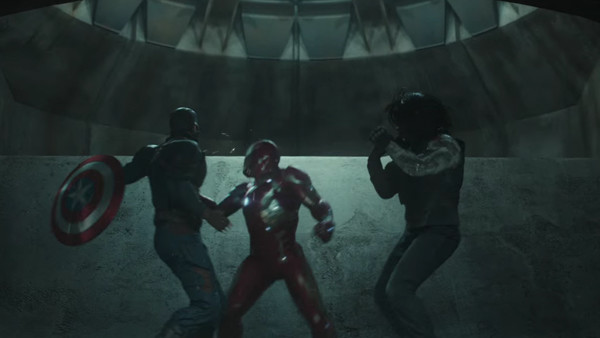
Removing a bit of the relentless fighting would also help tackle the Deja Vu problem that seems to occur at the end of all Marvel movies. By the time Captain America and Bucky battle Iron Man it feels like something we have seen already – not just in this movie, but in every other Marvel movie produced. If some of those other sequences were a bit more efficient, the final battle would have a lot more impact, rather than the sense of inevitable check listing that it winds up having.
5. Pulling The Trigger On A Meaningful Death

There was really no reason for James Rhodes to survive this movie. It has become an all too common occurrence in Marvel movies that they will tease the death of somebody but never actually pull the trigger on it. This moment was no different, but it may have been the most frustrating fake out of the lot.
It might sound incredibly bloodthirsty and callous, but wishing for deaths in these movies has nothing to do with actually wanting to see characters die as such. It’s about creating consequences in the universe. When no Avengers have to suffer any threat to their life, it simply feels like there is no real conflict to be had, and all of their expansive battles are kind of meaningless.
Additionally, Rhodes’ death could have really helped viewers further explore Tony’s crumbling mental state in detail, as discussed earlier. Having his best friend become collateral damage from his own directions would no doubt have crushed an already guilt ridden Stark.
It would have been illuminating to see Stark deal with the fact that even with all his resources, he can not bring back someone from the dead. Instead of acknowledging this huge philosophical quandary, though, he got let off the hook. We know Rhodes will be fine because Stark will figure out a way to cure paralysis and nothing will change. Which…is a lot less effective as far as storytelling goes.
4. Keeping Crossbones In The Film

In contrast to keeping Rhodes alive, the film doesn’t waste any time killing one of the really awesome villains that it was exciting to finally see. Crossbones is a cool-a*s character, and it was frustrating to see him removed from future films so casually – especially after the amount of build-up he was given in the Winter Soldier.
Marvel desperately needs interesting villains, and there is no better example of this than in Civil War. Daniel Bruhl does a perfectly fine job of playing Baron Zemo, but his entire scheme and character felt very clichéd. The film could have had much more fun and delved more deeply into the psychological motivations of the protagonists by incorporating somebody like Crossbones, whose very lack of humanity stands in polar opposition to that of the heroes. His very existence (and ideally the inevitable reign of terror he then unleashes) could have become a key part of Iron Man and Captain America’s ideological battle. In a way, Crossbones could have been Steve Rogers’ burden, in the same way that Miriam Sharpe is Tony Stark’s. He could have been their Joker, revelling in escalation and chaos.
Additionally, in the comic book world, Captain America and Crossbones have a rich history over the past 27 years. Crossbones, in fact, was responsible for helping to assassinate Captain America in the Civil War aftermath so his inclusion in the story would have been both fresh, but appropriate for the characters involved as well.
Hopefully, we get to see an unleashed Crossbones in the future (as Frank Grillo still has hope), but it seems like this would have been a great opportunity for him to be incorporated meaningfully.
3. Use Music More Effectively

There are two jobs in movie making that are completely underrated – editing, and composing. Now, while the editing in Civil War is basically excellent, the lack of oomph from the score seems kind of bizarre and disappointing.
Sound is one of the most important senses we have, and music can be incorporated to play on our most primal instincts. An amazing composer like Hans Zimmer will understand how different pitches interact with different parts of our brain, and how by playing on those sounds, we can increase or decrease tension. His use of screeching strings during the Dark Knight is probably the best example of how the music can absolutely transform a scene from ordinary, to iconic.
By reconsidering the score as something intrinsic to the plot as opposed to merely a background element, Civil War could have been taken to the next level. The final battle, for example, demanded something either incredibly bombastic, or starkly minimal to reinvigorate the audience. After two hours of sitting through endless battles the audience needs all their senses attacked so that the payoff is meaningful.
As it stands, Civil War relies solely on its visual brilliance to hook the audience. And while it is undeniably brilliant in terms of visual composition, it could have been something truly special if that kind of attention was paid to how our ears were receiving the film too.
2. Drop The Needlessly Convoluted Villain Plan

I'm not sure who started it, but for some reason, the plots of comic book movies have become extraordinarily convoluted. Unfortunately, Civil War is no different in this regard. While the plot is serviceable and does what was asked of it, there was really no need for it to be anywhere as needlessly twisty as it was.
The film goes out of its way to try and trick the audience into thinking one thing about what the antagonist's motives are, only to undermine that exact thought a few moments later. While this technique was interesting years ago when filmmakers were trying to make comic book movies legitimate in the eyes of the wider public, it's one that has been repeated so many times that it has lost all effectiveness.
The heart of this movie is a conflict of ideology. At its core, it is about the inherent conflict that arises between a man whose experiences have broken him, and another who seems to be strengthened by the very same horrors they have faced together. That’s already a very interesting idea, and it's intriguing because it's simple and relatable. Quite simply, there is a myriad of ways to bring that conflict to fruition without a fake plan from an antagonist who has to rely on a million little pieces falling into place, like we have seen countless times before.
1. Bring In A Hanging Ending
One thing The Dark Knight proved is that you can make a film that is a closed loop, but still has an open ending. A similar hanging ending would have given Civil War an extra bit of punch because frankly the payoff in Civil War does not match the overall stunning work that is constructed earlier in the film.
There was no need to rush the ending, particularly when we know that this is a set up for future movies anyway – as all Marvel movies are. The film could really have benefited from an open ending and the increase in speculation that arises from that narrative quirk. Ideally, I would have loved to have had the film simply end on Captain America dropping his shield, with the fates of everyone in prison all up in the air, and the relationship between Iron Man and Captain America in major trouble.
Instead, we had everything wrapped up and happy in the space of about five minutes. Which made the rest of the film feel incredibly wasted, and made the ending feel ridiculously paced.
In lesser hands, a hanging ending can be a sign of narrative laziness. But Marvel has proved to the world already that if there is one thing they don't do, it's narrative laziness. Constructing a more ambiguous and open ended conclusion would have fit the tone of the movie much better than the fairly tepid closing scenes that we all got.
Agree with these picks? Do you think Civil War could be improved? Let us know in the comments.