8 Famous Movie Plot Holes With Shockingly Simple Solutions
Otherwise known as Stop Bloody Nit-Picking.
There's a good reason plot hole spotting has become a micro-industry all of its own: mistakes a lot of fun, and they succeed in making us feel superior to those folk over in Hollywood for, like, those few precious moments when we realise that Avatar doesn't completely hold up when you put it under a microscope... As if that's how we should all judge fantastical films or something.
And of course there's also the possibility that we're just frustrated that something we love has such an obvious and irritating flaw built into its narrative framework. Maybe that unconsciously and insatiable thirst for perfection (and the burning fandom fire that claims ownership over things it loves) is why so many of even the most famous plot-holes in movies can be chalked up simply to nit-picking.
There are some plot holes, of course, which have made themselves known because they're of genuine concern, but there are some famous ones that just don't hold up under close scrutiny, and probably have far simpler solutions than anybody gives them credit for.
Here's 8 famous movie plot holes with shockingly simple solutions: plot holes with, uh, their own plot holes, if you will...
8. The Microwave Emitter Should Have Vaporised Every Human Being In Gotham City - Batman Begins
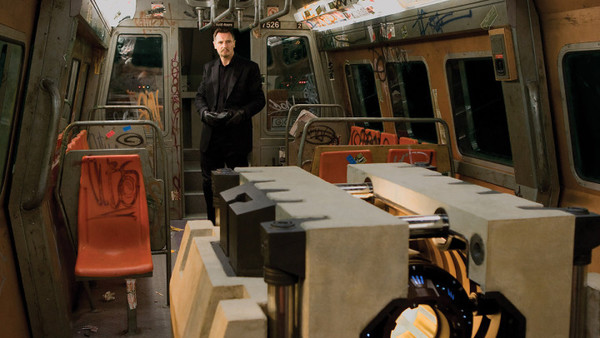
The "Plot Hole"
One of the major plot threads in Nolan's Batman Begins involves bad guy Ra's al Ghul and his plan to use a "Microwave Emitter" he stole from Wayne Enterprises to spread a nerve toxin throughout Gotham, thus allowing the city's confused inhabits to destroy themselves.
The Microwave Emitter, of course, will vaporise Gotham's water supply, allowing the toxin - which has been leaked inside - to spread everywhere. But given that the body is composed of, like, 75% water, wouldn't this have resulted in the deaths of everyone involved?
The Simple Solution
Firstly, you have to consider one very important factor: this movie takes place in a world where Ra's al Ghul would rather go through an elaborate plan like this instead of just finding a bomb and destroying Gotham that way. Secondly: the Microwave Emitter is a fictional device, and one whose details are never fully revealed, so it's hardly fair to throw this down as a glaring plot hole anyway. Would it have made sense for Wayne Enterprises to create something that murdered human beings if they turned it on? Absolutely not.
Logic dictates that there is science working behind this thing that we simply don't understand - as with pretty much every other gadget or device in the movie that nobody cares to question. It's entirely possible that the Emitter had been designed purposely so that it didn't effect the human body.
In fact, that surely had to be - without question - one of the device's built-in safety requirements, given that it's not made expressly for nefarious purposes?
7. Why Don't Other Nazis Recognise Hugo Stiglitz? - Inglourious Basterds

The "Plot Hole"
The "Basterds" in Quentin Tarantino's giddy war time exploitation homage are a rag tag bunch if you ever saw one: Lt. Aldo Raine's crew are made up of mostly Jewish-American soldiers, but there are a couple of Germans in there too, including Sgt. Hugo Stiglitz.
Stiglitz was originally a German-enlisted man but turned on his allies and joined the Basterds after offing members of the Nazi High Command. He's "famous" in Germany as a result. If that's the case, why doesn't Major Hellstrom recognise him in the film's famous basement sequence?
The Simple Solution
Simple logic would dictate that Major Hellstrom, the extemporary soldier that he is supposedly is, would know exactly what a notorious traitor such as Hugo Stiglitz looked like, given the circumstances. That makes sense. But what people forget when they point to this plot hole is that, in the months that have passed between Stiglitz's escape and rescue by way of the Basterds, Hellstrom likely wouldn't have had the man's face imprinted on his memory - not to recognise him in a situation like this, anyway.
Months have passed, remember. One might also consider that, given the situation, Hellstrom has no real reason to believe that Stiglitz would actually be sitting next to him - without that suspicion anywhere in his brain, isn't it more likely that he just believe him to be another soldier?
The fact is, though, that there are far too many variables here to call this a plot hole: we don't know why Hellstrom doesn't recognise Stiglitz. He might be bad with faces. He might have never seen a picture of the guy. Maybe it's far simpler: the two men are never sitting opposite one another, after all - perhaps he didn't get a good enough look.
6. What's Up With The Weird Time Frame During Luke's Training/The Asteroid Field - Star Wars: Episode V - The Empire Strikes Back

The "Plot Hole"
Here's a strange narrative irk that has continued to bug Star Wars fans since the second movie in the original movie made its way into theatres. After their narrow escape on Hoth, Luke Skywalker separates from Han, Leia and the others in order to train with Yoda on Dagobah.
During the time that Luke undergoes his training, though, the time frame becomes strange and unclear, because - apparently - he's able to do much of it in the same time that it takes for Han and company to evade an asteroid field and get to Bespin... That seems pretty implausible.
The Simple Solution
This a rather complicated issue in general, and one that doesn't have a definitive answer. Still, I think this part of the movie's association as a kind of plot hole doesn't hold much ground, either, because we're never given information about the distances between planets.. We have no real idea how far away anybody is from anywhere in the Star Wars universe, which gives the writers license to do play around with narrative.
The fact that the Millenium Falcon's hyperdrive is down during this part, too, means that time becomes difficult to work out. All that aside, though, it's most likely that Luke was training for a few days (maybe a few weeks), before he left to save his friends on Bespin. Taken like that, there's no real issue with the timeline at all - we're never told how long it takes the Falcon to get to Bespin, after all, and we don't know who was closer to begin with.
Dagobah and Bespin could be next door neighbours, for all we know, which would explain Luke's speedy journey to the planet, and the relatively long one that the Millennium Falcon undertook.
5. Why Don't Marty's Parents Remember Him From When They Were In High School? - Back To The Future

The "Plot Hole"
Back To The Future centres around teenager, Marty McFly, who accidentally travels back in time, stops his parents from meeting, and must get them back together before he's erased from existence. To do this, he teams up with hair-brained inventor and genius Doc Emmet L. Brown, and makes friend with both his future mother and father.
Eventually, he successfully reunites them as a couple. Back in the present, everything is returned to normal, with one glaring omission: why don't George and Lorraine McFly remember Marty from the past?
The Simple Solution
People really take this one to heart, as if there's enough evidence here to cite this as a genuine plot hole. But think about it for a second, and there are some simple reasons as to why they don't remember Marty being around in 1955 (and why they almost definitely wouldn't anyway). Firstly, they met him 30 years ago, when he "looked" 16 years old, on and off for, like, a week. How well do you remember somebody you met even 10 years ago for that length of time?
If you saw them 30 years later, would you really make such a connection? Nope. Secondly, the fact that the McFlys will eventually raise Marty as a child would remove any possibility that they'd associate him with "that kid who came and went from 1955." They'd see him everyday, after all, and he wouldn't look like 1955 Marty until he reached his teenager years anyway.
After all that time watching him grow up, they'd see him in a completely different light - from a baby to a toddler to a kid to a teenager. Their view of Marty would be entirely distorted. Thirdly, put yourself in their shoes: can you really remember the face of that kid who came to your school for a week and left again? I definitely can't, and there were a ton of them.
4. How Did Indiana Jones Survive That Perilous Underwater Journey To The Island? - Raiders Of The Lost Ark

The "Plot Hole"
At one point in Raiders of the Lost Ark, the Nazis board a ship with Indiana Jones, Marion and the Ark of the Convenant on board. They capture Marion and the Ark and take them onto an adjacent U-boat, whilst Indy watches from afar.
Just before the submarine departs, Indy leaps into the water and swims the distance, where the remaining ship crew cheer him from afar. The submarine sets course for a deserted island, but what the heck does Indy do? He can't get inside the submarine - and isn't about about to submerge itself beneath the surface?
The Simple Solution
This plot hole is particularly well-regarded for its head-scratching nature, but - thankfully - we can actually use cold, hard facts to solve this one outright. Here's some information, courtesy of Wikipedia, which nicely explains how Indiana Jones could have possibly made that hellish journey beneath the surface. Quite simply, he didn't. Consider that...
"U-boats usually traveled on the surface, propelled by diesel engines. They would dive to periscope depth to follow ships and attack. They would dive deeper only in order to avoid detection or attack by enemy ships. Speed was severely limited while submerged."
The fact that "speed was severely limited" pretty much ensures that the U-boat didn't use that method to get to the island: time was far too precious at this point in the movie. So Indy likely just hung out on top of the submarine for the entire length of the journey.
Given that said journey was supposed to be around 50 hours in length does call into question the likelihood that Indy would have made this arduous trip and still had enough energy to foil to the Nazis, though it certainly wasn't impossible - he's Indiana Jones!
3. How Did Andy Reattach The Poster To The Wall? - The Shawshank Redemption

The "Plot Hole"
In The Shawshank Redemption, wrongly imprisoned Andy Dufrense spends much of sentence slowly digging a tunnel out from his cell. When he finally makes his escape, the Warden discovers that Andy has concealed his plot over the course of many years using a simple poster, which was hung over the ever-expanding tunnel. How does he discover such a thing? He throws a chess piece at the poster whilst venting his anger, which creates a large hole and reveals the tunnel entrance.
But how did Andy fix the poster onto the wall from within the tunnel?
The Simple Solution
Here's another plot hole that gets far too much attention, despite being relatively easy to solve. Given that we don't actually see a shot of the poster attached from all four corners (people assume that we do), isn't it rather logical to assume that it was only fixed to the wall from the top two corners? Gravity would have done the rest, allowing the poster to fall over and cover the hole.
If it were fixed hard enough to the wall from the top, anyway, the chess piece would have been perfectly capable of making that hole without the poster moving or falling off.
2. Why Does The Matrix Exist In Such An Advanced Time Period? - The Matrix
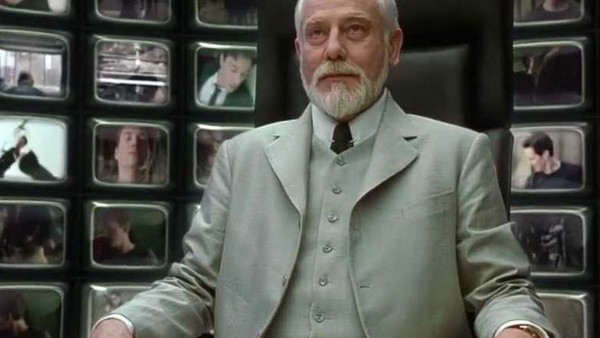
The "Plot Hole"
In the world of The Matrix, humanity lives unknowingly inside a program created by sentient robots, as to conceal us from the "real world" - an endless farm where artificial intelligence use our bodies as mere batteries.
The "Matrix" itself resembles the world back in 1999 (which, at the time of the movie's release, was the present), and is therefore inclusive of the technology available at that point. But why would the robots put humans in a world that gave them the means to "wake up" from the Matrix? Why not plunge them into the ice age instead?
The Simple Solution
This isn't even a simple solution that I've come up with on a whim to try and convince you: the movie outright tells us why A.I. put us at the peak of our civilisation, and the reasoning makes sense. Given that humanity was at a point resembling the "present" when the artificial intelligence took over and plunged us into darkness, it's at this point that human beings are wired to live within.
Agent Smith explains that trying to put humanity in a time period unlike the one they were supposed to live in meant that they kept trying to wake up from a "dream."
1. Why Does Buzz Lightyear Freeze If He Thinks He's A Real Space Ranger? - Toy Story

The "Plot Hole"
The main plot in Toy Story revolves around the fact that Buzz Lightyear, a toy, believes himself to be a real-life space ranger - and he's the only toy around who seems to think in this manner, otherwise we might not have a story.
To the annoyance of Woody, a cowboy doll, Buzz goes about acting as if he's a real hero, and refuses to accept that he's actually just a plastic plaything. If that's so, though, why does Buzz "freeze" like all the other toys when a human being enters the room?
The Simple Solution
The writers of Toy Story have steered well clear of this point, because it's not necessary that they really explain it, and they obviously didn't want to get involved in the endless semantics surrounding an rather pointless issue. That said, there's a reasonable explanation lurking at the heart of this "plot hole" anyway: in Buzz's case, the reaction to "freeze" is purely instinctive - pre-programmed, if you will, into his subconscious.
Consider that, for a moment, Buzz thinks he's a real space ranger - that doesn't necessarily mean that he thinks he's a real human being, though. Technically, he has no real concept of what an actual human being is, otherwise he'd be going insane upon realising that he doesn't have a heart, doesn't need to eat, and doesn't go to the bathroom. Which means that he's in a class of his own entirely, and one with its own set of rules.
Though we know that all toys, by default, opt to conceal themselves from human beings, it's no surprise that it comes instinctively to Buzz, because - ultimately - he is still a toy. This doesn't, however, clash with his belief that he's a real space ranger: for all that we know, his concept of being a space ranger might actually account for his "freezing" - when enemies that look like human beings make themselves known to him, freezing is presumably what Buzz has been "pre-programmed" to do. It's just a matter of perspective.
Like this article? Let us know in the comments section below.