8 Famous Movies That Totally Deserve To Face Giant Lawsuits
 Everything that exists in the realms of movie-making has, in likelihood, been done somewhere else. Even the greatest filmmakers will tell you that the best stuff is all stolen from things that already exist, because that's where new ideas come from. We take the familiar and we try to imbue them with something fresh and unique - hopefully to the point at which people don't realise that what you've created came from an existing product. That's to say, everyone has to get their ideas from somewhere, because that's what an idea is. It's something you come up with based on the way your own brain is working, and your brain is working because you've been influenced by all the movies, TV shows, albums and people that you've spent your life in the company of. Occasionally, though, the lines blur and it's probably a good idea for people to hire lawyers to win them money. So, yes, although Woody Allen ripped off Fellini's filmography to inspire his own movies, and Quentin Tarantino's movies are made up of hundreds of individual scenes ripped from other flicks entirely, there are times when the comparisons between two products are too similar. In the cases of the 8 movies I've assembled here, it's surprising that - to this day - each and every one hasn't been the subject of insane, raging lawsuits
8. The Lion King (1994)
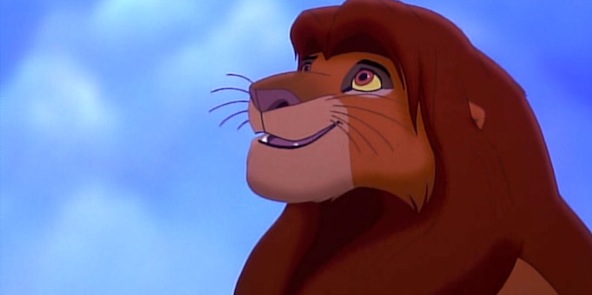
AH ZABENYA! Yep, you guessed it: The Lion King. One of Disney's most beloved animated classics - a movie that made each and every one of our childhood's better by default, just for having existed in the same time frame. And what an original movie it is, huh? Simba... Pride Rock... wonderful ideas that only those incredibly creative folks over at Disney could've come up with, right? Now go back and read everything I just wrote in a sarcastic voice, because The Lion King might actually owe some Japanese guy a whole bunch of money. Seriously.
It's common knowledge that Disney like to take existing stories and concepts to carve our their animated features, but usually they do that with things that are, I don't know, in the public domain, like Aladdin or The Little Mermaid - stories with no copyright issues. I mean, this film was even based on Hamlet. So it's strange that The Lion King also shares a bunch of similarities with Kimba The White Lion, an anime series from the '60s - Simba's name is similar to Kimba's, obviously, and that famous Pride Rock shot was here first, too. Sure, it's possible that these are unintentional, or that some guys at Disney saw Kimba one day and years later came out with all the ideas thinking that they were their own. But even Matthew Broderick thought he'd signed up to voice Kimba when he agreed to voice Simba for this movie - why didn't anyone at Disney see the similarities between the two properties? Oh, yeah: 'cause they're invincible and they don't give a .7. Black Swan (2010)
 It's Incredibly Similar To...Perfect Blue (2000) Darren Aronofsky's Black Swan was the second movie in his "sports trilogy," one that started with The Wrestler and will end with nothing, because I've just made up that concept right now. Basically the movie was written as an excuse to have Natalie Portman and Mila Kunis kiss and have sex with one another. Despite the fact that this movie appears to be wholly original, though (those actresses had never kissed on screen before), it resembles a Japanese anime called Perfect Blue in lots of bizarre way. Man, Americans loving ripping off the Japanese. If you've seen Black Swan, you'll know that it's a movie about ballet. Perfect Blue isn't about ballet, but it is incredibly similar in its tone, premise and execution - it just happens to be able a pop star instead. The beats of the story are bizarrely coincidental, and by coincidental, I mean that Aronofsky has obviously copied them: a girl gets pressured a lot, starts seeing doubles or herself, maybe she dies in the end. It doesn't end there. Perfect Blue even has scenes that are framed in exactly the same way. So why haven't we got a lawsuit on our hands here, people? Well, in an strange turn of events that will likely blow your mind eight ways from Sunday, Darren Aronofsky owns the rights to Perfect Blue. Almost as if he planned on ripping it off this movie on purpose and secured the rights with all his millions of dollars as a way of ensuring he got away with it? So, will, like, Aronofsky be forced to sue himself, only to find that he's wrestling with his own double in a dark, broody drama about the nature of obsession? just got crazy.
6. The Village (2004)
 It's Incredibly Similar To... Running Out Of Time (1996) If a director's fourth movie is the one that ends their career and convinces everybody that they're a useless coasting hack, then The Village is M. Night Shyamalan's fourth movie. It's also the movie that proved that ol' Shyamalan was running out of ways to shock audiences, because there's only so many times you can make a movie with a big twist at the end. Well, that's in my opinion: M. Night Shyamalan would probably disagree. So although we all sensed he was losing it, I still doubt anybody had this guy down as a plagiarist of sorts. The plot of The Village concerns a secluded community living in the 19th century. Nobody is allowed out of the settlement, because they've been led to believe that there are monsters waiting for them outside. The Village ends when a young blind girl - granted permission to leave on the basis that she brings back medicine - goes outside the boundaries and discovers that it's actually the present day, and M. Night Shyamlan made an entire movie to in order to use that twist. It's a shame that it was actually ripped from a YA novel called Running Out Of Time. Yep: Running Out Of Time was released years before the movie, with a plot centered around a young girl who ventures out into society to find that, she too, has been living a "fake" life in the 19th century when it's really modern day. Oh, she also goes out to pick up some medicine, just like in M. Night Shyamalan's remake. My research tells me that author Margaret Haddix did actually considering suing the director for stealing her plot, but as far as I can tell no legal action was undertaking. Plot twist: Haddix is M. Night Shyamalan.
5. Toy Story (1995)
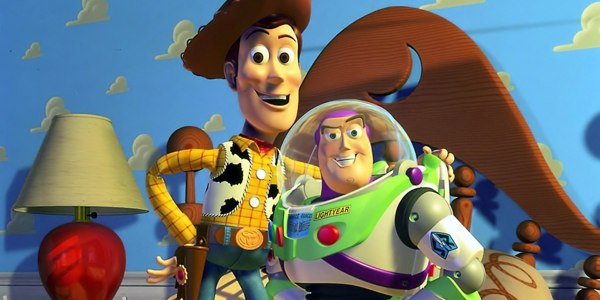
It's Incredibly Similar To... The Christmas Toy (1975) Toy Story seems like the kind of genius-level idea that only those guys over at Pixar could have come up with, but then you remember the premise of this article and all thoughts of that notion are instantly erased. Because when you look back through time and at a movie called The Christmas Toy (directed by a man you'll be familiar with called Jim Henson), the similarity train clearly takes a large and unwieldily stop in Plagarismtown. Toy Story is, I'm afraid to report, incredibly similar to The Christmas Toy, and I think justice needs to be done. "Come on," you're probably thinking. "How similar can these movies be, really?" Buckle up, buddy. First let's take Toy Story's premise, which is based around toys who come to life when their owners aren't around. A feature in The Christmas Toy. "Well, okay, but that's a pretty basic idea," you're thinking now. "It's possible that such an idea could've been thought up twice." You're not wrong. What about the idea that an old favourite toy feeling threatens when a new toy - a flashy, space toy that doesn't realise it's a toy - arrives on the scene? Oh, no. But oh yes, unfortunately. That genuinely is the plot of Henson's A Christmas Story, which was first released on TV in 1975, 20 years before Toy Story. In this case, the Buzz Lightyear character is called Meteora, Queen of the Asteroids, and just like Buzz, she's obsessed with tracking down her arch-nemesis. I don't know about you, but I felt a little put off finding out that Toy Story had so much in common with this VHS oddity. I'm not saying Toy Story ripped its premise from this movie or anything, but... well, I guess I am saying that.
4. The Matrix (1999)
 It's Incredibly Similar To... The Invisibles (1994) The Matrix is, without a doubt, one of the greatest sci-fi movies of the '90s, and you wouldn't have to push me into saying that it's probably one of the greatest sci-fi movies ever - I love it! Though it's reputation has been lessened slightly thanks to those unnecessary and kind of boring sequels, it's hard to deny the visceral power of the original flick: when this thing came out, everybody started buying Neo's phone, wearing leather jackets, and learning how to hack (for, like, a week). And how can you argue with The Matrix's wholly original premise? Quite easily, actually, if you're at all familiar with a little comic book called The Invisibles. Now, before anybody goes crazy and thinks about explaining to me how "the Wachowskis have always been incredibly open when it comes to acknowledging their influences," here's one influence that they forgot to mention when they were paying homage to Ghost In A Shell and cyberpunk novels. Without sounding overly dramatic, The Invisibles is The Matrix, if The Matrix were about super-intelligent insect creatures instead of sentient robots. I'm really not kidding here. Grant Morrison's comic clings to a familiar concept: what if reality were actually an illusion? That's the plot of The Matrix, too, of course, but I guess that's still a vague comparison to make, right? Wrong. Both the comic and the movie focus on groups of people who are aware of this fact, have a character like Neo whose destiny is to become the "chosen one" and has the power to unleash kick-ass skills through the bending of reality. And just to imbue this argument when some added weight, both groups are led by a bald guy who wears dark, round glasses. Uh-huh: Morpheus.
3. The Terminator (1984)
 It's Incredibly Similar To... "Soldier" - The Outer Limits (1964) The Terminator tells the classic story of a walking robot death machine that travels from the future and into the past with a single objective: murder the mother of future human resistance leader John Connor, who will cause a lot of trouble for sentient robots if he lives. To counter this movie, the humans also get a bit time travel-y, in the sense that they send back their own man, Kyle Reese, to face off against the Terminator (that's Arnie, in case for some reason you just came out of a coma today and you're easing yourself back into society via this list). James Cameron was the guy who came up with this wacky premise, of couse, and you'd presume he'd have done that using his own thoughts and his own brain. Not according to sci-fi writer Harlan Ellison, though, who - in this article's only instance of somebody actually getting sued - took out a lawsuit against Cameron because he thought that the writer/director had stolen the movie's premise from an episode of then The Outer Limits. The episode in question is called "Soldier," in case you feel like checking it out and you're really, really bored. Ellison thought that the plot of "Soldier" (which featured a man going back in time, shacking up with a family, and facing off against another time-travelling enemy later on) was too similar to that of The Terminator, and there's no denying that there are similarities, especially since the main character sacrifices himself like Reese does to save somebody. "Demon With A Hand" was another story that Cameron also apparently copied at one time, but Ellison later stated that he only thought the director had plagiarised "Soldier." He won the lawsuit.
2. Disturbia (2007)
 It's Incredibly Similar To... Rear Window (1954) Once upon a time in Hollywood, somebody decided that it would be a good idea to make a movie that was exactly the same as Alfred Hitchcock's Rear Window, expect that this time it would be called Disturbia, and instead of Jimmy Stewart in the central role, we'd get Shia LaBeouf, that kid from Nickelodeon's Even Stevens. I'm not saying it was a good idea - you see the movie and tell me what you think. They also didn't ask permission. So although Disturbia is obviously a teen remake of Hitchcock's movie, to the extent that it's impossible not to recall that movie whilst you're watching this one, the filmmakers refused to say they were related. But listen: LaBeouf plays a douchey kid who is confined to house arrest via monitor strapped to his leg that will alert the police he tries to leave the perimeter. Bored, he finds himself entertained by a local neighbour, who he becomes slowly convinced is a murderer. To investigate, he enlists the help of an attractive girl. Everyone thinks he's nuts, but it turns out all along that he was right. Sound familiar? It's Rear Window, yeah. And though in this case people actually did try to sue over Disturbia, given the obvious similarities, a judge decided that the plots were only similar in a "general sense," forgetting to note that there was a fifty year time gap between the settings, and that it would have been impossible for it not to have been "general" given that the first movie is set in the '50s. D'oh.
1. The Hunger Games (2012)
 It's Incredibly Similar To...Battle Royale (2000) Susan Collins claims that she never heard of Battle Royale in either its movie or novel incarnations before she sat down to write her very own incredibly similar version called The Hunger Games, but we can all claim whatever we want, can't we? We can spend our lives claiming that we didn't set fire to that dustbin, or that we really, really don't know what happened to the family cat - fact is, The Hunger Games - which has probably made a ton more money now than Battle Royale has in its entirety, clings to a premise so similar that any lawyer could probably put together a case for plagiarism in about eighteen minutes. Koushun Takami's 1999 novel is set in a world were a dictatorship government rounds up children and forces them to battle to the death to keep the population in line. Susan Collins' 2008 novel is a set in a world were a dictatorship government rounds up children and forces them well, you get the idea. Sure. it's entirely possible that both authors stumbled upon these ideas independently, and that's the story that we've been fed so far, but I'm genuinely surprised that ol' Takami hasn't thought about chasing Collins for some Yankee dollar. In fact, he's been pretty chilled out the whole thing. When fans of Battle Royale went crazy that The Hunger Games was something that existed, he thanked them, but said: "Every novel has something to offer. If readers find value in either book, that's all an author can ask for." I suppose the concept might have been thought-up on two separate occassions, but I doubt anybody would disagree there some incredible similarities going on here. For one, both protagonists are called Shuya Nanahara, which is really weird. No, I'm kidding, I'm kidding. Like this article? Let us know in the comments section below.