8 Great Movies Saved By Ridiculously Last Minute Changes
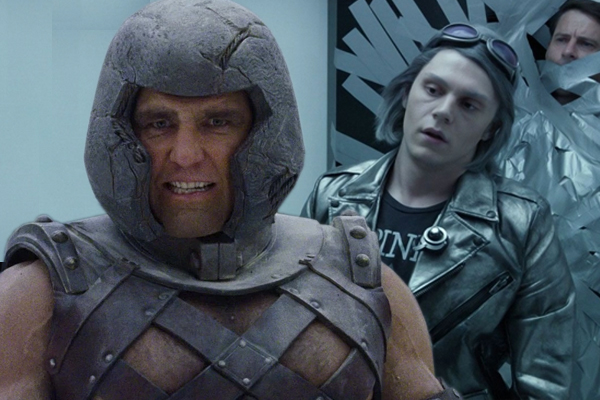
Juggernaut instead of Quicksilver? No thanks.
Movies take a long time to make. Like, a ridiculously long time. So long that Matthew McConaughey could go for a two week vacation to that water planet and by the time he got back James Cameron would still be tinkering with the tech he needs to make Avatar 2.
Securing the rights; writing the script; casting; redrafting the script to please each of the financiers; recasting when an actor pulls out, but totally not because of the script; shooting; discovering your director was off-his-face the entire production and having to shoot more; moving the release date because you realise you're within two months of a Marvel/Star Wars movie: it's an arduous process that takes at least a couple of years from conception to release.
With so much time (and, more importantly, money) at stake, you'd expect things to be ran as tightly as a ship captained by Breaking Bad's Tuco. In some cases they are - Christopher Nolan is notorious for his planning ahead, leading to films that are irritatingly lacking in any extra deleted scenes (they didn't even shoot a James Cameron cameo for Interstellar) - but, more often than you'd expect, some of the biggest decisions in a movie's development can happen right at the last minute, just before the final edit's locked. Here are eight major movies that were oh so nearly very different.
8. The Post-Credits Scene Was Thought Up Only Two Months Before Release - Iron Man 3
Iron Man 3 went out of its way to irritate die-hard Marvel fans. Not only did new director Shane Black make the most Shane Black-iest (and thus un-Marvel) film that the studio would allow, chock full of off-kilter humour, but it boasted a hilarious (if unfaithful) twist that relegated Iron Man's greatest nemesis to a punchline. The impact of all that, particularly revealing the fearsome Mandarin to be a drunk Ben Kingsley, means that the film is still regarded (unfairly) as one of the MCU's worst.
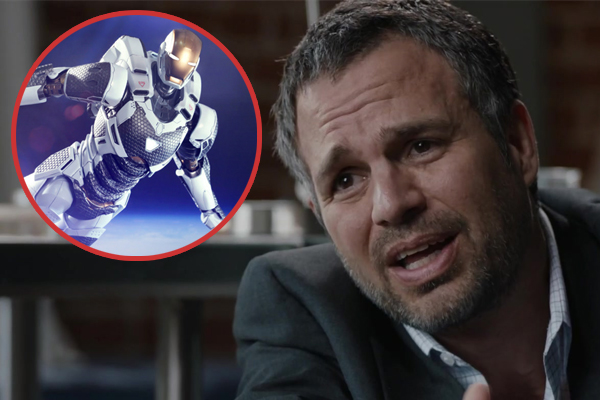
To top off the subversive start to Phase 2 of the Marvel Cinematic Universe, the threequel messed with the traditional post-credits scene. Instead of providing an exciting clue for an upcoming film, we got a slight cameo from Mark Ruffalo as Bruce Banner (with no sign of "the other guy") that revealed the whole movie was being narrated by Tony Stark to his not-too-angry friend. And... that was it. In a universe-expanding sense it's a bit lacklustre, but for Iron Man 3 as a standalone film (which, after the massive The Avengers the year before, it was definitely trying to be) it fit perfectly, very in-line with Black's modus operandi.
As you'll come to expect from this list though, things were almost very different. The Ruffalo stinger was only dreamt up at the last minute after Robert Downey, Jr. bumped into his Avengers co-star at the Oscars and decided to replace the planned scene with an appearance for his buddy. For reference, that ceremony was in February, little over two months before the film's May (April in the UK) release.
What the original scene was has (irritatingly) never been announced. A popular fan theory is that it would see Tony Stark jetting off into space to visit the Guardians Of The Galaxy, but given how that doesn't fit the MCU timeline and the only source is an unsubstantiated rumour it seems rather reaching. A more likely candidate was Ant-Man - at the time the Edgar Wright version of the movie was gearing up up for production. That film's continued delays may even have been what necessitated the stinger change.
7. The Original Ending Was Removed (A Week After Release) - The Shining
Stanley Kubrick doesn't do things by halves. So when he wants to make a last minute change to one of his films, he does it after the film has already gone on general release.
The ending of The Shining is nothing shy of masterful - after Danny and his mother escape, leaving Jack to freeze to death in the maze, we cut to inside the Overlook Hotel, slowly zooming in on a photograph of the 1921 4th of July Ball, which features Jack himself front-and-centre. Chills every time, along with a fair bit of head-scratching.
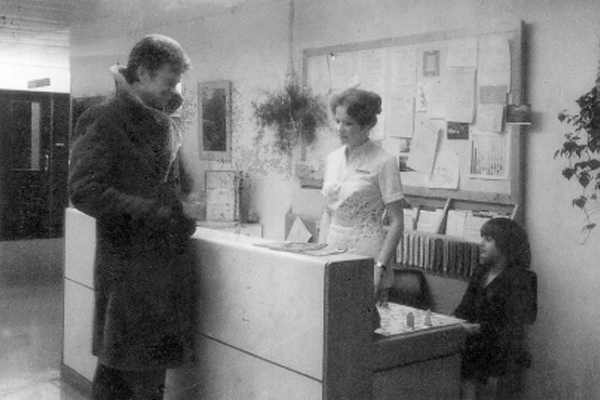
In Kubrick's original cut, however, there was a further scene that picks up with Danny and Wendy after their scarring experience; hotel manager Mr. Ullman visits the pair in hospital to tell Wendy that Jack's body wasn't found and give Danny a tennis ball just like the one that lured him into Room 237. It asks more questions than it answers - we still have no clue what the malicious power behind the events are - but puts the onus most certainly on the ghostly hotel, rather than the family dynamic and Jack's madness.
Kubrick only realised this wasn't the best resolution a week into the film's theatrical run. Rather than lamenting his mistake and releasing a Director's Cut down the line, he immediately forced projectionists to remove the sequence and, for completion, return it to the studio for destruction. All that remains of the scene now is a couple of grainy stills.
6. Hugh Jackman Wasn't Cast As Wolverine Until Three Weeks Into Shooting - X-Men
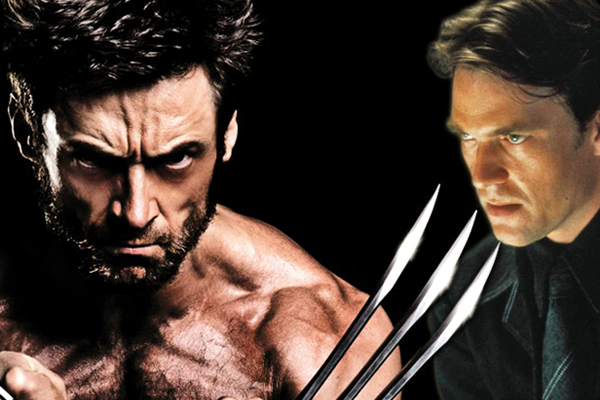
Hugh Jackman is Wolverine. The musically-inclined Australian has played Logan a whopping seven times (with two more appearances due in the next couple years), becoming a bona fide Hollywood star in the process. From this standpoint, it's somewhat crazy to think that before the star-making turn in X-Men he was a total unknown outside of musical circles, having only starred in two Australian movies so obscure you don't even have to pretend to have seen them. And, were it not for a troubled action sequel, things could have easily stayed that way; he very nearly wasn't Wolverine at all.
It was Dougray Scott who was originally cast as Weapon X in Bryan Singer's revolutionary superhero film, but he had to pull out at the last minute to finishing shooting Mission: Impossible II, otherwise known as the worst in the series. Despite the setback, Singer was clearly holding out for Scott to get free - Jackman wasn't rushed in as a replacement until the movie had already been shooting for three weeks.
Scott probably felt OK at first - Mission: Impossible II was the highest grossing film of 2000 (it was a confused time), while X-Men barely cracked the Top 10. Fifteen years on, however, and the superhero bubble continues to grow, X-Men is bigger than ever and Jackman is a worldwide superstar whose eventual departure from the franchise will be a true end of an era. Scott, on the other hand, was the baddie in Tak-three-n.
5. Peter Jackson Spent Most Of Pre-Production Planning To Make Only Two Films - The Lord Of The Rings

In a situation pretty much identical to Scott and Jackman, Aragorn was almost played by Stuart Townsend, only to be replaced by Viggo Mortensen the day before shooting began. But that's only getting as far as Hobbiton in the vast Middle-Earth of last minute developments in the production of The Lord Of The Rings.
As crazy as it may sound, but the idea of making J.R.R. Tolkien's mammoth tome - which, let's remember, was released in print in three parts - as a trilogy was an obscenely fantastical idea. Even, it seems, for trilogy-hocker Peter Jackson himself - his original pitch for LOTR was a two movie story (with a third for The Hobbit), which (after a protracted negotiation phase that involved a failed attempt at King Kong) was approved by Miramax. When the budget spiralled, however, Bob Weinstein baulked and chose to bail on the project (unless it could be shrunk down to a single film, something that would clearly be impossible).
When Jackson tried to sell the production to New Line Cinema, they too questioned the number of films, only in the other direction; part-creatively motivated, part-financially, they suggested bumping the pitch up to three movies, and the rest, as they say, is legendarium. The finished films did chop and change a lot between books (much of The Two Towers novel - Boromir's death and Shelob - wound up in different films), but Jackson had the time to do the epic journey justice, producing cinematic history.
The reverse case happened with The Hobbit - originally a two-parter, Jackson bumped it up to a trilogy six months before release after principal photography was well over. And we all know how that turned out.
4. Test Audiences Stopped Scott Ending Up With The Wrong Girl - Scott Pilgrim Vs. The World

Scott Pilgrim Vs. The World ends with the titular slacker hero flying off into subspace with his new girlfriend Ramona after defeating her seven evil exes in physical combat. It's pretty weird, although not as weird as the alternate ending, which sees Scott go through all the video-game infused action, only to eventually pair up with his obsessed teenage ex Knives. And do you know what's even weirder than all that? The alternate one was the original finale of the film.
That's right - not happy with sending up modern action cinema by homaging an entire medium, Edgar Wright wanted to subvert the typical "guy gets the girl" finale with something that, being quite frank, doesn't even sit right as a "What if?" take.
Enter test audiences. Usually a blight on the creative process where members of the general public nit-pick a film they have no real interest in, forcing filmmakers to make neutering changes to their work, they actually improved Scott Pilgrim; the scores from test screenings were low, primarily because of that ending (well duh). Being unconventional is exciting and all, but the film is already pretty off-kilter - it doesn't need a final "twist" to cement that.
Wright and the studio realised this (as had Bryan Lee OMalley, the concurrently-written comic's writer, who had already altered the graphic novel's ending) and shot the new, thematically fitting conclusion.
3. Lucas Only Remembered Obi-Wan Had To Pick Up Anakin's Lightsaber In Reshoots - Star Wars Episode III: Revenge Of The Sith
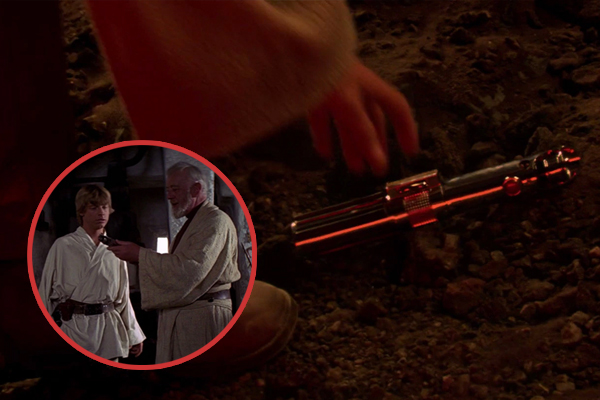
Even though the Star Wars Prequel Trilogy spent most of its seven hour runtime obsessed with tying into the original movies (rather than telling its own story), there's actually only a handful of events referenced in the first trilogy that actually needed to happen; Anakin becomes Vader, Luke and Leia are born, the Empire is created and the Jedi are exterminated. Everything else is up in the air. But even with such a short list of things he had to do, George Lucas still almost missed out a crucial moment essential to the franchise's narrative.
In A New Hope Obi-Wan gives Luke his father's lightsaber, saying "Your father wanted you to have this when you were old enough." Given the subsequent reveal that Anakin was Vader, it was assumed there was some twisting of words going on, but the impact of the baton getting passed was still there; it's one of Star Wars' most pivotal and memorable moments.
Yet, in the original cut of Revenge Of The Sith, Obi-Wan sliced Anakin up, watched him burn and just walked away, leaving the essential lightsaber (which is going to make a further reappearance in Star Wars: The Force Awakens) on the sands of Mustafar. It was only when pick-ups rolled around that Lucas realised his error (maybe he finally went back and fact-checked his script). He quickly added in a shot of Obi-Wan picking it up and the continuity was, in this moment, preserved.
2. Disney Made It A Cinematic Release With Only Nine Months Left Of Production- Toy Story 2
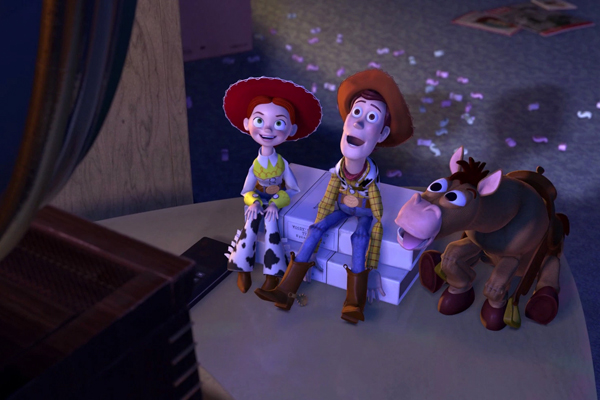
Unsurprisingly for the series that singe-handedly turned animation on its head, Toy Story's journey to the big screen was far from plain sailing. The first suffered a complete production shut down and rewrite of the script when Disney took stock of the well-into production film and realised their corporate meddling had impeded Pixar from making the film to the best of their abilities, leading to a complete change of Woody's character (warning: that link is a satire of recent literary events, not a serious report on the interesting footage).
Toy Story 2 was only more fraught. The film was originally conceived as a direct-to-video sequel in the spirit of Disney's other cash-ins (see: The Lion King 1½), and wasn't even an official Pixar production at first (it involved the studio's key creatives, but was treated as a separate project). However, when it became clear from the early drafts there was something more special here than Cinderella II: Dreams Come True, the film was bumped up to a tentpole cinema release.
All good, except that the time-frame for this change was incredibly tight - the studio had only nine months to take the rudimentary cheap version and hand in the polished, finished product. But boy did they pull it off - they added in twelve minutes of story (including the video-game set opening and the entire character of Wheezy) and wound up making a film inexplicably better than the original.
Sadly, the lesson wasn't learned. In the mid-naughties Disney started production on a direct-to-DVD Toy Story 3, which would see Buzz recalled and the toys travelling to Taiwan to save him. This was thankfully scrapped when John Lasseter took over as Head of Animation, and Pixar started on their own version from scratch.
1. Juggernaut Originally Broke Magneto Out Of Prison, Not Quicksilver - X-Men: Days Of Future Past
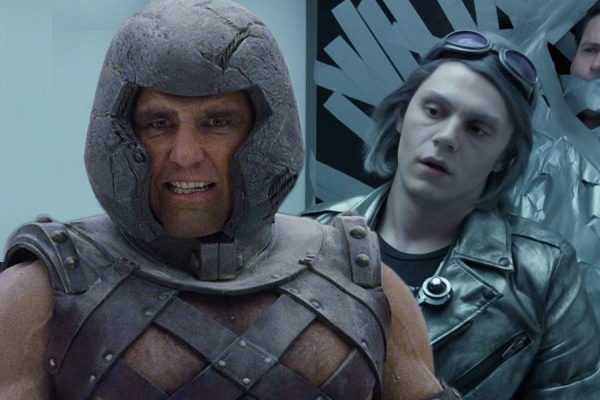
You didn't see that coming - the Quicksilver in X-Men: Days Of Future Past was better than the one in Avengers: Age Of Ultron. Oh, Aaron Taylor-Johnson's version of the super speedster wasn't bad per se, but just couldn't match Evan Peters' obnoxious take. The X-Man was, after all, the central part of Days Of Future Past's highlight - a slow-mo sequence where he saves Xavier, Wolverine and Magneto from Pentagon security to Jim Croce's Time In A Bottle - which emerged as a strong contender for "Best Action Scene Set In A Kitchen Of 2014" (an awards category that had some strong competition from The Raid 2).
But that sequence, and Maximoff himself, were almost completely absent from the film; the original plan was to have a younger version of Juggernaut help break Magneto out of the Pentagon, with the switch made to Quicksilver not happening until the film was lurching towards principal photography. While the change is well patched up in the final cut, this does explain why Wolverine says he knew an older Quicksilver in the future, despite no previous movie showing that.
So why the switch? Bryan Singer's argued it was because of the character's presence in The Last Stand (yeah, because Vinnie Jones was just so-damn definitive in Brett Ratner's messy attempt), but the fact Marvel had just stretched the definitions of the character rights by announcing a non-mutant version of Quicksilver in their then-upcoming Age Of Ultron has to have played a part; Fox were no doubt delighted at the opportunity to beat Marvel at their own game.
Which other movies were improved by last minute changes? Shout out any more down in the comments.