8 Marvel Movie Villains Better Than The Comics

Not everyone's comic backstory is as good as Loki's.
Despite producing a vast array of successful films, Marvel has consistently taken a lot of heat in one area in particular: the handling of their villains. Even before Marvel Studios existed, people were lamenting the mishandling of classic villains like Galactus and Bullseye over at Fox. Moreover, it seemed like there was an inability to adapt anyone but A-listers like Green Goblin and Magneto into compelling cinematic villains. But in spite of this general trend, on certain occasions Marvel has found ways to elevate their comic book villains when bringing them to the big screen. They€™ve occasionally taken bizarre concepts and underdeveloped characters and managed to, at least in part, make them relatable, layered, and powerful villains. These may not represented the greatest villains in all of Marvel€™s films, but they absolutely mark the biggest improvements of characters from page to screen. Even if they weren€™t handled perfectly, these were all competently put-together characters that make their comic-book selves look like afterthoughts. Establishing a memorable and credible threat can be a daunting task so even if some of these villains didn€™t impress, just wait until their comic book origins become more clear and the successes of their characters will become apparent.

8. Sebastian Shaw (X-Men: First Class)
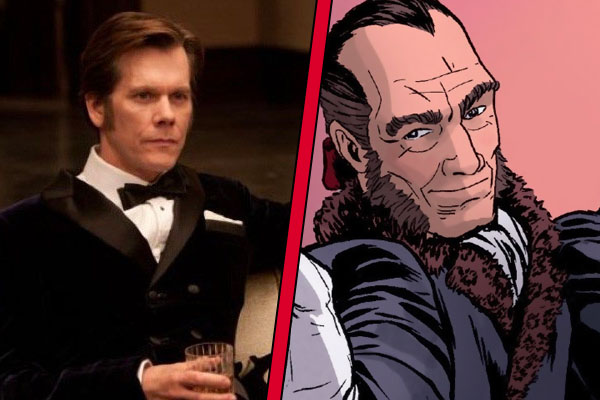
The Comic Version: Armed with the ability to turn energy he absorbs into strength, Sebastian Shaw is a powerful mutant and a self-made billionaire. He would use this influence to take control of the Hellfire Club, a group of like-minded people trying to exert their influence and take over the world. His most notable exploit occurred during his debut run in €œThe Dark Phoenix Saga,€ in which he and his associates tried to control Jean Grey and harness the Phoenix force for themselves. The Better Movie Version: Simply by bringing the character into a more realistic setting did wonders for Shaw. There were still hints of his secret cabal and Victorian-era stylings but they did not dominate the character as they did in the comics. Instead, his focus was on inciting World War III via the Cuban missile crisis, all the while fending off a revenge-seeking Magneto. These connections to real history as well as the main characters made his character much more organic to the story. Furthermore, the characterisation of Shaw, from his cocky attitude to his firm belief in his actions were masterfully brought to life by Kevin Bacon, delivering a complete package that the comics never did.

7. Deacon Frost (Blade)

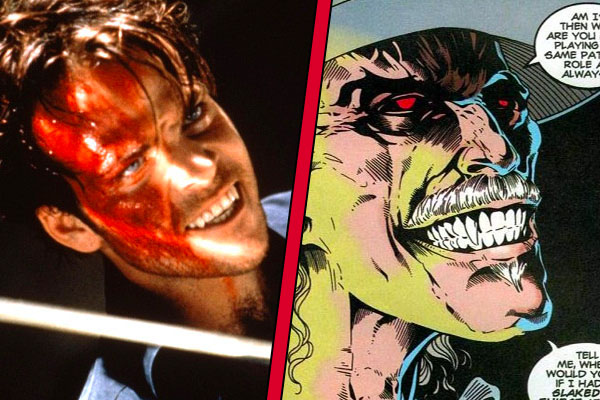
The Comic Version: A middle-aged scientist bent on finding immortality, Deacon Frost began to experiment with vampire blood. When an accident lead him to not only be infected, but gifted with the ability to create vampiric doppelgängers, he sought out Dracula to usurp him of his throne and became the leader of all the vampires. In the years after this, Frost became responsible for killing Blade€™s mother and turning him into a vampire, inciting his quest for revenge. In doing so, Frost believed that he had given Eric Brooks a higher purpose and that Blade should be thankful to him. The Better Movie Version: Though his motivations of assuming control over the lesser human race remain, Deacon Frost is very much a different character on film. Instead of the older and more proper German man, he€™s played by the much younger Stephen Dorff. He€™s more wild, sexual and sociopathic than his comic book counterpart, all of which round out his character. Frost€™s anger feels visceral and the near-success of his mission to summon the Blood God make him more fearsome and memorable as a villain. Blade is often forgotten about, but it was the first well-made Marvel movie and its unhinged villain is one of the reasons that it€™s still remembered nearly 20 years later.

6. Ivan Vanko (Iron Man 2)

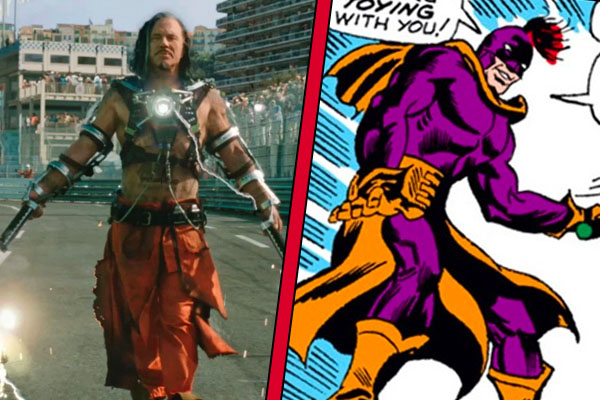
The Comic Version: As an amalgam of two Iron Man foes, Vanko bears similarities to both Whiplash and the Crimson Dynamo. Mark Scarlotti, the comic-book Whiplash, was an electrician at Stark International who invented an electrified whip and became a career criminal. Using his skills, he went to work for the Maggia, working undercover at the Stark plant and battling Iron Man. Crimson Dynamo, on the other hand, is a title held by multiple men, usually Russian, who sport an armoured suit like Iron Man€™s and typically try to stifle American interests at the behest of their government. The Better Movie Version: By taking parts of each of these characters, Iron Man 2 managed to update the antiquated Soviet-era Dynamo as well as give the generic Whiplash a personal connection to the hero. In addition, using Whiplash€™s signature whips provided a new visual dynamic and immediately separated Vanko from Iron Monger of the first film. Though it€™s a pretty standard MCU tactic, they morphed Whiplash into more of an inversion of Iron Man. Vanko represented an intelligent inventor, like Stark, but who corrupted the use of his technology. While much of his Russian backstory was lost on the cutting room floor, the version we got, although imperfect, still marked an improvement on the classic characters of Whiplash and Dynamo, largely thanks to the changes that were made and the devoted performance from Mickey Rourke.

5. Pyro (X2, X-Men: The Last Stand)

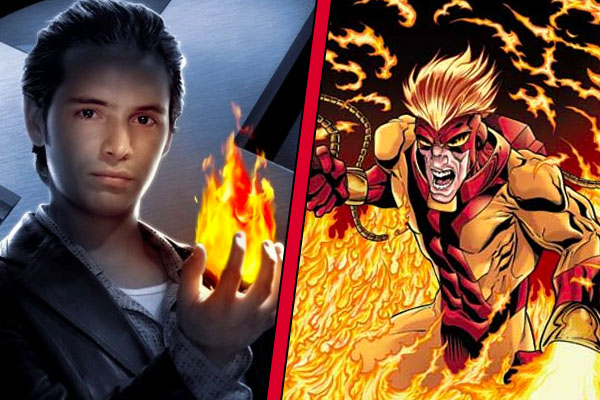
The Comic Version: Born St. John Allerdyce, the Australian mutant Pyro learned early on that he could manipulate fire. Recruited by Mystique, he joined the Brotherhood of Evil Mutants and helped to attempt an assassination on Senator Robert Kelly. In later years, he was little more than a foot soldier for other factions until he became infected with the fatal Legacy virus. As he came close to death, he realized the futility of the struggle between humans and mutants, saving Kelly and inspiring him to work towards co-existence. The Better Movie Version: Pyro actually had a compelling redemption arc in the comics but his corruption in the films speaks to an equally pertinent theme. Using his powers for fun and small acts of revenge, the American John Allerdyce never really fit in with the X-Men. He felt they were holding him back and denying who he really was, only to find acceptance with Magneto, who believes that they should not be the ones in hiding. Pyro's journey to the dark side showed why Magneto was so compelling and proved that there wasn€™t necessarily a right way to handle oppression. His rivalry with Iceman furthered this point home and helped to exemplify one of the central themes of the series in a more thoughtful and developed way than the comics managed.

4. Alexander Pierce (Captain America: The Winter Soldier)
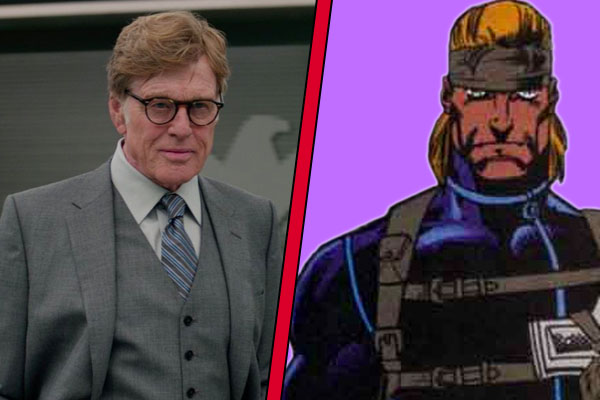
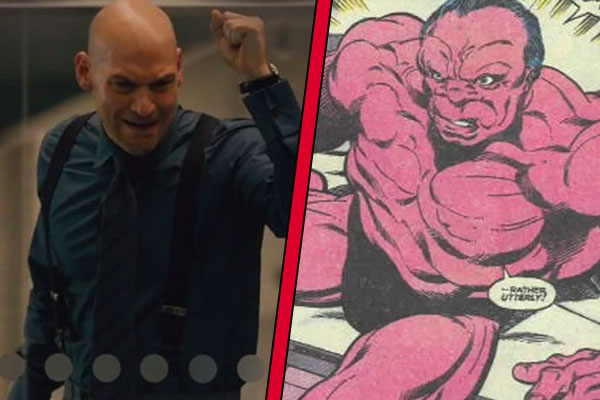
The Comic Version: A high-ranking S.H.I.E.L.D. agent, Pierce€™s most notable exploit was personally helping Nick Fury on subterfuge missions against a robotic force called the Deltites. Beyond that, Pierce was a very minor character in recent years and certainly never a villain. The Better Movie Version: Pierce bears little resemblance to the comics and seems to have been appropriated in name only. Of course, his nondescript comic identity was key to keeping his double-identity a secret before the movie released. Once you get over the disappointment of realizing he was not the Red Skull in disguise, Pierce was actually one of the more compelling villains in the entire MCU. In fact, him being American makes his cause all the more interesting, he€™s not some anti-freedom nut, he just firmly believes his cause is right and will help people in the long run. To have an icon like Robert Redford take on this role only furthered the transformation from an unremarkable SHIELD agent into the mastermind of a HYDRA terror cell. His calm demeanor yet fierce dedication stood out, as did the scope of his plans, especially considering he was both a unpowered, old man and a complete non-entity in the comics.

3. William Stryker (X2)

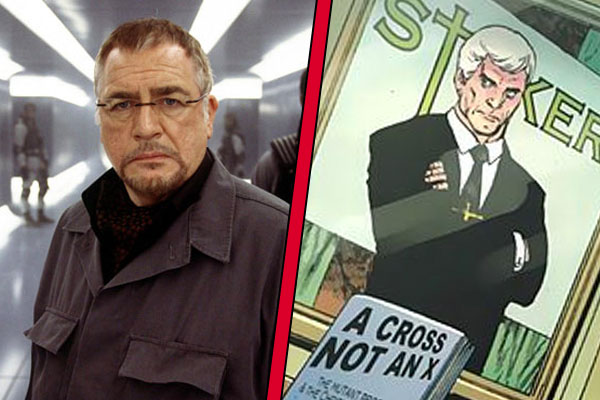
The Comic Version: Though he boasts a military history, William Stryker was prominently a religious fanatic, obsessed with ridding the world of mutants. Believing them to be derived from Satan, he even killed his wife and newborn son when he discovered he was born a mutant. Spotlighted during the €œGod Loves, Man Kills€ arc, he became convinced that he was on a mission from God, and became a televangelist. Privately, he started a paramilitary group called the Purifiers with the purpose of enacting mutant hate crimes. His ultimate plan involved using Professor X€™s powers to kill all mutants, and subsequently tried to execute Shadowcat on live TV. The Better Movie Version: Stryker in the comics was already a well-received character, so his inclusion here speaks to how well crafted the adaptation was. You may recognize his ultimate plan was identical to the one from the comics, complete with Magneto joining the fight against him. The difference was the downplaying of the religious angle and a focus on his military side. He sees mutants as something to be fixed, a disease that can be cured, and refuses to believe otherwise lest he admit his own son is beyond saving. He€™s very practical, acting out of fear for what mutants might do as opposed to believing in a divine quest. All of this serves to make him stand out as a fearsome foe, one unencumbered by a religious fervour as his comic book self was.

2. Aldrich Killian (Iron Man 3)

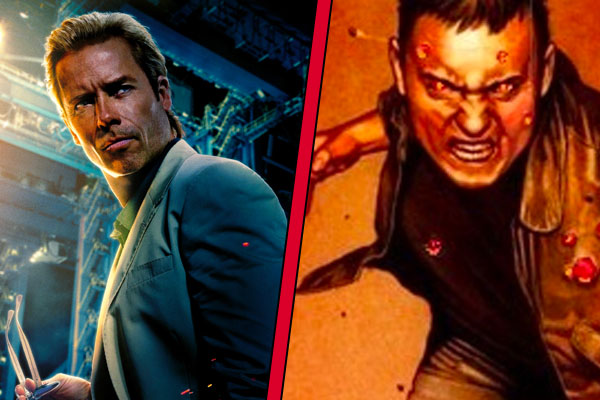
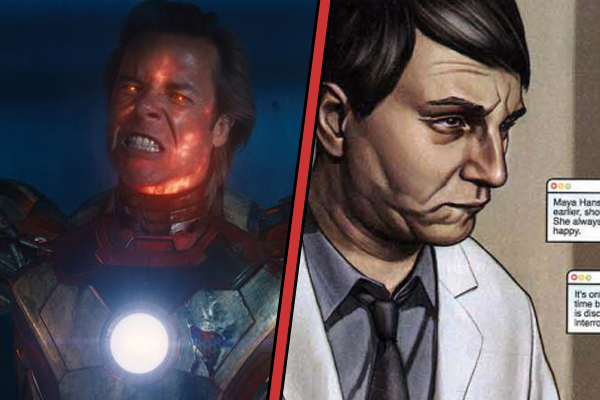
The Comic Version: In an attempt to create a super-soldier, Dr. Aldrich Killian teamed with Maya Hansen and developed Extremis. Successful, he wasted no time in turning around and selling the formula to a terrorist group. After seeing one of their members transform as a result of the serum, he returned to his office and commits suicide, expressing great regret for his actions and kicking off the events of Extremis. The Better Movie Version: The thing to remember here is that this is meant to represent not the best Marvel villains, but the most improved ones from page to screen. Killian went from a footnote in a singular story into a master manipulator complete with unfathomable superpowers. Though Killian himself was a pretty generic villain his fearsome physical presence and Guy Pearce€™s charisma greatly elevate him from a weak-willed scientist to a worthy opponent. Fans may have been disappointed with how The Mandarin was adapted, and while this won't make up for it, it does prove that sometimes the changes that Marvel makes to the source can be for the better.

1. Darren Cross (Ant-Man)

The Comic Version: Darren Cross was the successful founder of Cross Technology Enterprises, however he quickly found himself succumbing to heart problems as a result of the work. Using an experimental pacemaker, he saved his life and accidentally gave himself augmented physical abilities, but the cost was having to routinely go through heart transplants to keep himself alive. He came into conflict with Ant-Man while forcing surgeon Erica Sondheim to use hearts from abducted victims. Ant-Man, also seeking out Sondheim to help his daughter, found himself in the middle of Cross€™ scheme and caused him to burn out his heart during a fight. The Better Movie Version: It was immediately clear that this version of Cross was a step up from the classic incarnation when he shrunk Frank into a goopy mess in the bathroom. He boasted a more sociopathic streak and acted not out of desperation to save his life, but out of greed and pride. His role as Hank Pym€™s former prodigy strengthened his desire to succeed in his inventions and their bond was one of the core relationships in the movie. And while it still reads like an old trick to simply have Cross don a suit like Ant-Man€™s for the climax, its design was incredible and felt much more organic to the film that his monstrous comic book self would have. What did you think of these villains? Did they improve on the comics? Let us know in the comments.

Contributor

Connor loves movies, comics, and TV, and is trying to write for people who feel the same way. When he's not sitting on the couch with his laptop, you might find him lying in his bed with his laptop.