8 Movie Characters Who Suffered The Most From Time Travel
Things are going to get timey-wimey.
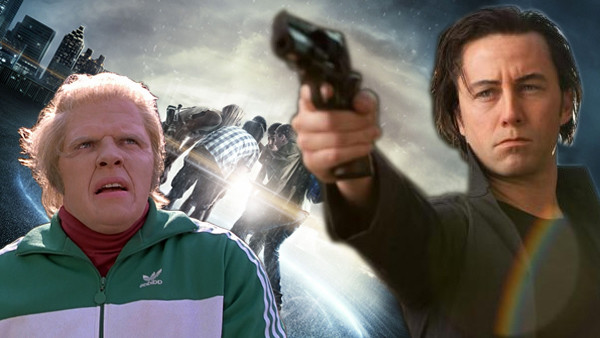
Wouldn't time travel be awesome? You could go back and kill Hitler. Or hang out with your parents when you were young. Or go forward and prove every sci-fi movie ever wrong. All you need is a Delorean/spaceship/complicated mesh of wires and plates and you're away. Awesome, right?
Well, not quite. Not only is time travel only scientifically possible in quantum physics, meaning to do any of this you'd have to split yourself apart at a sub-atomic level, but it is one of the most dangerous science fiction activities this side of ingesting black alien goo. You could step on a butterfly and cause an earthquake in Los Angeles or, even worse, discover that the entirety of existence is pre-determined and you're incapable of altering the flow of time.
Of course, all of this should be pretty obvious to you - it's not like cinema's hid the fact that time travel is a dangerous, scary, life-destroying exercise. To try and make sure you stay here in the present, and celebrate the impending home video release of time travel warning Project Almanac on 15th June, here are the eight people who have suffered most from travelling in time.
Honourable Mention - Quantum Leap
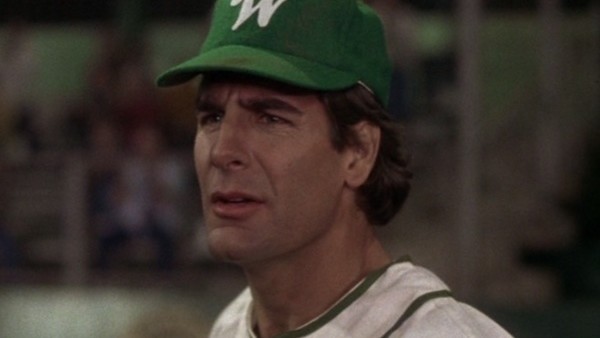
It's not a movie, but you can't talk about characters suffering from travelling in time without having a shout out to Sam Beckett from Quantum Leap. When an experiment goes wrong (isn't that always the case), Sam finds himself jumping constantly through time, thrust into other people's bodies where he proceeds to right the wrongs in their lives in a hope it'll eventually lead him back home.
Did he make it back? No, no he did not. For five seasons and almost 100 episodes Sam and his guide Al worked on returning him to his own body, but in the end Sam discovered his work saving people was more important than his own safety.
8. Joe Either Lives To Lose His Wife Or Kills Himself - Looper

For sociopaths not above murdering strangers, becoming a Looper is a pretty plum job. You occasionally have to kill someone sent back in time (who is thus untraceable) for a load of gold bars and then get to spend the rest of your time partying, dripping drugs into your eyes and almost running over children in slums.
Sounds great. Well, aside from one minor sub-clause in your contract. Eventually the crime organisation behind all the easy kills will want to "close your loop", a fancy term for sending your future version back in time to for you to kill. And if you fail to do that, you get your limbs lopped off until older you gives up. That's a pretty rough retirement plan.
Though that sounds bad, it's only worse for Joe. When they try to close his loop, his future version escapes and attempts to hunt down the leader of the crime syndicate. After a bit of child murder (oh yeah, this film goes shockingly dark), it all culminates in Young Joe killing himself to stop Old Joe (the time travel at play here is so intricate the film even jokes about not being able to explain it). Whether in Joseph Gordon-Levitt or Bruce Willis form, Joe doesn't get a happy ever after.
7. David Cole Fails To Save The World And Dies - 12 Monkeys

Looper wasn't the first time Bruce Willis travelled back in time with some vague plan of changing the future. In Terry Gilliam's 12 Monkeys he's sent back from a post-apocalyptic future to stop the outbreak of a virus that decimated humanity. With only a couple of vague transmissions to go on, when back in the mid-nineties Willis' James Cole begins investigating the Army of the Twelve Monkeys, which keeps him bumping into Brad Pitt's Jeffrey Goines, a man he unwittingly motivates to create the group.
But the big twist is that the films focus on the titular apes is completely misleading. The "Army" is really a group of animal activists who want to release Central Park zoo animals into New York - the person responsible is a corporate guy only tangentially related to Goines. To top things off, Cole is killed trying to stop the outbreak, an event he himself witnessed when he was younger.
The message of 12 Monkeys is an incredibly bleak one. Whereas in the likes of Back To The Future travelling back in time offers the hero the chance to change the future, here it's an inevitable loop - Cole will always die in that airport, catching the eye of his younger self, and humanity will always succumb to the virus. At least the animals got set free.
6. George Taylor Finds Out Humanity Destroyed Itself - Planet Of The Apes

Out of all the films to ever feature time travel, Planet Of The Apes is (shockingly) the most accurate. Time is relative, so if you were to travel away from Earth and return a few years later you'd find everyone back home would have aged much more. That's exactly what happens to Charlton Heston's Taylor on a massive scale in Planet Of The Apes.
During hypersleep he and his crew go so far away from Earth that when they crash on a mysterious planet they've travelled millennia into the future without ageing a day. The world that cynic Taylor winds up in is a perverse reversal of the 1960s Earth he left behind - a society of evolved primates rule the planet and keep mute humans as slaves. His teammates are captured and turned into museum exhibits/lobotomised, while he becomes a fugitive from the ape government.
Of course, as the DVD cover clued you in, the planet is none other than Earth - in the time Taylor was away humanity destroyed itself, leaving only the Statue of Liberty sticking out of the sand. He doesn't take it well - he may have spent the whole film moaning about the fallibility of man, but it's something else to come face-to-face with confirmation of it.
Things only get worse for Taylor in the sequel, Beneath The Planet Of The Apes - he gets captured by psychic mutants and winds up destroying the world with a doomsday device. Of course, that's so ridiculous only really die-hard fans accept it.
5. Biff Tannen Creates More Suffering For Himself - Back To The Future

Marty McFly is the definitive time traveller. He may not have gone that far back, or done so with grand timeline redefining intentions, but the life-preserver wearing, Delorean driving teen is the pop culture-defining figure of all things temporal. He goes through a lot of scrapes across the trilogy - almost wiping himself out of existence, destroying his hometown of Hill Valley and facing death in the Old West - but always comes out of them in pretty good shape.
The same can not be said for Biff Tannen. Oh sure, he's an absolute dick and totally deserving of being knocked down a peg or three, but that doesn't hide the fact that just as the trilogy marks the redemption of the McFly name, it sees the Tannen's decimated. It's not just as a side effect of Marty's travels that he suffers, however. In Back To The Future Part 2, Biff steals the Delorean and travels back from 2015 to 1955 to give his younger self a sports almanac, which sets in motion a series of events that sees not only him, but also his ancestor, disgraced.
Of course, given his previous, bullying actions it's hard to feel too sorry for him. Especially when you consider his complete lack of foresight - to do this requires wiping this version of himself from existence. A deleted scene even showed Biff fading from existence after his return, which a pretty hefty price to pay for success.
4. Sean Fentress Is The Only Person To Lose Out - Source Code
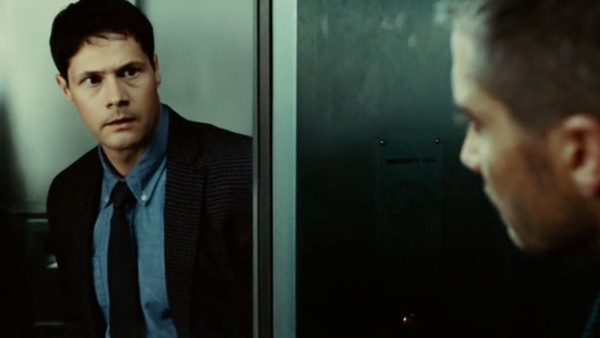
Source Code is basically Quantum Leap On A Train; Jake Gyllenhaal takes over the body of a teacher in the last eight minutes of his life in an attempt to find out who bombed a commuter train. OK, so the repetition and time constraint give it a fresh coat of paint, but director Duncan Jones was aware enough of the parallels he got Scott Bakula to provide an audio cameo.
Like Sam Beckett, Colter Stevens is thrust unwittingly into this weird past and must help the people around him to complete his goal. It all sounds pretty rough, but when you consider that he's actually a comatose war victim on intense life support it's probably the better option. In the end, Colter figures out that Source Code isn't just mentally projecting him back in time; each new run in the machine is actually creating a new parallel universe. So he goes back one last time after identifying the bomber to save everyone and start out a new, safe timeline where he can live happily with Christina, a woman he's gradually fallen for over his many repeats.
What a nice, happy ending. Except, what about Sean Fentress, the guy whose body Colter's taking over? Guess you can't save everyone.
3. David Rips Himself From Existence - Project Almanac
It was only a matter of time before the found footage genre set its eyes on time travel. What better way to allow the audience to really feel like they were jumping from date to date than giving them a front seat to the action?
Outside of the shooting style, the story of Project Almanac is a pretty standard time travel yarn - friends discover the technology, start off using it just to have a good time before things start to mess up - although it does explore one of the oft-cited questions about Back To The Future. If you change something in the past then return to the present, how do you deal with this new timeline you know nothing about? That's a problem that David (eventually) gets to when he fixes a bad romantic encounter and winds up in a relationship he has no knowledge of. But that's not really where David, or his friends, really suffer.
When he starts jumping alone (one of the group's rules is that they always do it as a team) things get muddled and past selves keep meeting, which in this version of the tech leads to the person getting erased from reality. In the end David goes back to his scientist father and sets the timeline right, inadvertently leaving his recorded footage as a memento to his future self.
This is all played as rather happy - in this new version of events David and co. get to experience the thrill of knowing without having to go through the ruinous trials and tribulations of learning - but it doesn't come without a dark (if perhaps not totally intentional) undercurrent; to get to this point, the 'first' versions of the gang have had to be painfully ripped from existence.
2. Skynet Is Causing Its Own Destruction - The Terminator/T2: Judgement Day
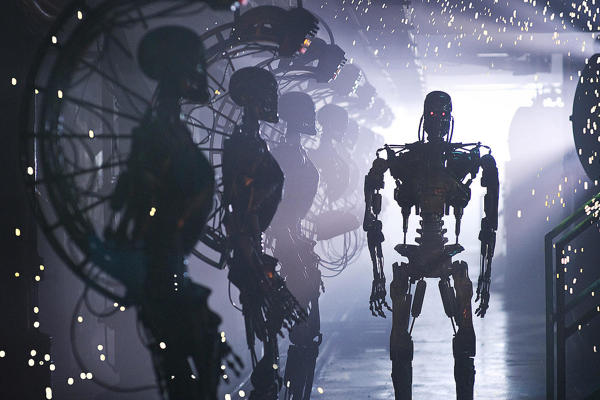
You could argue that everybody suffers from time travel in the Terminator franchise - Sarah Connor is forced from her nice, normal life into a mental asylum, Kyle Reese has to travel to a strange new time and John Connor finds his world turned upside down decades earlier than he needed to - but there's a cogent upside to all of these. Sarah finds meaning in her life, Kyle gets to meet the love of his life and John gets to prepare to lead the human resistance against the machine uprising (well, if you ignore the stupid choice of Rise Of The Machines to make him a drifter).
No, the real loser across the Terminator movies (at least the four that have thus far being released) is Skynet, the evil robot controller of all the Terminators and Hunter Killers. After all, the whole idea of sending the Arnie-looking T-800 back in the first film is motivated by imminent defeat - it's a last ditch effort by Skynet to avert destruction. So every time there's a new Terminator movie, that essentially means Skynet's getting defeated once more in another timeline.
But it gets worse than that in the sequel. Sending the liquid metal T-1000 back affords John and Sarah Connor the ability to actually avert Skynet's creation itself. The sentient machine pretty much engineered its own wiping from reality. Sure, this is all ret-conned away in the later entries, but does anybody count them?
1. Aaron And Abe Ruin Their Friendship (And The Audience's Minds) - Primer

Primer follows two friends, Aaron and Abe, who accidentally create a time machine. It works in a loop, with people travelling back the same amount of time they remain in the machine. At first they use it to make a quick buck on the stock exchange, but as things get out of hand Abe uses a back-up machine to undo all their meddling. However, Aaron has already cottoned onto the this, sending himself further back and taking control of the technology. And then things get really weird.
That's about as simply the film's plot can be explained without having to grapple with the mathematical precision of the presentation, so let's cut right to the end to avoid brain splattering all over your screen. OK, so as the credits roll there are three versions of Aaron (one who was drugged, one who runs away to France and one who disappears elsewhere) and two of Abe (the original and the one who's travelled back in time).
In what has only been five days in unmessed time, this pair have not only had their friendship blown wide open, but their lives have been irreversibly ruined - the duplicates can't go back to their families and even the versions that get to continue living the normal lives have had their perceptions realigned. And it's only going to get more messy - the final scene shows Aaron attempting to built a warehouse size version of the machine with much grander plans.
Which other movie characters suffered from time travel? Share any we missed down in the comments.