8 Reasons X-Men: Apocalypse Doesn't Deserve The Hate
It has been given some pretty harsh reviews, but is that fair?

The most recent X-Men movie has undoubtedly been met with a very mixed reaction over the past couple of weeks. While it hasn’t had the critical mauling that Batman V Superman faced, it is fair to say the reaction has been muted in comparison to the rapturous reception Civil War (deservedly) received when it opened.
The film currently has a 51% rating on Rotten Tomatoes (at the time of writing), and has been met with some very harsh criticisms from fans who seem to feel that the film was a catastrophe. This is really strange because the film might not be perfect but it definitely is not a bad film. In fact, it's probably one of the better entries in the X-Men cinematic universe.
I’m not an X-Men fan. In fact, I’m not even a huge Marvel fan. I grew up reading DC, and can count on one hand the amount of X-Men comics that I own. I also had astonishingly low expectations for Apocalypse, because the trailers looked utterly atrocious.
So perhaps it’s simply a case of ignorance, or maybe it’s because I wasn’t expecting much from Singer’s fourth entry into the X-Men canon. But whatever the reason, I really enjoyed X-Men Apocalypse, and I feel it’s getting a pretty bad rap.
Simply put, it was nowhere near as bad as people are claiming it is, and here's precisely why...
8. The Direction Is Beautiful

Even when Bryan Singer doesn’t make a particularly good film (think Superman Returns or Valkyrie) he always demonstrates himself to be a gifted craftsman. X-Men Apocalypse is no different in this regard. The camera direction is utterly gorgeous, and Singer’s direction of the camera is so clear, that you could probably watch the movie on mute, and explicitly understand the themes and emotions he is trying to portray.
There is always a lot of focus on how the X-Men films present socio-political themes through characterisation and narrative – like in First Class how prejudice against mutants is analogous for prejudice against homosexuals. However, because of this, we are sometimes guilty of overlooking just how much we can actually learn about the art of filmmaking from directors like Singer.
In the case of Apocalypse, the camera moves a lot, but Singer eschews the Bourne style handicam shots that have become increasingly popular in large action set pieces.
Instead, he tries to use angles, actor positioning, camera trickery, and movement to help emphasise the inner motivations and emotions of characters he is focusing on. The film is transparent with its continual emphasis on camera work, which makes it both engaging, and somewhat challenging.
This kind of camera direction is adaptation at its best. Rather than simply regurgitating comic book panels onto the screen, Singer focuses on using his chosen medium to completely reshape and refashion a story, while staying true to its roots.
It is a gorgeous watch I would happily sit through again.
7. It Provides Something Different

Considering just how many comic films are getting released, it’s an enormous challenge for filmmakers to create any point of significant difference. Marvel are known for producing films with a lot of levity and colour, and as a direct response DC have gone out of their way to produce films that are as dark as possible. Deadpool was a major exception to the rule, but as it stands, the formulas are pretty entrenched.
I would argue, however, that Apocalypse manages to provide something unique in an increasingly crowded marketplace. The film has moments of melodrama, much like the DC Universe has tried to imbue into its properties, without being quite as heavy handed. Similarly, it makes sure to have some laughs, but the gags are less frequent, and less central to the overall tone than they are with Marvel.
Additionally, the film adds to an ongoing origin saga, that treads different narrative beats than the typical single film origin we see in so many films. Because Apocalypse is an ensemble cast, that is also a period piece prequel, and also sits in a world that has had a heavily altered timeline, there is nothing that quite compares to it in comic book films at the moment.
Now, does this make it perfect? No way. But given how much material there is at the moment, it’s a real testament to everyone involved that they can still produce something that stands alone, and further adds to a universe that has not always been particularly strong, right in the middle of the superhero bubble.
6. The Plot Holes Are Forgivable

There are plot holes in X-Men Apocalypse, just as there have been in basically every movie ever produced. Inevitably, as time passes, the film will become the subject of many impassioned essays and critiques as more people watch the film and discuss it with other fans. As these discussions continue, more and more plot holes will be revealed, and more and more transgressions will stand out.
But this doesn’t make the film bad. Plot holes aren’t some magic thing that filmmakers missed because they are ignorant (well, okay, sometimes they are). They normally occur because of conscious decisions on behalf of the filmmakers to expedite a narrative, and normally they don’t really affect the overall quality of the work being presented.
From this dummy’s perspective, the major plot holes in Apocalypse are not readily apparent. The minor plot holes (such as questions about what exactly the limitations for each mutant are) stick out pretty readily for sure, but they’re not insultingly stupid, nor are they particularly difficult to ignore if you choose to.
Given what we saw with some of the terrible plotting in Batman V Superman (a film that I did not hate, by the way) the narrative flaws in Apocalypse seem incredibly minor in comparison. Unless you’re really desperate to try and outsmart the movie (in which case, I would just ask, why?) the construction of the plot shouldn’t really upset you at all.
5. Most Of The Set Pieces Are Superb

I’ll start with the bad here. The majority of the final set piece in Apocalypse is not very good. The CGI is weak, and there are moments where it feels like everyone is working on the world’s smallest soundstage. The props look fake, the green screen is transparent, and the actors seem to be struggling to interact with nothing.
However, the final set piece is the exception to the rule. Most of the other set pieces are wonderfully constructed and superbly shot. The sequence where Magneto destroys all the buildings in Auschwitz might be a little bit hammy, but the effect itself is very cathartic and satisfying.
Similarly, the destruction of the world might seem over the top, but there is something perversely enjoyable about seeing landmarks like the Sydney Opera House, that are not often featured in these kinds of sequences, destroyed so effortlessly. Additionally, the Wolverine sequence, was far more fun than I ever anticipated it would be, even though it’s entirely predictable.
Inevitably it goes without saying that the Quicksilver sequence was the high point, as anybody that saw Days of Future Past would expect it to be. It might push the limits of his superpowers to the nth degree, and it might even be a little too cute for its own good at times.
Yet overall, the attention to detail, the charm of the character himself, and the sheer creativity that goes into building the set piece means that only the most jaded viewer wouldn’t crack a smile at some point during the chaos.
4. The Character Balance Is Strong

Ensemble films are notoriously difficult to pull off, and comic book films have often struggled with ensembles. Numerous critics decried Zack Snyder’s inability to make every character in Batman V Superman meaningful, and Joss Whedon has been repeatedly hit with the same criticisms with the Avengers films.
With this in mind, Apocalypse deserves some admiration for the way it incorporates new characters into the fold while making sure that the older characters do not lose their centrality to the plot.
The conflict of ideologies between Professor X and Magneto is still the key narrative driver, but rehashes of their past are thankfully avoided. In a similar way, Apocalypse’s origin is mercifully brief, and while this admittedly leaves a bit of confusion about just what it is exactly he can and can’t do, this confusion is preferable to an overlong origin story.
The film spends a surprising amount of time on the development of fresher characters like Cyclops, Jean Grey, Nightcrawler, and Storm. Now, while all these characters have featured in the earlier films, they haven’t really been the stars. This time around, though, they get pulled very significantly into the fold, and their own individual journeys buffer the central plot without detracting from it.
Helping them out with the heavy lifting are other characters that we have seen in previous films, but whose stature is increased this time around, such as Beast, Rave, and Quicksilver.
It's a clever, and well-crafted strategy that makes the different narrative strands flow together. It’s not perfectly executed, but it’s one of the better attempts at creating an ensemble in the genre to date.
3. The Stakes Are Surprisingly High

One of the inevitable questions an X-Men novice like myself had when the hype machine for Apocalypse really started kicking into gear, was simply, ‘how can we possibly invest in this film’?
Just a couple of months ago we were treated to the wonderful Deadpool, which presented to us the X-Men Universe as it is today – and Apocalypse was noticeably absent. It was thus clear even for clueless viewers like me, whatever threat that Apocalypse presented was short lived.
The film does a remarkably good job of working around this issue by actually making Apocalypse something of a secondary character to the ongoing development of the X-Men characters in this particular incarnation.
Apocalypse is less an all-encompassing threat, as he is a narrative device used to create division and subsequent unity between the mutants. This was probably predictable for aficionados. But for a dummy like me, it was quite surprising and made the stakes more immersive, and significant.
Additionally, the writers actually pull the trigger on a meaningful death in the film, and the death is used as a major motivation for a key character. The character isn’t brought back from the dead, and his loss increases the stakes for another character that desperately needed a better connection to the film.
Given that Marvel and DC struggle to embrace this narrative device, it is nice to see it executed well in another cinematic universe.
2. The Characters Are Well Cast
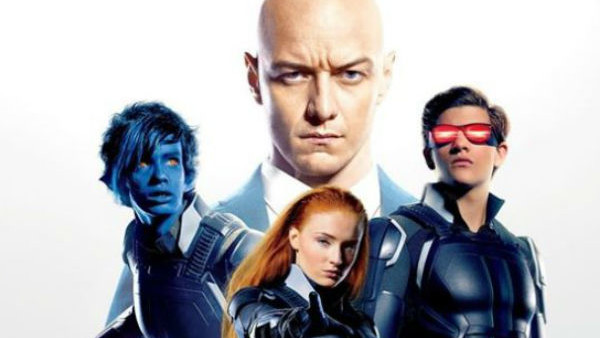
I feel like if there is any point that is going to get me laughed out of the room it’s this one. There have been a lot of complaints about the casting in this film, but I can only assume this displeasure comes primarily from genuine fans of the X-Men.
From where this amateur was sitting, the cast all did a pretty great job. Tye Sheridan was an incredibly bratty and sulky Cyclops, I’ll concede that. And some of the accents were…well they had some interesting moments. Overall, though, the casting seemed pretty strong and made sense given how we have seen these characters in the future.
The young cast had an awful lot of heavy lifting to do, and they were charming and talented enough to pull off their roles believably. Their youthful timidity also acted as a nice counterpoint to the highly entertaining melodrama that James McAvoy and Michael Fassbender were immersing themselves in.
I have also seen a bit of backlash to Oscar Isaac’s portrayal of Apocalypse – primarily because he is supposedly wasted under all the prosthetics and voice enhancements.
But again, I thought he was kind of great. His voice and mannerisms are wonderfully creepy, and Isaac fully committed himself to creating a character that was both completely menacing, and grippingly ludicrous.
Considering some of the villains we have seen this year (looking at you Doomsday and Ajax) he absolutely feels like a memorable villain we’ve been waiting for.
1. It Continues To Help The X-Men Universe Recover From The Really Bad Films
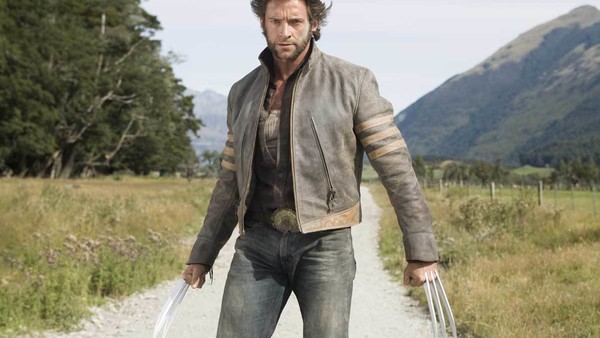
In terms of general pictures that you’ll see at the multiplex this year, Apocalypse is absolutely a decent film. When you compare it to other X-Men films, however, it really stands out as one of the most valuable contributions to the overall universe.
Make no mistake - there have been some very weak entries into the X-Men canon. I never had a lot of time for the first X-Men film, and only really got interested when I saw the second one - which to this day still might be my favourite.
The excitement from that film didn't last, though, because next up was Brett Ratner's attempt at a third entry. Ratner's film was an absolutely abysmal trainwreck that could have derailed the property forever. Those fears weren’t alleviated when the first Wolverine movie was released either. And as for the second Wolverine movie, it’s basically impossible to remember anything even remotely about that snooze fest.
In other words, the whole universe has been a bit of a mixed bag, where half the films are very good, and half the films are uncommonly strong. It's fair to say that Apocalypse is definitely in the latter category and only looks weaker when compared to the very best entries in the catalogue - which are probably some of the finest comic book movies ever made.
Is it natural that it gets held to a higher standard? Sure it is. Is it fair, though? Probably not. Regardless, the film is worth a watch and definitely keeps the franchise on a high note.
Have you seen X-Men: Apocalypse? Share your review reactions below in the comments thread below.