8 Things Nobody Wants To Admit About MCU Spider-Man
There's plenty to love about the new Spider-Man films, but also a lot not to.
It might seem a little weird to think, but it's been four whole years since Tom Holland's Peter Parker made his debut in Captain America: Civil War. It was a huge surprise at the time, with many writing off the prospect of Spider-Man ever crossing over into the MCU as a pipe-dream, one that had about as great a chance as succeeding as an Avengers/X-Men crossover. (Oh, how the times change.)
Since 2016, audiences have seen Holland suit up as Spider-Man on four further occasions, twice in his own Spider-Man movies (Homecoming and Far From Home), and twice again in Avengers: Infinity War and Endgame. For the most part, this latest rendition of the wall-crawler has proven a hit with fans, with Holland - buyoued by talented co-stars Zendaya, Jacob Batalon and Michael Keaton - able to capture the youthful energy of Peter Parker in a way previous actors haven't quite managed.
That being said, there are a few things to find uncomfortable about the newest version of Spider-Man. For all that it's been great seeing him on the big screen with Iron Man, Captain America and co., sacrifices have been made. This isn't the Spidey we all knew and loved, but fans seem content enough to ignore that so long as Peter gets to mix it in the big leagues opposite Marvel's other heroes and villains.
There's so much to genuinely like about this new web-slinger, but there are some seriously problematic elements laying beneath the surface.
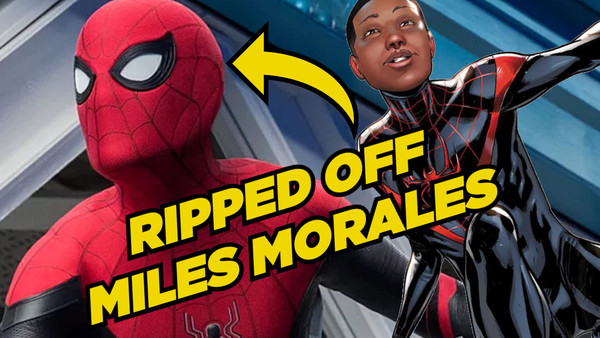
8. Peter's Personality And Story Were Taken Straight From Miles Morales

Okay so, you know that "youthful energy" I mentioned in the introduction? That's not really Peter Parker.
Although he was far from a stick in the mud in the comics, Pete was very much a wallflower in the original Stan Lee-Steve Ditko run, later developing a more outgoing personality when he became a part of the friendship group that comprised Harry Osborn, Mary Jane Watson, Gwen Stacy and Flash Thompson. He might be a bit of a meme these days, but Tobey Maguire has still done the best job of capturing Peter's shy awkwardness in live action.
Which brings me to the MCU's Peter Parker. It's impossible to tell what was going through Marvel and Sony's heads when they were drawing up plans to reboot Spider-Man, but it's more than obvious that Miles Morales must've crossed their minds. How so? Because the new Peter Parker has literally taken SO MUCH from Miles, including his more excitable personality, his relationship with the Avengers (Nick Fury - NOT Tony Stark - gives him his iconic black and red costume in the comics), and even his best friend Ganke, who was changed to become Ned Leeds in the films for... some reason or another.
After two separate film franchises had Peter in the role of Spider-Man, one has to ask why Marvel and Sony didn't just make the MCU's Spidey Miles in the first place. As it stands, this new Peter has taken so much from his comics and it's pretty blatant to see if you've ever read them.
7. He's No Longer A Working Class Hero
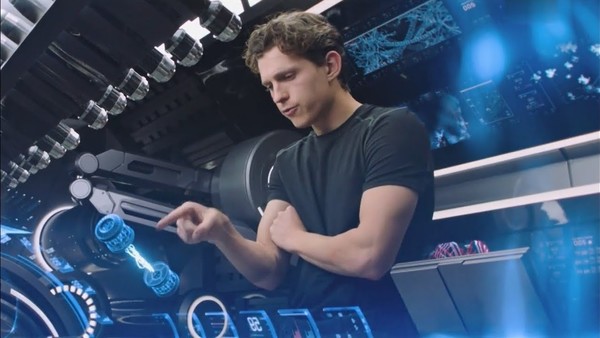
Okay, so, ripping off the backstory and personality of Miles Morales is pretty dreadful. But do you know what else is dreadful? How the MCU has transformed Peter Parker from a working class hero into the successor of a billionaire tech mogul with limitless resources.
Peter Parker has always been from a working class background. He doesn't come from money and his responsibilities as Spidey have always made it difficult for him to get any kind of financial security. He has a heart of gold and constantly tries to help others, and he does so from a fairly precarious position (at least until his later years in the comics), which was all conveyed faithfully in the Sam Raimi films from 2002-2007.
The newer, MCU Spidey films make only cursory attempts at diving into this dynamic however. Civil War shows how he's been struggling to get the right equipment for school and it's clear there isn't much money in the May household - a dynamic further exemplified when Pete's putting on an old suit to go to Liz Toomes' swanky get together - but this is immediately off-set by the fact he's swinging around in millions of dollars worth of equipment, and is clearly being groomed to inherit the mantle of the world's wealthiest superhero.
Peter's status as a working class character is further eroded in Far From Home, where he's granted access to a near limitless array of weapons, gadgets and resources. There's a great message about not rushing into certain responsibilities at a young age, but the film ends with Peter fully assured of his neo-Stark status, fashioning his own suit using Stark tech, and retrieving the E.D.I.T.H. glasses off Beck for his own use.
6. He's Only Been Used As A Vehicle To Process Iron Man's Legacy

Just to qualify everything in this entry: Spider-Man: Homecoming and Far From Home are good comic book films. Within the context of the MCU specifically, they're actually excellent. Both films do a tremendous job with Spidey's villains and there's a conscious effort made to reappraise the legacy of Tony Stark, albeit one that's sometimes at odds with Peter's own journey onscreen.
The high school dynamic is also a stark improvement over Marc Webb's Amazing Spider-Man films. Director Jon Watts applies the spirit of John Hughes' seminal coming of age dramas to Spider-Man, and when it works, it REALLY works.
The issue with Homecoming and Far From Home isn't that they're bad comic book movies, but that they are bad Spider-Man movies. The high school element is the perfect setting for a story dedicated to exploring the web-slinger's mythology, but so far both have spent the majority of their time processing Iron Man's legacy, and how Peter factors into it.
Adrian Toomes is superbly reimagined in Homecoming, played to perfection by Michael Keaton - as is Quentin Beck by Jake Gyllenhaal in the sequel. However, both characters serve near enough the same purpose in detailing how Tony Stark's arrogance did major harm. Both have their own motivations and differences, but their battles with Peter ultimately perform the same function in working through Iron Man's legacy.
5. He Was Introduced In Pretty Much The Worst Way

Captain America: Civil War stands out as one of the best films in the MCU, and while Spidey's appearance in the film is likely still a highlight to many, in retrospect... it sticks out like a sore thumb.
Civil War has so many moving parts in it and by far the most compelling is the battle going on between Steve Rogers and Tony Stark. Christopher Marcus and Stephen McFeely's adaptation of the Mark Millar and Steve McNiven comic is a noticeable upgrade in that it dedicates the time to unpack Tony's feelings, injecting some moral ambiguity into an issue that was decidedly more black and white on paper.
Factor in the relationship between Steve and Bucky, the arrival of Black Panther and Zemo AND the conflict between all the heroes, and you do have to wonder whether or not it was the best place to introduce Spider-Man.
By introducing Spidey as Stark's muse in Civil War, Sony and Marvel effectively locked the character into one path. His costume, his motivations, everything is defined by Iron Man and the Avengers from that point on. There are attempts for Peter to reconcile that responsibility with what he should be doing as a young high schooler in the following features, but that's his ENTIRE arc.
4. He's Given Access To A Fleet Of Killer Drones... And It's Played For Laughs?

A small moment from Far From Home, but one that exemplifies the problems with the MCU's newest Spidey pretty well.
Far From Home is all about Peter Parker dealing with being given a HUGE responsibility. Power, responsibility - it's the bread and butter of Spidey's comics, and while Far From Home does make good on movements to unpack that it's sometimes okay not to accept certain responsibilities if you don't feel capable, Peter still ends the film in possession of the most ridiculous device in Iron Man's arsenal.
As Parker is getting to grips with the device, he uses it to try and intercept a risque photo that makes it look as though he was getting frisky with a femme fatale, which Brad Davis intends to send to MJ. Instead of merely intercepting the message, Peter unwillingly accesses an orbital defence weapon that deploys a killer drone to murder his classmate, and it's all just... sort of... played for banter?
Just think about it for a second. Tony Stark dies and decides to give Peter access to an arsenal large enough to invade a small country, Peter nearly kills a classmate with it, and the whole thing is laughed off like some nervous escape? Peter takes the glasses at the end and so clearly intends to use them again in some capacity, but doesn't the idea of a version of Spider-Man who can kill indiscriminately and at the push of a button not make you feel a tad, y'know... uncomfortable?
It's so macabre, so antithetical to the character's roots, and yet he accepts them as a part of his new identity in the film's conclusion.
3. The Uncle Ben Conundrum

Up until recently, there were a few constants audiences could expect in comic book movies. Every Batman film would feature Thomas and Martha Wayne being murdered in crime alley, leading to an artistic shot of her pearls cascading across the concrete; every hero would agonise over whether or not they should reveal their identity to a loved one, and, when it came to Spider-Man, Uncle Ben simply had to die.
Now, it's important to put all of this into context. The MCU's Parker had recently followed The Amazing Spider-Man series of films that, save for the chemistry shared between leads Andrew Garfield and Emma Stone, were pretty forgettable. On top of the rush to ape the MCU and create a new "Spider-Verse", the reboot was also criticised for retreading familiar ground, showcasing the death of Uncle Ben as Spidey confronts a villain close to his family, as had been the case in 2002's Spider-Man.
It was with these films in mind that Marvel and Sony opted to ignore Uncle Ben completely, but not without cost. Uncle Ben's death is a pivotal moment in Spider-Man's origin; without his famous words - that with great power, must also come great responsibility - or Peter's selfishness resulting in his death, the character loses something important.
This isn't to say that Marvel HAD to show Uncle Ben's death in their rebooted Spider-Man, but rather that it becomes a problem once you consider Peter's age. It makes no sense to gloss over such a tragic and indeed defining moment in the character's life, even if a similar function is performed by Tony Stark, when he's just 16.
Had Marvel opted to depict an older Spider-Man though, one more in line with the version portrayed in, say, Insomniac's 2018 game, then it would've made more sense to have Uncle Ben as a distant presence. As things currently stand though, Ben's absence is just jarring.
2. He's Treated More Like A Commodity Than An Actual Character

This is potentially a little cynical, but when looking at Spider-Man on the big screen now, he definitely seems more like a commodity than a flesh-and-blood character who serves an essential narrative purpose.
At the end of the day, films are meant to make money. Superhero films typify that mindset the most in that they've been at the forefront of popular culture for well over two decades. Batman is valuable IP. The X-Men are valuable IP. And so too is Spider-Man.
I'm not going to pretend that other heroes aren't great sodding moneymaking machines that producers aren't desperate to acquire - they are. But in the context of the MCU, they fulfil a narrative purpose. There's a reason why the Infinity Saga was such an edifying experience for millions of fans across the globe.
When it comes to Spidey though, you do get the sense that he's more an "asset" than an organic component of a given franchise. The Sony/Marvel deal works to each company's mutual benefit; Sony get to have a slice of the MCU pie, and Marvel get to include their most popular character in their flagship franchise. It's a no brainer, but it can also seem disingenuous.
Right now, Sony are doing their damndest to make their own Spider-Man universe, using the character's brand and association with the MCU to bring C-list characters like Morbius and Jackpot to the silver-screen as heroes. Then there's the long-running Spider-Man/Venom crossover, a project bound to get True Believers excited, but one that feels just about as contrived and unnecessary as 2016's Batman V Superman.
1. He's Been Displaced As NYC's Hero

Spider-Man is the quintessential New York hero. Sure, most of Marvel's library have taken a permanent residence in the Big Apple, such as Daredevil, Luke Cage or Iron Fist, but Spidey is definitively the city's super-mascot.
Admittedly, one of the most welcome changes about these new Spider-Man films has been seeing the character really stay close to Queens. It's Peter's home, and the opening montage in Homecoming really does a great job of setting the stage for how Spidey is owning the "friendly neighbourhood" title.
All that said, both Homecoming and Far From Home have uprooted the wall-crawler from his familiar stomping grounds. The former features a class trip to Washington D.C., while the latter sees Peter and co. embark on a school vacation across Europe.
It's pleasant enough seeing Spidey get out of his comfort zone, but without the New York link, something is definitely missing. Far From Home ends on a note that suggests Peter will finally get back to the Big Apple, but for now, it's clear that the next film will have a lot of catching up to do.
--
What do you think of the MCU's Spider-Man? Let us know in the comments below!
Watch Next
Marvel Quiz: How Well Do You ACTUALLY Know Spider-Man?
