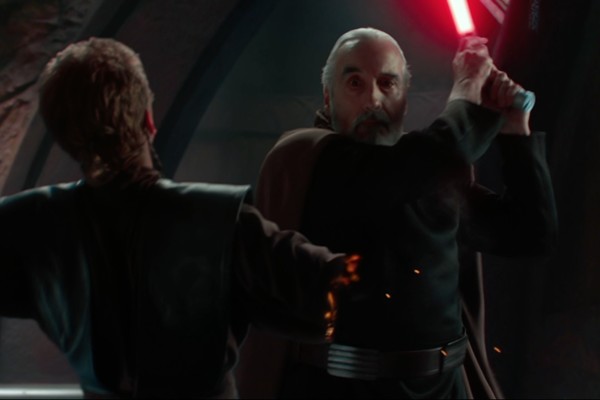
8 Things You Learn From Rewatching Star Wars: Attack Of The Clones

Seriously, was it always this good?

The second installment of George Lucas' Star Wars prequel trilogy was always going to be the toughest assignment, the bridge between the anticipation and excitement of the first Star Wars film in sixteen years and The Revenge of the Sith, where fans knew they would finally get to see Anakin Skywalker become Darth Vader. Attack of the Clones was certainly the film I remembered enjoying least as a kid (the final 45 minutes aside, which everyone agreed were insane), and I was sure that that would be the case again. That's not quite how it transpired, though, and instead I have come away from my prequel rewatch marathon with Attack of the Clones as my unbridled favourite of the three. If anything, I might love it a little too much, so much so that the following eight points are basically seven mini love letters to the film and one slight disagreement. Early reviews of the film in 2002 were promising, but since then critical discourse seems to have slipped away to the point where, as with the Phantom Menace, Attack of the Clones is now seen as a middling film. That's not entirely fair, though, and while there are some undoubted problems with the picture, for the most part it's a thoroughly enjoyable - sometimes masterful - affair. Here's why....


8. The Urban, Noir-ish Element Of The Coruscant Sequence Is Great

The main opening sequence of Attack of the Clones takes place in Coruscant, a city which looks half-Tokyo, half-Blade Runner, and one which presents an urbanised cityscape unlike anything seen before in the Star Wars franchise. One which has always naturally been about grand sweeping space vistas and desolate, arid planets which look perpetually on the brink of a sand storm. Such difference makes for a welcome habitat, and though the actual action that takes place in the city (such as the main speeder chase through the traffic-laden sky, which is impressive in parts but far, far too long) is hit-and-miss, it remains that taken as an environment - a setting - the opening sequence makes for a brilliant introduction to the film. Coruscant's Wookiepedia (an invaluable resource for all things Star Wars) page states that the city's Undercity, the downtown region where the action ends up, is "dangerous and filled with crime...where sunlight never reached", and that element of Film Noir is definitely present in Attack of the Clones, with Obi-Wan going solo, detective-style, to search for clues and potential missing persons. This is all set up in the Coruscant sequence, which uses essential Noir-ish traits - from the Venetian blinds in Padmé's room to Obi-Wan finally thinking f**k it and grabbing a drink at the bar to nurse the weariness his chase has caused - to foreshadow the murky world of betrayal and deceit that Clones will turn into. There's something immensely satisfying about seeing Star Wars drop one of its most revered Jedis into a seedy bar to kill a shot of something, and Anakin's line "Jedi business, go back to your drinks" feels like it could be ripped from any Noir picture of the period were "Jedi" swapped for "Police" or "Detective".

7. The Anakin/Padmé Relationship Still Feels Creepy
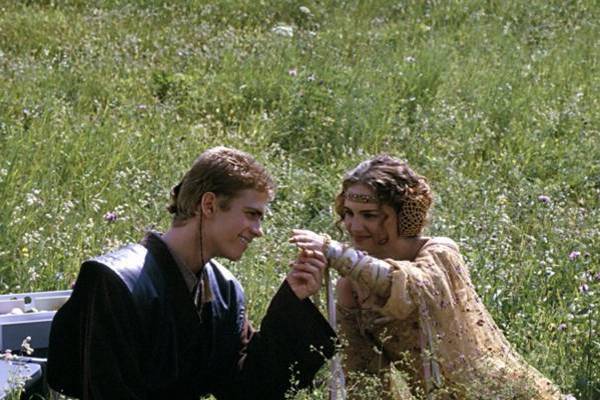
Within two minutes of seeing Padmé for the first time in a decade (and for the first time since he was nine years old) Anakin has remarked how beautiful she is in front of a room full of people, and it's damn awkward. Maybe it's Hayden Christensen's delivery and general smugness (which, in hindsight, kind of works for his character - sometimes), but everything he seems to say is toe-curling, and, as in the Phantom Menace - but for different reasons - his relationship with Natalie Portman's Padmé is just plain strange. It doesn't help that Portman imbues all of her similarly cringeworthy dialogue with a sincere earnestness that makes her young-woman-in-the-throes-of-a-love-affair shtick believable (her speech before they enter the Petranaki Arena is particularly heartfelt), because it only amplifies how misjudged the Anakin side of the relationship feels in comparison. (It also doesn't help that she might be the most exquisitely beautiful woman who ever lived; a Goya painting come to life - but I digress). As we'll see later, when the Anakin/Padmé dynamic is told visually, it can be stunning (not including the part where the lovers literally roll around in the grass, about which the less said is better), but when they are forced to spout Lucas' as-always awful dialogue, it is becomes mawkish and hackneyed.

6. There Are Some Inspired Costume Choices

Mainly worn by Padmé - though Anakin does get a cool Clint Eastwood-style Spaghetti Western Poncho at one point - the costumes of Attack of the Clones are spectacularly on point, with Portman donning a number of what could be iconic outfits. It might not be the first thing you think of when watching a Star Wars picture (or any film for that matter) but costume is as integral to a movie as any other aspect you can think of, especially in a film that has to distinguish so many different characters, races, creeds, associations, and ranks. Topped off with what always seem to be inspired headwear garments, the early parts of the film see Padmé sporting outfits chiefly concerned with concealing her identity, such as her supposed "peasant" wear (above) from when her and Anakin are posing as refugees. Later on, though, as the sexual tension between the couple is upped, her skin becomes more revealed in a series of striking, elegant outfits which nevertheless hint at a slow shedding of cloth as she becomes increasingly comfortable in the Jedi's company. Most notable of these is the pale blue outfit she wears on Tatooine. All of this of course culminates in her Princess Leia costume, one of the prequels' nods to the originals that actually works, inspiring just enough about the first Star Wars trilogy without relying too heavily on its nostalgia factor.

5. Seeing Yoda's First Ever Lightsaber Battle Is Still Exhilarating

Was there a more thrilling sight to a Star Wars fan than seeing Yoda, that tiny green Jedi we were always told was the grand master without having any real proof (at least not in terms of action and swordsmanship), finally get his lightsaber out after three movies and countless near-illiterate monologues? Every kind of answer to that question is No, and the excitement which accompanied his duel with Christopher Lee's Count Dooku was a few levels higher than palpable. And it still is, because rewatching Attack of the Clones proves that the battle was far more than an easy way to get potential naysayers on side, a feat in both choreography and sheer exhilaration. There is an absolute WTFness to the way Yoda danced in the air like a firework knocked off course, and it's set up perfectly by the slow tapping of his cane coming around the corner. It couldn't be him, but it was, and the explosion of green light that followed remains one of the absolute high points in a film that, as we're seeing, is actually chock full of them. Extra points too for the way Yoda summons his miniature lightsaber to his hand, which surely every Jedi can do but for some reason doesn't. It's badass.

4. And Some Of The Lightsabers Are Badass
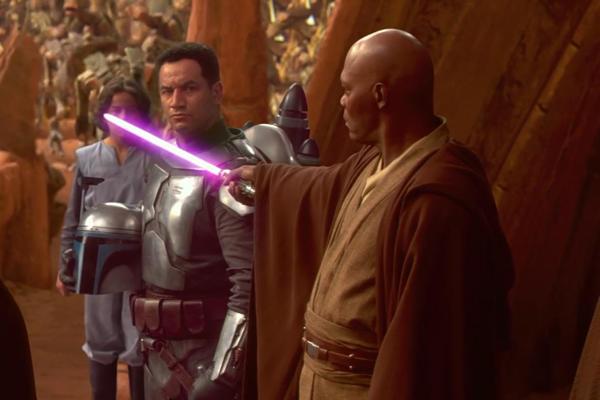
Talking of bad-ass, some of the lightsabers in Attack of the Clones are exactly that. This may not seem like the most important note in the world, but when you consider the bona fide iconography of the lightsaber, when you consider its importance to the actual films and to popular culture in general, the note becomes relevant. While special mention should be made to both Count Dooku's curved lightsaber (the handle resembles a cane) and the aforementioned miniature Yoda version, this section is really about Mace Windu's (Samuel L. Jackson) purple saber. Jackson lobbied hard for his wish (the purple was his idea) to be granted, longing to stand out from the crowd, especially in the climatic battle, which saw numerous Jedi waving their swords of blue and green. Lucas initially declined, but when Jackson made his case about being the highest ranked Jedi bar master Yoda - so surely he should have a different colour! - the director relented, granting the actor one of the most memorable, distinctive characters in the process.

3. The Anakin Foreboding Is Strong

There are some allusions to Anakin's fate in The Phantom Menace, but none as strong as the ones on display here, which are plentiful and even at times obvious. But that's no matter, because they work so well, are so great in their baleful nature, that they can be as on-the-nose as they like - no amount of patent one-liners are going to disrupt the spine-shiver one gets when you remember that, yes, of course, this man will become Darth Vader, and this is how he became him, and oh my god those people he's with have no idea, the horror...the horror... Whether it's lines that seem throwaway out of context - as when Anakin is "joking" with Padmé about the benefits of a dictatorship - or segments more obviously designed to show his increasingly menacing nature - the slaughter of the Tusken raiders, for instance - the Anakin foreshadowing is a constant throughline within Attack of the Clones, a film which was always going to show the embryo of the Anakin/Vader transformation but one which you may be surprised to find does so so well. Best of all the foreboding scenes is one which Anakin isn't even present in, the one where Yoda and the younglings help Obi-Wan solve the riddle of his missing planet. A scene which should feel redundant (and certainly did at the time) instead becomes pivotal: these are the kind of children Anakin will murder in Revenge of the Sith, and you can't help but feel that their one appearance in Clones has nothing to do with answering puzzles and everything to do with setting the scene for the series' most shocking moment - an idea reinforced by the fact that we don't see the younglings again until they are butchered by Anakin in Revenge of the Sith.

2. There Are A Couple Of Best-Shot-In-The-Series Contenders

I mentioned earlier that Anakin and Padmé's relationship is best conveyed visually, and the latter half of Attack of the Clones proves that point emphatically, producing what are, for me at least, some of the best single shots in the entire Star Wars franchise. The final shot of the couple secretly marrying at the Varykino lake retreat in Naboo's lake country is particularly splendorous (as are most of the scenes at the vicinity), echoing The Empire Strikes back as they look out into an uncertain future, Anakin's mechanical hand mirroring that of Luke's as the scene fades out. Most impressive, however, are the one-two of Anakin's shadow half-depicting him as Vader as he and Padmé are silhouetted onto Tatooine rock (which can be partly seen in the introductory picture to this article and in full here) and the shot above, my own personal favourite in the whole of Star Wars, which depicts the doomed nature of the lovers' relationship better than any line of dialogue ever could. As they kiss, their carriage carries them forward and the camera follows slowly as they make their way out into the abyss, passing through what might just be an inverted love heart in the process. Bathed in half-light, it is the moment Anakin and Padmé both realise their love and seal their fate, the shot capturing perfectly the ominous, woebegone nature of the whole beautiful, melancholy enterprise. Stunning.

1. The Last 45 Minutes Is A Franchise Highlight

For pure sustained action, the last 45 minutes of Attack of the Clones can rival any stretch of any blockbuster ever. Starting with Anakin, Obi-Wan and Padmés' near-execution in the Petranaki arena, where they are forced to fight a trio of beasts, and culminating in the aforementioned Yoda/Dooku lightsaber duel, the sequence is a masterpiece of action film making, fitting a sprawling, Mace Windu-led Jedi battle against the droids - which finally gifts us Windu in action, where he beheads Jango Fett for one of the series' greatest kills - and an even bigger battle outside between the Republic's Clone army and the Confederacy's Droid army, in between. It also manages to incorporate some Death Star talk and imagery, as well as presenting Padmé as Leia and Anakin as Luke (he loses his arm in a battle with Dooku) to make one of the most complete, satisfying last passages in modern film memory; an epic sweep across both narrative and pop-culture history that amounts to a dizzying, whirling fantasia of light and sound and a fitting finale to what might be the greatest sequence of perpetual action since the opening of Return of the Jedi.

Contributor
Contributor

No-one I think is in my tree, I mean it must be high or low?