8 Ways 2016 Will Change Movies Forever

More than just the red capes are coming.
We're all too ready to announce something as a seismic shift in cinema. No matter how inane, every new bit of tech or unexpected box office hit gets immediately gets jumped on and trumpeted as something that is going to change how we watch/make/discuss movies forever. Then a couple of years after its impact is at best negligible. Nowhere is this best scene than with inexplicable juggernaut Avatar. When James Cameron's space romance hit after years of hype and offering up more new technology than a whole week of Black Friday, it was instantly called a game changer. Motion capture, 3D, Cameron's bank account - nothing was going to be the same again. Except after the excitement died down it turned out the cinematic landscape had been left mostly unbulldozered, leaving us only with a sense of bemusement that blue cats became the highest grossing film ever made. Warcraft looks kinda like it, I guess, but that's the limit of its influence. But when you look forward over the next twelve months, however, and it looks like we're in for some genuinely big shake ups. From the future of a single franchise to complete redefinitions of what a movie is, here are eight ways film will look very different come the end of 2016.

8. The Budget Glass Ceiling Will Be Smashed

2015 has been a record box office year, with five movies cracking the once-coveted $1 billion barrier (and a late strong contender that is all but guaranteed to do it). Even with some wild predictions it's hard to imagine next year will come close to this record-breaking level, although one thing that will keep climbing is budgets. Regardless of dollar value or potential profits, over the past few decades the actual sums sunk into the biggest movies produced by Hollywood has ballooned to the size of the GDP of several first world countries (not an exaggeration, look it up). It's got to the point where Cleopatra, one of the most notoriously expensive movies ever made, even when adjusted for inflation, barely cracks the top twenty for the highest-budgeted films. The current record holder is Pirates Of The Caribbean: On Stranger Tides at almost $400 million (an eye-watering amount for a movie exactly no one enjoyed), but that's set to be smashed in 2016. Possibly twice. First is Batman V Superman, released in 2016 itself, which will reportedly cost upwards of $420 million, a believable amount given its somewhat protracted production. That's a record that won't be held for long, however, as at the end of the year production begins on Avengers: Infinity War, with a projected budget of $1 billion for the two-parter. It's crazy as it is, but when you consider the general rule that a movie needs to make more than twice its budget to break even (due to advertising costs and the like), these franchises are really pushing their limits.

7. There's Probably Going To Be A Good Video Game Movie
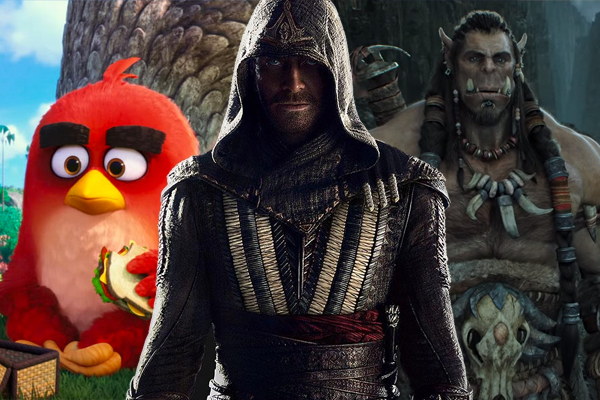
Ah, video game movies. That "genre" of films, based on a medium that has invariably been engineered to either get as many coins out of children or recreate the feeling of watching a movie (yes, I know I'm simplifying), that we're inexplicably confused why they're never any good (clue: cracking gameplay does not have any bearing on a good film). Still, no other broad source has had such a low level of success to the point where something like Resident Evil can actually be called "alright". But that'll probably change in 2016. Not because of any particular film that looks set to buck to trend, but by the sheer law of blockbuster averages; May brings us the animated Angry Birds movie, Warcraft, Duncan Jones attempt to bring WoW's mythos down to two hours, hits a month later and then in December we get Assassin's Creed. Each one boasts an unreasonably high budget and what we've seen of all is certainly above average. Maybe they will all be rubbish, but odds are one'll be OK. Angry Birds' trailer wasn't as bad as many had expected and, while the first look at Warcraft certainly erred on the side of being utterly bonkers, having Zowie Bowie at the helm is a big cause for hope. However, if you're wanting to bet on the movie to break the curse, then you should be piling the money on Assassin's Creed. Not only is there an inherently cinematic story there to be mined, but it's reuniting the key players of this year's astounding Macbeth - director Justin Kurzel along with stars Michael Fassbender and Marion Cotillard - meaning it should be an artful, well-acted action-adventure. Count me in.

6. Peak Superhero Movies

Ah, that delicate question about the superhero bubble bursting. Every new movie, whether a super success or massive dud, gets everyone chattering about how movies starring once-spandexed heroes are on the way out and how audiences will tire and other blah that makes up far too much of comic book movie coverage. While both of the MCU movies this year certainly saw a decrease on box office expectations (and let's not even acknowledge Fant4stic), it feels like that's a little bit alarmist thinking. Next year will be the real test though. We're going to be getting a grand total of seven movies (assuming there's no production-enforced release date changes) from Marvel and DC properties alone - Deadpool, Batman V Superman: Dawn Of Justice, Captain America: Civil War, X-Men: Apocalypse, Suicide Squad, Doctor Strange and Gambit - more than any year previously. With at least two movies in each of the respective MCU, DCEU and X-Men series, we're the closest we've ever been to peak superhero saturation. There's a high level of variety here for sure, with R-ratings, pure fantasy, anti-heroes and more making each project distinguished (heck, the two big hero showdown movies couldn't come across more differently). But that doesn't mean the year still isn't, to use the parlance, the genre's biggest test. 2016 will determine whether audiences will buy in unconditionally to cinematic universe with multiple releases in a single year or (as suggested by the success of Jurassic World and co.) are starting to long for some diversity; a decision that will have a major impact on the box office in the coming years.

5. An Inevitable Oscar First

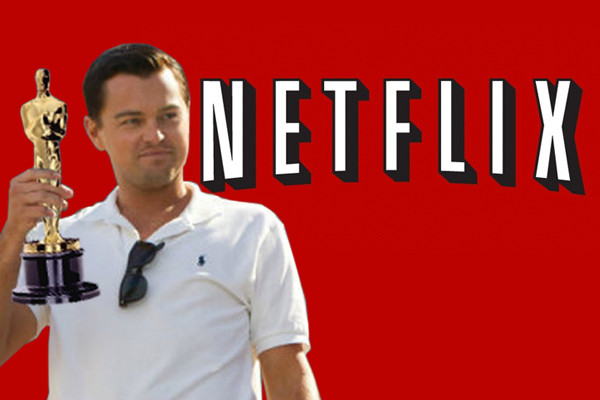
The Oscars are always an essential event on the cinema calendar, but are often dismissed as not mattering because, once you get past the pomp, there's minimal lasting impact. What was the long-standing impact of the success of the brilliant The Artist on cinematic form? But get past the stars weeping at agent-requested moments and overblown musical numbers and there's more to it than giving Meryl Streep some more notice. In recent years alone we've seen indie directors become some of the biggest names of Hollywood and incredible actors have staged impressive comebacks (without the success of Argo you can bet Warner Bros. would have been less excited about getting half of Beniffer as Batman), and as 2016's awards race shapes up it's looking like a classic year. The biggies is Leonardo DiCaprio; one of the finest actors of his generation, and still yet to win an Oscar. By this point it's a cliche; every time he has a new movie out it's the same old comment everyone makes. The thing is, is it much of a surprise? He's typically a leading man, but rarely picks roles with innate Oscar-weight (the only exception was Django Unchained, but for whatever reason Harvey Weinstein chose to back Christoph Waltz for Best Supporting Actor that year instead) and isn't a big fan of the essential promotion. However, he's currently the bookie's favourite for his turn in The Revenant (which has obscene early buzz), although without the majority of people having seen the film it's hard to equate his chances with certainty. And there's also the fact we're in the early stages of the race - at this point last year Michael Keaton looked like a dead lock. But even if things don't go to plan for Leo, then the way things are falling it still looks like we're going to get something influential; Inside Out's inevitable snubbing of Best Picture will cause more animation fallout than Beauty And The Beast, Up and Toy Story 3 combined, while the rapidly risen Alicia Vikander (a future all-time great, surely) should begin fleshing out her Wikipedia awards page.

4. Star Wars Spin-Offs Test Disney's Investment

It's hard to miss with the advertising saturation, but Star Wars: The Force Awakens isn't the only thing that's coming out of Disney's acquisition of Lucasfilm though (you don't pay $4.05 billion to put SuperShadow out of business). Alongside the Episodes, the merchandise and new-continuity comics and books, there's going to be a run of spin-off movies, imaginatively subtitled A Star Wars Story. And, if there's a test for making Star Wars an immortal cinematic staple, rather than a beloved legacy license whose worth lies off the silver screen (which is, let's be honest, what it was becoming post-prequels), this is it. The only feature-length spin-offs in the franchise have been terrible (whether it's the long-maligned Holiday Special or the cheap TV pilot-cum-feature film The Clone Wars). That's been for several reasons (George Lucas' money-grubbing ways is the general throughline), but the key issue is story. The Episodes by their very nature have an individual purpose in the wider narrative, advancing the galaxy's wider plot in important and irreversible ways that give the space fantasy its epicness. The same is true of the best EU material, which was typically set after the movies or well in the past. But now we're reaching beyond that - these new stories are intertwined with what we already know and thus need to craft a strong internal narrative that works within the more important, decade-spanning story. I have the utmost faith in Lucasfilm, Disney and the directors they've picked, but this is the biggest hurdle they have to leap to make Star Wars bigger than it's ever been. Expect a similar issue to loom over the other big 2016 spin-off; Harry Potter prequel Fantastic Beasts And Where To Find Them.

3. The Death Throes Of 3D

Remember when 3D was the next big thing? What a time it was. For about a year after Avatar hit everyone suddenly acted as if being visually resplendent was something a movie could totally lean on in total absence of well-rounded characters or story. Then we all woke up, realised that even if you didn't get a headache 3D looked rubbish, and moved on. Or we could have, if cinemas hadn't already sunk a ridiculous amount on 3D digital projectors (a good £20k more than their standard 2D counterparts) and were desperate to make their money back. Now, there's been the odd "Oh yeah, this might be worth seeing in 3D" flick - Gravity, The Walk - but none have really elevated the form beyond gimmick; Gravity is a special effects masterwork whether it's in IMAX 3D or watched on your phone and The Walk's terrible story is no more palatable with a disorienting extra dimension. Thankfully, due to restrictive screentimes that force you to pay extra twice (once for that surcharge and another for a pair of uncomfortable glasses, because who keeps a pair of them in their jacket pocket just in case), that money's been made back, although getting in the black isn't why 3D should become less of a big deal - the simple fact is that audiences just no longer care. After an overwhelming uptake with Avatar, audience share has steadily decreased to the point where some of the biggest recent movies made the majority of their money from 2D, despite the surcharge. The real nail in the coffin? Cinemas have found a new way to charge more for a similar experience - a blanket ticket surcharge for big movies. Yay?

2. Netflix Becomes A True Cinema Power

OK, so this is technically something that's started in 2015, but it'll be next year where it goes from being a remarkable oddity to accepted occurrence. I speak, of course, of Netflix's bold move into the arena of film distribution. We've already had their first movie, Cary Fukunaga's phenomenal Beasts Of No Nation, and their second, Adam Sandler's The Ridiculous Six (no doubt a tonal opposite to the West African war drama) hits in the coming weeks, but like their foray into in-house TV, things are going to ramp up quickly. 2016 will see the likes of Crouching Tiger, Hidden Dragon II: The Green Legend, Pee-Wee's Big Holiday and Brad Pitt's War Machine released almost exclusively through the service. There's six films announced thus far, although expect that number to grow with subsequent acquisitions. By the end of next year, a movie's main form of distribution (there'll likely be a few, select theatrical releases to fulfil awards-related requirements) being an online streaming service will be somewhat commonplace. And that is massive. Like, redefining over a century of cinema massive. Home video certainly shifted things, creating both competition for cinemas and a new revenue stream for distributors, but this is an entirely new form of distribution and marks the start of a new era not only of movie consumption, but movie-making. With cinemas cut out almost completely and the audience of a once-niche movie expanded masisvely (Beasts Of No Nation was viewed 3 million times in its first few weeks, which translates to a sizeable box office equivalent) there's a lot of creative opportunities here. As a strong cinema advocator, the circumventing by way of streaming isn't the most palatable of ideas, but with such potential quality films on the cards, I'd be lying if I wasn't excited. New New Hollywood, anyone?

1. The Rise Of Virtual Reality

Netflix redefining how movies are distributed may seem like the biggest change to movies in 2016, but that looks positively minor next to how next year may see the very fabric of the medium itself altered. Virtual reality has been an obsession of sci-fi for decades, ever since computers allowed for digital realms to be created, but we're now getting to the point where the fiction part is becoming increasingly flimsy; the Oculus Rift has become a pioneering piece of tech, even if uptake is still in the early stages, while the likes of PlayStation VR and Google Cardboard furthering its affordability and mainstream applications. The go to application of VR thus far has been video games, making FPS' even more FP than ever before and expanding interactivity, but as more developers get on board, so too are the uses, with movies looking like the next big thing. We've already had the first film released explicitly for VR purposes, with a handful more expected before the end of 2015, allowing the watcher to choose where they view a story from, but in the next twelve months it looks to be going from a gimmick to a viable form of entertainment. There's an increased slate of varied products, with 20th Century Fox even signing a deal to release some special Oculus Rift features, and, if 3D has proven anything, Hollywood isn't above pushing a new tech after that initial cash injection (although hopefully this one will stick). Of course, the more interactive element means these experiences will be really toeing the fine line of what "film" is - add a few more points of interaction and you're bordering on a very passive video game - but there's no way to avoid that this won't just revolutionise how we consume films, or the type we're exposed to, but what exactly movies are in the first place. Exciting (and scary) times. How do you think cinema will change in 2016? Share you thoughts down in the comments.

Contributor
Contributor

Film Editor (2014-2016). Loves The Usual Suspects. Hates Transformers 2. Everything else lies somewhere in the middle. Once met the Chuckle Brothers.