8 Ways Modern Blockbusters Trick You Into Ignoring Plot Holes

'So Tony couldn't just summon another suit? 'LOOK, EXPLOSIONS!'

Plot holes are everywhere these days. For modern blockbusters, it's part of the game that storylines be leaky and, at times, even incomprehensible - it goes hand-in-hand with the current 'release date' system of moviemaking, whereby projects now have to meet their release deadline whether they're ready or not. For Disney's Star Wars: The Force Awakens, director JJ Abrams made a request to extend the film's release date deadline of December 2015, for the reason that the movie was going into production without being fully ready - that request was denied. That's the fate of so many blockbusters in production today and, inevitably, going to film a project when that project isn't totally prepared more often than not will result in a plot line that isn't exactly airtight. This has become such a regular occurrence that the filmmakers behind these money-gobbling behemoths have come up with ways to stop you noticing the plot holes. Although, in the deeply-scrutinising age of the internet, no film can truly get away with flaws in the story, modern blockbusters have still cooked up ways to distract you, at least initially, from the narrative nonsense on display. Here are eight such methods...

8. Special Effects

Wowing the audience is a good way to stop those pesky viewers from asking any goddamn questions, and using special effects to do the trick is something all modern blockbusters are guilty of €“ there aren't many that haven't used glistening CGI and cool, fake explosions to paper over the cracks. Thor: The Dark World, for example, has a ravishing opening sequence of beauty and wonder, featuring battling astral realms. In fact, there's such wonder apparent that the rather obvious piece of dumb storytelling is hardly noticeable: If Dark Elf Malekith wants the Aether, and if, in the opening prologue, all he has to do is absorb it, then why does he just stand next to it and gawp at the battlefield instead, allowing enemy forces to win the war? Pacific Rim is another culprit, relying heavily as it does on its impressive design work and special effects to be something entertainingly mindless. So much praise was given to the look of the film that the questions didn't come until later, questions like: With such technology available, why can't the Jaegers be operated remotely? Why was Gipsy Danger's super-effective sword used so late in the game? And why exactly does a Jaeger require two pilots? It's something the film dismisses with a casual, "Don't ask me, science is a mysterious mistress." Which leads us nicely onto...

7. Hey, It's Sci-Fi!

There is a tendency in modern science fiction cinema to brush off suggestions of plot-holery by merely countering that, well, it's sci-fi, and sci-fi can make as much or as little sense as it pleases. After Earth finds animals rapidly evolving within just a thousand years? Science! Pacific Rim's Dr. Geiszler needs Kaiju DNA to enter the Kaiju portal, but doesn't need one leaving it? Science! People on future-Earth have the right amount of technology and know-how to fly to Elysium, but not enough to build one of those healing devices on their home planet? SCIENCE. Inception is one of the biggest recent offenders when it comes to using the "Hey, it's sci-fi" method €“ there are plot holes aplenty in the way Nolan uses and defies his own 'dream level' logic. And, of course, any movie that uses time travel is always problematic. Take Looper, for example €“ that the younger Joe (Joseph Gordon-Levitt) killing himself makes the older Joe (Bruce Willis) die too is a bit shifty, considering they're technically from different dimensions (if older Joe has already lived as younger Joe, then why should he automatically die when the younger Joe from another timeline dies?). But hey, after all, science fiction doesn't have to make sense - the word "fiction" is in there for a reason, so best not to quibble, even when those films disobey their own internal logic. Just don't worry your pretty little head about it.

6. Comedic Hijinks

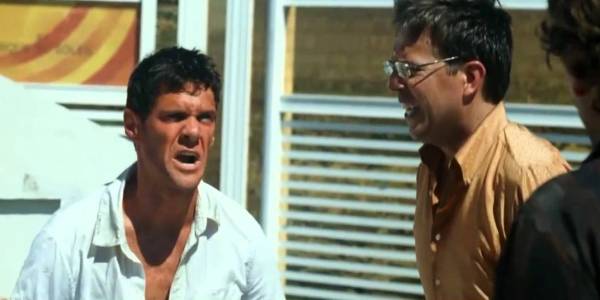
In The Hangover, Zach Galifianakis, Ed Helms and the handsome one from Silver Linings Playbook spend almost the entire movie searching for their friend, Doug (Justin Bartha), after they lose him on an ambitious boys' night out in Vegas. When they eventually discover him, redder than the sun and more dehydrated than a raisin up on their hotel roof, days have passed. Which means Doug just sat there the whole time; as far as he knew, he was going to die upon that roof. And yet we never question it, nor the fact that Doug probably would have died from heat exposure by this point anyway, because all manner of hilariousness has been going on. A number of other modern blockbusters have attempted to get their plot holes off they hook by using comedy to throw you off the scent. Transformers does it with a simple throwaway gag: that the MacGuffin-carrying Sam Witwicky's (Shia LaBeouf) eBay username is 'LadiesMan217' is, obviously, absolutely hilarious, but there's no recognition of the fact that the Decepticons could have just bought the film's MacGuffin from LadiesMan217 rather than hunted him down and tried to kill him for it. Iron Man 3 arguably uses the banterous interplay between Tony Stark and a helpful little kid in its entire second act to make you forget that the one Iron Man suit Tony is dragging round the Tennessee streets like it's the Cross to his Jesus, isn't that important €“ how can it be when he casually summons dozens of the things to help him do battle in the final third?

5. Gaps Between Prequels/Sequels

In continuing franchises, baffling inconsistencies can arise as we jump from film to film. It has been suggested that X-Men Origins: Wolverine is so rubbish that it isn't considered canon, but that doesn't explain Origins' post-credits scene clearly showing Hugh Jackman's man-beast Logan swigging sake in a Japanese bar, obviously leading into James Mangold's Japan-set The Wolverine. So if we are to assume they're both following the same timeline, it makes zero sense that the adamantium bullet that smashes Logan's mind in Origins doesn't seem to be having the same effect in The Wolverine. In Mangold's film, Logan remembers his World War II experiences clear as day, even though in Origins his memory was wiped pre-the 1970s. In a more extreme example, so much about the Star Wars prequels fails to neatly match up with George Lucas' original trilogy. However, with a gap of 16 years between episode six, Return of the Jedi (1983), and episode one, The Phantom Menace (1999), inconsistencies don't register as well when the collective memory is generally hazy. By the time episode three, Revenge of the Sith, rolled around in 2005, there was added scrutiny, especially as it was the Star Wars prequel to finally link up with the original trilogy. And yet, by being the most entertaining of the prequel trilogy, it nonetheless received the most critical acclaim of any Star Wars prequel, down in no small part to the fact that the film was so exhilaratingly action-packed. Speaking of which...

4. Action, Bro

Did Brad Pitt just blow up the plane he was a passenger on in World War Z? And did Indiana Jones really just survive a nuclear blast by hiding in a fridge? Two extreme examples there €“ 'nuking the fridge' and 'grenading the plane' have become our very own 21st century versions of 'jumping the shark' €“ but, upon initial viewing at least, when films go big in the action stakes, they can get away with narrative flaws for a simple reason: by making the action so in-your-face that you don't quite register the storyline's absurdity. The Hunger Games: Catching Fire is a fan of the action distraction method; Plutarch Heavensbee (Philip Seymour Hoffman) is €“ ridiculous plot twist alert! €“ secretly on hero Katniss Everdeen's (Jennifer Lawrence) side throughout the entire film, which is why it makes complete sense that he, as Head Gamekeeper, ups the Hunger Games stakes and tries to kill her really, really hard. Hancock is another guilty party: after we discover Will Smith's super(anti)hero and fellow god-like immortal Mary (Charlize Theron) lose their powers when they're near one another, they inexplicably then use all their powers to have a destructive, citywide fight. Man of Steel is full of more gaping plot holes than most, but by going one up on Hancock by just reducing its city setting literally to rubble, all you can do is sit with your jaw agape and wonder how many people Superman has just killed. No one would be thinking about plot holes after that kind of carnage.

3. Charismatic Villainy

A great, smart villain that matches and does battle with the good guys is all well and good, but modern blockbuster villains have a tendency to be almost TOO smart. Skyfall's Raoul Silva, Star Trek Into Darkness' John Harrison (spoiler alert: it's actually really obviously Kahn), The Dark Knight's Joker and The Avengers' Loki all allow themselves to be caught and imprisoned by their various nemeses, with a despicable ulterior motive in mind. And it goes to plan for every one of them, spectacularly. Clearly, it's a ridiculous conceit - we either have to assume all four got supremely lucky, or that they're a group of amateur Nostradamuses €“ but when the villains are this much fun, it's hard to notice, or even care. In The Dark Knight, it's never explained what happens after The Joker throws Rachel Dawes out of the window at Bruce Wayne's fundraiser €“ maybe he got bored and just went home, to sleep? €“ but Heath Ledger is so charismatic in the role that you're just grateful he crashed the party. As for Loki, the villainous Marvel douchebag played with aplomb by Tom Hiddleston, his powers are used so inconsistently throughout his movie appearances that you have to wonder how smart he really is. In Thor: The Dark World, Loki first shows off his ability to 'shapeshift', a talent he could've used at crucial moments in both The Avengers and the original Thor, but never did. His choice of mind-controlled goons in The Avengers €“ Hawkeye and not Nick Fury? You could have stopped SHIELD right there, you space-Viking idiot €“ is similarly suspicious.

2. Quality Moviemaking

Christopher Nolan's The Dark Knight Rises is full of plot holes, but nobody seemed to notice/mind when they were watching the film due to the fact that it was such a grand, handsomely-mounted epic. Inexplicableness abounds: broken-spined Bruce Wayne gets punched back to health, escapes from a near-inescapable prison with crippling leg and back problems, travels back to Gotham from some unknown desert locale with no money or passport in no time at all, and then infiltrates Gotham unnoticed when it's on lockdown. But who cares about all that - look it's Bane! The Avengers is another great comic book movie of our time, but it's no stranger to plot holes. The final battle for New York is stirring stuff, but how exactly does Iron Man not simply float around space €“ a zero-gravity environment €“ once he's entered the portal and delivered the bomb, instead of falling conveniently back through the portal and down to Earth? The same thinking could obviously also be applied to the likes of Skyfall (Silva's intentional capture plan relies on events entirely out of his control) and MI4 (villain Hendricks doesn't need to be attached to the suitcase he drops tens of storeys at the end of the film). We expect plot holes from our blockbusters now, but genuinely impressive filmmaking is expected less, so when a competent one comes along with one or two threads left dangling, we tend to give them a free pass.

1. More Plot Holes

So you've tried throwing special effects, comedy and copious action at the viewer, and you've tried relying on charismatic villains, above-average filmmaking and the audience's collective short-term memory to keep them docile and happy to accept all manner of ludicrousness. But there's one more thing left to try, Hollywood exec, to stop them questioning the plot holes: more plot holes. The Wolverine is a prime example - we know, for instance, that Logan remembers clearly his WWII experiences, even though his memory was wiped in the previous film. You might be proud of yourself, perhaps even a little smug, for recognising this fact, but staring you right in the face is another glaring plot hole you might not even have clocked: If the whole point of the villain's plan in The Wolverine is to steal Logan's powers, then why does he let Logan free to roam around Japan for almost the entire movie? After all, Yashida has Logan asleep in his house in the first few minutes of the film €“ he's easy pickings, ready to be drained of his immortality instantly.

Contributor
Contributor

Lover of film, writer of words, pretentious beyond belief. Thinks Scorsese and Kubrick are the kings of cinema, but PT Anderson and David Fincher are the dashing young princes. Follow Brogan on twitter if you can take shameless self-promotion: @BroganMorris1