8 Ways The Winter Soldier Could Dominate The Marvel Cinematic Universe

Is the Winter Soldier the most accomplished baddie in the MCU yet?
In the past few years, the Marvel Cinematic Universe has brought forth from comic book lore deliciously likable villains, intensely loathsome villains, and a great deal of rather mediocre villains. The Thor franchise, for example, gave us Loki, a scene-stealing, silver-tongued, angst-ridden antagonist who, in his own way, captured the hearts of fans in The Avengers as much as any Captain America or Iron Man did. For every Loki, though, we€™ve been given numerous Malekiths or Aldrich Killians in recent films: the MCU, it seemed, had lost the sacred, special art of the compelling antagonist - that is, up until last week. Some have called the titular character of the Captain America sequel €˜bland,€™ even €˜boring,€™ due, in fairness, to the brainwashed, robot-assassin-on-a-deadly-mission nature of the Winter Soldier. (This begs the question, however: in what world should €˜robot assassin on a deadly mission€™ ever be classified as boring?) In all seriousness, though, the Winter Soldier could very well be the best antagonist that the MCU has produced so far. Despite his minimal presence, nearly non-existent dialogue, and smudged eyeliner (sorry, that€™s €œblack camouflage war paint€) in the film, the former Bucky Barnes has worlds of character potential stored somewhere in that wiped brain, that metal arm, and that mysterious past. Though his storyline is likely going to be explored in greater depth in later installments, Captain America: The Winter Soldier has given fans plenty to think about in regards to the Winter Soldier's promise as a villain, as a character, and, ultimately, as a tragic hero. Beware of many Captain America: The Winter Soldier spoilers ahead...

8. He€™s The Perfect Foil To The Hero

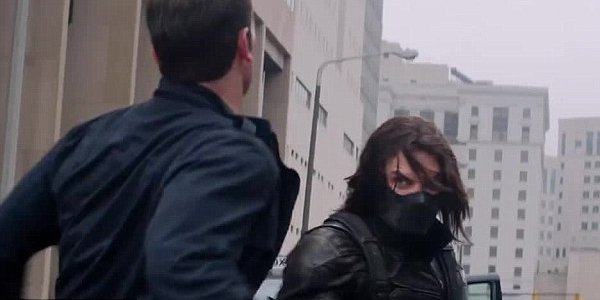
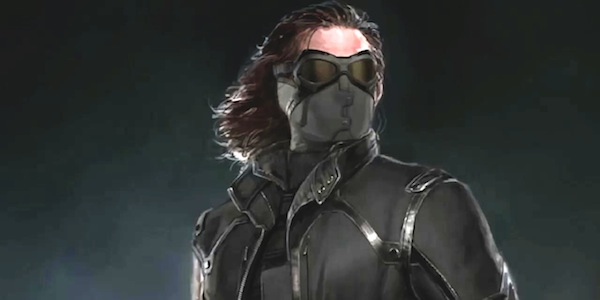
The costumes and looks of both Captain America and the Winter Soldier were in striking contrast throughout the movie€”dark versus light, blond versus black€”a visual nod to the fact that the Winter Soldier is a near-perfect literary foil to Steve Rogers, a quality that makes him a compelling and noteworthy antagonist. A foil in literature is a character, though often similar in nature, who contrasts with the protagonist in some key way to highlight the protagonist€™s important qualities. Both Steve Rogers and Bucky Barnes were treated to a super-soldier serum that enhanced their abilities, and both are men out of time that were created as a tool, one by what became SHIELD and one by HYDRA€”one and the same, in the end. But while one is a €œliving legend,€ the other is a €œghost€; where one represents high ideals and is a pillar of moral fortitude, the other is a brainwashed, highly successful assassin; one is a good man, the other a perfect soldier. Furthermore, Captain America was created as the embodiment of the American ideal, which is closely linked with freedom and liberty. The first time we see the Winter Soldier, the entirety of his face is covered, and he wears a mask nearly throughout the movie. He is mindless, voiceless, nameless, faceless, mechanised with neither will nor memory to his name: he is the polar opposite of what Captain America was meant to represent.

7. His Genuine Cool Factor

If contrasting symbolism isn€™t what makes you giddy for a character in an action movie, though, there€™s always the fact that the Winter Soldier is simply really cool. Where Thor 2 gave us, in the words of Christopher Eccleston, a €œnaughty elf,€ here is a bionic, mind-wiped, super-soldier assassin focused on one thing only: his mission to kill Captain America. One need not look further than the scene where the Winter Soldier literally single-handedly rips out the steering wheel of the heroes€™ car to understand what makes him so undeniably cool: unlike Loki, he doesn€™t need magic, and unlike Iron Man villains, he doesn€™t need a metal suit to hide behind. The Winter Soldier€™s methods are intimate: he is fast, strong, and precise, with remarkable skill in every area of combat. Whether by gadgetry, knife, or a good old machine gun, his methods produce awesome hand-to-hand fight scenes with a mesmerizing choreography. With his obscure and eerie past, his lack of dialogue, and a masked military-esque costume complete with cybernetic arm, he has just the right mix of capable, mysterious, and unsettling that gives the renegade antagonist a scene-stealing cool factor that has been hitherto unbeaten by MCU villains.

6. The Implications Of His Existence On The Universe
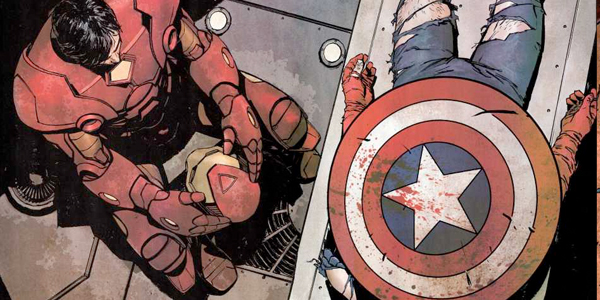
The thing about a movie like Thor 2, and to a lesser extent Iron Man 3, is that they don€™t do much other than act as an extended prologue to the next big Avengers flick; conversely, Cap 2€™s events impacted and expanded the Marvel Universe in an unprecedented way. Similarly, the Winter Soldier€™s existence might have certain implications on the universe (and Marvel rarely teases plots without some larger design at hand) that put him a cut above some other one-shot MCU villains. As most comic book fans know, Bucky Barnes eventually becomes Captain America, after Steve Rogers is shot at the end of the Civil War arc; and Sebastian Stan has stated that he has signed a whopping nine-picture deal with Marvel. This almost necessitates the fact that Bucky will eventually become Captain America€”which begs the question: will Civil War be adapted, or else how exactly is Steve going to be retired? Additionally, with a solo Black Widow movie being rumoured to be in the upcoming works, it€™s not difficult to imagine the Winter Soldier€™s backstory playing a role in Natasha Romanov€™s, as in the comics. Essentially, what Bucky Barnes brings to Marvel€™s antagonist table is future possibility, something that€™s invaluable of a character in a franchise like the MCU.

5. His Believability

MCU movies are not made to be believed, as it were, but some convoluted and confusing villain arcs (looking at you, Iron Man 3) ruin the immersive experience that the more successful films of the franchise give the viewers. The Winter Soldier, despite being as implausible as his counterpart, contributes to the Captain America sequel€™s successful suspension of disbelief. Unlike, for example, Aldrich Killian, the Winter Soldier has pretty clear motivations throughout the movie, as do most brainwashed assassins with no unique thought or opinion, generally. This helps in keeping the film relatively streamlined and uncluttered despite Alexander Pierce€™s SHIELD shenanigans going on around him. In-universe, and with respect to the HYDRA plot, his existence is perfectly believable, smoothly integrated, and even hinted at subtly in the first Captain America movie, instead of something like Malekith and the Aether that seemed to come jarringly out of left-field. The Winter Soldier€™s modus operandi€”down and dirty, machine guns and fistfights galore€”contribute to his believability as well. Despite the relative simplicity of his character€™s motivations and methods, though, there is no way he feels underdeveloped, courtesy of a few excellent moments of humanization and an ending open for further exploration. It seems a simple point, but given some of the MCU€™s bizarrely convoluted villain plots, it€™s a welcome change.

4. His (Actually) Tragic Story

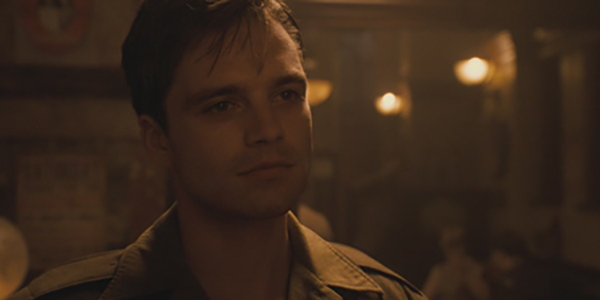
Everyone loves a sympathetic villain; it€™s the mark of a well-rounded antagonist that viewers can feel sorry for him or her at some point. With the Winter Soldier, you almost find yourself feeling sorrier for poor, brainwashed Bucky Barnes than you ever do Steve Rogers. Having your body preserved and experimented upon, your mind wiped, your memories stolen, your name erased, and then being used as an assassination tool for decades sure beats being stood up by Tony Stark on New Year€™s Eve, at the very least. Even Loki, with whom many sympathize on account of his rough family life, doesn€™t have it nearly as bad as the Winter Soldier; and the few scenes where we see the memories and personality of Bucky resurfacing under years of force and abuse are heartrending (obligatory kudos to Sebastian Stan). €œBut I knew him,€ he says miserably before they agonizingly re-wipe his mind to make him forget his former best friend, the first person to recognize him as a person, not as just €œthe asset,€ and to utter his name in years. The Winter Soldier, then, becomes not just an antagonist but a figure reminiscent of classical tragedy: a fallen hero, a victim of fate. Now, tragedy does not necessarily a good villain make, but Bucky€™s story gives the Winter Soldier a certain depth, pathos, and well-roundedness that many recent MCU antagonists€”such as Aldrich Killian, Malekith, or Ivan Vanko€”certainly lacked, that makes viewers want to see more of his story and his ultimate redemption unfold.

3. The Character€™s Darkness

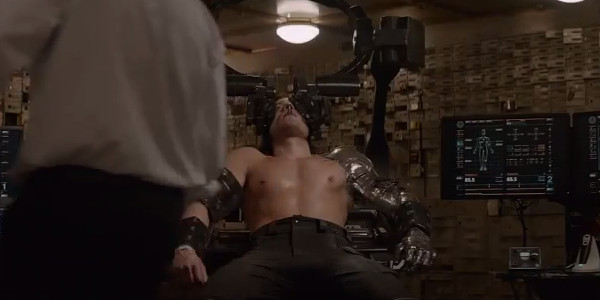
Similarly to the previous point, the Winter Soldier has a certain darkness to him that Marvel hasn€™t seen before in its cinematic universe. Sure, there have been excellent villains like the Red Skull and Loki, but even they, in their bright hues, lack the almost unsettling aura that the Winter Soldier brings onto the screen. To illustrate his disquieting presence, consider the scene in Alexander Pierce€™s home, where the cybernetic assassin sits, bathed in shadow with an eerie blankness in his eyes, silently and mindlessly awaiting his orders. The Winter Soldier€™s origins are more than just sad: they can be downright frightening, especially when looked at from his€”Bucky€™s€”perspective. The way he lashed out like a hurt child during the scene where his bionic arm is being repaired and then blankly and obediently accepts a mouth guard to let his memory be re-wiped in an agonizingly painful procedure--despite having the ability to kill everyone in that room three times over--shows the erratic, mechanized, and tragically terrorized nature of the character that makes his presence and the thought of how he came to be so very unsettling. In a cinematic universe that has largely featured €˜I€™m-going-to-dominate-the-world-but-first-I€™m-going-to-talk-about-it-a-lot€™ villains, the quiet darkness of the Winter Soldier€™s character is, though creepy, a welcome addition to Marvel€™s arsenal of antagonists.

2. His Potential For Character Development
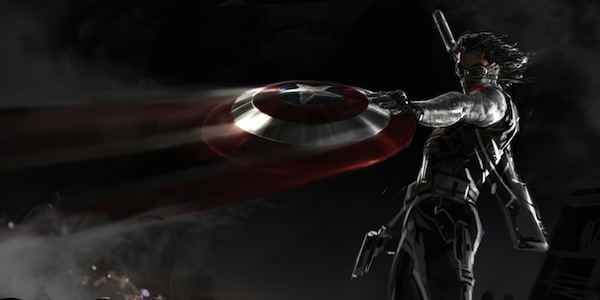
The Winter Soldier€™s three-dimensionality gives him something that only Loki, as a villain, before him had: the potential to grow as a character in further installments. The only truly memorable MCU antagonists can be counted on one hand, and Bucky€™s story, with the character€™s tragic-hero quality, in this film teases his admittance into that prestigious hall. Generally, there are two ways an antagonist can go after their initial villainy: falling into obsolescence or entering the equally murky waters of the redemption arc. With the Winter Soldier, it€™s clear they€™re going the second way, and it has the potential to turn Bucky into one of the MCU€™s most compelling, complex characters. Bucky Barnes was a good guy whose body and mind was used to murder people for decades; thus, we€™ll undoubtedly see, once his memories return, a great deal of that delicious internal conflict, sprinkled with self-loathing and a long struggle for redemption. This layered quality of the Winter Soldier€™s character is what makes him so open to character development; any single one of the aspects of his multifaceted character and arc can be used to further his character growth, a luxury quite a few MCU villains, in their two-dimensionality, cannot afford.

1. The Emotional Weight He Brings To The Hero

Captain America: The Winter Soldier was far more successfully executed than any of Marvel€™s Phase 2 films so far, because, despite huge plot points, the film managed to keep a lot of the action to a more intimate scale. This was due in no small part to the nature of the relationship between Steve Rogers and the Winter Soldier. Steve Rogers isn€™t a typical angst-ridden antihero, and many of his troubles stem from feeling lost and alone in the new century; this is driven home when he uncovers the Winter Soldier€™s identity as being that of the best friend that he thought had died back in the 40s. Throughout the film, hints are given as to the strength of the two men€™s friendship€”including a touching flashback scene - which gives the conflict between Captain America and the Winter Soldier an emotional weight that sets it apart and above previous installments, because it creates a tortured but emotionally satisfying internal struggle for our hero. Even amid shocking images of Helicarriers exploding into skyscrapers, the true heart of the climax was the anguished fistfight between Steve and Bucky: the high-minded Steve is unable to fight back against his friend, forcing even the Winter Soldier to pull his punches. Certainly a departure from Marvel€™s most recent antagonists, and with an emotional edge that even Thor and Loki€™s fractured bond could barely compete with. Despite this barely skirting the realm of cheese, the Winter Soldier€™s limited arc in the film is wrapped up perfectly in his final (pre-credits) scene, when he wordlessly drags Cap€™s nearly lifeless body onto the shore and walks away without even properly remembering the man whose life he saved. Like this article? Let us know in the comments section below.

Contributor

Canadian student. Spends probably an unhealthy amount of time enthusing over musicals, unpopular TV shows, and Harry Potter. Main life goal: to become fluent in Elvish.