9 Confusing Films Where Absolutely Nobody Knew What Was Going On

Conventional plotting is for wusses.
Hollywood so often caters to the lowest common denominator that it's not often we'll emerge from the cinema and be rather unsure of quite what we've just been witness to. Is this exclusively a bad thing? Does a confusing movie automatically mean that a director has failed? Absolutely not: there are plenty of challenging, even nonsensical movies which are superbly acted, gorgeous to look at and fascinating to dissect, even if there's no clear answer to the puzzle and audiences are left to make their own minds up. One can often imagine the directors of such films rubbing their hands with delight at how much they can dismay audiences. Such will apply to many of the movies on this list, whereas others may simply prove to be too impenetrable for some audiences. It's highly subjective, as more casual viewers may have found something like Inception confusing, where more seasoned cinemagoers may have appreciated the intellectual workout. These 10 movies, however, have stirred up fervent debate online ever since being released, as viewers have scrambled to uncover their true meaning, even though there really may not be one. Did we miss any classic cinematic brain-busters? Or were these movies a lot easier to understand than we're letting on? Let us know in the comments!

9. Enemy

After their fantastic pairing in last year's top-notch thriller Prisoners, Jake Gyllenhaal re-teams with director Denis Villeneuve for Enemy, an extremely sinister thriller that plays out like the sort of thing David Lynch would make if he still had an interest in movies. Adam Bell (Gyllenhaal) is a college professor who rents a movie and notice an extra who appears to be his exact double. Adam becomes obsessed with tracking the actor, Anthony St. Claire (Gyllenhaal) down, and when he does, things start to get really messy. The two even share the same scars, and it's not long before the two end up swapping places, with Anthony hooking up with Adam's girlfriend Mary (Mélanie Laurent) and Adam with Anthony's pregnant wife Helen (Sarah Godon). Mary realises she's with the double and freaks out, but when Anthony drives her home, the car crashes and they're both presumably killed. However, when Helen realises she's not with her husband, she asks Adam to stay. Adam now seemingly assumes Anthony's life, but when he goes into the bedroom to talk to Helen, she has transformed into a giant tarantula, and makes a hissing noise, cowering from Adam. He sighs and the movie ends with no further explanation. Theories: The movie is relatively recent, and so Enemy still needs to find its audience, but that hasn't stopped the theories from already spilling out online. What makes the movie so confusing is that it suggests a number of ideas, that Adam and Anthony might be long-lost twins, or that one of them might be imaginary, but then intentionally contradicts these ideas with other plot points, as though to deliberately tie itself in knots. Director Villeneuve has suggested that his own personal interpretation is that the movie is an exploration of the protagonist's subconscious. As for the giant spider at the end? Some have suggested it's a sexual metaphor (the idea of a female spider biting the head off a male lover after mating?), while there's even the belief that the entire movie is a metaphor for some sort of Invasion of the Body Snatchers-esque political subversion.

8. Lost Highway

David Lynch's Mulholland Drive regularly appears on lists like this, so there was an intentional decision made not to include it, especially considering it's really not that confusing, and there is a very simple explanation of the movie's events: the first half is a dream, the second half is the nightmarish reality, with a little surrealism thrown in for good measure. Less talked-about (because, frankly, it's not nearly as good) is Lynch's Lost Highway, which begins with Fred (Bill Pullman) hearing a message over his home intercom which says, "Dick Laurent is dead." Other weird things soon begin to happen: Fred's wife Renee (Patricia Arquette) appears to momentarily have the face of a pale old guy (Robert Blake), and Fred receives a series of strange video tapes recorded in their home, even one of them asleep. After another freaky encounter with the pale guy at a party, Fred finds a tape of himself murdering Renee, and he ends up being sentenced to death for her murder. With headaches and bizarre visions invading his mind, he appears to have transformed into somebody else in his jail cell overnight, a young mechanic called Pete (Balthazar Getty). Pete is freed from jail and soon meets ruthless gangster Mr. Eddy (Robert Loggia), whose real name is Dick Laurent, before embarking on an affair with his mistress, Alice (also Arquette). They plot to rip off her friend Andy, resulting in Andy's death before they steal the money. Soon thereafter, Pete turns back into Fred, and the pale Mystery Man again appears, informing him that Alice is in fact Renee. Fred kidnaps Mr. Eddy and the Mystery Man shoots him, before Fred drives up to his own home and utters into the intercom, "Dick Laurent is dead." As the cops chase Fred and Rammstein blares out, Fred begins to transform inside the car as the movie ends. Theories: According to IMDB, a popular theory is that much of the movie's events are a construct of Fred's mind: he kills Renee and Dick Laurent, and Pete is simply an alternate personality he has forged to cope with the guilt of his actions. The Pete section is basically a fantasy, because Renee/Alice's personality is starkly different, and Pete is a sociable person whereas Fred was the complete opposite. His transformation back into Fred near the end is that repressed material returning, and some believe that the crazy final scene may in fact be Fred being executed on death row, due to him shaking around violently and there being a lot of light emanating from the car. It certainly makes a lot of sense, though in true Lynch style, he is never one to raise the curtain on his own mysteries.

7. The Usual Suspects

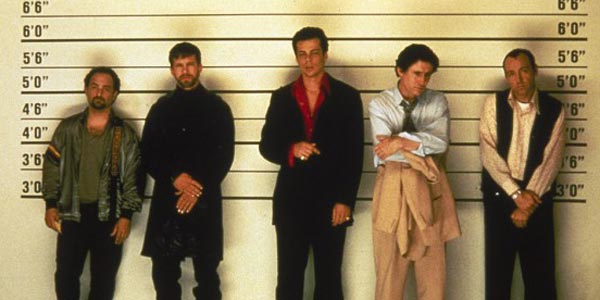
The Usual Suspects is a brilliant thriller movie, known best for its shocking twist ending, in which Keyser Soze is revealed to be none other than Verbal Kint (Kevin Spacey), the cripple who has been improvising a ridiculous story in order to fool Agent Kujan (Chazz Palminteri). The beauty of the movie's absurdly contrived storyline is that it's supposed to be convoluted: as we're spun this improbable tale about a jewel heist to be undertaken by five enterprising criminals, being flung from the past to the present and back again helps layer on the confusion and essentially prevent us from guessing the twist ending that's hiding in plain sight. With drug deals, shadowy men working for Soze, and a number of seeming double-crosses, Kint tells a story that may aggravate audiences in their first viewing, but after the reveal occurs and the film is viewed again, it's fun to just soak in the silly details and enjoy the story Kint/Soze is telling ahead of that jaw-dropping moment. Theories: None needed. Confusion is the total point of the movie, until that fantastic reveal.

6. The Fountain

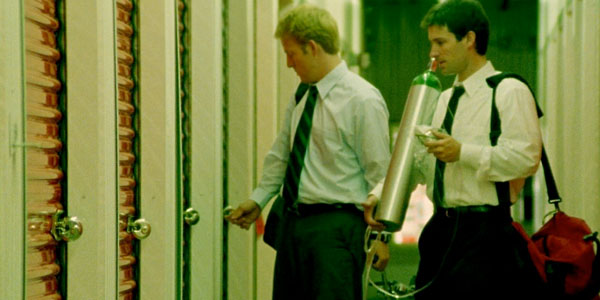
The Fountain tells a love story spanning three different time periods. The central one takes place in the present, as Tom (Hugh Jackman) desperately searches for a cure for his wife Izzi's (Rachel Weisz) brain cancer. During this time, she writes a story set in the 16th century, where Queen Isabella (Weisz) waits for conquistador Tomás Verde to discover the Tree of Life for her in the hope that it will help maintain her throne. After being stabbed, Tomás uses sap from the Tree of Life to cure his wounds, and after drinking it, begins to sprout grass from his body until it consumes him. There is also a future storyline which features Tom as an astronaut in the year 2500, travelling through space in a biosphere towards the cosmic body known as Xibalba. He also carries the Tree of Life with him inside the bubble, as he appears to believe that taking it to Xibalba will result in Izzi's resurrection. However, the tree dies, and it is only when an apparition of Izzi appears before him that he is able to accept his and her death, as Xibalba goes supernova, killing him but resurrecting the tree. A vision of Izzi takes a fruit from the tree, handing it to modern-day Tom, reflecting a conversation Isabella and Tomás had earlier in the movie about Adam and Eve. He then plants the apple in Izzi's grave, hoping that, as Izzi suggested, it might allow her to live on by nourishing the tree with her dead matter. Theories: The main contention surrounding the three stories is whether the past and present stories are true or not, or merely figments of Izzi and Tom's imaginations. One can argue that these stories merely have an allegorical meaning, and serve to reflect how patterns repeat themselves through time, while re-using the same actors and names is merely a handy way to tie it all together in a poetic tableau of sorts, referring to the spiritual idea of reincarnation. Perhaps the only true story is the present one, as Tom tries to cure Izzi, and the others are merely their imaginations trying to cope with the idea of loss and find a way to transcend the fates that await them. Aronofsky himself has remained pretty vague when talking about the film in interviews, though he has asserted that much of what people have read into was consciously placed by him rather than a mere coincidence.

5. Uncle Boonmee Who Can Recall His Past Lives
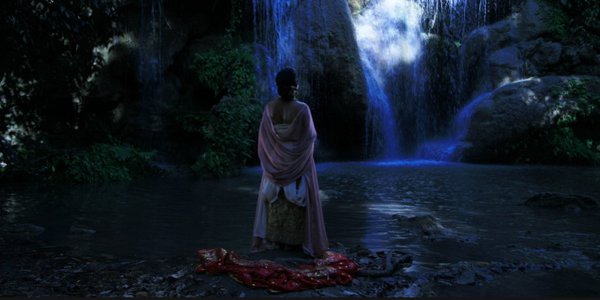
One of the most peculiar Palme d'Or winners in recent memory, Thai movie Uncle Boonmee Who Can Recall His Past Lives is a frustratingly impenetrable effort from Apichatpong Weerasethakul, which much like The Fountain considers the idea of reincarnation. Uncle Boonmee is dying, and during the last days of his life, he gathers his loved ones (including the ghost of his dead wife and his disappeared son, who has been transformed into some sort of red-eyed monkey phantom) to reminisce on his apparent past lives while also considering why he has fallen ill and what awaits him after death. Though most of the movie revolves around heady conversations, there are several surreal interludes, perhaps most memorably when Boonmee reveals his past life as a princess who ends up having sex with a fish (pictured above). While Uncle Boonmee boasts plenty of stunning visuals, it's also a difficult-to-swallow movie for anyone but the most seasoned cineaste prepared to follow its utterly unconventional construction. Weerasethakul makes little attempt to explain the images, instead letting them flow even when they don't appear to make much sense, but at least having the good grace to have a sense of humour about it. Theories: Clearly, the movie is broaching the notion of our universal fear of death, but what about these apparent past lives, which are given practically no context? Given that Uncle Boonmee is part of a larger art project called Primitive, it's possible that to glean more meaning from it, one needs to take in the entire set of photographs and video installations. In short: it's probably too much effort for most people, even ardent supporters of art cinema.

4. Southland Tales

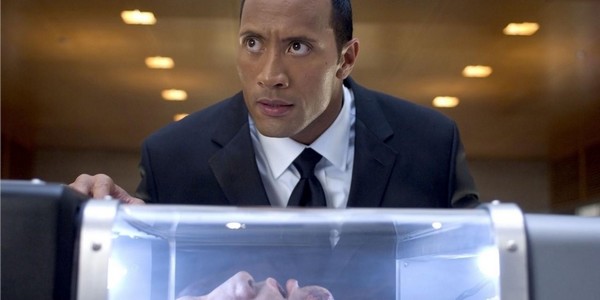
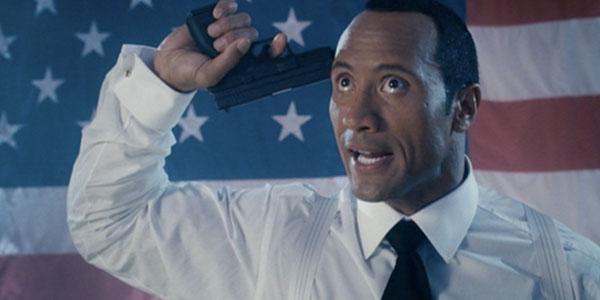
Much like our omission of Mulholland Drive, Donnie Darko has intentionally been left off this list because it's been dissected and picked apart so much that a clear meaning can be taken away from it these days (even if, on a first viewing, it is absolutely mind-melting). Kelly's follow-up feature, the highly anticipated Southland Tales, was infamous for its hugely divisive reception (especially the reviled near-3-hour cut premiered at Cannes), in large part because it didn't seem to make a lick of sense. The movie begins on July 4, 2005 with the Texan cities of Abilene and El Paso being nuked. Months later, the draft is reinstated, war breaks out against numerous Middle Eastern states, oil supplies begin to run out, Republicans win the next election, and the US becomes something of a police state. By 2008, another election looms, while an extremist liberal Neo-Marxist group grows, and Los Angeles is seen as the major voting battleground, in which most of the movie's events take place. The movie's various characters include actor Boxer Santoros (Dwayne Johnson), his lover Krysta Now (Sarah Michelle Gellar), a former porn star who now has her own reality TV show, Baron Von Westphalen (Wallace Shawn), a shady scientist who uses so-called quantum entanglement to create "fluid karma" in order to battle the energy crisis, and Ronald and Roland Taverner (Seann William Scott), two twins enduring an identity crisis of sorts. So, what happens? The Neo-Marxists try to frame Boxer for murder in order to ruin the Republican party, because Boxer's father-in-law is the Republican candidate. Throw in a sex tape, a murder tape, a very weird movie screenplay, glowing hands, injections of fluid karma, a Kevin Smith cameo as an old beardy guy, severed hands, Justin Timberlake singing The Killers' All The Things You€™ve Done, giant zeppelins and you've got the recipe for a crazy movie that's pretty damn difficult to follow. Baron's karma experiments then cause the world's rotation to slow, causing a rip in the space-time continuum, resulting in two Boxers, while it's revealed that Ronald and Roland are in fact duplicates rather than twins. The two touch and cause a catastrophic cosmic event, as the ice cream truck they're in floats up to the sky. The giant zeppelin carrying Krysta and Boxer then gets blown up as the ice cream truck continues to levitate. Theories: It's clear that the movie is a political and social satire first and foremost, what with its evident digs at the Republican party and mass media, but how can we actually make much sense of its absurd narrative? Some critics have suggested that the movie is Kelly's ultimate stand against the very idea of narrativity, and that he intended his movie to be as ridiculously over-the-top and even nonsensical as possible. Frustratingly, the movie begins with Chapter IV, as the first three chapters take place in the graphic novel, Southland Tales: The Prequel Saga, which much like Donnie Darko's The Philosophy of Time Travel, requires audiences to do some homework before being able to properly approach the film. One theory is that the movie is simply an abstract interpretation of the Book of Revelation, a prophecy of the end of the world. Then there are those who believe the movie adheres to the same universal logic as in Donnie Darko, but that's a whole other can of worms...

3. The Holy Mountain

What would a list like this be without an Alejandro Jodorowsky movie? Where to begin, though? The director's famously challenging movie is more about images than ideas, with the movie's opening act containing practically no dialogue at all. An opening section features a man shaving the heads of two blonde women (pictured above), before we move onto the loose central narrative, which features a Christ lookalike teaming up with a limbless dwarf to reach the so-called Holy Mountain, which is essentially a giant, towering metaphor for spiritual enlightenment...or something. As an eventual group of ten, their plan is to reach the top of the mountain and topple the Gods who live there in order to achieve immortality. During their travels, they have a number of peculiar encounters, stuffed to the gills with Jodorowsky's expectedly bizarre imagery. The director himself plays The Alchemist who assembles the group in the first place, while some of the more memorable imagery includes flies covering the protagonist's face, naked boys with green-painted penises, fecal matter being turned into gold and countless theatrical displays of animals both alive and dead. However, the true WTF occurs at the very end of the movie, as the alchemist shouts "Zoom back camera!" while revealing the set of the movie, and exclaiming, "Real life awaits us" as the movie ends. Theories: For many, the movie just makes good background viewing if you've dropped some acid or started toking up, because taking much meaning away from it continues to prove challenging. Many critics have agreed over the years that the movie is best viewed as a satire, an excessive and often incoherent satire, but one nevertheless. This is arguably best apparent when we meet the protagonist's fellow travel companions, who are all questionable individuals to say the least (such as, a weapons baron, a sketchy toy maker, a cosmetics manufacturer and so on). As for the beguiling final scene, it could, perhaps simplistically, reflect a disdain for easy answers and false enlightenment, instead urging viewers to seek their own enlightenment and meaning to their lives, not achieved through illusory means but in the real world. Or maybe it was just a giant middle-finger to the audience. Answers on a postcard, please.

2. Holy Motors

Leos Carax's Holy Motors is a hilarious if highly challenging work of cinema, one which revolves around Denis Lavant's Mr. Oscar, a man who takes on several eccentric roles over the course of the movie, the reason of which is never really explained. Oscar spends much of the movie riding in a limo, and his "job" appears to be to play a host of different characters, often using make-up and amusing get-ups to disguise himself. His characters include an old female beggar, a guy in a motion capture suit getting kinky with his co-star, and easily most memorably, Monsieur Merde, a flower-eating lunatic who ends up kidnapping Eva Mendes. Yes, you read that right. Then Oscar takes on a number of more violent roles, as he has to take down people who look very much like himself. Later on, he meets an old acquaintance, Eva (Kylie Minogue) who appears to work in the same profession as himself, and after a brief song number, she jumps to her death. His final assignment appears to portray him as a family man, but soon enough it becomes clear that his family are chimpanzees. But that's not even the end of it: the limo then ends up back at the Holy Motors garage, and the limos begin talking to each other, worried that they are becoming old relics... Theories: In many ways, it seems like Holy Motors is a satire of contemporary storytelling, particularly in the world of cinema (given how an establishing scene takes place in a cinema), and how we take on different roles throughout our lives. The famously vague Carax meanwhile said in an interview with IndieWire that, "It's trying to have the whole range of human experience in a day." The movie is about life and death, family and love, and though it might take on these ideas in a relatively abstract, some might say messy way, it encapsulates them all, and so the director's comments seem to hold water. As for the talking limos? Who knows...

1. Primer

Shane Carruth's famously difficult time travel flick revolves around two young men who accidentally stumble across the means to travel through time. The movie is noted for its absolute refusal to condescend or patronise its audience, often to the point of frustration, employing heavy use of technical dialogue which will seem esoteric to all but the science graduates among us. Abe (David Sullivan) builds a prototype machine which appears to work successfully, and shows it off to Aaron (Carruth), before they begin to experiment far more ambitiously together. They initially do what anyone else would, by trying to make money off the stock market, before a problem abounds when they realise that Abe's girlfriend's father has somehow used the machine and become comatose as a result. After they agree that time travel is too dangerous, Abe employs the use of a fail safe machine to travel back in time once again and negate everything that has happened so far. Now, this is where things get complicated, as Aaron and Abe begin to argue over the applications of their machine, and Aaron tries to stop Abe from undoing everything. At the end of the movie, despite Abe's attempts to tamper with the machines, Aaron moves forward with creating a time machine that's the size of a warehouse. Theories: Time travel movies can be confusing at even the best of times, and though the central narrative of Primer isn't too difficult to follow, it's the non-spoonfed manner in which the various timelines all play out. It's estimated that there are up to 9 timelines in play throughout the movie, and because the movie's low budget prevents Carruth from showing any doubles on screen together, the movie is made even more complex as a result. There aren't really any theories needed: just a firm explanation of the time travel mechanics, which you can handily find in the below image. It's still something of a headache to get your head around, but it simplifies the central laws of the movie:
Did we miss any classically confusing movies? Let us know in the comments below!

Contributor
Contributor

Stay at home dad who spends as much time teaching his kids the merits of Martin Scorsese as possible (against the missus' wishes). General video game, TV and film nut. Occasional sports fan. Full time loon.