9 Deleted Scenes That Explain Confusing Movie Moments
Prometheus almost made a lot more sense.
Who doesn''t love watching deleted scenes? They present an alternate version of the finished film and give us a view into the filmmaking process. Sure, mostly they're ill-thought out excursions that somehow survived long enough to be shot, but occasionally there'll be an absolute gem you can't quite believe didn't make the grade.
Unless you're Peter Jackson, editing is a time where you take the rough three-hour film that uses all of your material and work it down to something more bladder friendly. When cutting out scenes too unrelated to the overall story, in some cases exorcising entire subplots, there's always a distinct chance what's on the cutting room floor (or, in the age of digital, the recycle bin) has some artistic merit, but as long as the final film works that's a sacrifice worth making.
Sometimes, however, a scene's absence isn't compensated for, to confusing effect. It may be cut, but the effects of its content are still severely felt; audiences don't know the context and can be quick to ridicule or cry plot hole.
In an attempt to alleviate the confusion, today I'm going to look at nine stupid movie moments that with their deleted scene suddenly make perfect sense. We've looked at plot holes before; now it's time for eyebrow raising moments that deleted scenes solve. And what better way to kick off than with one of the dumbest lines in blockbuster history...
9. What Happens To A Toad... - X-Men

As the first entry in the modern superhero genre that has gone on to define blockbuster cinema, people tend to go rather easy X-Men, forgiving its more ridiculous, borderline-camp leanings as a product of a shifting time. It's a good thing too; there's so much to like in the film, evidenced by the series' endurance. However, there is one thing audiences have proven to be less forgiving about.
Do you know what happens to a toad when it's struck by lightning? The same thing that happens to everything else.
With that one line the whole wave of comic book movies could have failed at the first hurdle. Delivered in monotone by Halle Berry, whose turn as Storm didn't connect too well with fans, it's a cringeworthy, eighties-style quip that comes out of nowhere and feels just as out of place. Originally, however, it was something a lot less offensive, just the payoff of a running joke that would have spanned the whole film.
Ray Park's mutant was going to keep making little asides about what happens to a toad in various situations, presumably to unsubtly explain his powers and character, with Storm's barb acting as a final put down. For some reason it didn't make it all the way through production, leaving us with the punchline, but no set-up.
8. The Madness Of King Scar - The Lion King
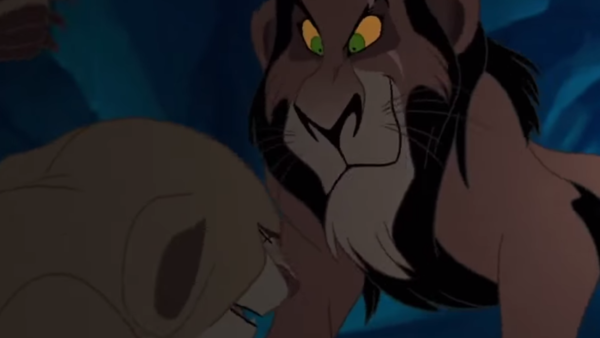
Yes, the Pride Lands were a barren wasteland where nothing would grow or live, but isn't it still a massive coincidence that Nala managed to travel the distance that almost killed a fleeing Simba and wound up at the very same oasis? Well, in a deleted scene (that survives in the stage musical) we get an explanation; on top of being a terrible leader, it turns out Scar is a bit of creep.
Haunted by Mufasa's ghost, he becomes increasingly unhinged and attempts to make Nala his queen, making a literal song and dance about it. It's a toe tapping number that never made it into the final film because even though it's with lions it borders on sexual harassment. After the song Nala is exiled and the film picks up as we all know.
It's an odd scene; the material is questionable and seeing the decimated Pride Lands before Simba feels misguided, but it does explain why Nala's out in the wilderness better, as well as giving an added depth to Scar mistaking Simba for his father later on.
7. I'm A Pig - Who Framed Roger Rabbit
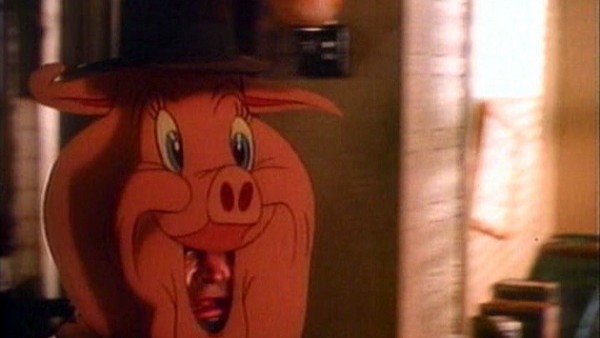
If you thought the world of Roger Rabbit, with toons and humans living in 1940's LA, was a little weird, the revelations made during an extended deleted sequence will send you tripping. In the edit long enough to appear in trailers, the scene has Eddie Valiant kidnapped by the gleefully obvious Judge Doom and taken to Toontown, where the weasels turn into a half toon, half human hybrid by somehow melding a fake pig noggin to his head.
Narratively it serves no real purpose, only reaffirming that Doom and the weasels may not be the good guys (and reminding us of the effect of turpentine), so seeing it cut isn't a travesty. However it shed a lot of light on the rules of the world (as well as clearing up a minor confusion). Taking the tram home, Eddie finds himself forced to sit in the designation toon section, highlighting the racism parallels that provide a peripheral subtext in the final film.
As for the confusing moment this is explaining, we get a reason why Eddie casually goes home and procrastinates in the shower while Roger's life hangs in the balance.
6. The Opening - Prometheus
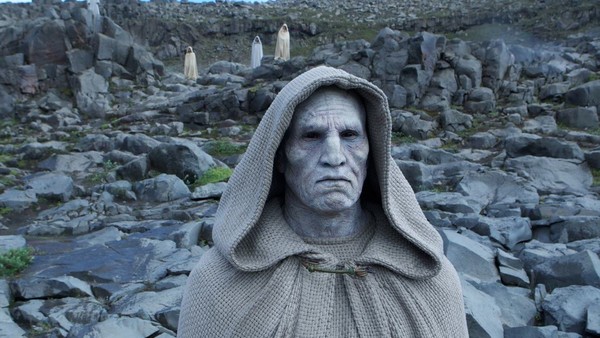
Remember that scene in Prometheus that didn't make sense? Oh wait, that's not specific enough... Remember that scene in Prometheus that made the Engineer's motives confusing? Nope, still not quite there...
Yeah, Ridley Scott's Alien pseudo-prequel got a bit of a bad wrap when it was released, with much of the hate going towards its distanced approach the vague mysteries it threw up. The film isn't as impenetrable as the extreme detractors would have you believe, but getting to a point where its ideas all makes sense certainly takes longer than it should. It's easy to glean that the Engineers created humans and were planning to destroy us with the black goo, which is when the xenomorphs come from, but that only poses more questions.
An alternate opening, however, could have made things work a lot easier. Showing the Engineer from the theatrical version watched by a larger group, it gives his DNA deconstruction a sacrificial edge and sets some of the bigger ideas about our creators in motion twenty minutes before they're first referenced properly in the film. Probably cut in a misguided and unnecessary attempt to give the film ambiguity, a reappearance in a director's cut would improve Prometheus no end.
5. Crushed Trumpet - The Hobbit: An Unexpected Journey

It's hard to conceive that adding more scenes to the first Hobbit movie would improve the film, already bloated by songs and unrealistic action sequences, and yet that's exactly what happens with the Extended Edition.
As with The Lord Of The Rings the new cut is more an experience than a film and in a home cinema context the length is far less of an issue. What's unexpected, however, is how moments that feel like filler or time wasting in the theatrical release suddenly get a sense of purpose. Goblin Town in particular feels like a proper action beat, rather than another distraction in the long journey.
Take what could be dismissed as an incidental shot in cinemas; an ear trumpet we half-recognise as belonging to one of the dwarfs get crushed. Why did that stay in the bloated film? Well, Jackson uses it in the extended edition to give in gets a chance to moan about his lack of hearing. Not only making the shot feel purposeful, it also gives a character with no distinguishing lines otherwise a short moment to shine. Light in tone, this tiny moment is more in keeping with the expected feel of The Hobbit.
4. Where's Miranda Tate? - The Dark Knight Rises

How did Bruce Wayne get back to Gotham? Who cares, the really serious plot hole in The Dark Knight Rises come later.
Look at the run of events. Bruce sneaks into Gotham and uses Selina Kyle to orchestrate his capture. He meets up with Lucius Fox and Miranda Tate, breaking the former out, gets his suit them heads off to save Gordon just before he goes for a chilly dip. And what's the first thing he says to Gordon when he finds him? "Where's Miranda Tate?"
Bruce, I know you're getting used to having visions of the Al Ghuls, but that's a pretty dumb question. Gordon doesn't know Wayne was captured, so it's not like Batman's just trying to cover his tracks (he's become pretty lazy regarding hiding his identity anyway); Bruce is genuinely just asking a question he already knows the answer to.
Christopher Nolan always tries for scripts with an air-tight, in-film logic, so this entire sequence has to have had an original form that made sense, but ended up chopped in the edit. My guess is a sub-plot with Tate was cut, but there were no takes of Fox being sprung not containing Marion Cotillard. Now if only Nolan released his deleted scenes...
3. Lovejoy Vs. Jack - Titanic
The real villain of the Titanic story is man's false sense of indestructibility (and therefore the natural human avatar of that is Bruce Ismay), but that didn't stop James Cameron inserting some tangible, totally fictitious hate figures into his big budget retelling of the disaster.
Billy Zane (who has sadly become less prominent in recent years) is all out despicable as Cal, but often lacking in praise is Lovejoy. As an assistant to Cal, his unquenchable hate of petty commoner Jack is as subtle as anything in the film, but David Warner reins in the script, keeping him always watchable. Sadly, Lovejoy is rather ignominiously thrown aside once the Atlantic waters become an increasing threat, only given a blink and you miss it send off as the ship splits in two.
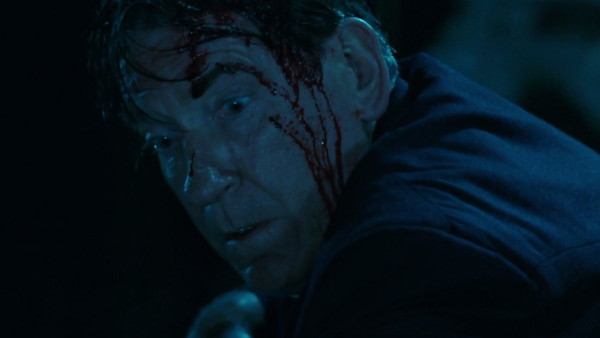
The moment is made jarring by Lovejoy's sudden disheveled and blood stained state, which references back to a deleted confrontation with Jack. Chasing down the young lovers after Cal's gun touting outburst, he shows his potential police history doesn't transfer into fighting ability, ending up knocked out in knee-deep water. Cut for a mixture of showing Jack in a darker light and keeping too much focus on the Heart of the Ocean, the scene is still important in the continuity of the sinking and, if included, makes things run a lot smoother.
2. Bernard And Bernard - Watchmen
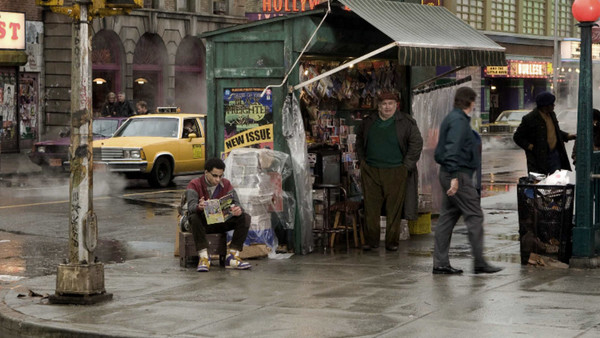
Zack Snyder never seems too concerned with characters or the pesky emotional stakes that get in the way of other directors. This is best showcased in his moments of whole city destruction. Little more can be said about Man Of Steel's 'happy' ending no doubt killing half of Metropolis, but that isn't the teenager-in-a-grown-man's body first foray into destruction of this scale.
Watchmen's denouement has smartest man alive Adrian Veidt attack one or more major cities in an ultimately successful bid to trick global superpowers into ending the Cold War. The groundbreaking graphic novel has a genetically engineered alien teleported to New York, but Snyder went for the less laughable blue explosions of the super-powered Dr Manhattan. While the comics ending is a little sillier (although it doesn't come across that bad in print) it wins out thanks to some genuine emotional stakes.
Throughout the book all the retired-super action has been punctuated with little exchanges between a newspaper stall vendor and his serial freeloader (whose book of choice, Tales Of The Black Freighter, has a cartoon adaptation on some copies of the DVD). It's with these characters (both named Bernard) that we experience the destruction of New York. The film has the character's cameo, only instead of an emotional death it just leads to confusion; "who are these people?" asks everyone who's never read the book.
However, a series of deleted scenes did give the characters their moment, which makes their death (and New York's destruction) feel more relatable in the Ultimate Cut (where they're included).
1. The Unicorn - Blade Runner

As the most commonly available version of Ridley Scott's sci-fi masterpiece is 2007's Final Cut, to many this no longer classes as a deleted scene, but before the 1992's Director's Cut (there's too many versions of the film than is reasonable) it most certainly was. What's so fascinating about this scene is that even though it runs at less than thirty seconds long, it has completely changed the film's plot.
All versions of the Blade Runner end with Harrison Ford's Deckard finding an origami unicorn as he and Rachael are running away together. Left by the mysterious Gaff, in earlier version it's a wholly symbolic deal that no doubt played a large part in audience's mixed (read: confused) reaction at the time. But then the Director's Cut added in a dream sequence.
A normally predictable narrative trope, this one seemingly went full-pretentious; it simply features a unicorn running through an orange-hued forest. And yet it's become a key pillar in the film's reputation-defining argument that Deckard is actually a replicant; Gaff planted the origami unicorn because he's seen Deckard's dreams. Artificial humans that the titular police are employed to hunt down if they go rogue, the notion of Harrison Ford actually playing an android had been around since release (that moment where his eyes go red does it for me), but the unicorn (and Ridley Scott's subsequent comments) really give it some credence.
Know any scenes we missed? As always the comments are the place to go.