Apollo 11: 5 Films You Need To See On Its 50th Anniversary
One small step for movie fans...
“That’s one small step for a man, one giant leap for mankind.”
This phrase, considered one of the most famous phrases in history, came from the first human to step onto another planetary body. On July 20, 1969, Apollo 11 astronauts Neil Armstrong and Buzz Aldrin walked on the surface of the Moon while hundreds of millions of viewers watched their unprecedented feat from Earth.
Some people say that everything was just a hoax, but regardless of what we think, it’s undeniable that the success achieved by NASA that day marked a turning point in our modern culture.
50 years have now passed since the first Moon landing mission and while numerous celebrations around the world are taking place in view of such anniversary, this is a great opportunity to review and enjoy some good films about the event.
But since there are dozens of movies dealing with every detail of the Apollo 11 mission, where do you start?
5. The Saturn V Story
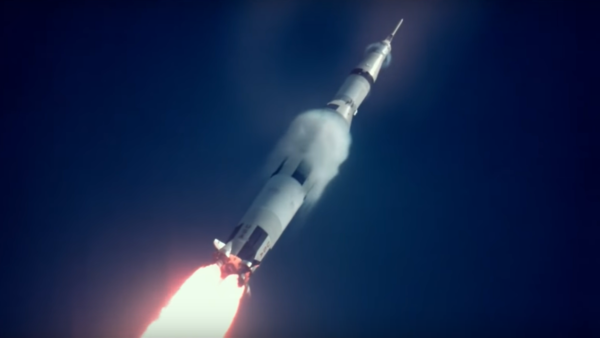
First up comes a documentary that isn’t about the famous men who made the trip to the Moon, but about the monumental machine that took them there. This British documentary, titled The Saturn V Story, was released in 2014 and allows the audience to learn about the main aspects surrounding the most powerful rocket ever flown, the Saturn V.
To do so, The Saturn V Story covers a fair amount of details about the rocket's construction, its role in the conquest of space and its subsequent legacy. The film explains the origin of space rockets after World War II, the birth of NASA and the beginning of the space race between the United States and the Soviet Union.
The Saturn V Story is full of many technical details about the rocket's design, showing from early, unviable concepts of the vehicle to the repeated failures that real models presented. A lot of emphasis is put on the fact that taking humans to the Moon required the effort of multiple companies and thousands of scientists over several decades.
The documentary features a considerable amount of footage from the different space missions of the 1960s, in addition to interviews with scholars of the subject. The Saturn V Story is definitely worth seeing, as it prepares you to better understand the relevance that the mighty Saturn V will have in the movies of the following points.
4. Hidden Figures

Based on both a homonymous book and a true story, Hidden Figures focuses on a little-known side of the effort behind the Space Race in the mid-20th century. The film narrates the life and achievements of a few people who, although mistreated by history, played a crucial role in the development of space exploration.
During the 1960s, American society still had serious problems to grant equal opportunities to women and black people. And even when NASA had some of the most brilliant minds in the world, sexism and racism also had their place within the space agency.
Amid these conditions, three African-American women faced prejudice while working for NASA in different fields. But they soon demonstrated that their knowledge and skills were indispensable for the United States to send humans into space and beyond.
The film features great performances by stars such as Octavia Spencer and Kevin Costner. While the script has well-crafted dialogues, its photography is impeccable and the music - which includes the legendary Hans Zimmer among its composers - is appropriate for every scene. All these factors make Hidden Figures a solid movie, with a powerful plot of its own that pleased both the general audience and the specialized critics.
3. From The Earth To The Moon
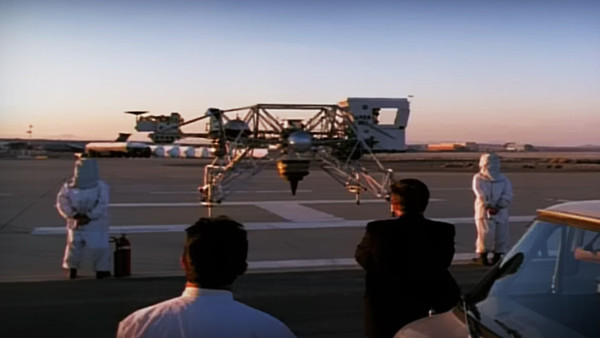
Do you prefer to review the journey made by the pioneers of space exploration in the form of a series instead? Then, From The Earth To The Moon is the right option for you. This mini-series, produced by HBO and released in 1998, consists of 12 parts of one hour each.
In such chapters, the series recounts from different perspectives all the milestones accomplished during NASA's three programs to reach the Moon: Mercury, Gemini and Apollo. Except for the last one, all the other chapters begin with some introductory words from Tom Hanks, who was the executive producer of the series.
Interestingly, From The Earth To The Moon tries to differentiate itself by focusing on details about the Space Race that other documentaries overlook. At the same time, it covers historical facts with great accuracy, depicting them just as what really happened.
But anyway, if you think that spending half a day looking at space missions is too much, you can go straight to the sixth chapter. Such part deals specifically with the achievement of Apollo 11, alternating between scenes of an interview with the three astronauts of the mission and a recreation of the actual Moon landing.
As usual in the series, this chapter shows details largely unknown to most people. For example, we can see the moment in which Neil Armstrong plans what he is going to say when he steps on the Moon. You can also see the subtle tension that existed between Neil and Buzz Aldrin on which of the two was going to be the first to go out of the lunar module.
2. First Man
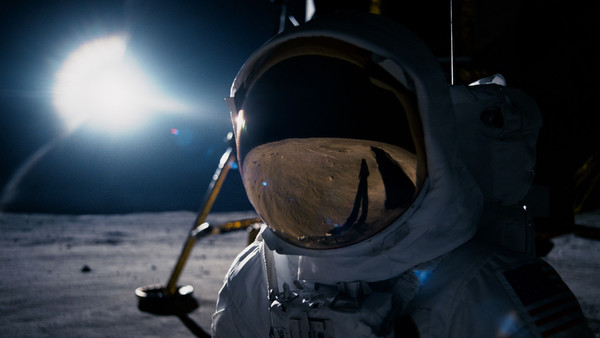
If we must highlight a movie that perfectly describes the experience of being the first person to walk on the Moon, then such mention goes to First Man. This biographical film, released in October of last year, narrates NASA's attempt to send the first humans to the Moon, seen from the eyes of a maximum exponent of the Space Race: Neil Armstrong.
Far from being a blockbuster full of large-scale action, First Man offers a rather intimate story. It depicts Neil's struggle to keep his personal life on par with his high-risk job. In 141 minutes of epic scenes and a very emotional plot, the film describes a little-known but fundamental fact behind the story we all know. It shows us that Neil's loved ones, especially those he lost but never forgot, were actually the driving force that determined him to fly all the way up to the Moon.
However, First Man does display unique visual effects when it comes to recreating the space flights that Armstrong made during his career as a pilot and astronaut. Such scenes show a frenetic action, reminding you all the time that an extraordinary ability is required to make right, life-saving decisions in space. Due to its technical level, the film won an Academy Award for Best Visual Effects.
And last but not least, it must be said that the performances of the main cast are on-point, particularly those of Ryan Gosling and Corey Stoll (who played Neil Armstrong and Buzz Aldrin, respectively).
1. Apollo 11
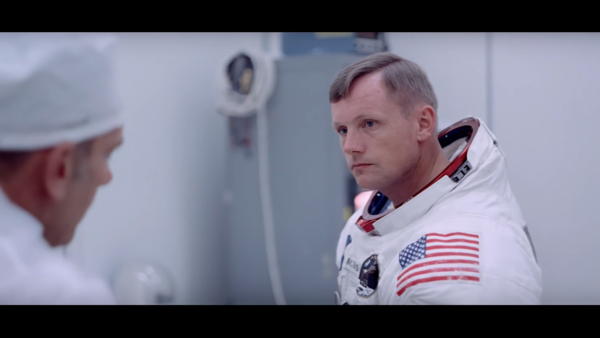
Yes, First Man could be the best approach to what it really felt to be the first to step onto another world. But the ultimate experience of witnessing such an event from down here on Earth, in full detail, is offered to us by a documentary called Apollo 11. It is the result of a joint effort between NASA, the National Archives and Records Administration (NARA) and CNN, who entrusted director Todd Douglas Miller with the task of producing the film.
This year, the production team finally presented a documentary devoid of narration, interviews or CGI recreations of the event. The entire film is composed only of footage filmed during the Apollo 11 mission, both on Earth and on the Moon. The most remarkable things about this film are, on the one hand, the amount of never-seen-before footage it displays. We have the opportunity to see previously unreleased recordings of the space journey and the incessant work in the Mission Control Center.
On the other hand, all the recordings were restored to obtain a high, cinematographic quality of image and sound, fairly superior to what could be seen on television at the time. This is in turn enhanced by an excellent soundtrack that provides emotion, suspense, and relief just when the film needs it.
There are several moments in the movie, such as the takeoff of the Saturn V rocket and the moon landing, which will certainly give you goosebumps. In the words of the film critic Kevin Maher: “Find this film now. Find it on the biggest possible screen, accompanied by the best, loudest sound. And sit back and marvel.”