Avengers: Age Of Ultron - 10 Previous Mistakes It Must Avoid

Do something with Hawkeye! ...Please?

The Avengers is the superhero movie every other comic book film aspires to be. After receiving an overwhelmingly positive critical reception worldwide and numerous nominations for achievements in visual effects, The Avengers has broken a number of box office records which led to it eventually becoming the third-highest grossing film of all time, making over $1.5 billion worldwide. Pretty impressive, right? The pressure is on then for the highly anticipated sequel, Avengers: Age Of Ultron. It's basically guaranteed that the follow up will be the third Marvel film to hit the $1 billion mark in ticket sales if another release like Guardians of the Galaxy doesn't beat it to the punch, but this is no guarantee of quality. Many sequels fall victim to the inevitable pitfalls that directors face when trying to match the success of the original; Darker does not mean better, recasting is rarely a good idea and introducing too many new characters can spell disaster. However, the worst offence any returning director can commit is simply to rehash the plot of the original movie in a bid to replicate its popularity. Avengers: Age of Ultron must stand on it's own two feet if it is to surpass the benchmark set by The Avengers. Saying that though, it would be foolish of Joss Whedon to completely ignore the first film. Despite the adoring consensus held by the majority of fans, The Avengers was not the perfect movie. It would be wise of Whedon to look back at his most successful work to date and pick apart the flaws, so that they do not reoccur in Avengers: Age of Ultron. Do it for the fanboys Joss! You've still got plenty of time before May 1st 2015 rolls round. Will Avengers: Age of Ultron avoid the mistakes of its predecessor? Remember to let me know what you think in the comments section below!

10. Don't Alienate Casual Audiences

Regardless of your thoughts on comic book movies, the planning and preparation behind Marvel's cinematic universe is certainly impressive. Ten years ago, who could have predicted how successful Marvel Studios has now become? As both a business model and a creative process, their unique release schedule has helped make Marvel one of the most successful brands on the planet and the machine shows no sign of slowing down. With movies currently planned for release up until 2028, it's no wonder that rival publisher DC are keen to emulate Marvel's business plan, as it's undoubtedly one of the big cinematic success stories of the past decade. Fans also get a kick out of seeing the movies interconnect with cameo appearances and hidden easter eggs which are usually included for the most hardcore enthusiasts to find. Entire web sites are dedicated just to spotting these hidden secrets and that works well because it doesn't have any impact on the casual viewers enjoyment of the movie. However, the flip side of building such an intricately linked universe is that audiences who have not seen all of the other Marvel films or read the comics may become lost regarding some specific plot points. This was never a huge issue in Avengers Assemble, but there were definitely some scenes which may have baffled casual audiences, particularly those regarding the Tesseract which was a huge part of the first Captain America film. Loki's Asgardian origins may have also been confusing for anyone not familiar with the Thor movie and these are the kind of key plot points which Whedon will need to make clearer in Avengers: Age of Ultron if he wants to appeal to as wide an audience as possible. As more and more Marvel films are released, the temptation to rely on the audiences prior knowledge gained from other movies will be strong, but as long as key details are explained in a natural way, then this should not be a problem. Just no heavy exposition please!

9. Clearly Define Each Character's Powers
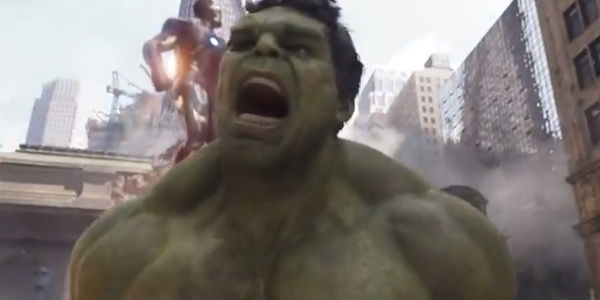
Whether you agree with it or not, many fans had a huge issue with how the Hulk's powers were portrayed in the final battle of Avengers Assemble. Throughout the film, it's established that Bruce Banner struggles to control the monster within and can transform at a moments notice if put through too much stress. On the S.H.I.E.L.D. Helicarrier, Banner becomes the Hulk after the team are attacked by Loki's forces, despite his best efforts to calm down and prevent the transformation. This is where things become confusing. In the final act, Banner arrives to lend the Avengers a hand defending New York City against the invading alien forces. As one of the Chitauri approach, Captain America tells Banner that now would be a good time to get angry and in response, Banner reveals that he's always angry and then somehow triggers the transformation with complete control, flying in the face of everything we've learnt about his abilities up to that point. Audiences also took issue with how the Hulk's rage suddenly seemed to focus solely on the enemy, keeping bystanders and his fellow team mates safe from harm... aside from Thor, of course. There are possible explanations for this new found control, key among them being that Banner has finally accepted his condition in light of being accepted by his fellow Avengers and therefore has learnt to embrace the anger within, However, the point is, even if this can be explained away, too many people left the movie confused regarding this key development and Whedon needs to ensure that the abilities of the heroes in Avengers: Age of Ultron are more clearly defined. New villain Ultron has a huge variety of powers at his disposal in the comics and these would need to be limited in order to not become too confusing. Then there's the Scarlet Witch. As the newest addition to the team, all eyes will be on Wanda Maximoff and her abilities are difficult to define at the best of times. Originally in the comics, the Scarlet Witch could create 'hexes' which altered probability, causing bad luck for her enemies. Over time, Maximoff gained more control over her powers until eventually, it was revealed that she could actually manipulate something called 'chaos magic', which enables her to rewrite the laws of the universe. Good luck with that one, Whedon...

8. Don't Sideline The Female Characters

Avengers Assemble featured a strong performance from Scarlett Johansson who was excellent in the role of the Black Widow. Some of the movies most memorable scenes heavily featured the former Russian spy, including the chair fight and her interrogation of Loki. Scarlett Johansson is a beautiful actress, but the character of Natasha Romanoff was not portrayed as just eye candy or part of a romantic sub-plot. While this is certainly progress for the male dominated world of comic book movies, the majority of the cast members were still men, aside from Cobie Smulders who appeared in a small supporting role as S.H.I.E.L.D. agent Maria Hill. Avengers: Age of Ultron appears to be addressing this issue by casting a number of actresses for parts in the film, including Hayley Atwell as Peggy Carter and Elisabeth Olsen as the Scarlet Witch, who is reported to appear as a key role. Korean actress Claudia Kim has also been cast in an unspecified part which could potentially develop into a significant role based on a hero from the comics, such as Mantis or even the Wasp, a founding member of the original team. While the addition of female characters like the Scarlet Witch is certainly promising, there is always the possibility that some of these women may be sidelined due to the size of the cast and the sheer number of stars involved. Whedon has always been an advocate of portraying strong women in his work and if he is true to form, then hopefully Avengers: Age of Ultron will give the women a more central role.

7. The Enemy Shouldn't All Die At Once

One of the most impressive things about Avengers Assemble was the sheer scope of the third act, which essentially consisted of one long battle scene between the Avengers and the Chitauri, an alien race hellbent on destroying New York City. Instead of dragging the fight out or making it too repetitive, Whedon and his team were somehow able to keep the pace up throughout, shifting back and forth between the various heroes as they repelled the invading force. The threat escalated as the Avengers struggled to fight wave after wave of the Chitauri pouring through the wormhole, until the Black Widow realised that the generator powering it could be shut down using Loki's scepter. While this happened, Iron Man intercepted a nuclear missile aimed at destroying the Chitauri and New York City along with it. After he successfully manoeuvred the missile into the wormhole, the Chitauri mothership is finally destroyed and somehow ends up killing every single alien who is still on earth too, all at the same time. How exploding a spaceship can instantly disable an entire army on the ground is anyone's guess. If Whedon had somehow established a physical or neural link between the mothership and the Chitauri forces earlier on, then all could be forgiven, even if it is a lazy way to conveniently tie up loose ends. However, it is never explained how the ground forces all collapse and presumably die at the exact same time and it makes no sense based on the information we were provided up to that point. Regardless of however Whedon decides the Avengers should ultimately defeat Ultron in the upcoming sequel, a logical solution will be vital to maintain credibility, particularly if Ultron enlists help to carry out his scheme. No instant off-switch, please.

6. Keep The Pace Up From The Outset

avengers_thor While the X-Men was a hugely successful ensemble film that paved the way for all subsequent superhero movies, fan expectation was literally insane prior to the release of Avengers Assemble. The entire project was arguably one of the most ambitious cinematic undertakings of all time, as never before had so many iconic characters been brought together in one movie. Luckily, Marvel's gamble paid off in a huge way, due in large part to a fantastic script, intelligent direction and strong performances across the board. Truthfully though, the movie could have been distinctly average and many lifelong comic book fans would have still experienced a thrill just seeing Marvel's flagship team finally on the big screen together, almost fifty years after they first appeared in The Avengers #1. However, many fans complained that it took too long for the Avengers to actually unite within the film itself. Arguably, it was necessary to establish a number of plot threads before the team could be assembled, but in contrast to the second two acts, the first forty-five minutes felt much slower in comparison. This should not be a huge issue in Avengers: Age of Ultron, as the team dynamics have now been established for audiences who are more than familiar with these heroes. The only way a slow build up could occur again in the sequel depends on how Whedon introduces the new characters Quicksilver and his sister the Scarlet Witch. It would be impossible to keep up a consistently fast pace for every second of the film and it certainly would not be satisfying to watch, but Whedon would do well to bear these potential pacing issues in mind while shooting his script.

5. Don't Rely Too Heavily On CGI

Any blockbuster made these days will inevitably feature CGI to some degree. A mammoth superhero movie couldn't physically be made without it, so computer generated effects are to be expected when watching a film like Avengers Assemble. Whedon and his team did an admirable job of capturing the look and tone of the comics in a real-world setting. Nothing stood out as terribly artificial, which is a huge feat in itself. However, the alien invasion in the movies climax relies too heavily on CGI in order to portray the Chitauri. As the aliens are so homogeneous in appearance, the battle sometimes blurs into a chaotic mess of CGI characters, veering dangerously close to the look of a video game at times. Other summer blockbusters released in the same period such as Transformers and Battleship were far more guilty of this, but Avengers Assemble featured such distinct characters that this should never have become an issue. Avengers: Age of Ultron obviously features a robot as the main antagonist and it's doubtful that Ultron will work entirely on his own to bring Earth's Mightiest Heroes down. If the Avengers have to fight a number of Ultron's mechanical forces, then Whedon will need to ensure that he avoids turning fight scenes into a Transformers style blur of CGI metal. The computer generated effects should enhance confrontations rather than confuse the audience.

4. Keep The Antagonist Centre Stage

Since debuting in the first Thor movie, Asgardian villain Loki has dominated Marvels cinematic universe, becoming the franchise's signature antagonist. Avengers Assemble brought Tom Hiddleston's portrayal of the devious god to centre stage, creating some of the movie's most memorable moments in the first two acts. Scenes such as Loki's first confrontation with the Avengers in Stuttgart and the moment he threatens the Black Widow while imprisoned on the S.H.I.E.L.D. Helicarrier built suspense, leaving audiences eager for an epic final showdown in the movies climax. But instead of allowing Loki to come to the forefront and fight the Avengers, he ends up being comically beaten down by the Hulk. In Loki's place, we are then subjected to the Chitauri, an alien race who lack a definable personality. While the large airborne troop carriers are impressive in the visual stakes, the majority of the invading force are generic foot-troops who look vaguely reptilian and possess advanced technology. Even compared to other alien races from the comics such as the Kree or the Skrulls, the Chitauri have very little to offer in terms of story development and they're easily dispatched even by the non-powered Avengers Hawkeye and Black Widow. Admittedly, Loki is more known for manipulating events from behind the scenes rather than engaging in direct confrontation, but he could have still played a more active role in the films finale. Ultron is also quite devious, but due to his adamantium armour and extensive range of abilities, the robotic villain is more than capable of taking on the Avengers head on. Baron Wolfgang von Strucker has also been announced as an antagonist who will feature in the upcoming sequel, but the movie is named after Ultron after all, so it would be a huge mistake to sideline him in the final showdown.

3. Make Important Deaths Count

Clark Gregg appeared as Agent Coulson in a number of Marvel films before Avengers Assemble, but it was his role in Whedon's blockbuster that cemented him as a fan favourite, leading to a number of appearances outside Marvels cinematic universe, including a role in the comics and even the Ultimate Spider-Man animated series. In a bid to add dramatic weight to the first Avengers movie, Whedon killed off Agent Coulson during a middle-act confrontation with Loki. Such a move is guaranteed to pull at the heartstrings if the character is popular enough, and the death did come as a genuine surprise for many. However, what happened next completely negated the importance of the scene. Soon after, Marvel decided to expand their universe, creating the Agents of S.H.I.E.L.D. series for TV. With few recognisable names available for a starring role on the show, the producers decided to resurrect Agent Coulson in a convoluted manner which reflects the often-bizarre resurrections that happen on a regular basis in the comics. By bringing Agent Coulson back from the dead, it numbed any emotional impact his death scene in Avengers Assemble held for audiences. It's also likely that a main character will die in the sequel and the internet is already rife with rumours regarding potential candidates. This in itself is no bad thing; a surprise death can be extremely powerful and memorable for the fans if handled poignantly, but the lesson Whedon must learn is that the cinematic death of any key cast member must be permanent if it is to retain any meaning or the audience will feel cheated. Just because Buffy died numerous times on TV, it doesn't mean Captain America or Iron Man should suffer the same fate.

2. Keep The Villain's Motivation Clear
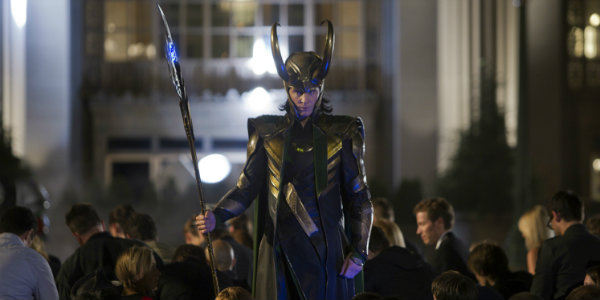
Fan favourite villain Loki possesses a vast intellect which he regularly uses to manipulate his half-brother Thor and the rest of the Avengers, preferring to work behind the scenes rather than directly confronting his adversaries if it can be avoided. Whedon's script for Avengers Assemble used this character trait as a key plot device, where Loki allowed himself to be captured by the Avengers in order to manipulate them from the confines of his prison. It's admirable that Whedon did not resort to changing Loki into a beefed up mindless fighter or heaven forbid, a giant space cloud, but ultimately, Loki's plan was severely flawed. The idea, of course, was to divide the Avengers from the inside, causing teammates to bicker among themselves due to a lack of trust. In essence, this scheme is absolutely something that would occur in the comics, so the movie is extremely faithful to the character of Loki in this sense. However, his actions throughout the first half of the movie are ultimately what bring the Avengers together in the first place, which begs the question, why deliberately unite all the people who could potentially stop your plan just to then make them dislike each other? Wouldn't it have made more sense for Loki to simply carry out his schemes as a free man without the combined force of the Avengers to fight against? In the comics, Ultron has a god complex, driven by the desire to eradicate all human life and populate the earth with his own robotic minions. Seems pretty simple, right? Whedon will likely develop this further, fleshing out the details, but as long as Ultron's plans stay true to this key motivation, the problems with Loki's scheme should not resurface in the new film. It would be interesting to see the relationship Ultron he shares with his comic-book creator Hank Pym, one of the founding members of the team, but it's likely that this will be rewritten as Pym won't appear before Ant-Man is released. Perhaps Tony Stark will be the one to create Ultron instead, allowing Whedon to still explore this concept in Avengers: Age of Ultron. It would certainly add further depth to Ultron's motivation as a villain.

1. Include More Character Building Scenes
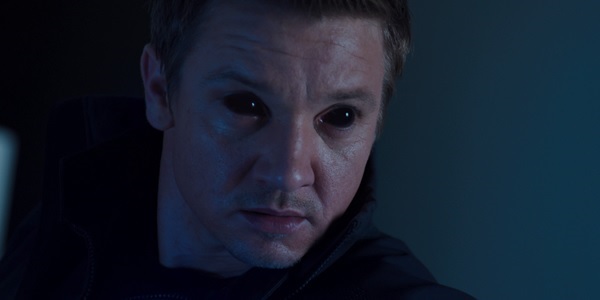
Earlier, I argued that the first act of Avengers Assemble was too slow in pace, as fans were keen to see the team united finally on the big screen for the first time, but of course, maintaining a constant fast pace would be exhausting to watch. Slower character building moments are also crucial for audiences to become invested in the story and to care about the people involved. Whedon did an admirable job of trying to balance pace with characterisation in Avengers Aseemble, but inevitably, some of our favourite heroes didn't receive the screen time they deserved. While characters like the Hulk and Black Widow had quiet moments which explored their personalities in more detail, others like Thor and Captain America were neglected somewhat in the grand scale of the movie, aside from the occasional line of dialogue within larger group scenes. Of course, it makes sense to prioritise character-building for the heroes who are not scheduled to appear in more solo outings in the near future, but we would liked to have seen more of Thor and Loki's rivalry or Captain America's struggle to come to terms with living in the 21st century. One thing most fans should be able to agree on though is that Hawkeye's first big cinematic outing was severely underwritten. After a brief cameo in the first Thor movie, Avengers Assemble was Clint Barton's time to come to the forefront, but in the end, Hawkeye spent the majority of the movie as a mind controlled puppet, unknowingly doing Loki's bidding. Jeremy Renner himself has openly stated he was unhappy with the treatment his character received, despite being one of the six core team members. Reports suggest that the role of Hawkeye will be increased for the upcoming sequel and with the current popularity of his solo comic book series, Whedon would be foolish to make the same mistake again. What do you think? Can Avengers: Age of Ultron surpass the original movie or is it destined to make the same mistakes again? Remember to let me know your thoughts in the comments section below!

Contributor
Contributor

David is a primary school teacher who tries his best to turn every math lesson into a discussion on the latest Pixar film. Passions include superheroes, zombies and Studio Ghibli. In between going to the cinema, moving to South Korea and eating his body weight in KFC, David writes for a number of movie sites, http://becarefulyourhand.blogspot.co.uk/