Avengers: Doomsday - Who Doctor Doom Is (& Why He's Marvel's BEST Villain)
Doctor Doom is Marvel's greatest villain, so why do the movies keep getting him wrong?
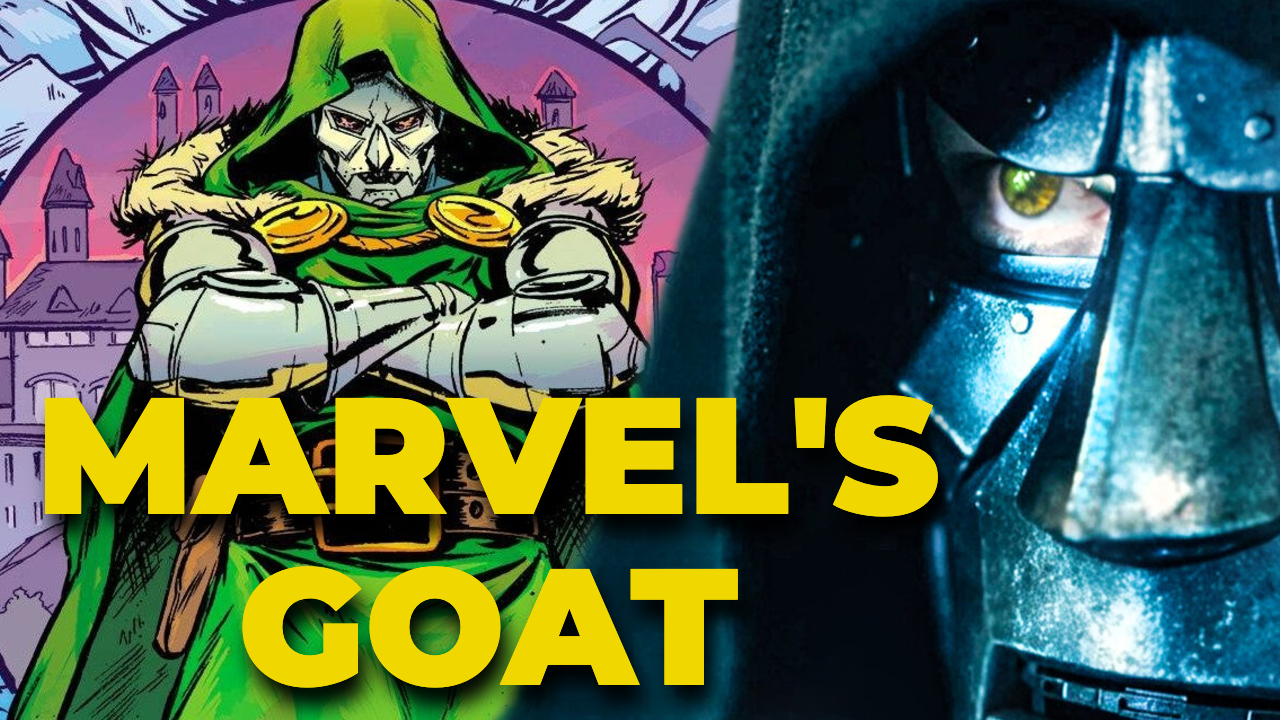
Doctor Doom is Marvel's greatest comic book supervillain - potentially, depending on who you ask, their greatest character full-stop - and yet, if you took a look back on the past 20-or-so years of the House of Ideas' on-screen history, you wouldn't really know it.
Courtesy of two rather insipid big-screen adaptations of the Fantastic Four from 20th Century Fox in the mid-2000s and 2010s - the first of which portrayed Doom as a sauceless billionaire and the latter as an animated crash-test dummy - Doom has fallen behind his fellow Marvel rogues in terms of notoriety and stature. Ask the average Marvel fan who the greatest villain in the company's history is today, and they're much more likely to say Loki than they are the metal-clad dictator of Latveria.
It's a perception that clashes heavily with the published history of Doctor Doom the character - a complex sorcerer-scientist defined as much by his ego as he is a bitter rivalry with Reed Richards of the Fantastic Four. In his time, Doom has brought the world to its knees, reshaped the multiverse in his own image, and even, at one point, tried to atone for his sins as a hero in the pages of Infamous Iron Man. (He looked especially cool in that last one.)
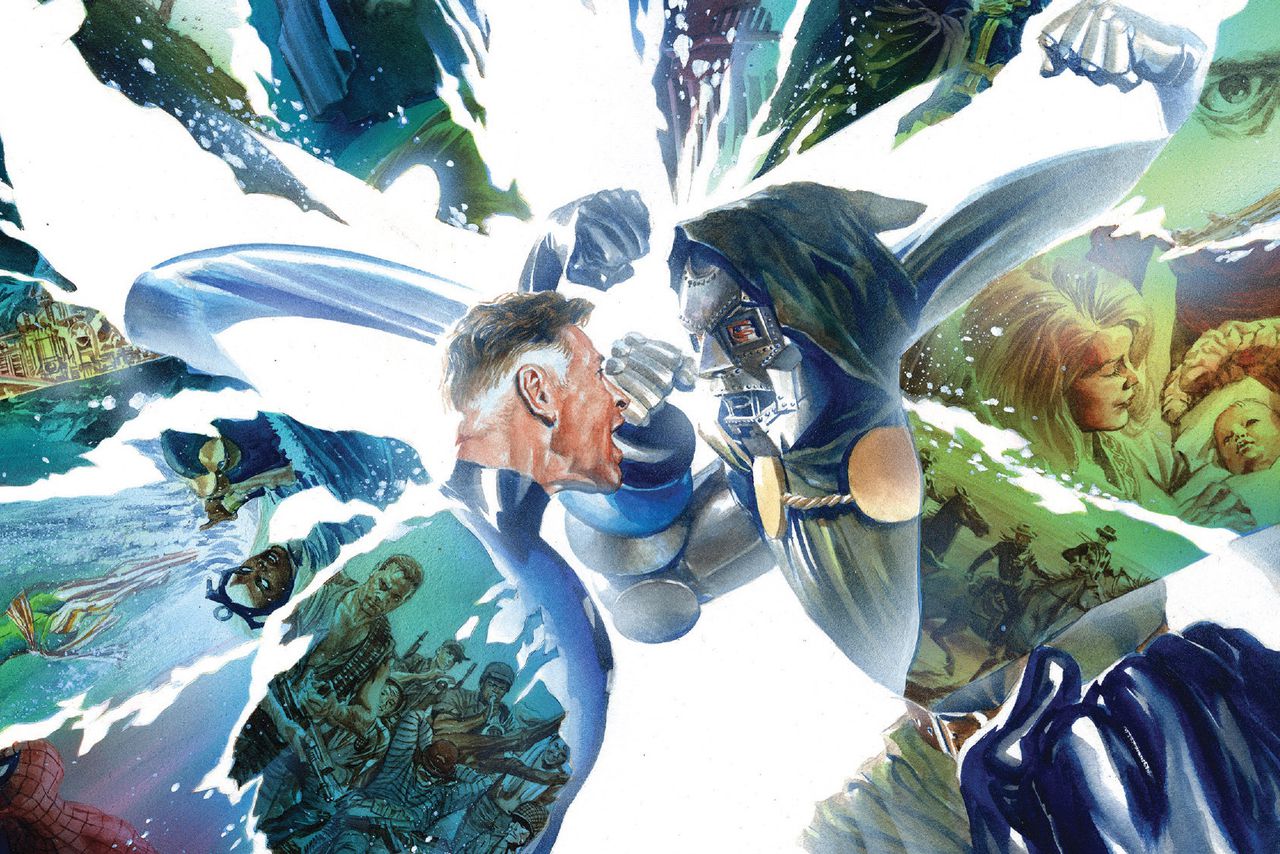
In short, there is no Marvel villain with as storied a history as Victor von Doom, and it's that baggage Marvel Studios is looking to wield with its latest Avengers film, Avengers: Doomsday, which at the time of writing has just seen its first big trailer get released. Joe and Anthony Russo's Marvel homecoming seems to be drawing heavily from Jonathan Hickman's epic work on Fantastic Four and The Avengers, which culminated in the multiverse-shattering event crossover Secret Wars in 2015 - a comic that also represented the culmination of over a decade's worth of storytelling from Hickman across FF and Avengers. Central to this arc was Doom's rivalry with Mister Fantastic, with the final pages of Secret Wars bringing cathartic closure to one of the most enduring feuds the superhero genre has ever seen.
Hickman's Marvel work has already proven a rich vein to mine for the MCU. The Russos and their screenwriting partners Christopher Marcus and Stephen McFeely drew heavily from Hickman's Infinity arc on Avengers: Infinity War and Avengers: Endgame, and with Doomsday intended as a ressuciative moment for the Marvel brand at large, it's no surprise that, along with Chrises Hemsworth and Evans, Robert Downey Jr. and co., Hickman's stories are too once again being fed through the Marvel Studios meatgrinder - with Doom the most unfortunate potential casualty; an icon eclipsed by iconicity, subsumed into the metanarrative of RDJ's return, and untethered to the Fantastic Four.
In other words, a very un-Doom-like portrayal. Although it must be said that the first trailer we've seen with Doom in the driver's seat, Downey appears to be giving it both barrels. The accent is there, the costume is spot-on - avoid any pitfalls with variants and the like, and it may just be enough to overcome the lack of build-up to a moment as climactic as Secret Wars come next year.
But who is Doctor Doom exactly? Why is he being spoken about in the Avengers: Doomsday trailer like he's the scariest guy Thor's ever seen? And can the Russos really provide a just adaptation of a legendary character without any buildup and with a shocking piece of stunt casting to boot? Let's get into it.
Doctor Doom Origins - A Sorcerer AND A Scientist
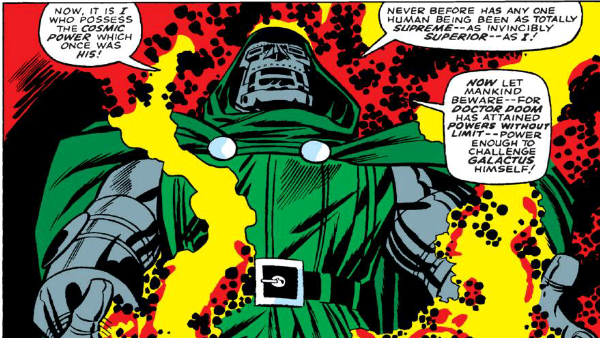
Like most of the main Marvel stable we know and love today, Doctor Doom was co-created by Stan Lee and Jack Kirby back in the Marvel bullpen era of the 1960s. Introduced in 1962's Fantastic Four #5, Doom immediately distinguished himself among what was then an already formidable lineup of characters, with Kirby fashioning a visage of cold, medieval death with the good doctor's design.
Much like the Fantastic Four, Doom himself was rooted in the dynamics of the Cold War. He was the dictator of a reclusive Eastern European country called Latveria, which he ruled with both a literal and figurative iron fist. His rivalry with Reed Richards - whom Doom blames for his own disfigurement during a failed scientific experiment - was East versus West writ large, with Lee and Kirby juxtaposing the science and ingenuity of the Fantastic Four with the dark arts and sorcery Doom commanded with such menace.
But Victor also existed in the exact intersection of science and magic, which made him one of the most powerful figures in the Marvel Universe, capable of going toe-to-toe with cosmic beings like Galactus and The Beyonder, let alone the Fantastic Four and The Avengers.
But Doom was also more than just a powerful tyrant - he was deeply flawed and deeply human, a man who wore a mask to hide his own pain from the world, who was moulded by tragedy, and who was deeply envious of the love and affection Reed Richards enjoyed from his own family, the Fantastic Four (and in particular his wife, Sue Storm). These aspects - Doom's pettiness, envy, and ego - have been a driving force of the character for decades, which in turn have also held him back from achieving all he's capable of as one of the Marvel Universe's most brilliant minds.
Kirby's immortal design would've been enough to make Doom an icon, but as is so often the case with Marvel's most compelling figures, the decision to disassemble his armour and find the humanity lurking beneath is what made him endure.
Numerous creatives have expanded upon the seminal foundations laid by Kirby and Lee, with the Doom of today boasting one of the most fascinating backstories in Marvel Comics.
Born in Latveria to a Romani tribe, Doom's mother died at a young age at the hands of Mephisto while his father, Verner von Doom, passed away after being sent into exile by a despotic Baron. Left to fend for himself, Victor discovered his mother's writings on magic and sorcery and fused that with his own curiosity for science and technology, using both to defend the Romani people of Latveria and eventually lead a revolution that resulted in him becoming the nation's sole ruler, but not before a period studying in the US brought him into the path of Reed Richards.
While studying with Richards, Doom attempted to fashion a machine that would allow him to communicate with his deceased mother. Pressing on despite warnings from the eventual Mister Fantastic, Doom's machine exploded in his face and led to his expulsion from university. Victor proceeded to walk the earth for a while, eventually being nursed back to mental and physical health by a group of monks, before returning to Latveria and becoming the tortured tyrant the Marvel Universe would come to fear and respect in equal measure.
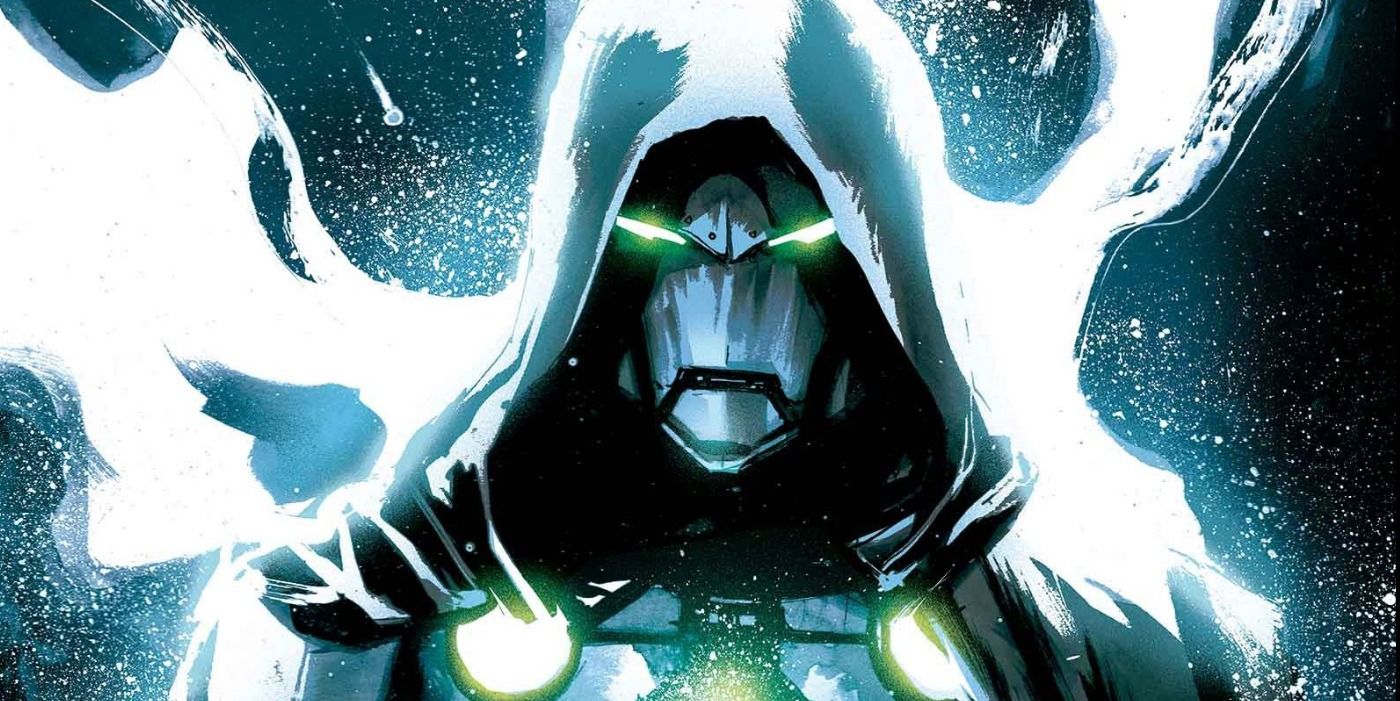
And Doom very much was and is a villain for the Marvel Universe at large, precisely because he is such a good character and is able to encompass so many genres within that supervillain framework. He's toiled against Nick Fury, Iron Man, and S.H.I.E.L.D. as a Cold War analogue, clashed with The Avengers as the leader of the Masters of Evil, dabbled with horror and the supernatural with Doctor Strange, and of course, the cosmic and the sci-fi with the Fantastic Four, a team which is foundational to Doom's character arc of the last half century of Marvel Comics history.
Where does that leave the Doom of today? Well, in a fascinating position. He's a tortured villain blinded by vanity and pettiness, but he's also the hero of his own story - a figure who is just as prone to noble and heroic deeds as he can be to darker and more cynical impulses. Doom may exist in the middle of science and magic, but he's also a man who lives on the edge of redemption.
[Article continues on next page...]
Avengers: Doomsday - Doctor Doom's Plan (& Why Thor Is Right To Be Afraid)
Now, given all of the aforementioned, it would be fair to call his treatment on the big screen more than diabolical. It also lays bare the quandary Marvel has with Avengers: Doomsday. With a comic-accurate look and drawing upon Doom's finest hour in Hickman's Avengers: Time Runs Out and Secret Wars, Marvel is leveraging the character's beloved status with comic book readers whilst at the same time negotiating his dire live-action reputation - hence, probably, the RDJ of it all.
How do you convey to MCU fans that Doctor Doom isn't a joke after two botched films whilst at the same time capturing the emotional baggage of his Secret Wars arc with none of the build-up? It's simple - you bring back the franchise's most acclaimed star to play him.
This does feel like a case of Marvel trying to have its Doom Cake and eat it, regardless of whether Downey's Doom is connected to Iron Man, but we Doomheads are also in the weird position of being confronted with all of this, and yet, somehow, still being left with the prospect of Avengers: Doomsday producing the most faithful live action depiction of the character to date. Granted, it's a low bar to clear, but all signs so far indicate that this Doom will at least look and act the part, which is more than anyone can say for either his 2005 or 2015 counterparts.
But what exactly will Doom's role be in Doomsday and Secret Wars? The evidence so far suggests something not all that dissimilar to the part he played in Time Runs Out and the 2015 Secret Wars comic, but let's get into (leak-free) specifics.
The synopsis for Avengers: Doomsday, as per Disney, is as follows:
"Beloved heroes from three distinct universes will be set on a deadly collision course and face an existential threat unlike anything they’ve ever encountered."
The "existential threat" here, so Doomsday's trailer would lead you to believe, is Doom himself, but it's actually the broader cosmic threat of "Incurions". An Incursion in the Marvel sense is when one universe collides with another, leading to the destruction of both realities in a cascading avalanche that, if left unchecked, will lead to the complete annihilation of all that is known. The concept was initially introduced in Hickman's run on New Avengers and saw the brightest minds in the Marvel Universe come together to try and stop the domino effect by any means necessary - even if that meant destroying another universe in the chain to try and break the pattern.
As it transpired, the Incursion phenomenon was the work of the cosmic entities known as The Beyonders, who had resolved to destroy the multiverse altogether. Doom happened upon the plan, which was tied to the character Molecule Man, but in attempting to diffuse the act of cosmic sabotage he unwittingly set off the Incursion phenomenon himself - as was the design of The Beyonders to begin with. Eventually, only two universes remain - the Ultimate Universe (Earth-1610) and the main Marvel Universe (Earth-616). Doctor Strange and Doctor Doom defeat The Beyonders, with Doom taking their power just as the multiverse implodes, and reshaping all of known existence into his own image - a single world, "Battleworld", which he rules as God Emperor Doom.
The MCU has already seeded the concept of Incursions throughout its post-Endgame slate - specifically in Doctor Strange in the Multiverse of Madness and Ant-Man and the Wasp: Quantumania. Here, while they function the same as their comic counterparts, they are established to have been caused by alternate timeline meddling, whether that be Strange using the Darkhold in Avengers: Infinity War, or all the Kang malarkey set up in Loki and afterwards. They appear to have reached critical mass in Doomsday, which will no doubt be what prompts the Fantastic Four to jump to the MCU's main timeline - along with Doom.
But Doom isn't what Thor is warning his fellow heroes of in the trailer for Doomsday - it's the Incursions themselves. While there will come a point where Doom enters villain status, the smart money here is on Victor presenting himself as an ally and working with the various factions present to stop the threat of Incursions - which, you would imagine, would also be his sincere interest. Doom is a pretty vain guy, and without a multiverse there'd be no one to appreciate his brilliance or show gratitude to him for saving all of known existence, which is also what he looks set to do in the film.
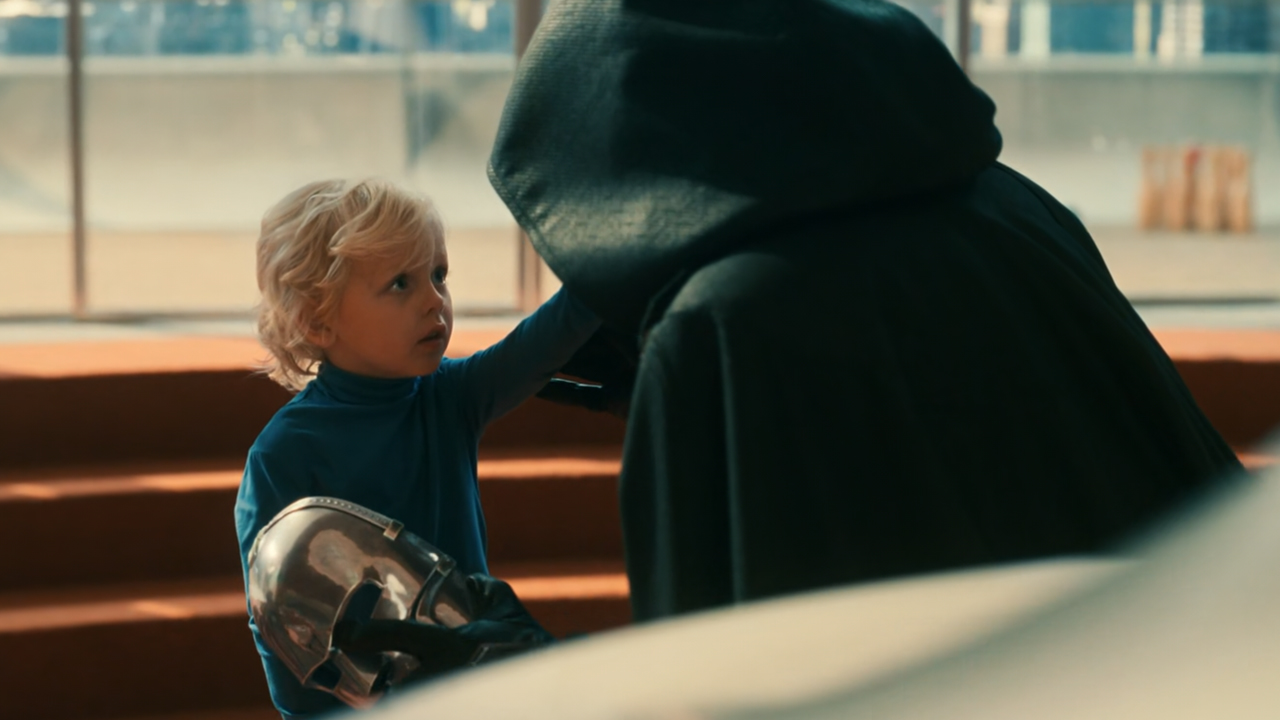
As for his motivations, the post-credits scene for Fantastic Four: First Steps, where Doom interacts with a young Franklin Richards, hints at a familial aspect in his character - as does the Avengers: Doomsday poster, which sees the ruler of Latveria kneeling in front of a mural depicting a heavenly woman and child. Were they lost in an Incursion? A result of Steve Rogers' timeline hijinks in Avengers: Endgame, perhaps? Only time will tell.
Beyond Doom's potential personal reasons for doing what he does, Doomsday does look as if it will follow the broader thrust of Hickman's Incursion arc from New Avengers and Avengers: Time Runs Out. That's probably why Shuri and Namor are in the picture, given they are two of the smartest figures on Earth in the main MCU continuity and, in New Avengers: Everything Dies (the commencing arc of the Incursion saga), Black Panther and Namor were principal players in the Marvel Illuminati looking to avert the Incursion catastrophe. The logic for our heroes in Doomsday will probably be the same - assemble the brightest minds to figure out a way to survive, and traverse the multiverse in order to do so.
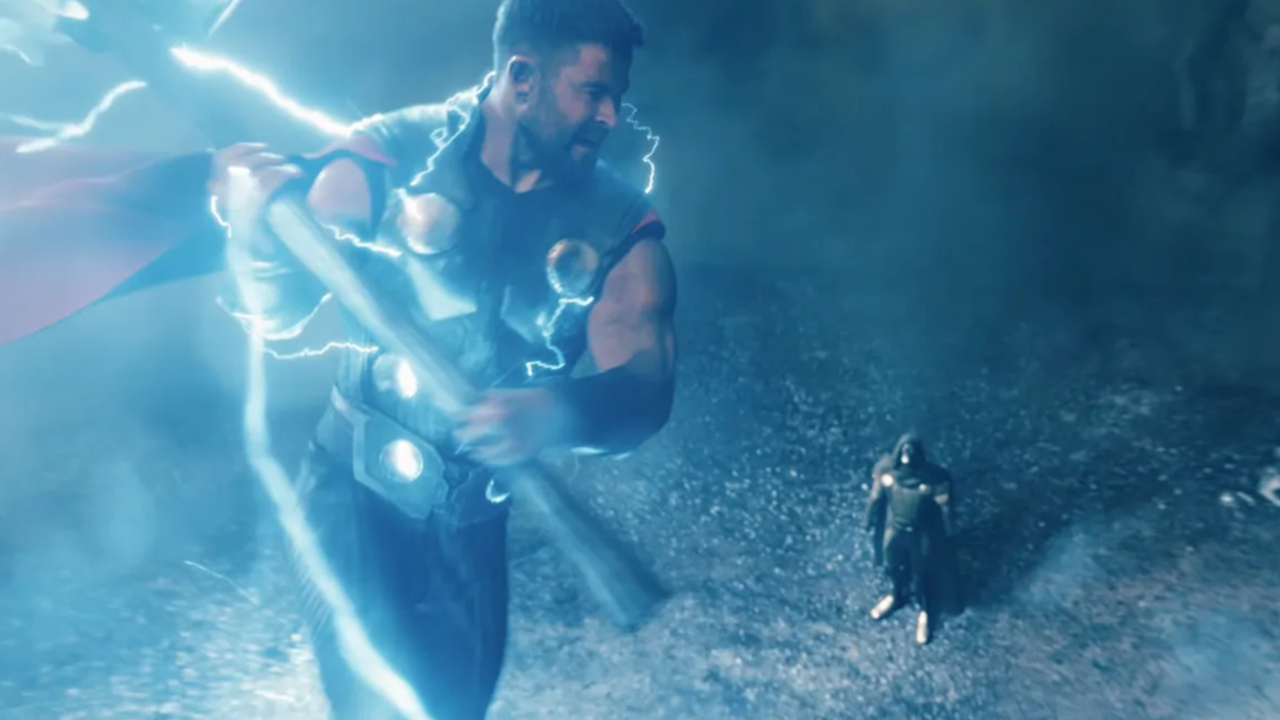
Judging from the trailer, it also looks as if Earth-616 will meet its end in the midst of a battle between Wakanda and Atlantis, with our surviving heroes making the leap to the old Fox X-Men continuity for refuge. The next steps in Doom's plan are less clear, but one would imagine that he attains some kind of power to be able to go toe-to-toe and even stop Thor in his tracks. Doom is powerful and cunning, capable of wielding science and magic in equal measure, but he'd need an extra bit of oomph to take on the God of Thunder - something The Beyonders would be able to provide.
While the intricacies of Doom's deception are yet to be made clear, it does look likely that, like Avengers: Infinity War before it, Doomsday will end on a sour note with the collapse of the known multiverse and Doom reshaping it in his own image to lead directly into Secret Wars. We can expect to see all sorts of riffs on various Marvel staples in that film, should it follow the same logic as Hickman and artist Esad Ribic's comic, with familiar faces from the past returning in new and unfamiliar guises.
Again, it remains to be seen how the Robert Downey Jr. of it all will factor into the adaptation - or the return of Chris Evans' Steve Rogers, for that matter - but on paper, Doomsday and Secret Wars do appear to be hitting at least some of the right notes as far as the Incursion arc is concerned.
As for whether it'll be a good Doom adaptation? That feels much trickier to gauge, currently, but there is an irony to the idea that no film will ever live up to the Victor von Doom we know and love - a figure so high and mighty that no film can ever do him justice. Once again, it feels like this particular adaptation's failings are self-inflicted - and the overall panicked air about Marvel Studios attempting to recapture that Infinity Saga magic is difficult to shake - but call it blind faith, desperation, or sheer force of will, it might be starting to win me over.
Avengers: Doomsday releases in cinemas everywhere December 18.