20 GREAT Monster Movies NOBODY Talks About
The creature features that deserve more love.
Over the years, monster movies have given audiences some of the best films of all time, as well as some of the worst. Jaws, Alien, and more recently Godzilla Minus One sit at one end of the spectrum, with the likes of Sharknado, Sharknado 2, all the way through to the aptly titled The Last Sharknado: It's About Time at the other.
With such a wide breadth of quality ranging from the revered to the reviled, there is a lot of middle ground. Within that vast no man's land, too many great outings either get forgotten about, are barely noticed in the first place, or are criminally underappreciated.
There are international gems that struggled to amount to the kind of widespread acclaim they deserved, strong efforts that have been lumped in with others of the same perceived ilk, and those that may have been overshadowed but are no less in their own achievements and merits.
With a cinematic landscape that has consistently grown to be more and more saturated, and with certain efforts lessening the reputation of the creature feature, it is too easy to miss something good, something worth watching, and something worthy of appreciating.
20. The Evil Within

If the goal for a movie is to leave a lasting impression on audiences long after the credits have rolled, regardless of the reason, then The Evil Within should be considered a great success, even if it doesn't get the recognition it deserves.
After going through a true, 15-year-long developmental hell, the film finally released in 2017 and was certainly polarising, thanks in no small part to its themes and portrayal of, as the name would suggest, an intrinsic evil growing and taking over its main character, Dennis (Frederick Koehler).
There are plenty of words that could be used to describe The Evil Within. It is utterly harrowing, disturbing, chilling, and genuinely terrifying, but arguably its greatest testament would be to call it unique. It may not have got the desired critical reception upon its release, but to produce something genuinely unlike anything else in this cinematic era is something that should be applauded.
Though not a monster movie in the traditional sense, the outing did feature Michael Berryman as the Cadaver, an incredibly creepy manifestation of evil within Dennis' mind. No, he wasn't real, but he did represent what Dennis quickly began spiralling towards, and there can be no denying that he was as unsettling as any good film monster should be.
19. Grabbers

Some movies are criminally underrated. Some movies are criminally underseen. Grabbers just so happens to check both boxes. As an Irish indie flick, a high viewership wouldn't have been exactly what was aimed at, but it damn well deserved one.
Even among those who did see the film, a critic score of 68%, paired with 52% from audiences on Rotten Tomatoes, is frankly mystifying. There aren't too many monster movies that could get away with being as goofy and silly as Grabbers, but here the two tones work together as a triumph.
After being threatened by vampiric, tentacled monsters, it is discovered that since they feed on blood and water, an elevated blood alcohol level could save everyone in the small Irish town. Cue the party that sparks a genuinely funny film that feels like if Martin McDonagh had contributed to the Cornetto Trilogy.
And it's not even as though it leans too heavily into the comedy to the point of losing the monster aspect; these creatures are still unnerving and the attacks genuinely scary. Irish folklore and landscape can make for a disturbing story, as in 2026's Hokum and another later on this list, but Grabbers took things in a different direction and was an incredibly enjoyable effort.
18. Alligator

In 1978, John Carpenter changed the entire horror genre with Halloween, subsequently spawning a litany of slasher rip-offs, none of which came even close to the terror instilled by Michael Myers (Nick Castle). A similar phenomenon occurred following the release of Jaws.
The next five years alone saw Piranha, Bug, Grizzly, Barracuda, Alligator, Orca the Killer Whale, and Squirm, all based around killer creatures. Of course, Piranha saw success and a subsequent franchise, but to throw Alligator in with the rest of the knockoffs would be unfair.
While other creature features have done little else other than take random animals and turn them into killers, leaving very little space for things like plot, dialogue, character development, and so forth, 1980's Alligator put far more effort in. Particularly with Robert Foster as the lead, this was a genuinely compelling outing that, though the influence from Jaws was clear, felt more like taking inspiration rather than an outright rip-off.
The film scored a sequel 11 years later, Alligator II: The Mutation, and in typical fashion it was tough to watch. However, the original is still a strong monster movie that arguably deserves better.
17. The Faculty

Perspective can play a big role in the reception of a film and is often the difference between some enjoying a project and others not. Even the most subtle of differences can have a big impact.
Take a look at The Faculty from 1998. As with many horror flicks, seeing the influence of other movies isn't exactly a stretch, but while some saw it as a cheap rip-off of the likes of Invasion of the Body Snatchers, others could appreciate its meta tone and style.
Bearing in mind this came just two years after Scream, which of course is the self-deprecating, self-aware horror flick, it feels as though, if The Faculty is looked at through a similar lens, it can be a lot more enjoyable than just a poor imitation of those that have come before it.
Yes, the story of the body-controlling aliens isn't the most original, but that's all part of the point. It's supposed to be a sci-fi movie for sci-fi fans, appreciating the tropes, the clichés, and the stories along with it.
16. Deep Rising

From one 1998 Famke Janssen outing to another...
Some of these films may have earned something of a cult following in the years since their release, but generally deserve wider acclaim. No one is trying to say Deep Rising should have earned any Oscars or anything, but there is a fun time to be had with it.
The Stephen Sommers-led effort came out in 1998, and much like his following film, 1999's The Mummy, it is a time capsule of everything '90s. While this can be taken as both a compliment and a drawback, it is undoubtedly an action-adventure romp that doesn't take itself too seriously, is at times wonderfully cheesy, and if this is what an audience goes in wanting, it can be incredibly entertaining.
Pitting the characters against a behemoth largely in the open water with little to no escape certainly presents a decent amount of thrills, helped along by CGI that is impressive, particularly for the time.
Arguably, Deep Rising has become better known as a failed franchise launch, as the final moments were supposedly to lead into a King Kong project before Peter Jackson's 20025 Kong effort. But as a standalone popcorn flick, it ticks every box it needs to.
15. The Host

It can be said of some works that, no matter how good they are, they will suffer in comparison to other masterpieces. The Prestige often gets lost within Christopher Nolan's repertoire, while the same could be said about Martin Scorsese's Shutter Island.
Just because they aren't Oppenheimer or The Departed, it doesn't mean they aren't genuinely outstanding pictures. In that same vein, Bong Joon Ho's The Host deserves a lot more recognition than it gets as a compelling and thought-provoking monster movie.
Of course, Parasite is widely regarded as the director's best work, but 13 years earlier he took inspiration from a real-world disaster to create a creature feature that hit home as something terrifying that felt far too real for comfort.
Balanced to great effect with such fear-mongering came a surprising amount of comedy. Not on the same level as Grabbers, which felt like a comedy first and a monster movie second, there was an underlying and understated aspect of dark humour that played perfectly with the tone of the story. It's a difficult line to walk, and the film nailed it.
14. The Void

The world of horror is full of homages, clear inspirations, and downright obvious plagiarism. In 2016, The Void released and felt something like a throwback to the monster movies of the '80s, and it would seem as though it worked better for some than others.
Steven Kostanski and Jeremy Gillespie's flick certainly plays into a number of tropes, with a group of people being thrown together to fight off unknown creatures that they don't quite understand. There is definitely an Alien kind of vibe in there, with the protagonists trapped and unable to escape.
Arguably, it's easy to see why The Void may not be as appreciated as it should be, but it is more than just another monster movie. It may not be the sleekest film the world has ever seen, but there is a Lovecraftian kind of horror to it that is there to be appreciated.
Plenty of creature features score better with audiences than with critics, as the former tend to be a little more forgiving of the kind of flaws that can come with such outings, and are happy to be entertained by a monster with less emphasis on what surrounds them. The Void, however, was enjoyed more by the critics, suggesting that it is the more subtle aspects, the more nuanced homages paid that may pass casual viewers by, that help make it so good.
13. Dog Soldiers

Certain monsters have typically had a better time in the cinematic world than others. The likes of Frankenstein's Monster, vampires, sea creatures, and titans like Godzilla and Kong have all had their time to shine, but werewolves have arguably seen less success.
Largely tied symbolically to romantic tragedy, metaphors of puberty, and thanks to the likes of Twilight and Underworld, a villain for vampires, a good werewolf movie is like a diamond in the rough. This particular diamond came in the early 2000s in the form of Neil Marshall's first feature directing effort, Dog Soldiers.
Throwing the creatures into a previously unexplored territory, namely coming up against a platoon of soldiers, offered something new to a monster that has been around on the big screen since 1935. It was gritty, with characters audiences could easily and quickly connect to, that were trapped with no escape from the horrors that awaited them.
Tension was certainly on the side of Dog Soldiers, and, like many on this list, though much of what it offered had been seen before, it was elevated thanks to its direction, dialogue, and action. Consider this the first of a few werewolf-based entries here; an area that deserves more love on the whole.
12. Underwater

Ever since the years of the Twilight Saga, Robert Pattinson has done his best to completely reinvent himself, with major projects like The Odyssey, The Lighthouse, and The Batman among others going a long way to his success in this area. Kristen Stewart's sole blockbuster post-Bella, however, was the all-time level bust, 2019's Charlie's Angels.
To that end, Stewart has instead found her career on a path to smaller, lesser-appreciated projects than those of her former co-star. She may not be leading a superhero franchise, but she still has some strong outings to her name, even if less people have seen them.
Joining the fraternity of sea creature features, Underwater released in 2020. Stewart plays Norah Price, who, along with her crew of deep-sea drillers and engineers, came into contact with the beast responsible for what they believed at first to be earthquakes.
As a monster movie, it trumps the similar ocean-based The Meg from two years prior, and leans heavily and successfully into the horror and claustrophobic aspects such a story allows. Certainly, it is a flawed film, and it could have used a lot less TJ Miller, for one thing, but an overall thoroughly jump-inducing effort, and arguably one of Kristen Stewart's best.
11. Sputnik

There are certain films on this list that were never too likely to break into mainstream, global reverence. Grabbers was a small Irish production that would struggle to find worldwide success, and the same could be said about Russian outing, Sputnik.
What could be described as something akin to an Alien vibe, but set within the Soviet era, saw some success in Russia despite its release being hindered by the Coronavirus pandemic of 2020. However, said success never truly crossed over to the rest of the world.
Comparisons to the likes of Alien and Cloverfield are all but inevitable, but in this case they are meant as the greatest of compliments, as arguably Sputnik is better than many of the sequels these two franchises can boast.
Of course, a monster movie often hinges on said monster, and while nothing will ever match the genre-defining Xenomorph, Sputnik was able to offer a strong combination of mystery and fear. It's a compelling film with a strong story, a terrifying villainous beast, and subtitles be damned, deserved far more global recognition than it ultimately got.
10. John Carpenter's Vampires

It is widely recognised that John Carpenter's best work came directing Halloween in 1978, while there are other, later works that couldn't be further from how his masterpiece was received. Between the best and worst of the man's catalogue are a handful of underrated outings, including the likes of In the Mouth of Madness and Vampires.
Based around James Woods' Jack, leader of a crew of vampire hunters, Vampires very much relies on Carpenter's competency as a filmmaker, as well as the performances of the likes of Woods, rather than its story or plot. It was received as something of a love-it-or-hate-it release at the time, though many in the latter category may wish to revisit and reappraise it in the wake of the works that Carpenter followed it with.
The undead can be a tough sell on the big screen at the best of times, and taking a popular novel and changing much of the plot likely didn't help, but this was one of the genre's greats showing that there was still something left in the tank.
Is the movie his best work? Of course not, and with Blade following just one month later, it wasn't even the best vampire hunter story of 1998. Still, that doesn't mean that there isn't still something to be taken from it.
9. Monster Squad

Crossovers don't always end well, particularly when there are monsters involved. The Dark Universe fell flat after one film in 2017, and The League of Extraordinary Gentlemen fumbled the concept, as did Van Helsing, both in the early 2000s.
It may be unconventional, but the most successful in this space is arguably 1987's The Monster Squad. Something of a version of The Goonies but with Universal's Monsters in tow, the horror comedy is goofy, corny, and a lot of fun.
If an audience is looking for a seriously scary film based around the likes of Dracula or Frankenstein, then yes, there are better options out there. But for a brisk sub-90-minute romp, boasting that unmistakable '80s charm and plenty of Universal's Monsters in the same place, The Monster Squad can certainly scratch an itch.
Quite unsurprisingly, this hit home more so with audiences than with critics, but in fairness, this was always going to happen. It's big dumb fun, it's child-friendly horror that may result in an eye roll or two, but can also result in a lot of fun if you let it. Yes, there are better monster movies on this list, but this one does exactly what it's meant to.
8. Stung
The craze for killer creatures following the success of Jaws didn't die off after just a couple of years. The likes of Sharknado, The Meg, and most recently Hungry have graced screens in far more recent years and decades, as well as plenty of others.
For example, take Stung. Releasing in 2015, Benni Diez's film carried a similar premise to the likes of Alligator and Piranha, only with mutant wasps attacking our heroes, and with some discomforting Cronenberg Fly-esque body horror thrown in.
The effects themselves are really the best aspect of the flick, with the biggest downfall arguably being the human element. However, though this does feel somewhat lacking, as is the case with a wide range of creature features, it is never so much as to derail everything. The focus should be on the seven-foot wasps, and if it stays there, Stung can be incredibly entertaining.
This is another on this list where the critics were more satiated with the film than audiences, as proven by the 60% vs 25% Rotten Tomatoes score swing. While it's not unreasonable to assume this to be another Jaws-type rip-off, if given a chance, audiences could be treated to a surprisingly fun movie about killer wasps that doesn't take itself too seriously.
7. Werewolf Of London

While slasher movies can almost always trace their roots back to Halloween (1978), with Night of the Living Dead (1968) playing the same role for all things zombies, the widely regarded cinematic origin for werewolves is The Wolf Man from 1941.
This may be the one that everyone remembers, but it was actually beaten by six years. The true first showing of a werewolf came in Werewolf of London in 1935, directed by Stuart Walker and starring Henry Hull in the titular role.
This was the real birth of the genre, and it laid the foundation for many of the recognisable staples of such movies in the modern age, including the monster's ties to the full moon and the curse being triggered by a bite. It is a solid film that walked so many others in the future could run, though admittedly it fell down in arguably the most important aspect.
There isn't too much to separate Werewolf of London from The Wolf Man, though the design of the creature at the centre of things is one of them. The former was rather understated, almost as much man as beast, while the latter, six years later, went all in and is arguably the main reason why it is remembered more, even in spite of Werewolf of London's own merit.
6. Life
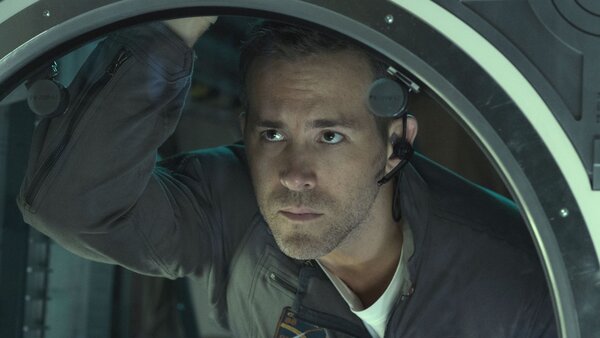
When it released in 2017, Life was incredibly intriguing. Led by Ryan Reynolds, Jake Gyllenhaal, and Rebecca Ferguson, it had a great cast, but the most attention it received was because of a widely believed fan theory.
Given that this was a Sony picture about the discovery of an otherworldly alien entity, and with Sony announcing a Venom project just days before Life's release, many subscribed to the theory that the two were connected, and that Life would be revealed as something of a Venom prequel. When this didn't happen, it's safe to say the excitement about the film died down.
However, such expectations shouldn't take away from what was a very strong outing. If nothing else, Life should be celebrated for having Ryan Reynolds in a role that wasn't just his own personality. There were heavy aspects of it, certainly, but there was more depth to Rory Adams, and the project benefitted from it.
Then there is, of course, Rory's death that came far earlier than anyone could have expected. Here, Life took the gloves off, and what was already a fascinating Alien-esque sci-fi horror became even more unpredictable.
5. The Relic

There is no shortage of movies that tie horror to some sort of ancient artefact or trinket. Unsurprisingly, Peter Hyams' The Relic falls into this category, and does a damn good job of it.
Whereas Werewolf of London fell short in terms of its monster design and final aesthetic, the same cannot be said for The Relic. In fact, the creature is arguably the film's greatest asset, as it is genuinely unnerving, which shouldn't be too surprising considering the type of picture it is.
Coming from a strong source material, Douglas Preston and Lincoln Child's 1995 novel, Relic, the on-screen adaptation can score some easy points. The story is inherently good and interesting, and with the incredible monster, there is so much to enjoy.
The Alien comparisons are always going to happen for an outing like this, and it's just not a battle The Relic is going to win. Add in the fact that it could have adapted the book in a stronger, truer way, and it's not too hard to see why this film gets slept on. That being said, 41% on RT is incredibly unfair, and this is most definitely worth a watch.
4. Ginger Snaps

It's been said on this list before that werewolves have had less success in cinema than other Universal monsters. It may be because the creature is lacking one specific work to draw from. Whereas vampires have Bram Stoker's Dracula, and Frankenstein's Monster has Mary Shelley's Frankenstein, for whatever reason, werewolves have fallen behind their scary brothers and sisters.
Of course, there are diamonds in the rough, with one such diamond being 2000's Ginger Snaps. The title's clever pun is a nod of the head to teenager Ginger (Katharine Isabelle), who turns into a werewolf around the same time as beginning her adolescence.
It's a theme that isn't exactly unique, as the werewolf "curse" has been used as a metaphor in such coming-of-age stories before and since, but the sexual awakening works here, going hand in hand with the more physical transformation of Ginger, and the reaction and responses of her sister and friends.
You could in truth argue that Ginger Snaps works less well as a horror than as a high school drama, but the performances, the dynamics of the family, and the feminist themes throughout are accentuated rather than overpowered by the monstrous entity. This makes it work all the better and is a must for creature feature fans.
3. Trollhunter

As creatures that are perhaps less featured than some of the other monsters moviemakers like to tell stories about, trolls don't find themselves front and centre too often (children's animated franchises notwithstanding). They have had small roles in the likes of The Lord of the Rings, The Hobbit, and Harry Potter, but it's to Norway we must look for a proper troll story.
In 2010 came André Øvredal's Trollhunter, telling the story of a group setting out to find a bear hunter, only to find that it is trolls in his crosshairs. If you're able to forgive some sub-par at times CGI, though rarely to the point of being too distracting, this is a strong outing, in equal measures scary, clever, and fun.
The found footage framing device worked incredibly well for the likes of The Blair Witch Project and Cloverfield, and just two years after the latter, it worked again here. This time styled as a mockumentary, Trollhunter offered something different as a monster movie, a uniqueness in storytelling that an audience will struggle to find elsewhere.
Naturally, a Scandinavian film such as this would struggle to find success and recognition in North America and across the rest of the world, but like Grabbers, Sputnik, and others, it certainly deserves it.
2. Watchers

Recent years haven't been so kind to the work of M. Night Shyamalan. Far, far removed from the likes of Unbreakable, The Sixth Sense, and even Split, the director's recent years have seemingly been focused more on nepotism projects than anything else.
Trap was a thinly veiled pretense to launch his daughter Saleka's singing career, while his other daughter Ishana Night Shayamalan directed Watchers in 2024 after making several of Saleka's music videos. However, while Trap fell completely flat, there was at least something to be taken from Watchers.
Dakota Fanning pulls double duty as both Mina and Lucy (similarly to Elle Fanning's turn in Predator: Badlands), as she encounters mysterious and deadly Watchers in Galway. As alluded to earlier, the backdrop of Ireland and its colourful folklore make the perfect base for a creepy horror movie, and the effects on the fairies were strong enough to scare while keeping some sense of realism, or as much as can be expected from such a film.
Of course, Watchers has its flaws, just like any other movie in history, but while it can be easy to look at it in the same way as Trap, the key difference is that Watchers is actually worth watching.
1. Nope
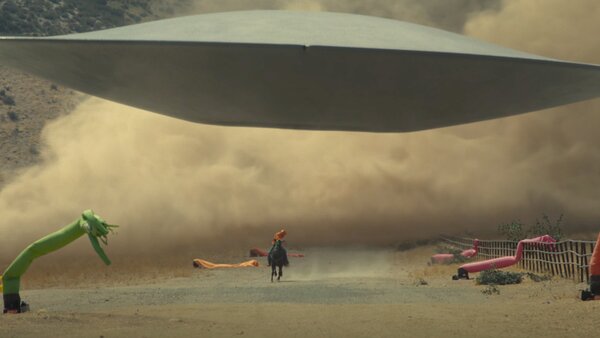
When Get Out released in 2017, Jordan Peele immediately announced himself as one of the best and most exciting directors in the horror game. An overnight star the likes of which the world had not seen for some time, he followed his debut up with the absolutely solid Us.
Though arguably not quite reaching Get Out's lofty heights, Us was an outstanding sophomore effort that proved the man's success was not a fluke. Three years later, however, it feels as though Peele's third outing, Nope, came and went with little to no fanfare. Certainly not compared with his previous works.
In all honesty, it even feels as if Him got more marketing miles out of his name, where he was a producer rather than director, in something that was much worse than Nope. This feels unfair, as Peele's third major outing is yet another very strong one.
His trademark style is still evident in what is arguably a film on a grander, more ambitious scale, particularly in terms of its sci-fi and monster elements, proving that Jordan Peele's worst movie is better than most directors' best.