Captain America Civil War: 11 Reasons It's Better Than Batman V Superman
Poor Affleck.

What a month it's been. Batman V Superman: Dawn of Justice dropped to extremely divisive reviews from both fans and critics, while Captain America: Civil War is landing to a shower of ecstatic praise, with many rightly proclaiming it to be one of the best movies in the Marvel Cinematic Universe to date, if not the best.
It's a slick, smart entertainment that delivers crowd-pleasing moments in spades, and curiously holds the mirror up to Batman V Superman, essentially functioning as a reminder of almost every big mistake Zack Snyder's movie made.
For every implausible plot twist or unconvincing character beat, Civil War is by comparison a well-oiled machine where almost everything click together. It isn't perfect like any movie, but it's easy to watch the two films in such close proximity and appreciate that Civil War completely leaves it in the dust. We want to see the DC Extended Universe succeed, but seeing them get "beaten" this decisively doesn't leave a whole lot of hope.
Also, only minor spoilers for Civil War will follow, so don't worry. Here are 11 reasons Captain America: Civil War is better than Batman V Superman...
11. There Aren't Any Pointless Subplots

One of the most vocal complaints about Batman V Superman was that it got weighed down by a wealth of subplots that were either pointless, boring or nonsensical.
For instance, pretty much the entirety of Lois Lane's existence in the movie is merely to justify her being in the film rather than actual plot necessity. She's chasing down the origin of some bullets used to frame Superman for half the movie, and it's an utterly superfluous MacGuffin that just pads out the film's runtime. There were far easier, tidier ways for Lex's plan to unfold.
Then there's blatantly unnecessary scenes like a visage of Jonathan Kent talking to Clark when he goes for a hike. Mildly interesting, perhaps, but Zack Snyder could easily have left that one for the Director's Cut Blu-ray.
Civil War, despite running just four minutes shorter than BvS, feels like a much leaner beast, with the fat largely trimmed and almost every scene adding at least something to the film plot-wise. Even the seemingly superfluous moments in which Vision and Scarlet Witch bond at Avengers HQ have an implication that's crucial to the plot later.
10. It Confronts Collateral Damage In A Mature Way

You have to hand it to superhero movies this year: they're finally realising that if you're going to have supervillains threatening millions of lives, then you probably need to engage with the lives lost, rather than be flippant about collateral damage.
One of Batman V Superman's more interesting ideas relates to this, yet it ends up strangely bungled, as when Supes is finally called to answer for his behaviour, it largely revolves around him being framed for an attack in an African village...rather than the obvious and far more compelling destruction issue from his fight with Zod in Man of Steel.
Sadly the film just sort of leaps away from the issue after that point rather than using it to deepen Bruce Wayne's conviction, whereas Civil War entrenches itself in the debate, brought up by Secretary of State Ross early on and having reverberations throughout the entire film.
Some of the film's most effective exchanges include Vision riffing on the heightened presence of superheroes on Earth inviting more conflict, and a superb cameo from Alfre Woodward, where she confronts Tony Stark about the death of her son in Sokovia. It makes Stark's later actions and motives seem all the more plausible, and tackles an issue too-often ignored in superhero movies in a thoughtful and intelligent way.
BvS? Not so much, even though the idea was nice.
9. Character Logic Is Near-Perfect

Batman V Superman is unfortunately a movie where you find yourself questioning the character actions a lot. Why does Lex Luthor have personalised bullets? Why does he even hate Superman? Why does the general public think Superman would shoot people in Africa? Why doesn't Superman try harder to talk it out with Bruce rather than just start a fight? Why does Batman kill numerous people? Why does Lois Lane throw the Kryptonite spear into the water only to retrieve it seconds later? Why doesn't Wonder Woman use the spear to kill Doomsday instead of Superman?
You get the point. There's a lot of questionable character logic, whereas Civil War by comparison manages the tricky feat of giving pretty much every character plausible motivations. Neither side of the conflict feels 100% right regardless of the side you pick, and yet it's easy to see how the Avengers end up split over the issue.
Hell, even the villain, Helmut Zemo, has a simple and relatable motive (though some might argue it's a bit cliched), and we'll take that over Lex Luthor's hyper-convoluted, obscure plan complete with highly questionable intent.
8. It's Not Desperately Setting Up The Next Movie

Batman V Superman is an insanely ambitious film, nobody can deny it. The problem is that, when a fairly simple hero vs. hero movie would have sufficed, it also encumbers itself with the need to set up Justice League, and so an already jam-packed movie ends up overloaded with too much to do.
Basically, for the most part it feels like we're watching a coming attractions reel for future movies rather than the film focusing on the present conflict with perhaps a small, subtle tease for what's next. This is perhaps where Warner might've been smart to actually make use of Marvel's now-standard post-credits scenes, considering how the widely-mocked laptop reveal of the Justice League would have made a lot more sense if it came after the credits rather than being a jarring diversion in the middle of the film.
Though Civil War has sewn some pretty blatant seeds for Infinity War, it's not at all shoehorned into the fabric of the story, and the movie on the whole keeps its focus pretty laser-trained throughout. Sure, Marvel has a huge advantage in that they already know you're going to show up for the next one, but the DCEU approach just seemed desperate, like they were trying to force too much through the gate too soon.
7. Supporting Characters Are Put To Good Use

Batman V Superman wastes so many of its supporting characters it's ridiculous. Lois Lane is obviously the most criminal offense here, relegating her to a boring, pointless subplot and then making her a damsel-in-distress.
That's not all, though: Perry White shows up for a cup of coffee and is then gone again, Jonathan Kent appears in an aforementioned scene that should've been cut from the theatrical release, Martha only shows up for a dull kidnapping plot, Lex's assistant Mercy Graves is quickly killed off nonsensically, and even Jeremy Irons' Alfred could have a lot more to do.
Civil War similarly juggles an absolutely gigantic cast of characters, though for the most part handles them all exceptionally well. Yes, it's disappointing that Crossbones is only in the movie for 10 minutes, and both Spider-Man and Ant-Man are very suddenly recruited into the mix, but at least the film gives them great character beats and awesome moments of action, ensuring that their presence doesn't feel perfunctory or overly tacked-on.
There isn't a single peripheral character whose presence feels questionable or particularly forced: we get why they're there, and so we can just sit back and enjoy it.
6. It Keeps The Scale Small & Intimate

While Batman V Superman revelled in Lex Luthor's wild plan to get the world's two biggest superheroes clashing in a mythic brawl, all while attempting to bring the Justice League together and teasing the arrival of Darkseid, Civil War instead opted to keep the scale surprisingly small, and it really worked.
Yes, the movie still has links to the unforgettable events from both Avengers movies, and an Avenger Civil War can only be so small, but the stakes feel personal and grounded rather than overly lofty, both as it pertains to Cap and Iron Man, and also Zemo's motivations for pulling the strings behind the scenes.
Civil War isn't a movie filled with otherworldly monsters and city-wide-superbrawls. Rather, it keeps things cleverly confined, and the result is a movie that feels much more satisfying than not only BvS, but the vast majority of the MCU's prior offerings (save perhaps for the original Avengers, whose freshness and novelty factor is hard to deny).
5. An Effortlessly Superior Villain

Fan reception to Jesse Eisenberg's Lex Luthor has been... divisive to say the least. Some say he's irritating and obnoxious, while others praise him for taking the character in a totally different direction, away from the mugging A-lister who has typically taken up the part before.
Still, even outside of the debate about the performance, Luthor's contrived scheme and wishy-washy motives are enough to make him easily bested by Daniel Brühl's Baron Zemo.
Zemo may only appear in small pockets throughout Civil War, but when the extent of his actions and motives are revealed, they're totally understandable and don't require a ton of exterior consideration.
He has his moments, then he gets out of the way and lets the events unfold: that's all he needs to do. Luthor, meanwhile, is more front-and-centre than necessary, distracting from the titular fight and leaving us fairly ambivalent about his return in future movies. Zemo? Not so much.
4. The Trailers Didn't Ruin Everything
One of the most vocal complaints about BvS is that, despite Zack Snyder and co. promising it wasn't the case, the trailers ended up spoiling the majority of the film's plot beats, and most disappointingly Wonder Woman's arrival as well as Doomsday showing up. Yes, they didn't give away Superman's "death", but for all the actual import it had in the plot, they could very well have.
Civil War's basic plot can probably be ascertained from the trailers by a keen-eyed observer, but there are plenty of surprises in store throughout, and the movie has a consistent slew of unexpected moments to keep audiences on their toes.
Though being surprised isn't the be all and end all of everything, it says a lot that Marvel Studios were clearly a lot more confident in their product not to give too much away ahead of time, whereas Warner evidently felt pressured to reveal more and more of the movie simply to get butts in seats.
That Civil War is predicted to demolish BvS at the box office really says it all.
3. It Actually Delivers On Its Title

Batman V Superman only barely delivers anything actually relating to its title. Sure, we get a ton of build-up as the superhero grudge match is developed, but the actual fight itself only lasts a little over five minutes...which for a film with that title is absolutely criminal. They should've had at least two fights (probably resulting in one victory each) before teaming up for the third act. Instead, we got very, very little of what everyone actually paid to see.
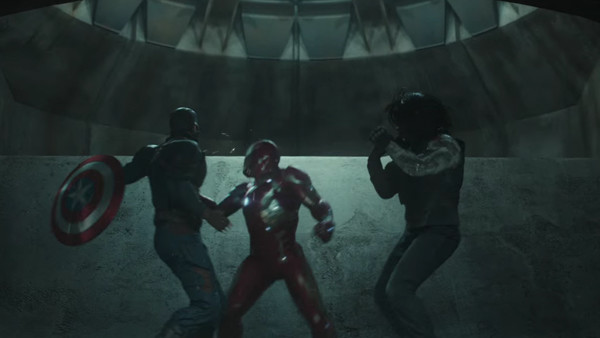
Civil War is the total opposite, thankfully: the movie's central action sequence at Leipzig/Halle Airport delivers pretty much everything you could want from a film with this title, and the final showdown between Cap and Iron Man truly is something brutal to behold.
It's hard to imagine anyone coming out of Civil War thinking, "Well, there wasn't enough action", or "But where was the Civil War?"
2. The Ending Makes A Lot More Sense

Batman V Superman's ending had many fans scratching their heads: Superman "dies" only for his resurrection to begin like 10 minutes later, at which point you have to ask why they even bothered. The only smart thing it did is hint that Bruce Wayne will be heading off to recruit the Justice League.
We won't spoil how Civil War ends, but it's decidedly more satisfying and thoughtful than BvS' conclusion. It's got action, pathos, and nods towards future movies while actually acknowledging that what's taken place in the movie will have repercussions down the line.
Basically, unlike many MCU movies, it wasn't a case of the status quo being returned to at the end: there's a lot here to digest, and it all feels naturally woven into the plot. There's nothing overly laboured or forced: more than anything, like an attempt to be shocking for its own sake, everything just makes a lot of sense, which is often more satisfying.
1. It's Simply More Fun & Entertaining

One of the biggest criticisms about Batman V Superman was that it wasn't "fun" enough. While a film being dark and serious is one thing, it probably helps if something as inherently absurd as Batman fighting Superman has at least some well-placed humour to balance the tone and ensure it doesn't become too dreary. Sadly this mostly isn't the case.
Civil War is, like any MCU movie, full of hilarious one-liners, outrageous action and entertaining characters. It doesn't take itself too seriously and yet it is at the same time arguably the first MCU film to tackle some serious subjects in a way that wasn't mostly dismissive.
Basically, it's proof that a superhero movie can juggle genuine concerns with a fun factor without compromising either. Hopefully Zack Snyder will be taking notes for Justice League Part One.
How do you feel Civil War measures up compared to Batman v Superman? Shout it out in the comments!