Christopher Lee: 5 Awesome Performances And 5 That Sucked

Whichever way you look at it, Sir Christopher Lee is one of cinema's most iconic figures. In a career spanning 80 years from his debut in 1948, he has captivated audiences in a wide variety of roles. He has played vampires, judges, Frankenstein's monster, priests, Bond villains, Nazi sea captains and wizards. This weekend he returns in this latter capacity, reprising his role as Saruman the White in The Hobbit: The Desolation of Smaug. Obviously in a career so long and so wide-ranging, it is impossible to include all his most famous roles in any list summarising his career. Even narrowing down the films included in his BAFTA tribute video is really rather difficult. With great regret and some pain, I've had to leave out his many collaborations with Tim Burton, his supporting role in Richard Lester's Musketeers films, and much of his finest work with Hammer, including The Hound of the Baskervilles. I even had to omit Jinnah, the film which he considers his finest work - though this is more down to fact that it is very hard to find. My only hope is that the five great performances I have selected are at least somewhat representative of the man's talent - and by exchange that the five bad ones I highlight do not overly diminish it. Nevertheless, let us begin our regular Friday countdown with the five biggest peaks in Lee's mountainous career...

5 Awesome Performances...

5. Mycroft Holmes - The Private Life Of Sherlock Holmes (1970)

As I mentioned in my introduction, Lee's connection with Sherlock Holmes goes right back to his Hammer days, when he played Sir Henry Baskerville opposite his long-time friend and colleague Peter Cushing. That performance, fine as it is, just missed out on this list. But with Sherlock returning to our screens next month, it's fitting that we start our countdown with the film that both Mark Gatiss and Steven Moffat have cited at their favourite depiction of Holmes on the big screen. Directed by the great Billy Wilder (Sunset Boulevard, The Apartment, Some Like It Hot), The Private Life of Sherlock Holmes is an affectionate parody of Sir Arthur Conan Doyle's characters. Like Sherlock it borrows liberally from the numerous Holmes stories, particularly from 'The Adventure of the Bruce Partington Plans'. The main plot involves the disappearance of a well-known engineer in Scotland, with Sherlock's investigation involving the Loch Ness Monster, monks and a large group of midgets (the film's term). Looking at the film in hindsight, it's not hard to see which parts inspired Gatiss and Moffat - there is even the suggestion of a homoerotic relationship between Holmes and Watson. But Lee's performance as Mycroft is the ace in the hole, playing off Robert Stephens' Holmes quite brilliantly. His voice and intimidating build are used to great effect by Wilder, and Lee captures the stuffy, unimaginative air that Mycroft exudes which puts the brothers at constant opposition. It's a fine and witty performance, and a great way to begin our countdown.

4. Count Dracula - Dracula (1958)

I'd never hear the end of it if I were to make a list of Lee's greatest performances without including at least one Dracula film. Lee's relationship with the character deteriorated as Hammer sought to cash in through inferior sequels; if Lee is to be believed, his Count was only silent in Dracula: Prince of Darkness because he refuses to say a single line of the script. Be that as it may, his first appearance as the Count for Hammer remains a classic of its time. Based rather loosely on Bram Stoker's seminal novel, Dracula begins in 1885 with the arrival of Jonathan Harker at the title character's castle in Klausenberg. Gaining access by posing as a librarian, he soon announces his aim to kill Dracula, but fails in his task and disappears. Some time later, Dr. Van Helsing arrives in the same town and is presented with Harker's journal by the frightened townsfolk. When he arrives at the castle, he discovers the true horror of what has taken place, and seeks to stop the Count at all cost. While Lee struggled to get across all the elements of Stoker's character that he wanted, there's no denying the appeal of his Dracula in a film which still holds up after 55 years. Not only is he physically suited to the part, towering over Van Helsing at six-foot-five, he also captures the elegance and tragic aspect of Dracula, particularly in the early scenes involving Harker and the captive woman. Whatever your view on modern-day vampires, his performance is one for the ages.

3. Flay - Gormenghast (2000)

In comparison to a very lengthy film career, Lee hasn't made a great deal of TV appearances. Admittedly he was in his prime at a time when TV was considered inferior to film: the production values were lower, budgets were cheaper, and unless you fancied a life in soap opera there was much less scope for long-running work. But late in his career, Lee made an albeit brief appearance in a fantastic BBC miniseries, coming on the eve of his role in The Lord of the Rings. Gormenghast is a four-part miniseries based on the first two books of Mervyn Peake's Gormenghast trilogy, Titus Groan and Gormenghast. It follows the rise and fall of the Machiavellian former kitchen boy Steerpike, who ingratiates himself to the lords and ladies of the castle Gormenghast and proceeds to ruthlessly murder family members to increase his power. The world of the castle is bound up in endless and absurd rituals, which come to a head with the birth of Titus Groan, who eventually kills Steerpike and flees the castle to explore the outside world. While the miniseries is driven by the scheming performance of Jonathan Rhys Meyers, Lee's role as Mr. Flay is very significant. He first spots Steerpike after his escape from the kitchen and remains suspicious of him, his invasiveness eventually resulting in his banishment. Speaking largely in broken sentences, Lee casts a gloomy shadow and epitomises the needless complexity and decay that affects all aspects of castle life. Watch out too for a funny bit of swashbuckling, as he and Richard Griffiths (playing Swelter the cook) sword-fight around a sleepwalking Ian Richardson.

2. Saruman - The Lord Of The Rings Trilogy (2001-03) & The Hobbit Trilogy (2012-14)

Saruman Chris Lee Considering the timing of this article, it was perhaps inevitable that Saruman would turn up somewhere on this list. Not only does Lee read The Lord of the Rings at least once a year, he is the only cast member in either trilogy who actually met J. R. R. Tolkien. Having long expressed a desire to play Gandalf, he was cast as Saruman since his relative age would prevent him from doing all the sword-fighting and horseback scenes. Fortunately, this turned out to a brilliant move. The stories of The Lord of the Rings and The Hobbit are so well-known and embedded in our pop culture that it scarcely seems relevant to recap them €“ not to mention the dozen of articles on either subject available on this site. Having seen Saruman become the puppet of the dark lord Sauron in Peter Jackson's original trilogy, The Hobbit trilogy focusses on a time when Saruman the White lived up to his name, as the sarcastic but ultimately wise and noble head of the wizards. Tolkien never specified what it was that turned Saruman from good to evil; it's an event that happens between the events of the two books. Lee's performance thus far in The Hobbit has not given any great indication, but what it has done is begin to broaden out and develop the more long-standing aspects of his character, particularly his feeling of superiority over Gandalf. Whether you rush out to the cinemas this weekend or opt for the original trilogy, you'll reach the exact same conclusion: he was simply born to play this part.

1. Lord Summerisle - The Wicker Man (1973)

No list about Christopher Lee would be complete without the cult classic that is The Wicker Man. With all the bizarre stories surrounding its production, its mistreatment by the distributors and its iconic, terrifying imagery, it has become a lynchpin of subversive British cinema. Not even the disastrous, meme-worthy remake involving Nicolas Cage and some bees can take away from what many still regard as the Citizen Kane of horror movies.

Originally released as the 'B' feature for Don't Look Now, The Wicker Man is the story of Sergeant Neil Howie, a devoutly Christian police officer called out to the remote Scottish island of Summerisle to investigate the disappearance of a young girl. Once there, he discovers the islands' residents are Pagan worshippers, under the watchful eye of Lord Summerisle. Fighting temptation on all sides, Howie struggles to get to the bottom of the mystery, and the truth is far more terrifying than he could ever have imagined... Aside from being his most famous role outside of Dracula, Lord Summerisle is Lee's greatest performance because it combines all the characteristics which make him such a compelling actor. Summerisle is intelligent, deceptively charming, refined and intimidating, with a dark heart and ruthless spirit hiding just below the surface. Lee brings enormous presence to the role, giving even the most perplexing moments great weight. It is perhaps the best depiction of religious fundamentalism in cinema, and the crowning glory of his long career. Having kept our appointment with The Wicker Man, let's move on to five of Lee's not-so-finest hours...

And 5 That Sucked...

5. Dr. Fu Manchu - The Face Of Fu Manchu (1965)

There's always controversy when an actor of one race or colour attempts to play a character of another race or colour, whether it's Mickey Rooney's supporting role in Breakfast at Tiffany's or Laurence Olivier blacking up to play Othello. Lee's appearances as Fu Manchu haven't come in from as much attention, with neither the films nor the character being widely known in today's society. But they are just as problematic as the other examples I've cited, and hence worthy of a place on this list. The Face of Fu Manchu is the first of five films made in the 1960s based on Sax Rohmer's novels. The title character is a Chinese criminal mastermind, believed dead at the start of the film but eventually found to be operating in a base beneath the River Thames in London. There he is holding Professor Muller hostage, whose research holds the key to the secrets of a deadly Tibetan flower. It is up to Fu Manchu's arch-nemesis, Sir Denis Nayland Smith, to track him down and save London from catastrophe. Notwithstanding the racist connotations of Fu Manchu as a character, Lee's performance in the title role is very uninspiring. He does nothing to justify the character's reputation as a famed super-villain, phoning in his dialogue and looking distinctly bored in many of his scenes. Even Peter Sellers, who parodied the role in his equally bad final film, has more presence in the famous moustache than he achieves here. Considering that Sellers was severely ill with heart disease at the time, that's a pretty big indictment of Lee's performance.

4. Captain Wolfgang von Kleinschmidt - 1941 (1979)

One of the little-known facts about Christopher Lee is that he is fluent in German. Indeed, in the early years of his career, he appeared in a number of German-language films. But all that study and training can't lift his performance in the next item on our list, which has alternately been branded a cult classic and a catastrophic embarrassment. 1941 is widely regarded as Steven Spielberg's worst film. Coming on the back of Jaws and Close Encounters, it is an ensemble comedy about a panic in Los Angeles following the bombing of Pearl Harbour. One of its many intertwining plot strands (few of which actually work on any level) involve a Japanese submarine, captained by a German officer, whose crews are trying desperately to get to Hollywood and capture Slim Pickens to tell them where it is. Spielberg has freely admitted that 1941 was a failure, that stemmed from the same sense of ill-discipline that had caused both his previous films to come in late and over-budget. But with a cast that includes Lee, John Belushi, Dan Aykroyd and Slim Pickens, you would think that the overall weight of the performers could pull something half-decent out of the wreckage. Alas, this is not the case, with Lee being given little to do by the awful script and struggling to come across as credible. He's not in the film for very long, but you certainly don't miss him when he's gone.

3. Commandant Rakov - Police Academy: Mission To Moscow (1994)

Like the National Lampoon series before it and Austin Powers after it, the Police Academy films are a classic example of a franchise that should have stopped after its first instalment. This, the seventh and final part to date, is rightfully regarded as the low point of the series. Taking just over $100,000 upon its release, it was a commercial flop and panned by critics, with Leonard Maltin commenting: "If the United States and Soviet Union were still at odds, this film would make a great weapon...it could bore people to death." Mission to Moscow takes place after the end of the Cold War and the collapse of the Soviet Union. Commandant Rakov is keen to bring down Mafia boss Konstantin Konali, who is laundering money under the guise of a video game business. Through a series of plot contrivances, Rakov ends up calling in the Police Academy team, who soon begin to cause havoc in Moscow in their foolhardy bid to bring Konali to book. It should come as no surprise that Mission to Moscow is dire. Its jokes are either lazy or non-existent, its direction is lacklustre, the writing is appalling and most of the performers seem embarrassed to be there. Lee's performance, however, is particularly toe-curling, camping it up as a somewhat effeminate Russian soldier and with an accent that comes and goes as it pleases. While the damage is mitigated by the film's commercial failure, it's sad to see a great actor waste his talent so markedly.

2. Count Dooku/ Darth Tyrannus - The Star Wars Prequels (2002-05)

Last month I wrote a piece on actors whose careers were irrevocably changed by their involvement in the Star Wars franchise, some for better, some for worse. I didn't include Christopher Lee on that list, since if anything the prequels sustained the career revival he'd experienced on the back of The Lord of the Rings. But while the prequels are mostly George Lucas' fault, Lee doesn't acquit himself quite as well as perhaps he could. As with The Lord of the Rings, it is rather pointless to recap the plot of the prequels: everyone knows the stories (or lack thereof) and everyone knows the jokes that flow from them. Count Dooku is the main antagonist in Attack of the Clones, who tries to kill Padmé Amidala and then confronts Obi-Wan Kenobi on Geonosis. A former Jedi who turned to the Dark Side, Dooku is partially intended to foreshadow Anakin Skywalker's fate, both in his transition and his relationship to Palpatine. Like Darth Maul in The Phantom Menace, Count Dooku is a very boring villain, being essentially a stooge to Palpatine who is cast aside when the plot demands it. But while he's working with very little, Lee does surprisingly badly for a man who is used to playing villains. Despite doing most of his own stunts, he appears overwhelmed and out of his depth, phoning in most of his dialogue and not being all that intimidating. His only memorable act, at least canonically, is cutting off Anakin Skywalker's hand €“ and even then, we were so fed up with Hayden Christiansen that we were almost rooting for him.

1. Stefan Crosscoe - Howling II: Your Sister Is A Werewolf (1985)
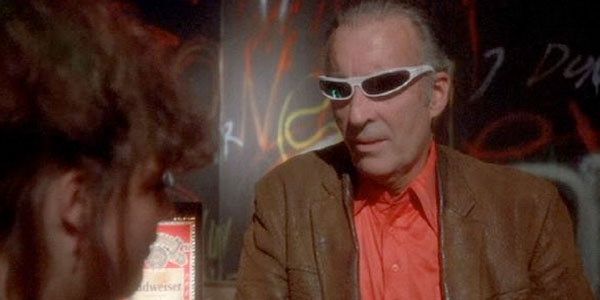
Lee knows all about terrible horror sequels. He made a fair few under duress during his later years with Hammer, being guilt-tripped into reprising his role as Dracula on the grounds that otherwise the crew would all be out of work. But the weakest entry in his filmography, at least in terms of his own performance, comes not from Hammer but from Hollywood €“ the risibly titled Howling II: Your Sister is a Werewolf. Picking up straight after the events of The Howling, the film begins with the funeral of Karen White, the heroine of the previous film. At her funeral her brother Ben is approached by Lee's Stefan Crosscoe, who tells him that his sister was a werewolf and persuades him to journey with him to Transylvania to battle Stirba, immortal queen of the werewolves. What follows is a pretty cheesy showdown involving witchcraft, dwarfs and supernatural parasites (no, I'm not making any of this up). Howling II may not be the worst film ever made, with some arguing that its ridiculous plot and camp action put it firmly in the 'so-bad-it's-good' category. But even with this stipulation, Lee seems embarrassed and disinterested during all his time on screen. Had his involvement been limited to a knowing cameo, that might have been alright, but having him on screen for so long doing so little so badly only serves to highlight the film's many weaknesses. In short, it's his worst performance because he makes the very least out of the very little he is given. --- Disagree with my choices? Drop me a comment below or visit Mumby at the Movies for more film reviews.

Contributor
Contributor

Freelance copywriter, film buff, community radio presenter. Former host of The Movie Hour podcast (http://www.lionheartradio.com/ and click 'Interviews'), currently presenting on Phonic FM in Exeter (http://www.phonic.fm/). Other loves include theatre, music and test cricket.