Christopher Nolan: Ranking His Films From Worst To Best

Let the arguments begin...

It may be relatively early days in the career of Christopher Nolan, but it€™s not too early to surmise that if he continues to make films of the calibre we have come to expect, when his career draws to a close he will likely be heralded as one of the best directors to ever wield a camera. We live in a world of hyperbole, where many are quick to judge something €˜the best such and such ever€™ and load extensive praise and lofty adjectives on the middling and mundane. That being said, Nolan€™s films to date have all been of an undeniably high quality; on IMDB, only two of his efforts have averaged a score below 8.3, and six are firmly entrenched in the Top 250. If IMDB is a little too populist for your taste or you€™re concerned that its voting system is far from infallible, the critics like him even more €“ just one entry from his filmography has anything other than a positive score on Metacritic, and his films are yet to fall below 76% on Rotten Tomatoes. Or rather, that was the case until the Interstellar reviews came pouring in. Nolan's latest film has garnered a thoroughly respectable 72% at the time of writing, but some are calling it a misfire that represents his worst excesses as a filmmaker. Still, early audience reaction has been enthusiastic for the most part, and Interstellar looks likely to bag an opening weekend take in the $50 million region. How some directors would welcome such a 'misfire'. An appropriate time, then, to review and rank all nine entries in the oeuvre of Christopher Nolan. Much as the most ardent devotees from his considerable fan base might argue, his films are not without their flaws, and any director who€™s received such a high volume of praise must also endure a little fault-finding from time to time. If you don€™t agree with the running order €“ fairly inevitable in such subjective affairs €“ you know where to go. Hell, the comments section €“ the choice is yours.

9. Following

Everyone has to start somewhere. That, in itself, is an unduly harsh way of summing up Following €“ Nolan€™s debut feature which was filmed on a shoestring budget in challenging circumstances. The result is far from perfect, but as debuts go it more than does the job, introducing us to a cerebral filmmaker who positively revels in twisting the traditional narrative approach to devious ends. Following tells the story of €˜Young Man€™ (Nolan wasn€™t the best at character names early doors), a labouring writer devoid of inspiration who calls himself Bill and takes to following strangers around London in the faint hope of stumbling on something worthy of putting pen to paper. However, he gets more than he bargained for when he winds up on the tail of Cobb €“ a professional burglar who takes the young man under his wing €“ and falls for the charms of a femme fatale. Nolan managed to put Following together for a meagre £3,000, commandeering friends and acquaintances that were in full-time employment, as he was, to sacrifice their weekends over the course of a year in pursuit of his filmmaking dream. The result is an absorbing neo-noir that foreshadows the director€™s fetish for non-linear storytelling, but unsurprisingly it's a feeler effort put in the shade by his later films. Hamstrung by a largely inexperienced cast and not yet the master storyteller that he would become, Nolan€™s debut is enjoyable but lightweight, and proof that things could only get better.

8. Insomnia

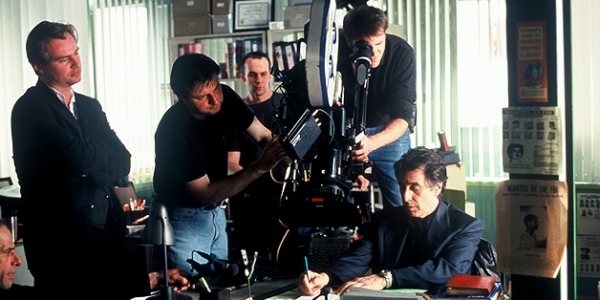
Remakes can be a tricky beast, particularly in instances when you€™re starting in the shadow of an already-lauded foreign film. Even a filmmaker of David Fincher€™s esteemed talents struggled to add much to Niels Arden Oplev€™s Swedish language version of The Girl with the Dragon Tattoo, while Matt Reeves€™ 2010 film Let Me In paled in comparison to Tomas Alfredson€™s Let the Right One In from a couple of years earlier. Insomnia was Chris Nolan€™s first attempt to work within the studio system, and he was tasked with filming a remake of Erik Skjoldbjaerg€™s 1997 Norwegian thriller of the same name. The plot concerns LAPD detective Will Dormer, played by Al Pacino, who is sent to the small, isolated town of Nightmute, Alaska, to assist an old colleague with a murder investigation. Dormer, under investigation by his own Internal Affairs department, is a troubled soul whose anxiety over his career is disrupting his sleep €“ a state exacerbated by Alaska€™s piercing perpetual daylight. A tragic accident forces Dormer into an uneasy pact with sinister crime writer Walter Finch (Robin Williams) and puts him directly in the crosshairs of dogged local police officer Ellie Burr (Hilary Swank). Nolan coaxes fine performances from Pacino and Williams, and Insomnia is never less than atmospheric and engaging. Nevertheless, the director is perhaps somewhat hampered by the existing source material, to which this film sticks fairly closely for the most part, and unable to toy with the narrative in his preferred fashion. The result is a rather hazy affair that is worthy but eminently forgettable, and undoubtedly one of Nolan€™s least satisfying efforts.

7. The Dark Knight Rises

By any normal standards, The Dark Knight Rises would be judged a tasty slice of cinema, and for most directors it would represent a career high-water mark. But these are not normal standards, for Chris Nolan€™s body of work is as robust and littered with brilliance as any filmmaker€™s you care to name. As such, TDKR was something of a disappointment, albeit a thoroughly entertaining one that brings his Gotham saga to a satisfying close. As the story begins, we find a reclusive Bruce Wayne eight years removed from his self-appointed position as Gotham€™s Dark Knight. The death of Harvey Dent in the prior instalment and Batman€™s sacrifice in covering up his crimes have practically eradicated organised crime, but a new threat emerges in the form of Bane €“ a mysterious hulk with a score to settle, an army to unleash and a city to enslave. So what went wrong? For the film€™s many fans and defenders it€™s a negligible question, but most would agree TDKR lags a valiant third in the hierarchy of this Batman trilogy. In terms of ambition, Rises stands alongside anything Nolan has attempted, but a disjointed, occasionally muddled storyline features several characters that fail to properly register, Bane is a less-than-inspired villain despite Tom Hardy€™s best efforts, and the abiding impression is of a film bloated by its own seriousness and aspirations. Part of the problem, of course, is that the two films that came before it €“ The Dark Knight in particular €“ were very hard acts to follow. Heath Ledger€™s bulldozing performance and untimely death left Nolan with a monumentally difficult task to top his own work; this he failed to do, and the results are good €“ very good, even €“ but not great.

6. Interstellar

After a lengthy period of hype and intense speculation, Interstellar has now arrived in cinemas. Hailed by the majority of Nolanites as another bona fide winner but criticised in some quarters for failing to live up to the director€™s best work, Nolan€™s latest film has provoked the kind of debate and discussion that typifies his output. Matthew McConaughey plays the part of Cooper, a former NASA test pilot and reluctant farmer struggling to raise his two children in a world afflicted by blight and dust storms. With the future of humanity looking decidedly bleak, the discovery of a wormhole near Saturn sends Cooper and a team of scientists on a mission into the unknown to seek out a new habitable planet before it€™s too late. There is much to talk about with Interstellar €“ unquestionably a good thing in a cinematic landscape overrun with lightweight popcorn fare. In an interview prior to the film€™s release, Nolan€™s leading man McConaughey said of the director, €œI believe he's constantly letting his reach exceed his grasp,€ and that€™s the problem with the film in a nutshell. The visuals are often stunning, McConaughey is predictably top drawer and there is much to enjoy, but Nolan€™s laudable ambition is a hindrance that suffocates the plot in oblique science and a muddy narrative. Rumours that the director had found a warmer side and that Interstellar is his most personal, emotional film to date are well-founded and welcome, but some of his bad habits €“ murky sound mix, exposition overkill €“ are also in evidence. Interstellar isn€™t a match for Nolan at his best, but it€™s more than a match for most films of such scale.

5. The Prestige

Christopher Nolan is well known for frequently collaborating with a recurring cast and crew, and Christian Bale€™s committed, pitch-perfect contribution to Batman Begins was enough to convince the director that he had found the perfect actor to head up the cast of his 2006 drama The Prestige. Bale plays Alfred Borden, a London magician who develops a friendship with fellow illusionist Robert Angier (Hugh Jackman) that disintegrates following an on-stage accident in which Angier€™s wife drowns. Angier blames Borden for her death, and a personal and professional rivalry develops between the pair where obsession, jealousy and deception fuel a dangerous war with tragic consequences. As is his wont, Nolan eschews the typical approach of telling the story in a linear fashion, choosing instead to start the film with Borden on trial for the murder of Angier and use misdirection and cinematic sleight of hand to cross-cut crucial events and keep the audience guessing right to the last. The Prestige received generally positive reviews but the movie€™s big reveal was underwhelming to some and either predictable or ridiculous to others. The film has been criticised for being an extended parlour trick that takes too long to get where it's going, but by and large moviegoers enjoyed Nolan€™s magic show, and the impressive cast and superbly-realised period setting do enough to moor The Prestige somewhere around the middle of Nolan's works.

4. Batman Begins

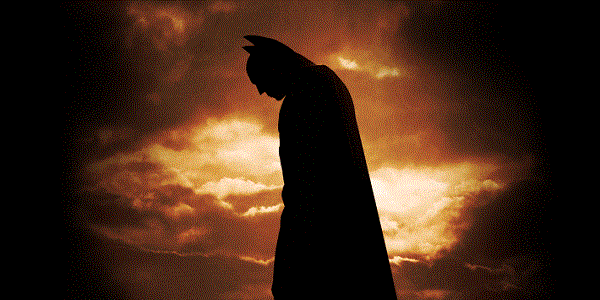
Is it really necessary to rehash the basic plot of Batman Begins? Assuming you€™re alive and have, at some point, had access to TV/film/comics/newspapers/people, almost certainly not. But just in case: a billionaire dresses up as a bat to fight crime and protect his city. If that sounds silly €“ and, let€™s face it, it€™s pretty absurd €“ the prospect of taking such a ludicrous premise and making it even vaguely plausible is utterly preposterous. Yet that€™s exactly what Chris Nolan attempted to do when he took on the daunting challenge of rescuing the Batman from a neon nightmare of sidekicks and bat nipples in a bid to restore credibility to one of pop culture€™s most indelible icons. Batman Begins also did something that hadn€™t been done before on screen: it took the time to properly address Bruce Wayne€™s upbringing and origins, exploring the arc of what motivated him to become a symbol of hope and how, in practical terms, he managed to achieve it. Indoctrinated into the League of Shadows during seven soul-searching years travelling the globe, Bruce must then foil their plan to rip Gotham asunder by way of a fear-inducing toxin and conquer his own personal demons. While X-Men, among others, had taken some important baby steps in immersing fantastical characters in real-world settings, Batman Begins succeeded on almost every level and flung open the doors for superhero films to be made and taken seriously. Some find the early plotting to be on the slow side, others complain that the third act is disappointing, but none can dispute that Nolan raised the bar in groundbreaking style to take his career to another level.

3. Inception

In The Usual Suspects €“ Bryan Singer€™s 1995 crime caper classic €“ we were informed that the greatest trick the devil ever pulled was convincing the world he didn€™t exist. Well the greatest trick Christopher Nolan ever pulled was turning a talky, two-and-a-half hour mind melter into one of 2010€™s highest-earning films and one of the most talked about flicks of that or any other year. Inception follows Leonardo DiCaprio€™s Cobb, a special kind of thief who uses dream technology to infiltrate the subconscious of his targets in order to extract information, as he assembles an elite team and leads them on a mission to attempt the hitherto-untried procedure of €˜inception€™ and plant an idea in the mind of soon-to-be-heir of a business empire, Robert Fischer (Cillian Murphy). However, Cobb is deeply troubled by the memory of his deceased wife (Marion Cotillard) and his subconscious becomes a palpable danger to both himself and his associates. Arguably the most challenging, high concept idea to ever form the basis of a tentpole movie, Inception€™s exacting plot didn€™t perturb cinemagoers, who turned out in throngs to push the film to over $825 million in worldwide box office receipts. A summer blockbuster with improbable intellectual heft, Nolan delighted in creating a beguiling labyrinth of a plot that includes a divisive ending that had people talking on leaving the cinema and debating long into the night in all corners of the Internet. For some, Inception is too clever for its own good and eats its own tail. To others, it€™s an exposition-heavy, overrated slog. For most, it€™s an all-too-rare example of a challenging blockbuster that shows just how successful a film that respects the audience€™s intelligence can be.

2. Memento

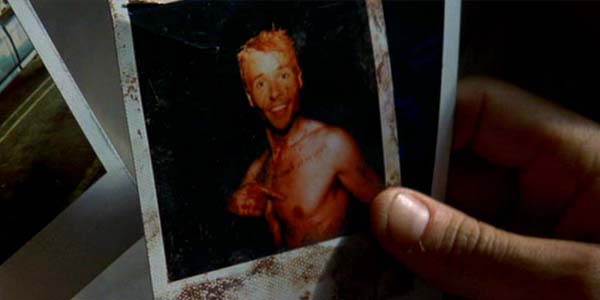
Remember Sammy Jankis? Leonard does, or thinks he does at least; Memento€™s protagonist is the dual sufferer of anterograde amnesia, which prohibits him from forming new memories, and the pain and anguish of his wife€™s murder. We follow his frantic attempts to solve the crime and achieve vengeance. Backwards. Back in 1997, Nolan had just finished shooting Following and found himself in Los Angeles, where his wife Emma Thomas had recently accepted a job at Working Title. The man she replaced, Aaron Ryder, had been recruited by Newmarket Films and tasked with finding new projects; after a screening of Following and talking to its director about a screenplay he had written based on a short story idea dreamed up by Jonathan Nolan, Ryder found just what he was looking for. Handed a $4.5 million budget €“ slight by Hollywood standards but astronomical for the fledgling director €“ and a 25-day shooting schedule, Nolan cracked the whip (gently, of course) and canned all of the footage required to edit together the kind of non-linear structure that would soon become almost a trademark. The finished product, which entails two different sequences interspersed €“ a chronological black-and-white series of phone conversations, and colour sequence shown in reverse order €“ is one of the most innovative and thought-provoking motion pictures of recent decades. Memento is now nearing its 15th anniversary but hasn€™t aged a day. The viewer is forced to inhabit Leonard€™s perpetual confusion as both you and he try to solve a riddle wrapped in a mystery inside an enigma edited by a sadist, and many theories abound as to what really happened. Nolan, of course, will never tell.

1. The Dark Knight

Is The Dark Knight Nolan€™s best film? As always, it€™s a matter of opinion. What€™s not up for debate, however, is that his sequel to Batman Begins is still the gold standard for superhero films, a zeitgeist touchstone, one of the most successful movies ever made and, thus far, the film that most defines him. Whereas Batman Begins set up Nolan€™s vision of Gotham, The Dark Knight allowed the director to run riot and fully indulge his ambition to make a comic book movie like nothing that had come before €“ or has arrived since. In the incredibly unlikely event that you haven€™t seen it, the film finds Bruce Wayne locked in an escalating battle of wits and will with the Joker, an agent of chaos who has no desire other than to watch the world burn. The Batman is put to the test like never before as his enemies seek to blow a hole through everything he stands for and force him to question whether the lengths he is prepared to go to in his fight against crime overstep acceptable boundaries. A genre-busting crime epic with serious things to say about the invasion of civil liberties in the name of upholding law and order, The Dark Knight is a masterpiece. A flawed one, if that€™s not an oxymoron. An argument can certainly be made that it€™s overstuffed and there€™s a plot hole or two big enough to flip an eighteen-wheeler truck through, but that would be missing the point. A thunderous piece of filmmaking with bravura performances, breathless action, unforgettable scenes and a smattering of humour to help it all down, The Dark Knight is still the film Nolan is trying to top. Here€™s hoping he manages to do just that €“ the pleasure will be all ours. Disagree with the running order? Think Interstellar deserves better? Head to the comments section and get it out of your system.

Contributor
Contributor

I watch movies and I watch sport. I also watch movies about sport, and if there were a sport about movies I'd watch that too. The internet was the closest thing I could find.