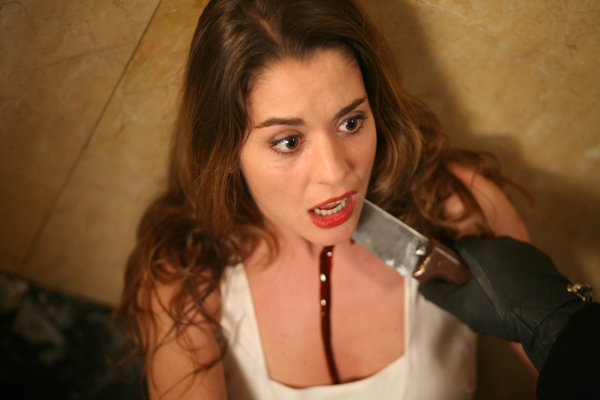
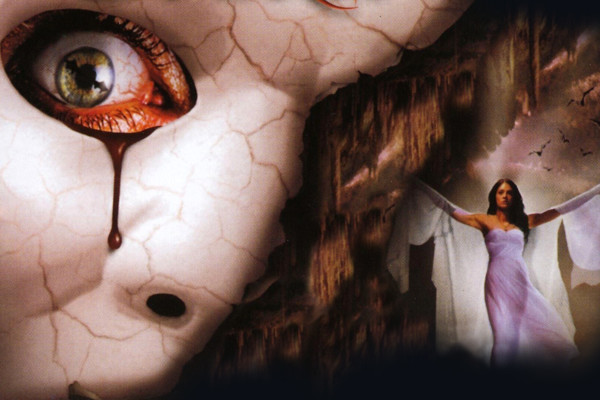
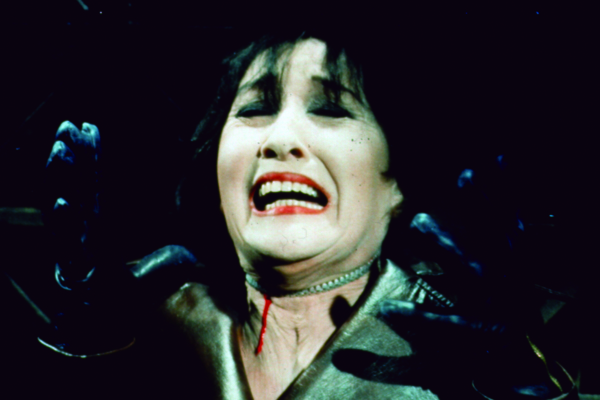
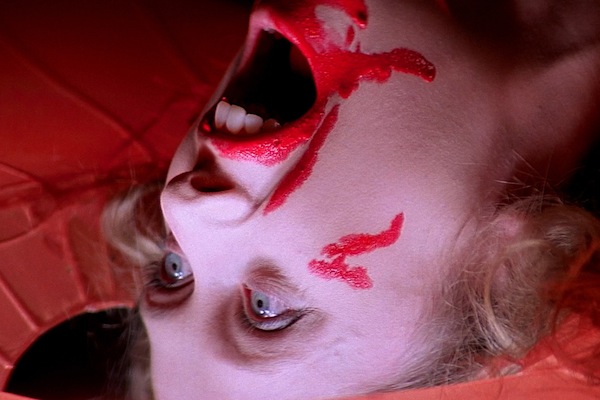
Dario Argento's Films - Ranked From Worst To Best

Do you like Argento?

Dario Argento, arguably Italy's finest ever horror director (and one of the best horror directors ever for that matter), turned 75-years-old on Monday 7th September, 2015. When I became aware of this milestone, it got me thinking about Argento and his films. Almost immediately after came the news that the much talked about Suspiria remake is going ahead, with Luca Guadagnino in the director's chair. Argento is an auteur, a man who has developed a visual style all of his own, works outside of the studio system (his films were routinely financed by his father Salvatore, before his 1987 death) and who writes everything that he directs. He directed his first featured in 1970 and has released films every decades since then. Invariably, some have been better than others. While Argento might have been the brains behind one or two masterpieces, he's also been responsible for some cinematic atrocities, too. The general feeling with Argento is that he had a magnificent run in the seventies and into the early eighties but something went drastically wrong in the late 80s, leading to a painful and drawn-out decline. But to what extent is that actually true? Are Argento's more recent films really as bad as his critics (and a significant amount of his fans) say they are? Are his seventies thrillers as good as those same people claim? And why now, after all these years, is Suspiria getting the remake treatment? Here are Dario Argento's 19 feature films, ranked from worst to best.

19. Dracula 3D

The less said about Dracula 3D, the better. It is a crushingly disappointing film, although one that should have been expected, given the downward trend that Argento has been on over the past twenty years or so. It is not a direct adaptation of Bram Stoker's famous novel, but does incorporate elements of it. Argento had toyed with the idea of making a Dracula film for some time but did not know how to go about doing it. The proliferation of 3D convinced Argento that he could fully realise his vision, stating that 'with the depth, something changes and the audience feels as though they have been pushed inside the screen'. He shouldn't have bothered. The film was a disaster, with cringeworthy 3D and lots of unintentional humour. It could yet become something of a camp cult classic in years to come, though.

18. Giallo

To a lot of film fans (although certainly not Argento fans) the term 'giallo' will like cause some confusion. 'Giallo' is Italian for yellow, the colour of the covers that were given to the crime novels of the likes of Edgar Wallace and Agatha Christie. That term was then adopted for a serious of Italian films that incorporated detective/thriller/horror elements. These films were popularised, in the main, by Dario Argento. So who better than to make a giallo called Giallo about a killer named, erm, Giallo? Certainly not Dario Argento, at least not by the time 2009 rolled around. Such a project would have been eagerly-anticipated in the seventies, eighties and into the mid-90s, but by the late 2000s Argento had, sadly, lost it. Giallo is a grim film, full of sleaze and gore. It is not akin to Argento's well-crafted seventies and eighties films, that's for sure. The most interesting thing about Giallo happened off-camera, when star Adrien Brody sued the producers for unpaid wages.

17. The Phantom Of The Opera

Like Dracula 3D, Argento's version of the Phantom of the Opera is not entirely faithful to the source text. For a start, the Phantom is not actually disfigured. He doesn't wear a mask, either. Also, the Phantom is abandoned as an infant and raised by rats (in the book he is raised by his mother). There's a bizarre rape in there, too. So the message is clear: anyone who wants to experience a faithful adaptation of Gaston Leroux's novel, don't look for it here. Anyone who wants crazy B-movie over-acting, nonsensical writing and gratuitous sex and violence should give it a gander. But be warned, this is a campy, schizophrenic film that completely fails on pretty much every level. That's coming from an Argento fan, too. It's hard to believe the director pissed away a $10 million budget on this. Even harder to believe is that Argento's original cut ran nearly two-and-a-half hours. Imagine having to sit through an extra hour of this?!

16. The Mother Of Tears

The Mother of Tears was the third film in Argento's 'Three Mothers' trilogy, based on Thomas de Quincey's Suspiria de Profundis. The first two installments, 1977's Suspiria and 1980s Inferno, we'll get to later. They're ranked far higher than the Mother of Tears, Argento's long-gestated concluding instalment, which was released in 2007. This is another disappointing venture from Argento. Longtime fans had been crying out for the concluding part of the trilogy for a long time. It was going to happen in the mid-80s and script had been written and locations were being scouted, but the project was cancelled. Had it have happened then, it might have turned out alright. By 2007 the film had been through many re-writes and the resulting script is muddled. The descent into the supernatural craziness at the end of the film did not help it and the pacing is all over the place. The cinematography is beautiful, though, and there are enough entertaining moments to satisfy most Argento fans. Overall, though, it's a bit of a missed opportunity.

15. The Card Player

If there's one thing lacking in The Card Player, it's style. Style is what Argento is knowing for and what audiences rely on to carry them through the questionable gender politics and nonsensical plots. That is distinctly lacking here, although the novel premise certainly keeps things interesting. The Card Player is about a serial killer who abducts women and kills them live on webcam broadcast over the internet. It is a cold, unforgiving film and resembles a pretty routine police procedural. There is hardly any gore (save for one particular impalement), which is somewhat unusual for Argento, but there are one or two semi-decent set-pieces. Does The Card Player offer anything that giallo/horror fans haven't seen a thousand times before? No, it doesn't, but it's not out-and-out terrible like some people have claimed. Those awful internet graphics have aged the film terribly, mind.

14. The Black Cat (Section From Two Evil Eyes)
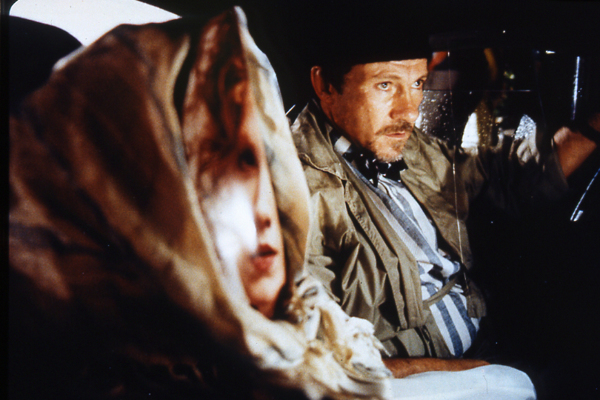
Dario Argento and George Romero. Sounds like a veritable horror dream team, doesn't it? The two were no strangers to each other as Argento had re-cut and distributed Romero's seminal Dawn of the Dead in Italy under the title Zombi. Argento wasn't one of the many people trying to cash-in on its success by making a zombie film, but he and Romero would work together again. Sort of. Two Evil Eyes is a portmanteau of two films based around the stories and themes of Edgar Allan Poe, but set in modern-day Pittsburgh. Argento's film was The Black Cat, which deals with a man (played by Harvey Keitel) who is haunted by an un-killable feline. Keitel is good here. Argento's is the superior film, making full use of Tom Savini's special effects work and going all-out in the short time that he has to play with. A notably striking scene is a dream sequence that Keitel's character has, where he is involved in some sort of ancient pagan ritual. Dario could ease up on the music sometimes and it certainly doesn't have the depth of his better work, but this is pretty decent regardless.

13. Five Days Of Milan

Yes, Dario Argento directed a western. A comedy western, no less. Although hardly implausible to see him making a violent spaghetti western (he did co-write Once Upon a Time in the West, after all), knowing that he was the person behind the elusive Five Days of Milan is just really weird. After the success of the 'Animals Trilogy' (more on that in a little while), Argento decided he wanted to spread his wings and move away from the giallo genre. He didn't want to be defined by one type of film and yearned to tell different stories. Five Days in Milan is a film that, I confess, I have only seen in an Italian form without subtitles (on YouTube, no less). I got the gist of what was going on, anyway. It seemed alright, although the acting was terrible (easy to tell in any language). Critics who saw the film when it was first released were not impressed and felt a little annoyed at Argento from straying away from the giallo. It was not a critical or commercial success and, although Argento reportedly liked the film and the experience, he decided to move back to the realm of the giallo the next year with Profondo Rosso/Deep Red. The reason it is ranked so 'high' is because Argento's direction was good and it wasn't as crushingly disappointing as some of his later horror films. Some English subs might help, mind...

12. Sleepless

After the disappointment of Phantom of the Opera, fans didn't know what to expect from Sleepless, another gaillo, and the first Argento film of the 2000s. In the film, the reappearance of some very familiar murders leads a detective to suspect that he may not have put the case to bed some seventeen years ago. Sleepless is an above average giallo, especially when considering the standard of the late 80s/90s films that were, in essence, gorier, poorer imitations of previous successes. The opening sequence is a keeper and there are plenty of brutal murders to satisfy the hardcore gorehounds, but the film also gives us a good performance from Mac Von Sydow and a genuinely suspenseful story. Clearly the best of Argento's 2000s films.

11. The Stendhal Syndrome

The Stendhal Syndrome, Argento's first movie to be filmed in Italy after his brief foray to the United States, has a compelling premise based on a real-life ailment. Stendhal Syndrome causes a person in the presence of great beauty (particularly artworks) to temporarily lose their senses and become dizzy, experience increase heartbeat and even faint. The main protagonist of Argento's film, Anna (played by his long-suffering daughter Asia), is afflicted with this condition and it is taken advantage of by a killer that she is on the trail of in Florence. He kidnaps and rapes her, in scenes that must have been especially hard for the father/daughter combo to work through. It is a sadistic film, but there are plenty of inventive and genuinely impressive moments to be found, like the sequence where Anna enters one of the paintings she is overcome by (just try to ignore the ropey CGI) or one of the pre-Matrix instance of slow-motion 'bullet time'. It was a modest hit with critics and Argento fans and did good box-office business in Italy. A sequel was planned for 2004 but, with Asia unable to commit, he re-cast her role and it morphed into The Card Player.

10. Trauma

After a very successful career in Italy, as well as worldwide box-office success, it was inevitable that America would eventually come calling for Argento. He had built up a reputation and an audience throughout the 1980s and early 90s, thanks in large part to the explosion of VHS. Following Two Evil Eyes, Trauma marks Argento's first feature-length American production. He was afforded a not-insubstantial $7 million budget and a cast including horror fan favourites Piper Laurie (who later claimed that she had never seen the film because she had heard it was terrible) and Brad Dourif, ace composer Pino Donaggio and special effects maestro Tom Savini. The results were mixed. The plot was confusing and some of the character motivations wildly inconsistent, but praise must go towards Argento's handling of the gore, which obviously benefitted from Savini's handiwork. It's not over-the-top but it is very effective. The whole anorexia sub-plot should have been discarded, however, as it is never fully explained and has little relevance to the overall plot.

9. The Cat O' Nine Tailes

The middle entry in Argento's (unofficial) 'Animals' trilogy, the name given to his first three features because they, erm, all had animal names in their titles. The success of this trio of films caused the Italian exploitation industry to jump on the bandwagon (naturally) and release similar animal-titled films like The Case of the Scorpion's Tale and A Lizard in a Woman's Skin. Of the Animals trilogy, The Cat o' Nine Tails is the weakest entry. It's certainly not bad, however, and there is a lot to recommend it, especially for fans of 1970s gialli. For a start, it is wonderfully photographed and Argento makes full use of the widescreen. Then there's the typically good score from the ever-dependable Ennio Morricone. It doesn't reach the epic heights of later Argento films, but it's a lot better than you might have heard (Argento frequently cites this as his least favourite of his films).

8. Phenomena

Let's get this out of the way now: Phenomena is completely all over the place. It is incoherent, confused and essentially sees Argento try and incorporate way too many ideas at one time. But is it actually all that bad? I would suggest not. In fact, a lot of the bizarreness just adds to the fun of it all. Phenomena is about a young girl (Jennifer Connelly in her first starring role) who communicates telepathically with insects in order to track down a serial killer. It also features a wheelchair-bound Donald Pleasance, who speaks with a Scottish accent and hangs around with a razor blade-wielding chimpanzee. It is completely bonkers. Bonkers but fun, and with some great set-pieces, too. The score from Argento's longtime collaborators Goblin is good but the presence of heavy metal tunes from the likes of Iron Maiden is a little jarring. The film was cut to ribbons for its US release, trimmed of over twenty minutes of footage (mainly violence) and retitled Creepers. It was a hit in Italy, however, and the now available uncut version has a cult following.

7. Opera

Argento was inspired to make Opera after commenting that he dislikes it when audiences turn away from his gore and violence before stating that, if he could, he would sellotape needles under their eyes to ensure that they do not blink. It is that central premise (and image) that drives Opera, an underrated late 80s effort from the controversial director. The film centres around insecure opera singer Betty's attempts to outwit a black-gloved killer who is murdering those close to her and forcing her to watch it with the old needles-under-the-eyes trick. The plot, as usual with Argento, comes secondary to the truly spectacular visual elements and style. Of particular note is the sequence where the character played by Daria Nicolodi (Argento's former partner and mother of Asia) is shot through the eye as she is looking through a keyhole. To pull it off required state-of-the-art techniques, as well as for Daria to have a small (but dangerous) amount of explosives attached to the back of her head. Arguably Argento's last great film, before the rot set in...

6. The Bird With The Crystal Plumage

The Bird with the Crystal Plumage is where the giallo really began to take shape as a sub-genre. Mario Bava had already directed the unofficial 'first' giallo with 1960s The Girl Who Knew Too Much (and then began to add the typical elements of the stylised set-pieces and the black-gloved killer with Blood and Black Lace), but Argento really took the giallo and made it his own. His debut feature, The Bird with the Crystal Plumage shows that Argento was instantly comfortable behind the camera. An adaptation of Frederic Brown's The Screaming Mimi, it concerns a writer who is stalked by a killer after witnessing a murder while trapped in an art gallery (which is one of the film's best and most clever scenes). The Bird with the Crystal Plumage put Argento on the map. Not only was it a critical hit (with those that could be bothered to review it, anyway), but it was a financial one, too. The film did good business in America where it was released with the blunt title of The Gallery Murders and was also well-attended in Argento's native Italy. A stylish and compelling thriller.

5. Four Flies On Grey Velvet

Unavailable on DVD for years (at least in any respectable non-truncated version), Four Flies finally surfaced on home video in the UK in 2012, forty years after it first played in cinemas. Argento devotees had long feared that the film was lost. That would have been a real shame, because it is rather brilliant. The last of the Animals Trilogy, Four Flies sees Argento at his most stylish and uninhibited to that point. There are several astonishing moments, with the car crash/decapitation/bullet time sequence deserving special mention. This features the first instance (at least in feature film) of following a bullets trajectory, thanks to the aide of special high-speed cameras. Truly ground-breaking stuff. It is arty but not overly so, and the acting a shade better than you would typically expect to find in an Argento film. The Ennio Morricone score, constantly-moving camera and the well-thought-out set-pieces are all there, of course. A must-watch for those who have yet to seek it out.

4. Tenebrae

The genesis of Tenebrae was a scary real-life incident that Argento experienced when the director was writing in Los Angeles in 1980. The director was harassed by a disturbed fan who claimed to want to harm Argento in the way that his films had harmed him. Although he wasn't physically assaulted, Argento was left shaken by the whole thing (understandably so). Tenebrae sees Argento return to the giallo after his foray into supernatural horror. As well as being a mediation on the notion of fame (novelist Peter Neale is targeted by a mysterious killer), it also comments on Argento's reputation as a filmmaker, particularly the accusation that he is a misogynist due to his penchant for depicting the murders of young, beautiful women. Certainly the infamous Louma crane tracking shot, which sees a camera effortlessly glide up to, over and into a house, whereupon two female inhabitants are brutally slain, caused debate (it is a beautiful piece of filmmaking but, again, is is misogynistic?). Regardless of what you make of the film's politics, as an exercise in style and horror it is simply a joy to watch.

3. Inferno

Inferno is the second instalment in Dario's Three Mothers trilogy, which focuses on a triumvirate of ancient witches who conspire to unleash evil and misery upon the world. Inferno deals with Mater Tenebrarum, alias The Mother of Darkness, who lurks in a New York City apartment building. After the surprising international success of Suspiria, Argento was able to get his next film funded by 20th Century Fox, with a budget of about $3 million, fairly modest for this type of film. Inferno is full of lush visuals, beautiful lighting (it really makes a difference) and striking cinematography. Although not as delirious as in other films, Argento's camera still moves and there are one or two breathtaking sequences (particularly the Irene Miracle underwater room sequence). The film was not a commercial success, suffering from poor distribution, but critics were favourable to it. That had to be some consolation to Argento, who was so debilitated by a case of hepitatis during filming that he had to direct some scenes while lying down. Other scenes were completed by a second unit crew, often featuring the late, great Mario Bava.

2. Deep Red

Argento has been at the helm of many giallo films, but Deep Red is undoubtedly his best. He helped popularise it with The Bird With the Crystal Plumage, added more of his personal flourishes with Four Flies but, with Deep Red, he truly perfected it. Not only is it Argento's bet giallo, it could be the greatest giallo, period. It is a labyrinth of a film, with many twists and turns. As usual, Argento's camera is star of the show, and here it barely stops moving. It makes the whole experience undeniably suspenseful and, yes, there are lashings of visceral violence in there, too. Goblin's score is one of the strongest of their collaborations with Argento and you might be surprised to see some allusions to high art (look at for the ode to Edward Hopper's Nighthawks). Multiple versions of the film exist, although thankfully the fully uncut 126 minute version is widely available in a remastered/high definition form. A 3D remake (with George Romero directing) was talked about several years ago but mercifully never came to fruition.

1. Suspriria

Argento's masterpiece, Suspiria has, and will continue to, stand the test of time. It is a sumptuous exercise in pure style, but also stands as one of his more coherent and absorbing works in terms of story. Deep Red may have Suspiria pipped in terms of plot, but as far as the overall package is concerned, Suspiria stands head and shoulders above all others. Suspiria is filmed like some sort of twisted fairytale, emphasising vibrant primary colours (particularly red) and helped immeasurably by the imbibition technicolor process, used for the likes of The Wizard of Oz. It creates a surreal, nightmarish feeling and also helps it look like no other horror film (especially not from the seventies). Besides the incredible visual style and cinematography, Suspiria has a lot else going for it, too, including an iconic score by Goblin, a great central performance from Jessica Harper and some spectacular murder set-pieces. It was a success when it released, doing bit business in Italy and around the world. The film's reputation has only grown in the years since and it is now considered one of the greatest horror movies ever made. Rightfully so. Argento is a polarising director and this is bound to be a polarising list, so please share your comments below. But keep it clean, or else I'll send the BBFC 'round after you!

Contributor
Contributor

Student of film. Former professional wrestler. Supporter of Newcastle United. Don't cry for me, I'm already dead...