Dark Tower TV Series: 9 Things It Must Do To Save The Franchise
Fixing those broken beams.

The Dark Tower movie was built on shaky foundations, but in spite of its much-publicised production woes, directorial departures and extended stay in development hell, it should have turned out better than it did.
There was no shortage of inspired source material for the film to draw on, the cast and director's talents were never up for debate and its $60 million budget, while relatively small by blockbuster standards, wasn't exactly chump change.
Dark Tower was lambasted by fans and critics, many of whom felt it lacked the vision, scope and runtime required to capture the essence of Stephen King's magnum opus.
Sony's vision for the franchise was originally an ambitious one, spanning multiple films and companion TV series, but the movie's reception may have scaled that back.
Scaled it back, but not killed it entirely as the studio's plans for a prequel series exploring Roland Deschain’s gun-slinging origin aren't yet off the table, with Walking Dead alum Glen Mazzara attached as showrunner and lead actor Idris Elba (by far the best thing about the film) willing to return.
Reports suggest the show will be based on the fourth book in the series, Wizard and Glass, with flashback sequences from The Gunslinger adding connective tissue.
Although The Dark Tower's future is clouded by uncertainty, one thing is for sure, any more slip-ups from Sony and the Ka-Tet will be broken forever.
9. Be More Faithful To The Books

Although The Dark Tower wasn't a direct adaptation of any of Stephen King's novels, playing out as a weird sequel-reboot hybrid, it could have at least respected them.
Much of the saga's lore was stripped away on the big screen, the high metaphysics, horror elements and moral ambiguity the author weaved into the story making way for a watered-down depiction of good versus evil.
The Dark Tower TV show should stick to the books more closely, delving deeper into their lore and mythology. Pick out the best scenes and adapt them, rather than create new ones that aren't as compelling as the source material.
A straight adaptation of Wizard and Glass - which tells the story of how a young Roland earned his guns and found love only for it to end in tragedy - would work in the context of the movie and add depth to Idris Elba's character, something he was denied by the film's wafer-thin screenplay and capped runtime.
Presumably Elba would serve as the story's narrator, telling his backstory to Tom Taylor's Jake Chambers before taking centre stage when their adventure continues, either in a future movie or another season of the TV show.
No doubt Dark Tower director Nikolaj Arcel went down the quasi-sequel road because he didn't have enough runtime at his disposal to adapt the books page for page. This isn't a problem the TV show will have, and it should take full advantage of that.
8. Make It R-Rated

Even Dark Tower fans who enjoyed the movie have to admit it was a tonal misfire.
Stephen King's saga contains moments of graphic horror and violence. In the first book, there's a scene where Roland guns down an entire town and, later in the story, a group of vampires devour a human baby on a rotisserie at a New York restaurant.
Okay, so nobody really wanted to see the baby scene adapted, but how did the movie have any hope of doing justice to such dark source material with a tame 12A rating?
Horrors aplenty await in Wizard and Glass - an innocent girl is burned at the stake and an entire army is swallowed up by an eerie dimensional hole called a 'Thinny'.
The Dark Tower cannot afford to pull any more punches and needs to be as adult in tone as Game of Thrones or Westworld when it comes to the small screen, if only to ensure the novel's hardest-hitting scenes have the impact they should.
Nothing less than a hard R certificate will suffice.
7. Do The Female Characters Justice

This wouldn't have been a problem for the movie if it had introduced Susannah Dean - something it was at liberty to do as an indirect adaptation - but since it didn't, Dark Tower's compelling female characters were in short supply.
Jake's mother Laurie was largely fodder for the Man in Black to kill and Arra Champignon did little to justify her inclusion in the script.
The TV show can atone for this by getting the women of Wizard and Glass right. Roland's love interest Susan Delgado presents the opportunity for a tough and ultimately tragic leading lady, while Rhea of the Coos is your classic literary witch, a chance to ramp up the show's horror elements with the appropriate casting.
Reports suggest that Katheryn Winnick was cast as Susan for a flashback in the Dark Tower movie, only for it to be cut. Her performances in Vikings suggest she'd be cut out for the role, while somebody with a solid horror background is essential for Rhea.
And, who knows, if the show ran long enough and picked up the movie timeline, it could even introduce Susannah and her husband Eddie, a move that would bring two fan-favourite characters into the fold.
6. Hand It To A More Experienced Director

Nikolaj Arcel is a capable, award-winning filmmaker, but he lacked the necessary credentials for a project as troubled and challenging as The Dark Tower.
It's a bold director who takes on an adaptation of a sprawling literary saga dubbed by many as unfilmable for their Hollywood debut, but guts alone was never going to make Stephen King's opus work on the big screen.
There's nothing remotely similar to the fantasy-horror-Western mash-up on Arcel's CV, and the television series must seek out somebody with relevant experience when it comes to filling the director's chair, whether that's one person or a bunch of people.
Miguel Sapochnik, a fan-favourite Game of Thrones director, has the right attributes considering his solid track record when it comes to bringing literary epics to TV.
This is the approach the movie should have taken by seeking out a more seasoned blockbuster filmmaker to shape Roland's cinematic adventure.
5. Fewer Cooks In The Tower's Kitchen
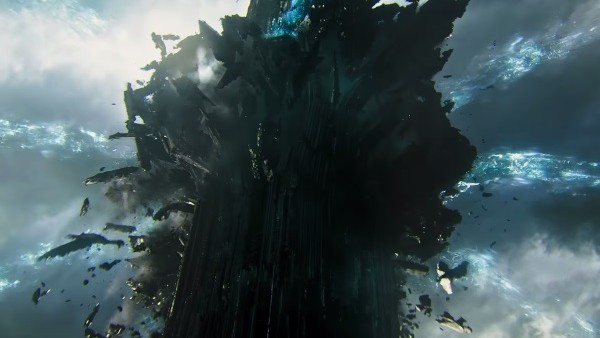
The Dark Tower movie was accused of many things, and one of them was being a convoluted mess. This is generally what happens when a film is sucked in and out of development hell, but there are simple fixes that would have made it more coherent.
For starters, there were clearly too many minds pushing the film in different directions. No fewer than four people shared scripting duties between them - Akiva Goldsman, Jeff Pinkner, Anders Thomas Jensen and director Nikolaj Arcel.
Goldsman was involved in the project since 2010 when Ron Howard was in line to direct, with Pinkner heading up a rewrite before Jensen and Arcel joined the team.
While four cooks in the writing kitchen isn't necessarily overkill for a blockbuster movie, it seems excessive for one which clocks in a little over an hour and a half, especially when none of them are on the same page.
The TV show's pilot will likely run for an hour or so, so streamlining in the writing room would go a long way towards coherence here, and could be the difference between scoring a series or Roland firing another round of blanks.
4. Western Elements And Wierdness

Maybe the piffling runtime was to blame, but The Dark Tower movie felt reluctance to truly embrace Mid-World, celebrate its unique culture and plumb the depths of the world Stephen King created.
Sony played it safe, with the mind-boggling metaphysics and otherworldlyness of this post-apocalyptic fantasy land replaced by largely vanilla visuals and a tone more fitting of a superhero blockbuster.
The TV show must channel the weirdness and gritty Western elements of the novels, not least because these are prevalent in Wizard and Glass, which has Roland flanked by two other post-apocalyptic cowboys for most of the story and features a six-legged mutant cat called Musty.
The series should play out like a dark, twisted version of The Good, The Bad and The Ugly, with added horror, pop culture references and a generous helping of WTF thrown in for good measure.
This harks back to the points about the show needing to be more adult and closer to the books, but it isn't just about adapting them page for page of tackling the graphic scenes head on, the tone also needs to be right.
3. Embrace The Moral Ambiguity

There were no grey areas in the Dark Tower film. It was a black and white battle of good versus evil with Ronald and the Man in Black in archetypal roles.
This is a far cry from the novels which are awash with moral ambiguity, whisking readers away to a world of flawed heroes that are sometimes difficult to root for.
Roland, for instance, is a man moulded by tragedy whose will to reach the titular tower borders on obsession, to the extent that he will allow a small child to plummet to his death or gun down an entire town if he thinks it will help he get there faster.
The gunslinger is a complex anti-hero who plays an emotional tug of war with the reader throughout. One minute they're on his side, the next they're questioning where their loyalties lie in the wake of his latest borderline atrocity.
Idris Elba could have pulled off a layered Roland, a faded hero with a bright-eyed good guy beneath the surface, but the movie's runtime and script compromised this.
With at least a full season on its side, the TV show has the chance to deal in more complex heroes and villains, moral ambiguity and meaningful character relationships.
2. Give Idris Elba A Substantial Role

When the flashback which serves as the meat of Wizard and Glass' picks up, Roland is in his teens, so a younger actor must be sought to serve as the show's protagonist.
Idris Elba, however, was one of the only good things about the film, bringing true grit to the Gunslinger role and excelling in the action scenes. If the reports about his involvement in the TV prequel are accurate, his presence must not be squandered.
This means giving him a substantial role that extends beyond introducing the story as narrator in the first episode. A dual narrative that jumps between the past and future is a storytelling device that could work.
Alternatively, Elba could take centre stage in the second season after the events of Wizard and Glass have played out, instead of another movie picking up the threads it weaves, which sounds like it was Sony's original plan.
Dark Tower was a better fit for TV from the beginning due to its size, scope and complexity, so here's hoping the Wizard and Glass adaptation is a success so Roland's further adventures can take place on the small screen with Elba at the fore.
1. Be Accessible To Newcomers

Making a sequel to a 4,250-page epic comes with its own set of problems, and chief among them is requiring your audience to have done more than a bit of light background reading beforehand.
The Dark Tower film tried to tell its own story, but prior knowledge of the source material, its characters and lore was advised given that it made a pig's ear of that.
Part of the problem was that the movie's promotion campaign offered no clarity on the subject of what Dark Tower even was. At first, it was touted as an adaptation, then teased as a direct sequel when images of the Horn of Eld appeared on social media, but the end product was more of a loosely-inspired reboot.
The TV series needs to make it clear that Wizard and Glass is almost a self-contained story with a clear beginning, middle and end. It's a jumping-on point for fans old and new that will work almost as well for those who didn't see the film.
A straight prequel would allow the show to do this, but if its creative team attempts to reinvent the source material again and splice bits of it together in Frankenstein fashion, it has failure written all over it.