Every Superhero Movie Franchise Ranked Worst To Best
The capes and cowls that ruled Hollywood...
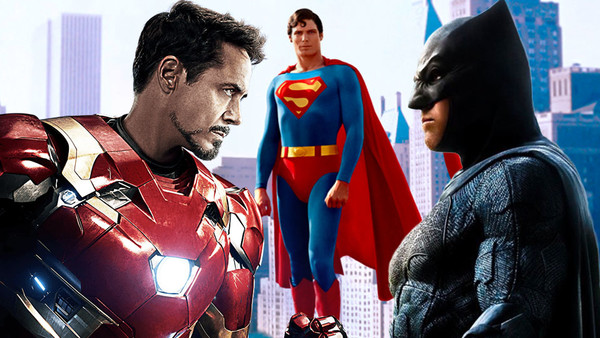
It is hard to imagine a world where superheroes did not dominate the cinematic landscape, box office receipts and more recently awards seasons. But the era of capes and tights is a relatively recent phenomenon that only really began to take off in the 21st Century and it looks like it is here to stay for the foreseeable future.
This article seeks to rank all official film franchises featuring superheroes from Marvel, DC and original ideas outside of comics. However, standalone films such as Chronicle and Hancock will not be considered for this list as well as films whose status is not entirely clear (Joker, Into the Spider-Verse). Also note that upcoming films in various franchises will not be considered as well.
14. Tim Story's Fantastic Four Franchise (2005-2007)

Films: Fantastic Four and Fantastic Four: Rise of the Silver Surfer
If all the cringe found in superhero movies in the mid 00s was somehow made into a duo of films then the Fantastic Four movies would be the result. Marvel’s second unsuccessful attempt at adapting Marvel’s first family was plagued by terrible writing, corny acting and inconsistent visual effects.
Unfortunately, the third attempt at bringing these characters to life was somehow even worse than what came before. Fans everywhere hope that Marvel is able to get it right a fourth time round.
13. Sony’s Marvel Universe (2018-)

Films: Venom (Morbius & Venom 2 Upcoming)
Sony really wants its superhero verse huh? Despite failing to stick the landing in their previous Spider-Man centric attempts and facing constant pressure from fans to give the rights back, Sony soldiered on and decided to create a series of films surrounding Spidey’s rogue gallery.
Their first attempt, Venom, was a dull yet odd affair that had generic plotting, garish visuals and an unmemorable villain but still had Tom Hardy eating raw lobster in a fish tank and Woody Harrelson in a dollar store style wig in the end credits.
But the movie made over 850 million dollars worldwide, giving Sony a bona fide hit and the confidence to ‘grace’ us with a Morbius movie and sequel to Venom later this year.
12. The Amazing Spider-Man Series (2012-2014)

Films: The Amazing Spider-Man and the Amazing Spider-Man 2
The Marc Webb directed film series is the poster child of unsuccessful reboots of beloved properties. The first film’s marketing promised to reveal the ‘untold story’ of Peter Parker’s origin, thus putting a new spin to it.
Unfortunately, we got a so-so movie that was elevated by the performances and chemistry between Andrew Garfield’s Spidey and Emma Stone’s Gwen Stacey, as well as decent set pieces (Spider-Man’s web swinging mechanics have never been this good in a movie).
The second movie repeated past mistakes and had remarkably terrible tonal issues that derailed the movie (Green Goblin and Electro were the main culprits of this). Ultimately, Spider-Man was put on hold until Marvel brushed the cobwebs off the character for Captain America: Civil War in 2016.
11. The Blade Trilogy (1998-2004)

Films: Blade, Blade II and Blade Trinity.
The Blade trilogy of films is very much an exercise in style over substance; but in some cases (particularly Guillermo del Toro’s sophomore effort) that is nothing to scoff at. The series’ leading man, Wesley Snipes, brings a cool charisma and dark sense of playfulness in a reflection of the world he inhabits.
The action sequences, world building and creature design made the series stand out from superhero films that preceded it and the first installment is considered to be the film that kicked off the modern superhero craze. It left a lot to be desired in the narrative and character development sections though.
It’s unfortunate that behind-the-scenes meddling and clashes during Blade: Trinity’s filming resulted in the end of the franchise before it could really live to its potential.
10. Kickass Series (2010-2013)

Films: Kickass and Kickass 2
Matthew Vaughn and Jane Goldman struck gold with their first adaptation of the Mark Millar published comics based on a teen (Aaron Taylor Johnson) who desperately wished to become a superhero despite his lack of advanced training or superhuman abilities. The film, much like the source material, is a dark comedy filled with laugh out loud moments and bursts of brutal R-rated violence and profanity.
The shocking bit is that the vast majority of said moments come from Chloe Grace Moretz’s Hitgirl, a pre-teen vigilante in training who works with her father Big Daddy (a delightfully unhinged Nicolas Cage) to fight crime in a manner that would make the Punisher proud.
However the sequel, written and directed by Jeff Wadlow, was not the breath of fresh air that the original was; it was considered to be lacking in its predecessor’s wit and mean spirited by critics and audiences alike.
9. Christopher Reeve's Superman Series (1978-1987)

Films: Superman, Superman II, Superman III and Superman IV: The Quest for Peace
This is arguably the franchise that convinced studios and moviegoers that comic books and superheroes had cinematic potential. The first Superman film is a reverent and well balanced tale of heroism that is lifted up by Christopher Reeve’s towering yet gentle performance, John Williams’ iconic score and then-cutting edge visual effects. The next film expanded the mythos by bringing in Kryptonian despot General Zod and gave the Man of Steel a physical and ideological threat not seen in the original film.
The next two films are disappointing falls from grace due to drastically inferior production values, phoned in performances and an odd campy style that didn’t match the more whimsical yet grounded sensibilities of the first two films.
8. Tim Burton & Joel Schumacher's Batman Series (1989-1997)

Films: Batman, Batman Returns, Batman Forever and Batman and Robin
BOOM! POW! SHARK-REPELLENT SPRAY! The loud and wacky way in which those words were written represents the joyfully campy way in which the Adam West Batman (and Batman in general) was perceived from the 60s. The almost psychedelic nature of Silver Age comics did little to remind fans that Batman’s origins were less colourful than what was depicted.
However, thanks to the Gothic (and delightfully odd) sensibilities of Tim Burton, Michael Keaton and company, Batman’s live action adaptation returned him to his dark and mythic status, a sentiment that was doubled down upon in Batman Returns and totally ignored to disturbing and uber campy effect in Joel Schumacher’s latter two efforts. The ice puns and merchandise driven aesthetic of the movie put the franchise on ice (it had to be said) till its reboot eight years under Christopher Nolan’s guidance.
7. Eastrail 177 Trilogy (2000-2019)

Films: Unbreakable, Split and Glass
This is the only non-comic book based franchise and that is testament to M. Night Shymalan’s creative genius (as frustratingly inconsistent as it may be). Unbreakable sought to look at how an everyday man would react if he suddenly gained superhuman strength and durability. It is a subtle yet moving film with understated performances from Bruce Willis and Samuel L. Jackson that are beautifully juxtaposed with James Newton Howard’s rousing score.
Split was more overt than its predecessor but it compensated for the lack of subtlety through James McAvoy’s dynamic performance as Kevin Wendell Crumb. However the final installment of the franchise, Glass, was incredibly disappointing and anti-climactic (that may have been Shymalan’s attempt at subversion but it does not make for captivating cinema).
6. DC Extended Universe (2013- )

Films: Man of Steel, Batman v. Superman: Dawn of Justice, Suicide Squad, Wonder Woman, Justice League, Aquaman, Shazam.
This is arguably the most divisive franchise on the list and has probably impacted the film industry a lot more than its critical reception suggests. What had begun as a ‘realistic’ imagining of the DC stables of characters became a desperate attempt to ape the MCU’s interconnected style. Oddly enough, it’s neither of those forms in the present day, and upcoming films suggest it will be more character-driven than previous efforts.
Things got off to a rocky start with Zack Snyder’s Man of Steel and proceeded to go downhill from there with Batman v. Superman, Suicide Squad and Justice League. These films were plagued by fundamental misinterpretations of the main characters, poor plotting, a dreary (but sometimes intriguing) visual style, a wasted cast of talented actors and extensive executive meddling.
However, the Wonder Woman, Aquaman and Shazam have all shown that Warner Bros. seems to have learnt its lesson and audiences seem to be cautiously optimistic about their new slate of films.
5. The Fox X-Men Film Series (2000-2020)

Films: X-Men, X2: X-Men United, X-Men: The Last Stand, X-Men Origins: Wolverine, X-Men: First Class, The Wolverine, X-Men: Days of Future Past, Deadpool, X-Men: Apocalypse, Logan, Deadpool 2 and Dark Phoenix
Marvel’s merry band of mutants got the cinematic treatment in 2000 through the efforts of director Bryan Singer and writer Simon Kinberg. They treated the source material with a reverence that was not seen in superhero films since the days of Donner and Burton and this led to the legitimization of superheroes in the film industry.
The franchise tackled heady themes such as discrimination, choice and identity and also provided the requisite blockbuster thrills as well. It was expertly cast; with respected names such as Hugh Jackman, Sirs Patrick Stewart and Ian McKellen bringing life to fan favourite characters and giving them a new spin that mostly respected the comics.
However, this didn’t extend to various elements of the franchises as it less than successfully adapted storylines such as Dark Phoenix and the Cure and mishandled characters such as the Juggernaut, Jean Grey and Deadpool (the first time round). It is a shame that the franchise ended on such a lacklustre note with 2019’s Dark Phoenix but it provided the genre with classics such as X-Men: First Class and Logan-the franchise’s logical endpoint in this writer’s opinion.
4. Sam Raimi's Spider-Man Trilogy (2002-2007)

Films: Spider-Man, Spider-Man 2 and Spider-Man 3
Sam Raimi was (and still is) a well known horror movie director who successfully swung into blockbuster territory with this trilogy. The Raimi films surprisingly blended pathos, sentiment, camp and horror movie sensibilities into an entertaining adaptation of Marvel’s flagship hero.
The franchises saw great performances from Tobey Maguire, Alfred Molina, Willem Dafoe and most notably J.K. Simmons as hot-headed editor J. Jonah Jameson, amazing action sequences and a rousing theme by Danny Elfman. The third film didn’t quite reach the heights of its predecessors but it also didn’t tarnish their legacy and the trilogy’s overall impact.
3. The Incredibles Series (2004, 2018)

Films: The Incredibles, The Incredibles 2
Brad Bird’s duo of films is a rare example of cinematic hiatuses done right. Pixar’s first foray into a computer animated film with a predominantly human cast was coincidentally its first superhero movie. It is safe to say that the resulting effort was a rousing success and cemented Brad Bird as an animated film maestro.
The first Incredibles movie featured the Parrs, a family of ‘Supers’ (super powered individuals) who were forced into hiding after public opinion shifted against Supers operating in the public space. However, a new threat arises and forces the family into the spotlight. The sequel picks up immediately after the events and looks at the impact Supers have on everyday people.
Both movies feature top tier animation (as is expected from Pixar), well crafted setpieces and relatable family dynamics that captivated audiences and showed the world how to create a compelling family centric superhero film.
2. The Dark Knight Trilogy (2005-2012)

Films: Batman Begins, the Dark Knight and the Dark Knight Rises
The late 90s and early 00s film landscapes were not kind to the Caped Crusader after the abject failure that was Batman and Robin. However, in an inspired move, Warner Bros. hired Christopher Nolan to revive the franchise and he did in spectacular fashion. The Dark Knight trilogy shaped the film industry and showed moviegoers/naysayers everywhere that superhero/comic book films were capable of depth and captivating thematic storytelling.
The franchise took Gotham from a Gothic-inspired cityscape to a more peak era Michael Mann-esque city with a criminal underbelly that carried a sense of realism not seen in that genre up until that point. Best of all, it gave us iconic interpretations of characters such as the Bat himself, Commissioner Jim Gordon and most notably the Joker, played to deranged perfection by the late great Heath Ledger.
1. Marvel Cinematic Universe (2008- )

Films: Iron Man, The Incredible Hulk, Iron Man 2, Thor, Captain America: The First Avenger, The Avengers, Iron Man 3, Thor: The Dark World, Captain America: The Winter Soldier, Guardians of the Galaxy, Avengers: Age of Ultron, Ant-Man, Captain America: Civil War, Doctor Strange, Guardians of the Galaxy, Spider-Man Homecoming, Thor: Ragnarok, Black Panther, Avengers: Infinity War, Ant-Man and the Wasp, Captain Marvel, Avengers: Endgame, Spider-Man: Far from Home.
The MCU’s impact on cinema and pop culture has been discussed in incredible detail since the release of the first Iron Man film and with good reason. It’s a rare franchise that blends together likable characters, a mostly winning sense of humour, interconnected storytelling and thrilling action to create a lived in world that sometimes transcends its comic book origins.
It made B-level characters such as Iron Man and Black Panther into household names and problematic storylines such as Civil War into compelling and layered narratives. It definitely has its misfires, but with over 20 good to great films the MCU will power through the new decade with its exciting Phase 4 line-up of movies.