Glass Reviews: 12 Early Reactions You Need To See
Can M Night Shyamalan's trilogy-ender live up to the hype?
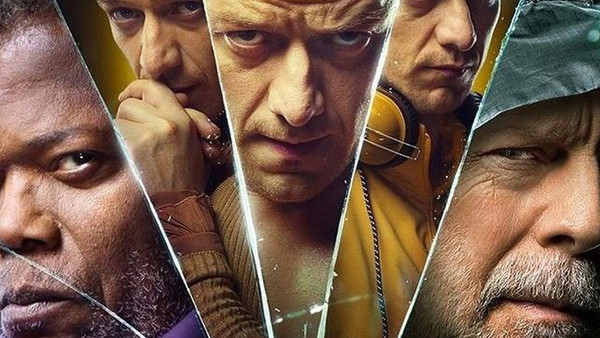
Universal has lifted the review embargo on the first hotly-anticipated movie of 2019: M. Night Shyamalan's Glass.
The follow-up to Unbreakable and Split has been hyped up as the final confirmation of the filmmaker's return to form, so it's a damn shame to report that the early reviews are wildly mixed.
At the time of press, Glass is rocking a Tomatometer score in the 35-40% region with a mere 5.0/10 average score, which would actually place it below the director's extremely divisive 2004 release The Village.
The early consensus seems to be that the director serves up some interesting ideas while getting solid performances out of his cast, yet fails to combine the various elements into a totally entertaining and satisfying whole.
Does it sound like Glass is terrible? Absolutely not, but given the high standard set by Split, it's certainly worth lowering your expectations before the film releases for general audiences next week.
As for Shyamalan? At least the movie has zero chance of failing at the box office, so he'll be fine...
12. James McAvoy Is The Easy Highlight

"Somehow, James McAvoy is even better than he was in Split as we get to see more of Kevin's personalities that make up The Horde, including a Spanish-language personality and a flirty teenager, with McAvoy taking on more than 20 different personalities. It's a magnetic and physical performance and a brilliant balancing act from McAvoy as, more than in Split, scenes require him to shift between several personalities." - Digital Spy
"McAvoy plays them with the same obscenely avid, gender-bending fluidity that made his performance in “Split” such a showboat feat. If anything, he’s more fun to watch now that he doesn’t have to be the whole show." - Variety
"Kevin is the character (technically 24 characters, though here we only see 20 in action) who dominates the film, with McAvoy on stand-out form again, toggling effortlessly between different voices and emotions, and managing to keep the Beast (essentially a cross between Pazuzu and an angry gibbon) frightening even with prolonged screen time." - Empire
To the surprise of just about nobody, the early consensus is that James McAvoy steals the show once again as Kevin Wendell Crumb aka The Horde.
While Split ended up taking a surprisingly restrained approach to unveiling Crumb's 24 separate personalities, it sounds like Glass gives McAvoy a far more wide-open canvas to work with and lets him run loose.
A few critics did note that a "less is more" approach to Crumb's antics may have proven more effective, but on the whole there's general satisfaction with McAvoy's mind-boggling ability to switch between personalities and give a totally different performance each time.
11. The Script Is Messy & Exposition-Heavy

"[Shyamalan's] writing here often doesn’t hit the target; where Unbreakable was a smart, simmering deconstruction of comic-book tropes, Glass veers towards the heavy-handed, with characters disseminating his ideas through clumsy dialogue." - Empire
"One of Shyamalan’s worst tendencies is to not let a clever idea just be clever. Glass‘s overall schtick, a cerebral thriller that follows the beats of a comic book, is a smart one, but Shyamalan falls a bit too in love with his own form. He’s not just showing you a cool thing, he needs you to know why it’s cool in context and needs to explain every layer of subtext. By the end of Glass, every single main player has transformed into Jamie Kennedy‘s character in Scream, a cacophony of know-it-all experts shouting at each other—and the audience—about The Rules of comic book storytelling. This is especially grating in 2019, when your six-year-old nephew could probably write a treatise on how this stuff works." - Collider
"We waste an entire movie watching a shrink trying to convince our comic book characters that they aren’t comic book characters (while constantly repeating story beats from the first two movies), at the expense of new journeys for David, Kevin and Elijah whom we wanted to see… actually being superheroes and supervillains (or at least interacting with the world)." - Forbes
If you were hoping that Glass would follow Split's lead and keep things relatively simple, it sounds like that's sadly not the case at all.
Numerous reviews cite Shyamalan's penchant for overly expository dialogue bringing back bad memories of his high-profile failures such as The Last Airbender and After Earth.
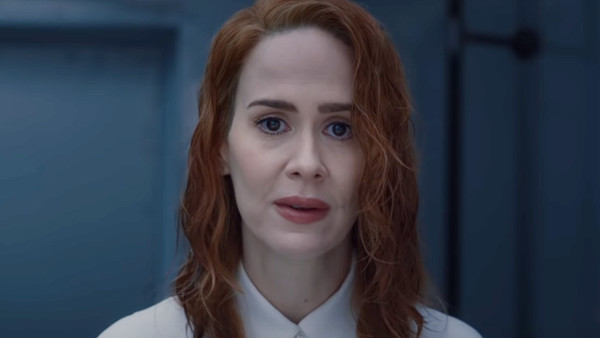
The decision to have much of the movie focused on Sarah Paulson's Dr. Staple attempting to gaslight the three superhumans into believing they're not super was also roundly criticised, because of course, the audience knows they are in fact super-powered.
While a few commended Shyamalan for at least having the balls to commit to an out-there vision no matter how messy, most expressed disappointment at how sloppy it all comes together.
10. Samuel L. Jackson Spends Too Long Off-Screen

"No spoilers, but Samuel L. Jackson’s Elijah is somewhat out-of-the-picture until he’s not..Elijah does eventually come back into the picture, and it’s clear that Jackson enjoys playing this character again." - Forbes
"As for Elijah, he’s a heavily sedated wreck who doesn’t utter a word for half the movie — but, of course, he’s just biding his time." - Variety
"There’s a long stretch where Mr. Glass isn’t onscreen at all." - Screen Crush
Samuel L. Jackson has received praise for his reprisal of Elijah Price aka Mr. Glass, though there was almost uniform disappointment across reviews that he's absent for so much of the movie.
Apparently Price speaks barely a word even when he's on-screen for the first 90 minutes of the movie, and only in act three does he truly come into the picture. Given that the marketing focused largely on his deliciously portentous monologues and sheer compelling presence, that's an undeniable shame.
Then again, that's probably how you make a movie starring Jackson, McAvoy and Bruce Willis on a $20 million budget.
9. M. Night Shyamalan's Direction Is Mediocre

"Shyamalan throws in a few long takes and one or two bold camera angles. Otherwise, Glass is perfunctorily shot — and the flashbacks to the events of Unbreakable (using footage from that film) only serve to remind viewers how interesting it was to look at, and how this one is mostly just ... there." - Screen Crush
"Shyamalan spends so much time on the are-they-or-aren’t-they question that he’s forgotten how to mount a persuasive escape sequence—the action is your typical WrestleMania stuff." - Time Out
Many noted disappointment with Shyamalan's direction here, which appears to be basically functional but ultimately uninspired.
Several critics drew comparison to his earlier, hungrier years where he was widely hailed as "the next Spielberg", yet it seems that Glass is mostly helmed in a workmanlike manner.
Some singled out the action and suspense sequences, which are said to be underwhelming and generic, lacking the gritty verve that made his better films so compulsively rewatchable.
Granted, it was easy to be suspicious about this from the trailers, which didn't include a single invigorating action shot.
8. It's A Surprisingly Conventional Sequel

"As a theoretical third act to a single superhero melodrama written 20 years ago, the story beats that make up Glass might have worked. To be fair, it would also have been potentially more effective 15 years ago before real-world superhero movies became, partially thanks to Unbreakable, a genre unto themselves. The plot beats and consequences would also make more sense in 2003 versus 2019." - Forbes
"“Glass” continues the saga, only this time stripped of any sense of revelation. We are now, if anything, oversaturated with comic-book films, so in theory the time is right for a movie like this one. And you could say that “Glass” follows the inevitable path of any comic-book sequel, with the origin story safely behind it. All of the first film’s secrets have been dragged into the light...all now feels very conventional, as if we were merely seeing the Dark Knight in a less cool uniform." - Variety
Though Split seemed to position Glass as a most unconventional superhero sequel, the consensus is that Shyamalan's latest is a bizarrely formulaic and familiar movie, racing through a comic book plot that we've seen countless times since the release of Unbreakable in 2000.
Many stated that Glass feels like a film out of time, refusing to pass comment on how the genre has evolved over the last two decades with the rise of the billion-dollar superhero movie, and turning out peculiarly quaint as a result.
Incredibles 2 just about got away with existing in an early-2000s bubble this past summer - thanks to a generally sharp script and immaculate direction - but it sounds like Glass isn't a movie that's going to age well at all (unlike Unbreakable).
7. Bruce Willis Gives Another Forgettable Performance

"While it’s nice to see Willis taking a break from direct-to-DVD duds, David’s stoic muscularity doesn’t lend itself to being locked in a cell." - Gamesradar
"Bruce Willis (shockingly) gives another sleepwalking performance, to the point where the movie feels edited around him." - Forbes
"Willis disappears for a huge chunk of the movie and barely seems to have been present for the climactic battle." - Slate
The biggest question mark surrounding Glass was undeniably the presence of Bruce Willis, reprising the role of David Dunn - now re-dubbed "The Overseer" - from Unbreakable.
Willis has been trapped in the straight-to-video action-thriller dungeon for a depressingly long time now, and many hoped that re-teaming with Shyamalan would finally wake him from his acting coma.
While most critics seem to agree that this is a step up from Willis' recent work, it's generally agreed that Shyamalan fails to take advantage of his talents and just leaves him to go through the boring motions. How disappointing.
6. The Character Development Is Weak
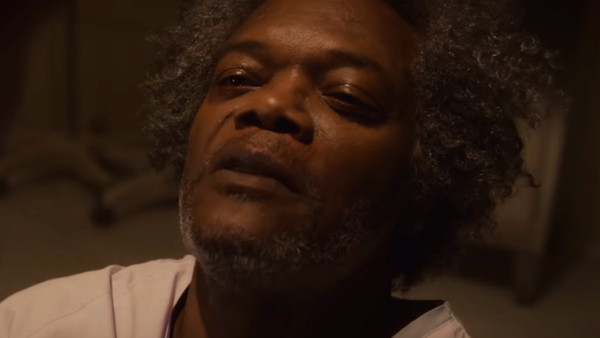
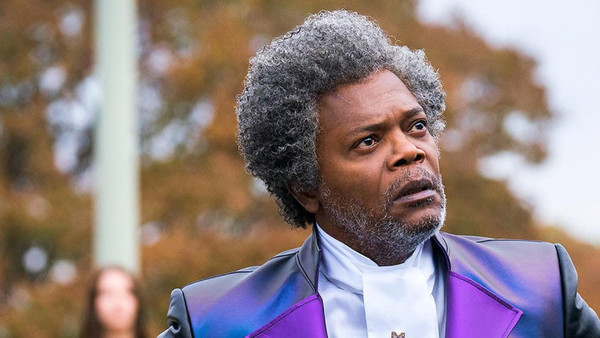
"While his characters are meant to evoke classic superhero archetypes, their extreme lack of depth or development only calls attention to how far the form has come thanks to movies like “Spider-Man: Into the Spider-Verse.” After 128 minutes, the only interesting question about Mr. Glass is this: If he’s been sedated in a psych ward for 19 years, then who made his sweet monogrammed “MG” cravat?" - IndieWire
"Not unlike Fantastic Beasts: The Crimes of Grindelwald, it sacrifices character interaction for the sake of setting up “here’s what it was all about” reveals that don’t justify the wasted time and betray a misconception about why the previous films worked in the first place." - Forbes
"Glass, for all its supposed insights into this genre and what it means, has very little to say about superheroes, and certainly nothing that couldn’t be gleaned from a casual scan of a TV Tropes page." - Screen Crush
With three colourful superhumans at the forefront of Glass, Shyamalan certainly had a ripe opportunity to delve deep into their psyches and deliver the same rich character development that made Unbreakable such a hit.
Unfortunately it sounds like Shyamalan's script instead plays with a rather broad list of comic book movie tropes while not delivering the sufficient subversion which might make them feel fresh.
Considering the acting talent the filmmaker has assembled for this trilogy-capper, it's colossally disappointing that the central trio are more thin sketches than fully fleshed-out characters in their own right.
5. The Twists Are Underwhelming
"The final act focuses on arbitrary reveals and empty confrontation (think Heroes) which forgets that the appeal of comic books is not the plot or the action but the character melodrama." - Forbes
"There is, as before, a twist to his madness, and though on paper it’s not a bad twist, it somehow lacks the “Whoa!” factor." - Variety
"If there's one downside, it's that the finale feels a bit exposition-heavy and could have benefited from being paced out a bit; at times, you've barely recovered from one reveal when another one comes along." - Digital Spy
Most reviews were mercifully vague when discussing spoilers, though several did mention the film's myriad plot twists, which apparently veer closer to the sillier and more underwhelming reveals of Shyamalan's lesser films.
Several critics also mentioned being exhausted or overwhelmed by the sheer number of revelations, which often aren't give much time to sit before the next one is trundled out.
More so than their absurdity, though, some dismissed the plot twists as ultimately unimaginative and even a bit dull, which is perhaps the worst thing of all.
4. It's Constrained By Its Low Budget

"90% of the movie is confined to the sterile interiors of the sanitarium, where all of the characters are left to rot as Shyamalan maneuvers them towards a clumsy third act confrontation (and the very unsatisfying reveals that await on the other side)." - IndieWire
"The majority of his running time is dominated by dull, painfully verbal group-therapy sessions at a secret lab, where McAvoy’s captured cannibal, known as the Horde, sits alongside Bruce Willis’s somber avenging angel David Dunn (a.k.a. the Overseer) and Samuel L. Jackson’s Mister Glass, a brittle-boned villain in a wheelchair who’s prone to speechifying when he’s not behaving catatonic." - Time Out
Shyamalan has been thriving in the lower-budget arena as of late, and Split in particular proved what the director was capable of with a mere $9 million and minimal executive meddling.
Glass meanwhile came with a $20 million price tag, an extremely low figure for a superhero movie led by three bonafide movie stars, yet ironically, several reviews have mentioned how Shyamalan this time doesn't seem to use his budgetary restrictions to his advantage.
The most common complaint is that so much of Glass is set inside Dr. Staple's psychiatric facility, which isn't terribly exciting and sees the characters doing far too much talking and not enough action.
One almost frets to say it, but perhaps Glass would've actually benefited from a mid-range budget - in the $40-50 million realm - to give Shyamalan a bigger sandbox to play with.
3. The Pacing Is Bloated & Self-Indulgent
"The signature sound effect of the film is a ticking clock; while it has very little relevance on the story, it does remind you just how slowly these 150 minutes are passing...Glass is a sequel to not one but two different movies that proved fairly conclusively that these guys are pretty darn special...What’s the point of convincing people, and then trying to unconvince them?" - Screen Crush
"[Glass] keeps the three lead characters apart...and gives most screentime to a doctor (Sarah Paulson) bent on proving they’re normal human beings after all. Her monologues grow wearisome, Willis doesn’t get enough to do, and the second act’s languid pace gives you more time to unpick the plot holes." - Empire
"It lacks a real climax, yet has room for multiple scenes set in comic-book stores, plus a lengthy and unnecessary cameo for [Shyamalan]." - Time Out
Glass clocks in at 128 minutes, which while not an indecent length on paper, apparently becomes torturous due to the director's molasses-slow pacing.
Even with audiences fully invested in seeing this finale play out, reviews have criticised Shyamalan's laboured pacing as self-indulgent, as though he's once again started to believe his own hype and gotten high off his own supply.
It obviously doesn't help that critics are largely unimpressed by the Dr. Staple subplot, which is said to go around in circles too many times before setting up the main characters for a climatic showdown.
At 117 minutes, Split wasn't a whole lot shorter, but with its confident through-line and consistent narrative trajectory, it appears to have what Glass sadly doesn't.
2. Anya Taylor-Joy's Role Is Mostly Pointless
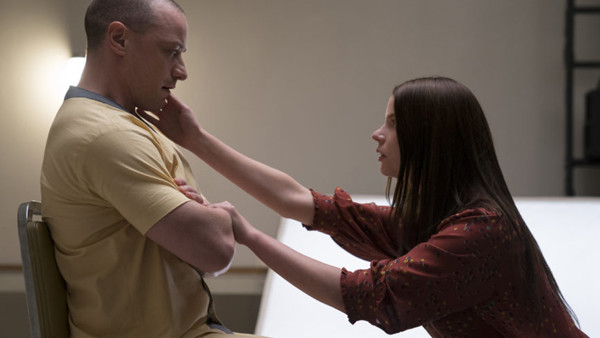
"Anya Taylor-Joy plays the lone survivor of one of his killing sprees, and despite her soulful presence there’s not a lot the actress can do with this sketchy and sentimental role." - Variety
"Casey shows up mostly to play out a weird and lazy “beauty can tame the beast” arc with her former kidnapper." - Forbes
Now, this isn't terribly surprising. Anya Taylor-Joy gave a splendid performance in Split as Casey, the sole survivor of The Horde's rampage, and the trailers for Glass didn't make much of a case for her making anything more than a superficial fan-service return.
According to early reviews that's exactly what it is, and though Taylor-Joy typically gives a solid performance, Casey's presence is completely unnecessary to the core story beyond giving the movie an additional callback to Split.
The fact that this dynamic is being compared to Beauty and the Beast isn't terribly encouraging, either.
1. The Ending Is Disappointing

"And it all ends with… no spoilers, an unsatisfying wrap-up that actively lessens the re-watchability of the movies that came before it. It can’t even cash the check it attempts to write." - Forbes
"A series of twists and a tonally baffling epilogue have pushed Glass from middling Shyamalan territory close to the lows of The Happening and The Last Airbender." - Screen Crush
"I can also confidently predict that the ending is going to piss more than a few people off. In the moment, a good portion of it pissed me off." - Collider
Another depressingly consistent sentiment across reviews is that the film ends on a wildly disappointing whimper, and some even went as far as to say that it retroactively makes Unbreakable worse. Wow.
Several critics outlined Glass to be a heavily divisive film, and it seems like the main sticking point will be not only the avalanche of plot twists but also how it all wraps up.
Whether Shyamalan leaves the door open for more movies or firmly closes the lid on this universe, it doesn't sound like there's much enthusiasm to go around.
What do you make of the mixed early response to Glass? Still going to see it? Shout it out in the comments!