The Hunger Games: 8 Things They Got Wrong From The Book
 When The Hunger Games film was initially announced, I was really excited. The novel is packed with heart-racing action scenes, sublime settings, and a variety of moments promising stunning visuals. After all, the Hunger Games themselves were made for television. The sinister sport is layered with horror, violence, intrigue, and everything else thats guaranteed to draw an audience. If director Gary Ross couldnt depict a compelling story, then the Gamemakers were there to back them up. Of course, with Suzanne Collins story in hand, the odds were in their favour. Even with the novels to guide the project, adapting words to the screen is never a basic process. Film has its own unique challenges and limitations. This forces certain alterations, and many moments are doomed to be lost in translation. Nevertheless, the filmmaker is tasked with capturing the major characters and themes within the scope of the camera. Aspects can be changed to suit the medium, but the filmmaker should keep the big picture in mind - the integrity of the novels story, that is. Moreover, with Collins as a screenwriter and executive producer, she is capable of monitoring every change made to her work. And a lot of changes had to be made. The novel is delivered from a first person perspective, which film simply cannot offer. With authorial crossover, however, I was confident that every change would be calculated and beneficial. But I was wrong. Certain changes translated the novel to the screen, but other changes fundamentally hurt the story. For many of the driving themes in the novel, the author of Katniss story completely missed the mark. Im not providing a list of changes made in the film; like I said, there are lots. Instead, here are 8 things the film got wrong from the novel that ultimately tarnished major plots and themes...
8. The Origin And The Purpose Of The Mockingjay Pin
 In the novel, Katniss receives the mockingjay pin moments before leaving District 12. Madge, the mayors daughter, rushes in to offer her final farewell, insisting Katniss take the pin. Madge explains the tributes are allowed to wear one token from home in the arena; she quickly gets Katniss to promise the pin will be her token. The mockingjay is the result of a muttation that backfired against Capitol, so this token represents both the support of Katniss District as well as the Districts rejection of Capitol. Wearing the pin in the arena asserts Katniss as a piece in a larger movement; it is vital to her development as the face of the rebellion. The film, on the other hand, must be mocking us by simplifying this symbol. In the film, the mockingjay pin is a trinket Katniss finds in the market. She gives it to her little sister, Prim, as a good luck charm. Of course, Prim returns the pin before Katniss leaves the District for the Hunger Games. In essence, the pin becomes a symbol for the support of Katniss family, rather than her district. If were pinning down the real issue here, however, its that the pin is not even visible on Katniss in the arena. The pin rests on Katniss undershirt as Cinna zips the arena attire overtop. Cinna puts his finger to his lips, shushing Katniss as the pin is pressed against her heart. Family pokes at the heart of Katniss, but this change stabs at the heart of the story. In terms of the pin, the love of Katniss family is present, but the support of the District and the growth of the rebellion are completely hidden.
7. Katniss' Awareness Of The Cameras
 From her internal perspective in the novel, Katniss is constantly considering how she is perceived. There is a clear divide between the appearance and reality of Katniss actions. From catching the moonlight with her face to smirking after a close encounter, Katniss carefully constructs the image she provides viewers in the Districts. She manipulates their expectations and pulls at their heartstrings to accomplish her goals. This is crucial throughout the trilogy as Katniss struggles to maintain her identity under the pressures of Capitol and, later, the rebels. The film, however, strips Katniss of her self-awareness. She looks lost in situations, failing to recognize how she is perceived. For example, after hearing a mechanical squeak from a tree in the arena, Katniss panics, eyeing a hole and trying to spot the source. A face of uncertainty plasters the screen in the Gamemakers headquarters, highlighting Katniss lack of awareness. In the novel, she is constantly conscious of the cameras, altering her emotions to maintain control over her image. As a central theme in the novel, Katniss never wants to become another piece in their games. This drive is what makes her character so compelling. By manipulating the viewers perception of her on the screen, Katniss uses the voice of Capitol against itself, asserting her marginalised identity within it. But the film diminishes this voice, ironically taking control of Katniss identity and subjecting it to the terms of the Games.
6. Katniss' Scowling Façade Becomes A Reality
 While I was excited to see this novel adapted to the screen, I was also paranoid that Katniss was going to be trapped with a brain dead scowl throughout the film. In the novel, she keeps an unreadable expression, afraid that Capitol will catch on to her digressions, even if theyre hidden in her thoughts. On paper, this look sounds stoic and calculated, but on screen, it looks strained and uninviting. This concern was superficial, but it somehow infected the core of the film. As I stated in the previous point, however, there is no longer a difference between appearance and reality for Katniss emotions and actions. As a result, Katniss stern scowl becomes a reality of her character. Expecting William Tell to be on the panel of judges, I suppose, Katniss shoots an apple out of a roast pigs mouth. In the novel, Katniss is immediately concerned after shooting in the direction of the judges. Even though she hit the apple, Katniss is afraid Capitol will punish her family. She mourns the action before Haymitch convinces her Prim is safe. In the film, however, Katniss recounts her actions with pride. Theres no concern - just fierce determination. In this case, Katniss seems to be fighting against Capitol rather than for Prim and her mother. But Katniss is a protector, not an attacker. The filmmakers aimed for the wrong target entirely, hitting Katniss in the face, paralysing it with a grim scowl thats actually completely out of character.
5. No Emotion For The Death Of Thresh
 Throughout the novel, Katniss strives to be independent. If anyone helps her out, she feels obligated to return the favour. Whether its a slice of bread or even her life, Katniss struggles with the fact that she will likely never have a chance to repay the people supporting her in the Hunger Games. However, in the film, these feelings of debt become unique to Peeta. The only feeling of debt she has surrounds the bread Peeta tossed to her as a child. The emotions are simplified, becoming an exaggerated vehicle for the films love story. In the novel, after Threshs face flashes in the sky, Katniss expresses deep remorse for his death. She feels trapped forever in his debt, determined to avenge his death in whatever way she can. By contrast, in the film, Katniss looks up at Threshs image before calmly stating, lets go. In this case, Threshs death simply brings her one step closer to finishing the Hunger Games. As the trilogy continues and Katniss becomes the face of the rebellion, she recognizes the variety of support systems that exist behind her. She quickly finds herself in more debt than the average credit card holder, owing people her life. This pressure drives many of her actions as she tries to satisfy her own expectations - theyre unreasonable expectations, but it demonstrates her desire for independence. If they hope to continue the trilogy effectively, I think they owe Threshs death something more than a glance. This is a major struggle in the novel, but its reduced to an anecdote for the love story in the film.
4. Katniss Kills Cato Immediately
 There is a small distinction between Catos death in the novel and in the film. Despite being a small change from page to screen, however, its the spark that sets the story ablaze - in a bad way, that is. The change has implications and repercussions that vibrate throughout the rest film, and perhaps the trilogy as the films continue. In the novel, Peeta and Katniss wait for the mutts to kill Cato, ending the games. But they wait far longer than they expect. After looking in the Cornucopia, its clear to Katniss that the mutts have been torturing him without any intention to kill him. Capitol needs the Districts to kill each other in order to send the message embedded in the Hunger Games. They want the Districts pitted against each other, feeling that they did this to themselves and Capitol isnt to blame. For this to work, Capitol needs the blood on Katniss hands, not their own. The film must have been running too long, however, because Katniss doesnt hesitate to shoot Cato. As soon as he falls into the clutches of the mutts, Katniss plants an arrow between his eyes. Its no longer an act of mercy - its a sigh of relief. In the film, Katniss momentarily plays into the concept of the Hunger Games, submitting to Capitols desire for bloodshed between the Districts. This both reduces Katniss to a pawn in the games and also removes an opportunity to highlight the calculated cruelty of Capitol. This calculated cruelty, of course, continues throughout the trilogy, and it creatively reveals a parallel between the rebels and President Snow. Both parties are determined to win the war at whatever cost. But the film makers kill this opportunity without hesitation.
3. The Mutts Are Not The Tributes
 Not only do the mutts not get a chance to torture Cato, but theyre also not made in the image of the tributes. No wonder they didnt extend their screen time. In the novel, these vicious mutts are created in the likeness of the fallen tributes. However, the film completely ignores this. Instead, the mutts are simply added to drive the remaining tributes together and hurry an end to the Games. Once again, I cannot stress how important the struggle to maintain identity is in the novel. Katniss and Peeta constantly battle against the Gamemakers and Capitol as they try to control their image. In both the novel and the film, Peeta tells Katniss his only goal going into the Hunger Games is to avoid being changed by the Gamemakers. Its a weighted statement, but the tribute-mutts are a literal depiction of his fear. The tribute-mutts are physical manifestations of revenge; the Gamemakers create them to suggest the Districts are naturally against one another. Theyre pieces to organize the Hunger Games. Removing the tributes images from the mutts diminishes Katniss and Peetas efforts to remain in control of their identity. This moment could have highlighted Capitols strict control over the perception of the Districts. And I cant help but feel that this moment could have also highlighted the talents of the make-up crew as well. Not only is this scene important to the story, but its also filled with some really interesting visuals. Readers were deprived of the excitement of this scene, and now theyre the only ones looking for revenge.
2. Cinna Is Superficial
 Katniss stylist, Cinna, works to keep Katniss image out of the hands of Capitol. He constructs Katniss as a symbol for rebels to rally around rather than as a contributor to the maintenance of Panem. Thus, Cinna digs deeper into the implications of District 12, making Katniss the girl on fire instead of the girl in the miners outfit. Its a subtle but recognisable rebellion. Cinna continues this trend throughout the trilogy, culminating in the Mockingjay outfit that represents the rebels. Unfortunately, the film undresses Cinnas hard-work, exposing him as a weaker character than he initially is. Despite providing Katniss signature dresses, he doesnt demonstrate any motivations to rebel against Capitol. While he makes her the girl on fire, he doesnt suggest Katniss and Peeta hold hands in the chariot. In the novel, Cinna tells them to look like a couple, and it sends shockwaves through the purposes of the Hunger Games. While the Games try to divide the Districts, Cinna gets Katniss and Peeta to display their unity. Instead, Peeta suggests he and Katniss hold hands, forwarding the romance rather than the rebellion. Moreover, Cinna covers the mockingjay pin before Katniss enters the arena. I touched on this earlier, demonstrating it minimizes Katniss position in the rebellion, but it does the same to Cinna as well. By covering the pin, Cinna suggests he has no interest in openly rebelling against Capitol. However, as the trilogy develops, Cinna becomes very vocal in his rejection of the Hunger Games and Capitol. He makes dresses that are just to die for, which, of course, he is more than willing to do. But in the film, Cinna is stripped of his depth as a character.
1. A Riot Instead Of Bread
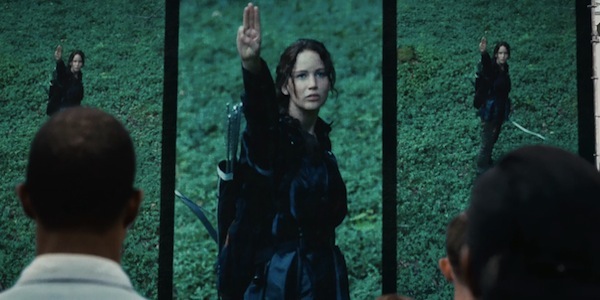 After Rue is killed in the arena, District 11 begins to riot. However, they dont send any bread to Katniss, thanking her for helping Rue. In the novel, each district has distinct loaves of bread, so sending some of their own to Katniss was a gesture of good faith and unity amongst the Districts. The riot is a similar rejection of Capitol, but it lacks the unity the bread suggests. As a result, it appears to be an isolated incident, easily contained and rolled over by Capitol. It may not be an isolated incident, but the bread could have asserted a more powerful and dynamic rebellion. The film makers sacrifice a symbol that makes frequent reappearances in the trilogy. The different breads throughout the Districts demonstrate their unique qualities through a common staple. They may be different, but they all survive on this basic product. Sending bread to Katniss in this novel, as well as later in the trilogy, inspires Katniss and the tributes to rise (evenly, of course) against their common enemy. Im sure most of us are going to be catching the next instalment in this trilogy. The first Hunger Games was alright, but these mistakes suggest the film makers, including Suzanne Collins, arent putting enough thought into the films. However, its not the film that suffers from these mistakes. The novels provided a compelling story which the filmmakers seem to dismiss. Statements surrounding identity, politics, and rebellion are lost in the action. I hope the filmmakers pull back and adjust their aim, because right now, theyre soaring at the box office, but are putting the integrity of the novel in the trash. Like this article? Think the movie bettered the book? Let us know in the comments section below.