John Carpenter's Films - Ranked From Worst To Best
A brilliant (if not inconsistent) collection of films from one of the best directors around.

There are few directors with as rich and varied a back catalogue as John Carpenter. Since 1974, he's directed eighteen feature films, three made-for-TV ones and has also tried his hand at straight-up television with Showtime's Masters of Horror Series.
Most commonly associated with the horror genre, Carpenter has also been at the helm of science-fiction, action, drama, music biopics and a martial arts movie. His films were largely dismissed when they were first released but the majority of them have since been reassessed and several of his films are now considered masterpieces in their own right.
Recent years have also seen Carpenter's films receiving the remake treatment, which bigger-budget but soulless remakes of Halloween, The Fog and Assault on Precinct 13 being released. Carpenter welcomes this, wryly observing that his dream job is to get paid for doing nothing. Although ostensibly retired, Carpenter has agreed to compose David Gordon Green and Danny McBride's latest attempt to reboot Halloween starring Jamie Lee Curtis, that is due out in cinemas later this year.
But really, who can blame him for taking it easy these days? He's been in the business for over forty years, worked pretty much non-stop for twenty five of those years and has had to to witness his movies be torn apart by those with the pencil. If Carpenter never makes another film again, he's still left us with a mightily impressive collection to enjoy...
18. Ghost Of Mars (2001)

Pros: Jason Statham is in it. Lots of decapitations. Practical effects over CGI
Cons: The special effects are just awful.The dialogue and acting are pretty terrible. Resulted in a 9 year break from Hollywood for Carpenter
Overall: What can you say about Ghost From Mars? Originally conceived as another in the Snake Plissken series (Escape From Mars/Earth, or so the story goes), this is a campy, ill-judged and deeply confusing film. It was savaged by critics and bombed at the box-office, grossing $14 million against a $28 million budget.
Carpenter and the cast have expressed their disappointment with the film and Carpenter was so burnt out afterwards that he didn't make another film for nine years, instead deciding to sit at home and watch basketball while cashing-in those remake royalty cheques. What a dude. What an absolute dude.
17. Village Of The Damned (1995)

Pros * The children are (admittedly) rather creepy * Christopher Reeve is surprisingly good in it * Faithful remake of the 1960 original Cons * Not as creepy or as good as the original * Unnecessary gore and violence * Disjointed narrative flow
Overall: Carpenter again tries his hand at remaking a film but this time the results are far less impressive than they were with The Thing.
Village of the Damned is an oddly anachronistic film - it may have been filmed and set in the mid-90s but it certainly feels like a film of the fifties, and not in a good way. There is no attempt to update the source material and, instead, the film comes across as a poor man's version of the 1960 original.
Critics were unimpressed and the film bombed at the box-office, grossing a poor $9 million (domestic) against a $22 million budget. It's unsettling in places, sure, but that's just not enough to redeem it, unfortunately.
16. Escape From L.A. (1996)

Pros * Lots of inventive action sequences * Great cast * The return of Snake Plissken Cons * Snake Plissken surfs... * Ropey CG effects * Uncharacteristically poor soundtrack
Overall Escape From New York is a brilliant 1980s action film. It was so good, and so much fun to make, that Kurt Russell and John Carpenter immediately set to work on the sequel.
Unfortunately, Carpenter was unimpressed with the script and distracted by other projects, so it didn't happen. It was only due to Russell's persistence that the film got made at all. He really shouldn't have tried so badly, because Escape from L.A. turned out to be a major disappointment. It has not aged as well as Carpenter's earlier films, despite only being released in 1996.
The film, while it has some cute moments, is just a little too cheesy (certainly moreso that the original). The action is extravagant and Snake Plissken is a fun character, but it's hard to look past the film's obvious flaws.
15. Memoirs Of An Invisible Man (1992)

Pros * Solid effects * Good performances from Chevy Chase and Daryl Hannah * Erm, the effects are really good (for the time) Cons * Misleading marketing * Not as funny as it ought to be * Standard plot
Overall Memoir of an Invisible Man is, oddly, underrated. Critics hated it when it first came out, questioning why John Carpenter, master of horror, was directing a comedy film. Then they watched the film and realised that the marketing campaign had misled them and that it was more of a drama, so they turned their wrath towards the supposed miscasting of Chevy Chase, who was well-known for his work in the National Lampoon's Vacation series.
Judged by its own merits, however, the film is actually enjoyable (if not a little lightweight). The effects work is especially good. It ought to be, considering the film had a budget of $40 million.
Unfortunately, it only made back $14.5 million of that back at the box-office, becoming another in a series of bombs for Carpenter. He knew he was up against it from the start, citing the studios refusal to grant him creative control.
As a result, it is one of Carpenter's only films not to be prefixed by the title of 'John Carpenter's'. Still, the film really isn't that bad and is a decent enough way to spend a bank holiday Monday.
14. The Ward (2010)
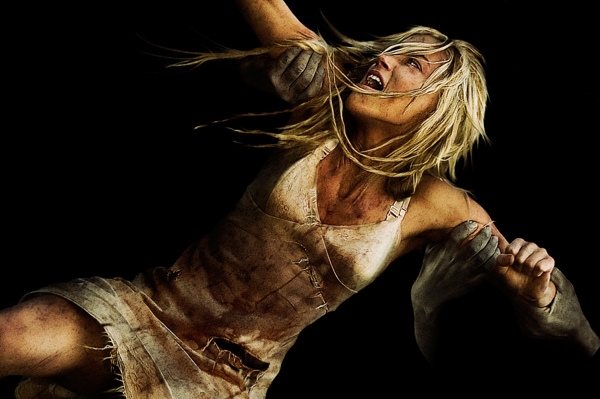
Pros: Carpenter's feature film return after nine years. His direction is assured and not as excessive as his most recent efforts. Amber Heard is great in the lead role
Cons: Familiar story. Too many cheap 'jump' scares. Sub-par special effects
Overall: Carpenter returned after a nine year absence from feature film direction with The Ward, a by-the-numbers psychological ghost story similar to Martin Scorsese's Shutter Island.
It's far from groundbreaking, as Carpenter looks to wet his feet a little after such a long layoff. But that's not to say the The Ward is bad or anything. It's not especially good, but it's way better than the critics would have you believe. It is atmospheric and the execution is good.
Yes, the character's are under-developed and the CGI again comes back to bite the director in the backside, but The Ward is tight formula fun.
13. Vampires (1998)
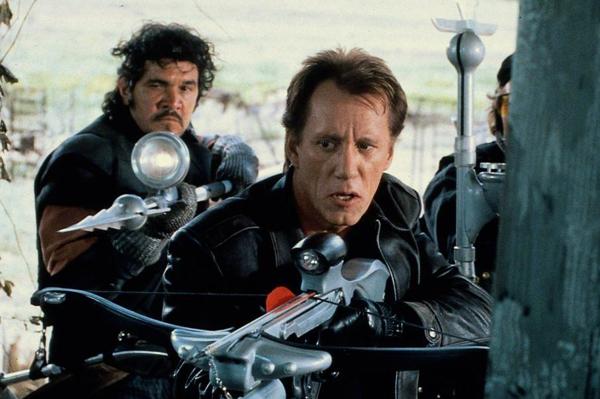
Pros: James freakin' Woods. Completely OTT violence. Novel premise
Cons: Not as scary as it should be. Flat dialogue. Gets a bit repetitive towards the end
Overall: John Carpenter has made clear his affection for the western and, despite never making a flat-out western himself it could be argued that most (if not all) of his movies have western elements and themes. This is certainly true of Vampires, which is clearly a western masquerading as a horror film.
Vampires is a lot of fun with a great irony-free central performance by the ever-dependable James Woods, who (along with Daniel Baldwin) plays a vampire bounty hunter hired by the church to the rid the earth of the fanged menaces. The action is unrelenting and there's a couple of great one-liners in there, too.
12. In The Mouth Of Madness (1994)

Pros: A show-stealing Sam Neil. Lovecraftian themes. One super effective scare
Cons: Confusing plot. Disappointing Carpenter score. Too many flash forwards
Overall: Few of Carpenter's films are as divisive as In the Mouth of Madness, an H.P. Lovecraft-inspired tale that also makes references to horror novelist and Carpenter's friend Stephen King. The story is often muddled but altogether this is Carpenter's best film of the 90s and has some genuine scares to boot.
In the Mouth of Madness split critics at the time and didn't do great business at the box-office (just about covering its production costs) and it's somewhat been forgotten about. In fact, the film has never received a UK DVD release. Despite this, the film has some interesting ideas about the nature of writing along with a winning performance from Sam Neil and assured direction from Carpenter.
11. Dark Star (1974)
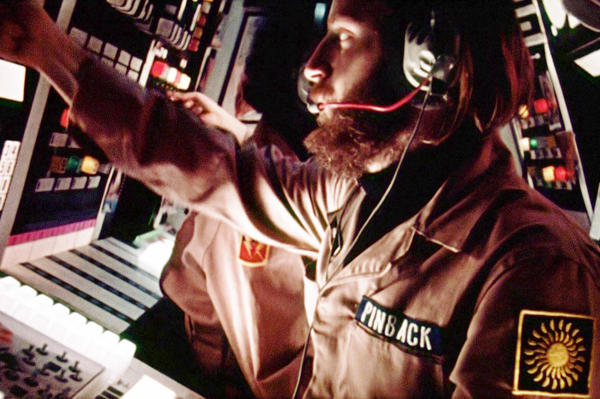
Pros: Black humour. Beach ball baddie. Low-budget charm
Cons: Inconsistent. Very rough around the edges. Hit-and-miss one-liners
Overall: John Carpenter and Dan O'Bannon (writer of Alien) made Dark Star as a student film. The theatrical rights were then acquired by an independent distributor and they went back and shot fifteen more minutes of footage to pad out the running time to suitable theatrical length (83 minutes).
As a 68-minute student film, you'd imagine Dark Star would work a lot better. The fifteen extra minutes do not help its cause and Carpenter has admitted as much in the past. Still, credit must go to the pair for their resourcefulness and effects work on such a limited budget ($68,000). Dark Star is funny, but it's not that funny and the spoof wares a bit thin after a while.
10. Starman (1984)

Pros: Ace Performances. Bizarre romance storyline.Exceptional widescreen photography
Cons: Plot holes/lapses in logic. A little bit lightweight. Oddly commercial
Overall: The process of conceiving, writing and making Starman was a long one, with many different directors, writers and actors at one point attached to it. Eventually it landed in Carpenter's lap with the underrated Jeff Bridges and Karen Black in the lead roles.
The studio originally wanted a more conventional science-fiction film but Carpenter was eager to shed his reputation as a horror/sci-fi filmmaker and instead chose to emphasise the central relationship that develops between the two main characters on their cross-country road trip. There are moments of science-fiction, yes, but Starman works best an intergalactic love story.
9. Christine (1983)

Pros: Surprisingly effective suspense sequences. Great fifties soundtrack. One of the better King adaptations
Cons: The killer car premise is a little hard to take seriously. Weird teen dramedy elements. Takes a while to get going
Overall: There aren't many directors who could make a film about a killer care suspenseful or scary but Carpenter just about manages to do both in Christine, an adaptation of a Stephen King novel. Such was King's popularity at the time that production on the film started before the book had even been released.
Usually, that would spell trouble, but under Carpenter's assured direction Christine turns out to be a pretty nifty film that is surprisingly free of cheap gimmicks. That's not to say it's not ridiculous, because it absolutely is, but at least it's fun and has some standout scenes (such as the one where Christine forces herself down an alleyway that is far too narrow).
8. Prince Of Darkness (1987)

Pros: Surrealist imagery. Cool Alice Cooper cameo. 'Gotcha' scare ending
Cons: Goofy premise. Lack of character development. Seemingly set to remain underrated
Overall: The middle film in Carpenter's unofficial 'apocalypse trilogy' (with The Thing and In the Mouth of Madness), Prince of Darkness was Carpenter's first independently made film for six years. Unhappy working with the big studios who constantly interfered in his work, Carpenter signed on for this $3 million movie under the proviso that he retain complete creative control.
The resulting film was an effective little chiller, which has somehow managed to fall by the wayside. It is one off the least-celebrated of Carpenter's eighties films which is a shame, because it's much better than the critics of the time would have you believe. Carpenter uses wide angle lenses and anamorphic widescreen photography to great effect and the film has some very genuinely creepy moments (particularly the cliffhanger ending).
7. The Fog (1980)

Pros: Lively performances. Carpenter score. Textbook use of anamorphic widescreen
Cons: Weak villains (pirate ghosts?). Light on gore. Awful 2005 remake
Overall: The Fog was Carpenter's first film after the huge success of Halloween, following two years spent making made-for-TV movies Someone's Watching Me and Elvis. Despite only having a budget of $1 million or so, Carpenter makes the film feel much grander thanks to his brilliant use of 2:35:1 anamorphic widescreen.
Although the premise is a little hokey, The Fog is genuinely atmospheric, in large part due to Carpenter's synth score. The film wasn't always like that, however, and Carpenter was deeply dissatisfied with the original cut. He re-cut the film, added a prologue and re-shot a couple of scenes until it was up to standard. Approximately one third of the finished film was new material. The Fog is a fun, tight (89 minutes) ghost story. Watch this and avoid the remake like you would a band of pirate ghosts.
6. Assault On Precinct 13 (1977)

Pros: Fun action sequences. Underlying social commentary. Catchy synth score
Cons: Erm...Not appreciated at the time. Mediocre 2005 remake
Overall: Made on a shoestring, Assault on Precinct 13 is a loose interpretation of Howard Hawks' classic western Rio Bravo (Carpenter even used the pseudonym John T Chance - the name of John Wayne's character in the film - for his editing credit). The plot is basic but it is Carpenter's direction and way of telling the story that make Assault utterly compelling.
When the film was released, Carpenter had to battle the MPAA, who initially wanted to give the film the kiss of death NC-17 rating because of a scene where a young girl is shot and killed at point-blank range (by a man in an ice cream truck, no less). He also had to contend with critics simply writing the film off as a cheap, quickie exploitation picture.
The film was a hit in the UK and Europe, however, and subsequent years have been kinder to the film leading to widespread reappraisal (97% on Rotten Tomatoes). There's very little to crow about with Assault on Precinct 13, which makes the most of its limited resources and keeps things simple but effective.
5. Escape From New York (1981)

Pros: Great effects and action. The Carpenter score, natch. Kurt Russell is incredible as Snake Plissken
Cons: Slightly predictable plot. Deliberate pace may be off-putting to some. A remake is, sadly, on its way
Overall: In this bleak, cynical sci-fi actioner Manhattan has been turned into a giant prison, used to house the most barbaric criminals in the world. Civilization is falling apart thanks to a 400% increase in crime, and only one man can save it: the grizzled, eye-patch wearing Snake Plissken. Carpenter had written the original story back in 1970 but couldn't find anyone to back it.
Thanks to the success of Halloween and The Fog, he was able to get the film made and even vetoed the studios suggestion of Charles Bronson or Tommy Lee Jones for the lead, instead favouring Kurt Russell (who at that point was mostly known for his roles in Disney films).
Escape From New York is a $6 million B-movie which is well worth watching for the action sequences, the cinematography, Carpenter score and, of course, Snake Plissken.
4. Big Trouble In Little China (1986)
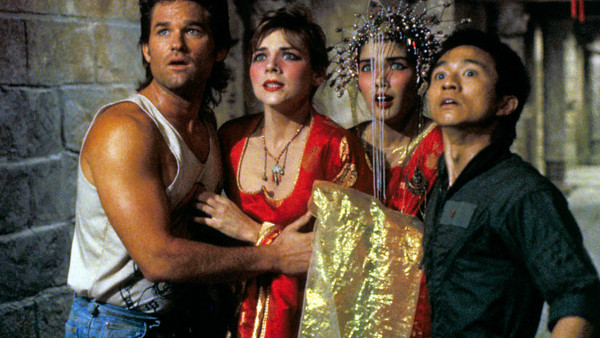
Pros: Another excellent Kurt Russell performance. Knowing, playful references to other films. Over-the-top effects and action
Cons: Poor character development. Unrelenting pace might leave you feeling burned out. Question mark surrounding forthcoming, big-budget remake
Overall: If there's one film that can be used to describe Big Trouble in Little China, Carpenter's ode to Chinese martial arts films, it's 'fun'. Big Trouble in Little China is lots and lots of fun, full of corny but endearing one-liners and spectacular action sequences. It also features another superb turn by Kurt Russell, who plays reluctant (and rather useless) hero Jack Burton.
Like a lot of Carpenter's work, Big Trouble was largely dismissed when it first came out, with critics condemning it for its apparent over-reliance on special effects and lack of character development, particularly when it came to female characters. The reception contributed to the director's disillusionment with the Hollywood system and was a major factor in his decision to return to the independent arena.
The film has since become a cult classic and a remake (starring Dwayne 'The Rock' Johnson) is currently in development.
3. They Live (1988)

Pros: Roddy Piper's greatest film role. Political message and clever subversion. Legendary alley fight scene
Cons: The alley fight scene could be at least fifteen minutes longer. Purposefully naff, 1950s style effects could irk some. Runs out of a steam a little towards the end
Overall: 'I'm giving you a choice: Either put on these glasses, or start eating that trash can'. How can you not love a film with dialogue like that?
They Live is cheesy, yes, but it also has a serious anti-capitalist political message. On top of that, it has humour, liberal amounts of action and a cracking central performance from recently-deceased WWE icon 'Rowdy' Roddy Piper.
One of the true highlights is the much-parodied alley fight between Piepr's John Nada and Keith David's Frank Armitage. Their scrap goes on for about five full minutes (without any score). A moderate success when it was released ($13 million on a $3 million budget), its reputation has grown significantly over the years. They Live is an eminently re-watchable film.
2. Halloween (1978)

Pros: Suspense and tension above gore and violence. Iconic score. Excellent performances from Donald Pleasance and Jamie Lee Curtis
Cons: Poor sequels. Poor remakes. Lack of bloody violence may be disappointing to some horror fans and modern audiences
Overall: Halloween is a landmark film in the horror genre, inventing or perfecting many techniques that would be borrowed by other filmmakers, particularly in the slasher sub-genre. Shot on a comparatively tiny $300,000 budget and in only 20 days, Carpenter's film made around $70 million at the domestic box-office, establishing itself as one of the most profitable indies ever.
Ostensibly a routine killer-on-the-loose movie (originally titled The Babysitter Murders), Halloween has been praised by critics, some of whom have tried to establish a critique of American youth culture and sexual promiscuity (which Carpenter has dismissed). Importantly, Halloween is really quite frightening, choosing to build suspense with sound, movement and the utilisation of space in the frame.
Carpenter received only $10,000 for his directing services, but the film became his calling card and established him as a director of real promise. Its influence cannot be overstated.
1. The Thing (1982)
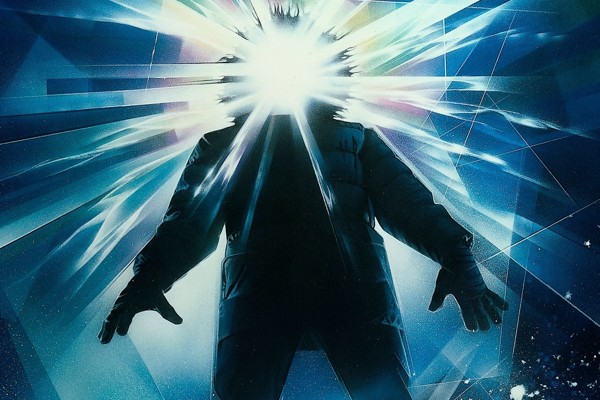
Pros: Perfect balance of sci-fi and horror elements. Ennio Morricone score. Revolutionary effects work
Cons: Those poor dogs. Frosty initial critical reception. Disappointing 2011 prequel
Overall: John Carpenter's greatest film was also the one which was most viciously attacked by critics upon its initial release. They hated Rob Botin's visual effects work, the music, the pacing, the ending and the bleakness of it all. This was the same year that E.T. was released, after all. That film offered a much more Reagan-friendly depiction of alien civilization.
The Thing was also a commercial disappointment. Released the same day as Blade Runner, grossing half as much as Ridley Scott's film. All told, it didn't make enough to cover its $19 million budget. But that isn't any indication of the quality of the film (box-office receipts never are).
The film is ultra-tense, boasts effects which hold up today and has one of the best open-ended endings of all-time. It has since been reassessed as one of the scariest and best films of the 1980s, and rightfully so. It's nothing less than the film deserves.