Jurassic World: 10 Big Clues From The New Trailer

Is the hybrid a human-dinosaur?
If nostalgia is a drug, then Jurassic World will be one of the biggest highs ever. The fourth entry in the franchise that began twenty years ago (or sixty-five million, depending on who you ask), World promises to return the Jurassic Park franchise back to thrilling greatness after two legacy-marring sequels. The first full trailer for the movie dropped yesterday, a few days earlier than expected, probably to avoid getting lost in the hype wave the unveiling of Star Wars: The Force Awaken's teaser will undoubtably bring when it arrives at the end of the week. Shockingly, no one appears to be complaining about getting their first extended look inside the park ahead of schedule. With familiar images (they may be CGI, but it's refreshing to see the gates open once more) and the return of that unforgettable John Williams score (albeit slowed down to a heartbeat), the trailer is an excellent two minutes that cements Jurassic World as one of the most anticipated 2015 movies. Beyond confirming that dinosaurs and Star Lord have been set loose on a tropical island, the trailer initially doesn't appear to present that much of what this film's actually about. But look further and there's actually plenty hidden in there that gives some hints at the events of Jurassic World. If you've not yet seen the trailer give it a watch, then come along and see the ten biggest clues. https://www.youtube.com/watch?v=RFinNxS5KN4

10. The Lesson From The Original Has Been Forgotten
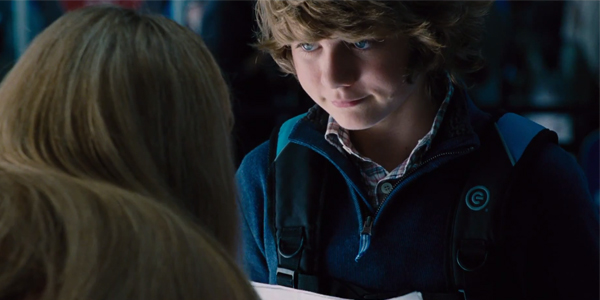
A snide dismissal of Jurassic World is to question why, after three deadly, dino-inflected adventures, would anyone in their right mind try again to build a dinosaur theme park. Well stop your smirking - mere seconds into the trailer it's heavily implied the film isn't going to leave that question unanswered. Instead of opening on the gates or some prehistoric wonder, the trailer begins in a very subdued fashion - parents seeing their kids off as they head to Jurassic World, the titular theme park. What jumps out here is just how pedestrian the whole thing is treated. It's been twenty years since the original incident and it looks like the very notion of dinosaurs being a threat has been negated. The way the mother treats fear of the dinosaurs as irrational, even joking about things going wrong, is particularly disturbing, considering how scarring the events of the first film were. Since its release, Jurassic Park has become a pop culture staple, in turn reducing some of its initial high tension. Could Jurassic World be going a little meta here, highlighting audiences' blasé nature before showing there's still intense terror to be found in dinosaurs?

9. An Underwater Action Scene

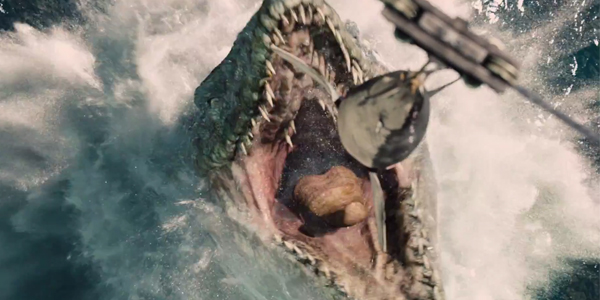
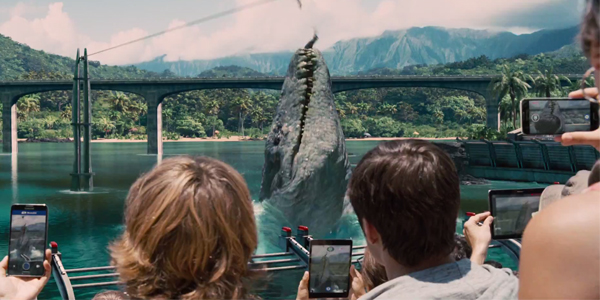
The central set piece in the trailer, which serves a similar purpose to the jaw-dropping brachiosaurus reveal from the original film, is the incredible mosasaurus' feeding session. It's the "look what we can do" moment and while the CGI is a cut below realistic (even compared to the original's twenty year old effects), it's certainly an example of the movie's ability to conjure up impressive imagery. Jumping up from the depths to snag a hanging shark (a possible reference to Jaws - is director Colin Trevorrow implying he's trying to top Spielberg?), this is a much-needed new dynamic to dinosaurs. After the base concept in the first film and the flying pteranodon in Jurassic Park III, going under the sea seems like the next best place to go to keep things fresh. But while the presence of the mosasaurus is obviously cool in its own right, it's what it implies that's so exciting - surely this means we'll get at least one aquatic set piece. Why else put so much effort setting up a new type of monster? Here's hoping the resulting scene is good enough for audiences to not question how a mosquito managed to get a sea-creature's blood.

8. Is It About Dinosaur Rights?

Speaking of the SeaWorld style show, could this be a window into the film's themes? Ever since Blackfish, an eye-opening documentary about killer whales in captivity, the ethics of keeping orcas locked up has become a major issue. So much so that Pixar even changed the ending of Finding Dory, originally set to take place at a marine park, in reaction to the controversy. You simply can't invoke whales in captivity any more without raising serious moral questions (or coming across as totally oblivious). And with Jurassic World going incredibly close to the bone with both the mosasaurus' show and the audience's gawping reaction, it'd be rather short-sighted for Colin Trevorrow not to draw any parallels between beasts. Jurassic Park dealt with the scientific ethics of bringing back long extinct species and the sense of showmanship. In World, with the creatures well established, isn't it only natural for the question of dinosaur rights to be raised, particularly when there's genetic meddling going on? Now that would be a new direction.

7. The Sequels Written Out Of Continuity
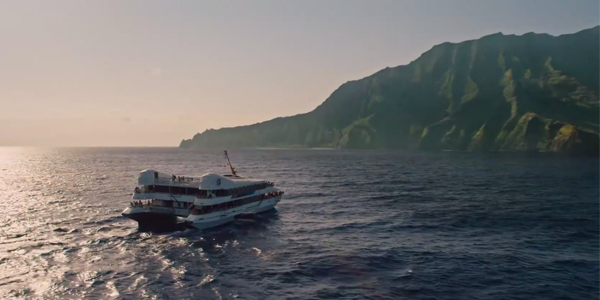
Jurassic Park may be rightly held as a classic of blockbuster cinema, but the overall series wasn't above falling prey to the usual franchise problems. Both of the released sequels, The Lost World: Jurassic Park and the less inventively named Jurassic Park III, were a mar of the pre-historic name, which naturally created some initial trepidation around Jurassic World. After the trailer, however, things are looking up for this fourth installment. Particularly as it seems like it will be actively ignoring the acrobatics of the lacklustre follow-ons. Thematically this is obvious - we're back to the notion of a theme park - but there's nothing here to suggest the lesser entries will be even acknowledged; as the trailer confirms the film's action is contained on Isla Nublar, home of the original Jurassic Park, but not the sequels. This may not be a literal re-write as seen in X-Men: Days Of Future Past, but expect Jurassic World to act like there's only been one previous movie. Like most fans do already anyway.

6. Flying Dinosaurs

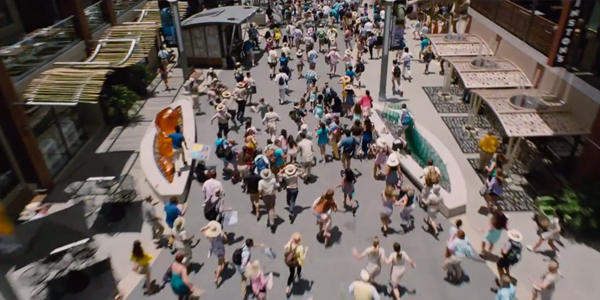
The shots of a Jurassic theme park filled with patrons immediately conjures up images of Disney World - the early scene of the park's main strip leading up to what appears to be a new visitor centre (lacking a T-Rex size hole) looks like an exact replica of a '50s era publicity still for Walt Disney's ultimate vanity project. But there's more going on in these crowd moments than just Universal targeting their rival's theme park. Near the end of the trailer there's a arial shot of visitors all running away. It initially appears rather innocuous, until you consider how specific the camera's trajectory is - it's almost like its swooping. Which can only mean one thing - there's going to be flying dinosaurs in this movie. Just imagine the sight of a massive beast flying down and picking up helpless humans. Yes, Jurassic Park III had the pteranodon, but it spent most of its time in a cage and looked pretty rubbish. This time get ready for some real shock and terror from above.

5. The Hybrid's Identity

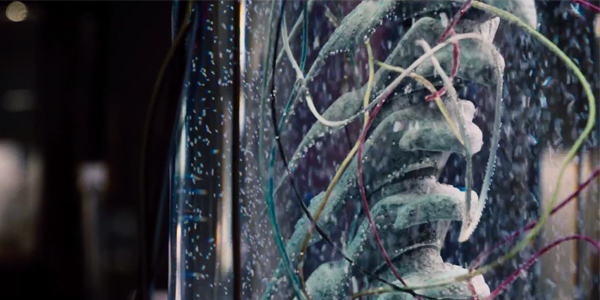
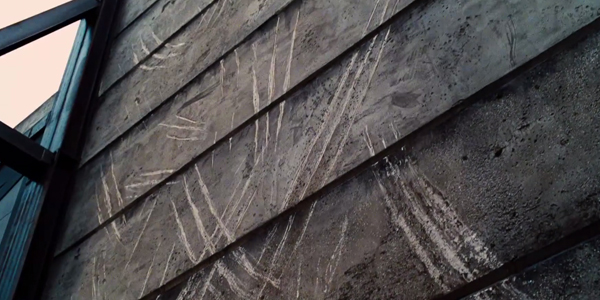
The biggest reveal from the trailer is what appears to be the film's main narrative thrust. Not perturbed by that horrible outbreak twenty years ago, InGen (assuming that name introduced in the sequels is kept) has continued to push the science of dino-cloning, developing a "genetically modified hybrid". Now that'll bring in the crowds. The escape of this "new dinosaur" appears to be the driving force of the movie, sending the otherwise completely safe park into chaos. And, refreshingly for a modern teaser, in this trailer we don't get to see what it looks like. No doubt elements of this creature will be revealed over the coming months, although there's already a few clues as to what exactly's going on here - the trailer shows what is suggested to be the hybrid's spine and some whopping big claw marks. Back before Jurassic World got off the ground, some concept art for a scrapped Jurassic Park 4 was revealed, showing a human-dinosaur hybrid. The general internet reaction to this was rather negative - you thought talking raptors was cheesy - but could the film-makers have taken a little inspiration from these early ideas? It'd make sense given the secrecy over what exactly it's a hybrid of. That spine could be argued as remotely human, while the fact its surprising that the hybrid escaped over a forty foot wall would imply it's not a T-Rex size behemoth. Speaking of which...

4. The T-Rex Is Back

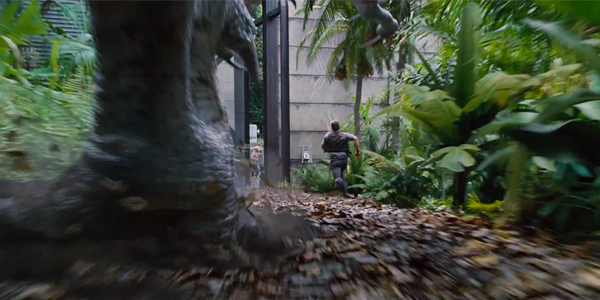
Yes. So much yes. It's painfully short and hard to actually to make it out, but this (nicely shot) moment has to be a stand-out from the trailer for one simple reason - the T-Rex is back. While the hybrid may be the start of the park's problems, don't be surprised if in the process of escaping she kicks off a widespread dino-epidemic. Near the end of the trailer we see Chris Pratt running from a mostly unseen dinosaur - shot from the ground, all that can bee seen is its gigantic feet and tiny arms. The voice-over tries to suggest that this is the hybrid, but closer inspection reveals it's much more likely to be a T-Rex. After being humiliatingly offed within five minutes of its first appearance in Jurassic Park III (the spinosaurus can go extinct for that injustice), it looks like everyone's favourite dinosaur is back to reassert its position as the King (not an official title, but might as well be). Of course, there was really little doubt she'd return, but it's damn fine to get visual confirmation.

3. An Even More Futuristic Park

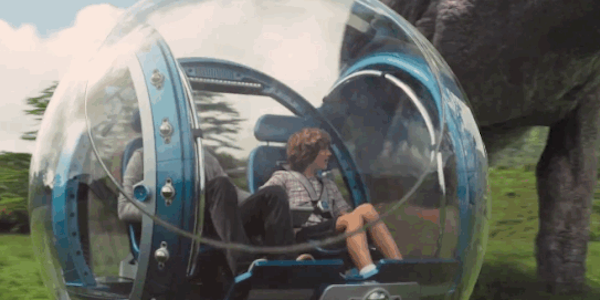
From a modern standpoint it's easy to ignore that the world presented in Jurassic Park was more advanced than the real world actually was in 1993. Obviously cloning from mosquito blood was (and still is) impossible, but with the latest jeeps, commercially produced night-vision goggles and intricate, totally computerised security, the whole thing was very cutting edge. Jurassic World looks set to keep that approach, with one of the main attractions being a zorb-style Gyrosphere that allows visitors to get up close with the big beasts. Obviously a hint of futurism is something modern audiences expect from their sci-fi, but it also hints at a more commercial undercurrent to the in-universe park; unlike John Hammond's original plan, the dinosaurs are only part of the show. Some fans have criticised this futuristic bent, especially the Gyrosphere, for not being very realistic. Which, aside ignoring that it's totally in keeping with the original's modus operandi, seems to be asking a little much from a movie that brings dinosaurs back to life.

2. Chris Pratt Is Brought In To Find The Hybrid
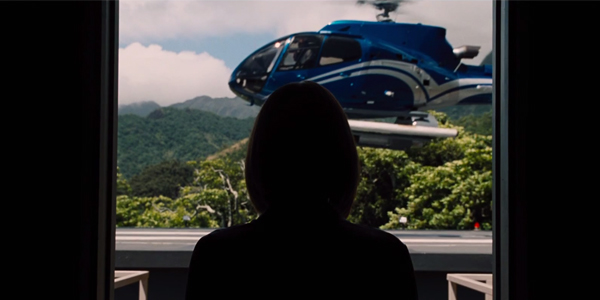
Just as the trailer revealed the hybrid as a primary antagonist, it's also given an eye into the various roles the impressive array of actors will be playing; we now have conformation that Bryce Dallas Howard is a more commercially-minded progression of John Hammond and that Ty Simpkins is a regular park patron. But the real big development regards Chris Pratt's protagonist - so far the only released image teased him as an Indiana Jones/Alan Grant mash-up, but now we know exactly what he's up to. Discarding the lightness of Star Lord to go full-blockbuster, Pratt's character appears to be a specialist called in when the hybrid, a new attraction/scientific advancement at the park, goes awol. The human side of Jurassic Park was essential to the original's success, so it's good to see there's some effort's been put into presenting the characters as more than just bags of dino-chow with limbs.

1. Domesticated Dinosaurs

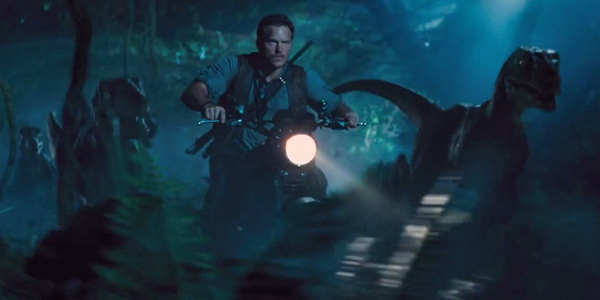
The post-title card scene brings us an image no one ever imagined would be committed to film - Andy from Parks And Rec riding a motorcycle alongside a pack of velociraptors. It's an audacious end to the trailer that has provoked much debate - why aren't these apex predators tearing Peter Quill to shreds? The potential answer to that serves as an eye into why there's an over-egged sense of safety at Jurassic World - the dinosaurs have been tamed. In-universe this makes perfect sense - after regular security restrictions failed miserably at containing what are essentially monsters, man came up with a more intelligent solution; subdue their violent instincts. Not just logical, however, from a film-making perspective it's utter genius, giving audiences something they're yet to see in a Jurassic movie. What better way to create terror than from an environment that's presented as totally safe? This would tie nicely into the alluded "dinosaur rights" element - if they're basically animals in a zoo, there's naturally an argument for them to be allowed to live naturally and free. What did you make of the Jurassic World trailer?

Contributor
Contributor

Film Editor (2014-2016). Loves The Usual Suspects. Hates Transformers 2. Everything else lies somewhere in the middle. Once met the Chuckle Brothers.