Killers Of The Flower Moon Review: 9 Ups & 1 Down
Expect Oscars a-plenty for Scorsese's latest masterwork.
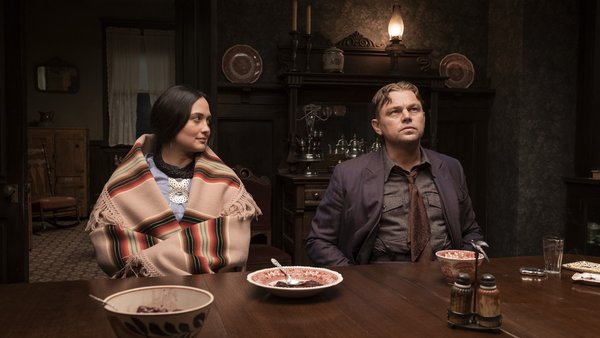
It feels like it's taken a damn age to get here, but Martin Scorsese's latest epic crime drama Killers of the Flower Moon is finally out now in cinemas worldwide.
At age 80, Scorsese is showing no signs of losing his touch if his latest masterpiece is any indication - another towering dramatic achievement which confirms him to be the most staggeringly, consistently brilliant filmmaker working today.
Indeed, the ecstatic early reviews are totally on the money - though it's tough to discern precisely where the director's latest sits amid his celebrated filmography, it is on its own merits an outstanding achievement and one of 2023's very best films, if not the best.
Audiences willing to put aside 3.5 hours of their day will be rewarded with a richly crafted, superbly acted true crime story which desperately needed to be told, even if understandable concerns remain about the perspective it's being told from.
All the same, those craving a meticulously executed adult drama from a master of the medium will be well-served by this astonishing account of the horrifying massacre of the Osage Nation in 1920s Oklahoma.
But of course it's not a perfect movie, and so first, here's what it doesn't quite get right...
Downs...
1. Not Enough Jesse Plemons
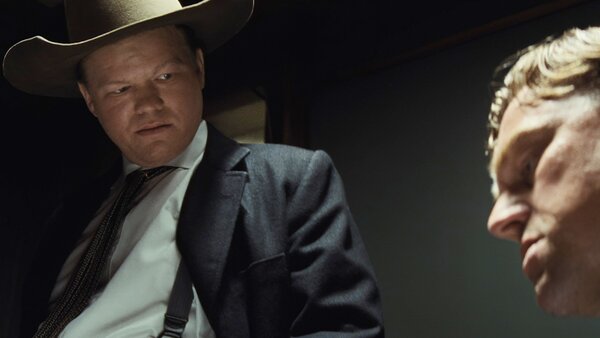
The marketing for Killers of the Flower Moon seemed to imply that Jesse Plemons would have a relatively large role in the movie as Tom White, a Bureau of Investigations officer who shows up to probe the suspicious number of Osage bodies piling up in Oklahoma.
And yet, despite this and White being the central character in David Grann's book on which this film is based, he ends up playing a relatively minor - if undeniably pivotal - role in the story, with Jesse Plemons not showing up on-screen until around the two-hour mark.
Plemons certainly does a terrifically understated job with what he's given, and his character absolutely helps tie the various narrative strands together on the course to the finale, but it's also a shame that he ends up getting a relatively short shrift compared to the movie's other prominent characters.
One suspects that Scorsese and co-writer Eric Roth might've been wary about centering too much of the story around white men - a valid concern, for sure - yet it does mean that Plemons' character feels a little undercooked.
But beyond that, here's why you absolutely need to see this movie...
Ups...
9. Leonardo DiCaprio Gives Arguably The Best Performance Of His Career
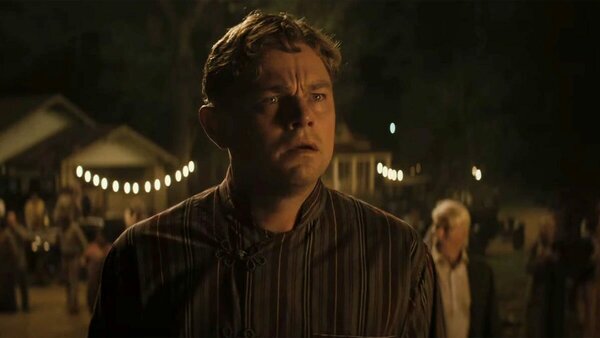
Shocking nobody, Leonardo DiCaprio gives a terrific performance here in his sixth collaboration with Scorsese, playing a character quite unlike any he's portrayed before.
DiCaprio's Ernest Burkhart is a far cry from the many charming and charismatic men he's played throughout the decades, instead quickly outlined as a rather pathetic putz who, in the quest for an easy, enriched life, hangs on every last word of his devilishly conniving rancher uncle, William King Hale (Robert De Niro).
And it's a part DiCaprio absolutely knocks out of the park, aided by a script which lends tremendous dimension to Burkhart.
For though it's easy to laugh at how spineless the man is, there's also huge complexity to his relationship with his Native American wife Mollie (Lily Gladstone), who he does appear to harbour a genuine love for despite the mounting crimes he becomes involved with against the Osage people.
DiCaprio will certainly receive a Best Actor Oscar nomination for his work here, and if it's not his finest performance to date it's certainly damn close.
8. It's Brilliantly Paced

If you were concerned about Killers of the Flower Moon's epic 206-minute length, you clearly didn't watch The Irishman, which proved that Scorsese is one of the few living filmmakers capable of making such a gargantuan runtime basically fly by.
Though Scorsese is evidently in no rush to tell his story, the expanded canvas allows him to dig down deep with his central characters and in turn deliver a crime drama of uncommon nuance.
It's tough to pick out more than a scene or two that could've been cut, honestly - basically every single scene is important to the overall whole.
And while not everyone will want to soak in such an experience on the big-screen, it's absolutely worth losing yourself in Scorsese's world theatrically for 3.5 hours if your bladder will allow.
As frustrating as it is that films seem to keep getting longer and longer, Scorsese is one of the few filmmakers who can be consistently trusted to make such a massive runtime feel necessary.
7. Robert De Niro Plays His Best Villain In YEARS
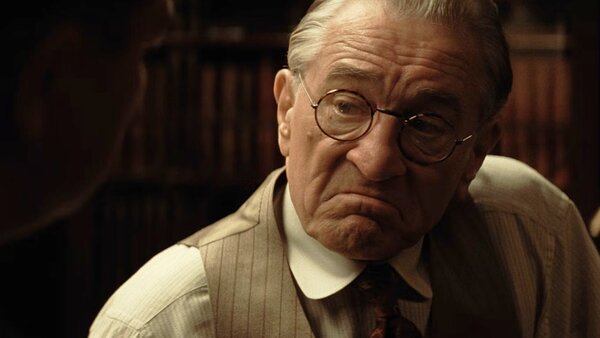
This movie is a welcome reminder of why Robert De Niro is one of the best actors to ever do it - when he dials it up to 11, there's virtually nobody who can match him.
And in Killers of the Flower Moon, he delivers not only one of the finest performances of his career - and one sure to net him a Best Supporting Actor Oscar nomination - but his most memorable screen villain in quite literally decades.
William King Hale is such a cartoonishly blatant Bad Guy that De Niro doesn't need to work too hard to make us hate him, but in the wrong hands it would've been easy for Hale to feel like a caricature.
Instead, De Niro pulls back on the reins and gives us a calm, collected villain who almost never raises his voice but simply uses his vast resources to pull the puppet strings from the sidelines.
It's a brilliantly chilling performance that represents some of the actor's finest late-period work.
6. It's Surprisingly Hilarious
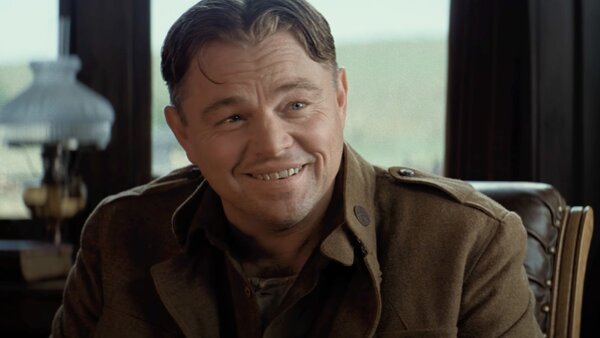
Though the movie's marketing quite understandably painted it as a relatively serious and severe piece of work, one of the big surprises is that it's frequently genuinely hilarious.
Scorsese and Roth's script is filled with moments of unexpected levity, from an early scene where Burkhart and Hale discuss Burkhart's sexual proclivities to a bevy of darkly comedic sequences later on which rank among the most grimly funny in the filmmaker's entire ouevre.
Scorsese derives much humour from the shocking, brazen stupidity of the film's most opportunistic characters, and that he does this without undermining the movie's serious message about the atrocities committed against the Osage people is truly impressive.
And so, if you weren't sure about sitting through a dour 3.5-hour drama about terrible people doing very horrible things, know that there are least regular spicings of gallows humour to savour.
5. Lily Gladstone's Star-Making Performance
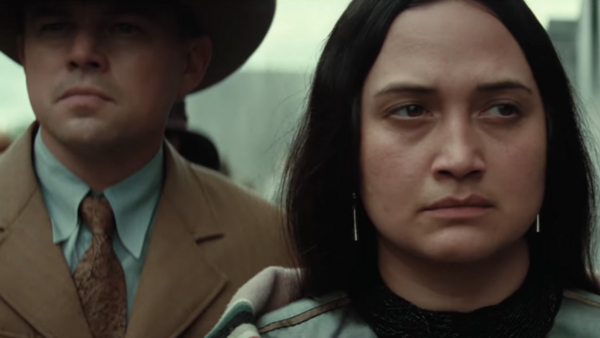
Lily Gladstone has been a quietly impressive actress for many years, with especially memorable and evocative performances in the likes of Certain Women and First Cow, but Killers of the Flower Moon will mark the moment at which she's finally, deservedly shot high into the stratosphere.
As Mollie Burkhart, Gladstone doesn't merely portray a prototypical suffering wife archetype.
Sure, Mollie suffers a lot throughout this story as she helplessly witnesses the Osage people around her drop like flies, but Mollie is a rich, textured character brought beautifully to life by Gladstone's superbly restrained performance.
Gladstone says a lot more with facial expressions than she does with words throughout the film, devastatingly selling both Mollie's overpowering sadness and righteous fury at what's happening around her.
Though Gladstone was initially expected to campaign for a Best Supporting Actress Oscar, she's since confirmed that she'll be campaigned as a lead, and honestly, there's a very strong chance she ends up steamrolling Oscar season and taking the statuette home.
4. The Incredible Production Values
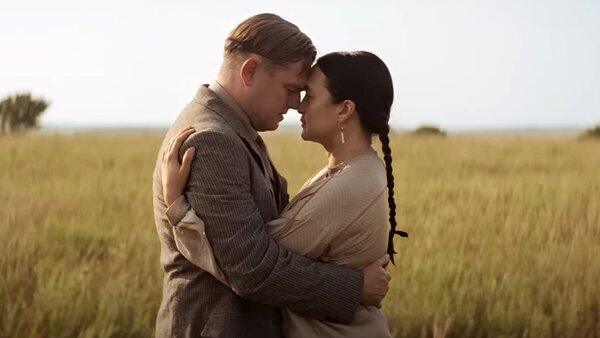
Again, it won't surprise anyone that a Scorsese movie has production values coming out the wazoo, but this is indeed a terrifically crafted piece of work from top to bottom.
Where to even begin? Rodrigo Prieto's lush cinematography captures rural Oklahoma in all of its brutal beauty, the production design and costumes perfectly transport the audience back in time, and as ever, Scorsese's partner-in-crime editor Thelma Schoonmaker cuts it all together with mesmerising nimbleness.
In an era where movie studios are becoming increasingly risk-averse and are generally investing less money in glossy period epics, it's refreshing to see Paramount and Apple dropping an eye-watering $200 million - an MCU-sized budget, effectively - on one.
Given that these sorts of non-superhero mega-budget spectacles are becoming rarer with each passing year, they're truly something to savour, and here Scorsese makes it feel incredibly special.
3. The Terrific Supporting Cast
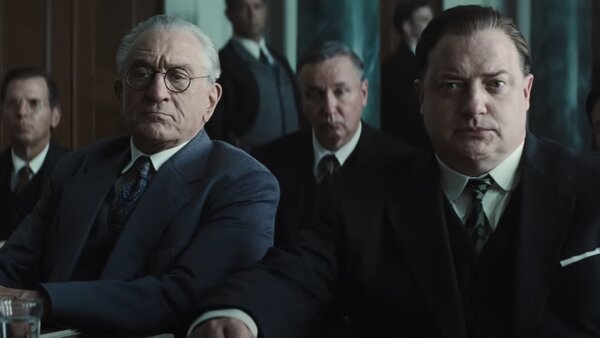
Even outside of DiCaprio, De Niro, and Gladstone, Killers of the Flower Moon boasts one hell of an ensemble cast, as shouldn't be terribly surprising given, well, Scorsese's entire filmography.
Though perhaps less star-studded than many of the filmmaker's works, there are a number of recognisable faces here who show up and turn in great work.
Beyond Jesse Plemons, there's John Lithgow and Brendan Fraser (whose surprisingly Big performance has admittedly proven a little divisive with audiences) as litigators on opposite sides, and an especially outstanding turn from Cara Jade Myers as Mollie's troubled sister Anna.
But what's perhaps most impressive about the cast is the sheer bevy of cult musicians and lesser-known Native American actors who show up for perhaps just a couple of scenes a-piece and completely steal the show.
You won't know most of their names, but they sure as hell leave a lasting impression, and by being less-recognisable than the frontline stars, help immerse the audience in the "reality" of the movie's world.
2. Robbie Robertson's Superb Musical Score
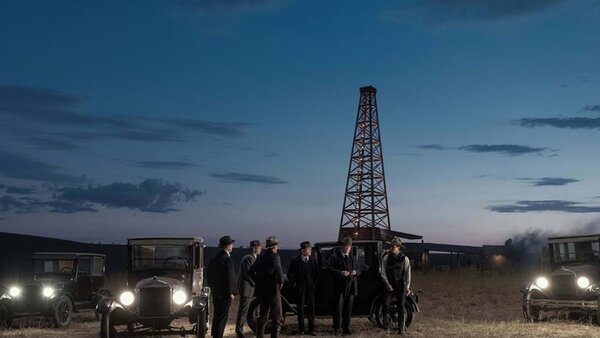
Killers of the Flower Moon marks the final collaboration between Scorsese and composer Robbie Robertson following the latter's death earlier this year, bringing to an end a creative partnership lasting almost 50 years.
But Robertson seems primed to earn himself a posthumous Best Original Score Oscar nomination with his deeply evocative work on this film.
Rather than opt for the pervasively ominous score you might expect for such a serious picture, though, Robertson defies expectations with a surprisingly groovy arrangement that somehow still feels appropriate for the material.
Robertson crafts a soundscape full of soulful harmonicas, pounding bass guitars, and impactful percussion, which fit the tone and style of the movie like a glove. Bravo.
1. It's Got One Of Scorsese's Best Endings
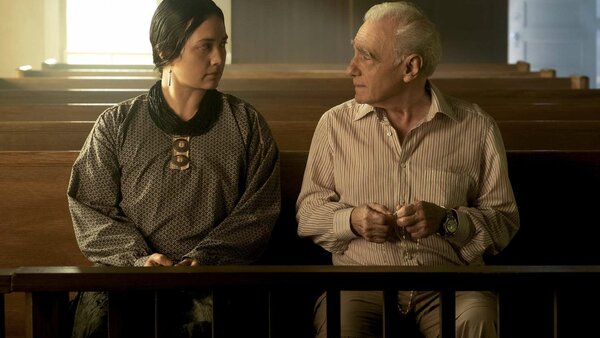
And finally, without spoiling anything, Killers of the Flower Moon arrives at one hell of a spectacular ending.
In fact, it just might be one of the very best in the director's storied career, which coming off the unforgettable finale to The Irishman is really saying something.
While most filmmakers would likely end such a massive story with a series of title cards wrapping everything up, Scorsese opts for a more playful and unexpected denouement that's sure to catch audiences off-guard in the best way possible.
And yet while audiences may smile at the surprising final sequence, its unconventional execution does nothing to undermine its devastating final exclamation point, with Scorsese pointedly begging the audience to consider why this story has remained so little-known for so long.