Oscars 2014: If We Picked The Nominees (Best Picture)

If we were the movie gods, this how the 10 Best Picture nominees would have looked.

Whether you're an Oscar enthusiast or a casual fan who uses the night of the ceremony as an excuse to get drunk, either way, one thing all cinemagoers love to do is critique the Academy's choices. "How did Martin Scorsese not get nominated as Best Director for Taxi Driver?" "DiCaprio wasn't nominated for The Departed but was nominated for Blood Diamond?" "The Reader got nominated for Best Picture but The Dark Knight didn't!?!!?!!!?!!!?" These are typical conversations among cinephiles that started exclusively thanks to the Academy and their megalomaniacal annual awards ceremony, and everyone from your uncle to your niece can tell you how they would have improved the Academy Awards if it was up to them. In fact, the "I would have nominated X, Y, and Z if I were in the Academy" game it is quite irresistible. Each year when the Academy announces its list of their chosen few, it's only human nature to look over the slate of nominees and give your hypothetical stamp of approval or seal of rejection. Undoubtedly, it is this vicarious voting mindset that has led the 86-year-old awards show to become the cultural phenomenon that it is, and with that in mind, indulge us (and play along if you like) as we critique the Academy's lineup in this year's Best Picture race. Now for the last three years, the actual number of nominees competing for Best Picture has technically been a variable ranging from five to ten nominees (although so far it has been nine nominees in the three years since the field became a variable number), but in order to be as generous as possible and spotlight as many films as allowed, we are going to go with the maximum and name the ten films that should have been nominated for Best Picture of 2013. Even giving ourselves this much maneuvering room though, narrowing the field to ten is no simple task (the Academy might not have it so easy after all), as 2013 proved to be a year brimming with good films. It may not have quite been the existence-shattering year in cinema that it is being chalked up as in some corners, as there were only really a handful of truly great films, but without a doubt, there were a plethora of "good" movies this year, more so than perhaps we have seen in some time. The final list then is a good mix of all this year had to offer. Some comedy, some drama, and some in between. Some made the Academy's actual Best Picture lineup, some were likely just on the fringes of the final cut, and some never had a chance in hell at receiving a Best Picture nomination. All the movies though represented some of the best 2013 had to offer in cinema, from the work of the directors, the writers, the actors, and all the below-the-line people that make film the collaborative art that it is. Without further ado, the ten films of 2013 the Academy should have nominated for Best Picture.

10. Inside Llewyn Davis

Out of all the spots to choose, picking the final film on this list may have been the hardest. There were a number of good films that almost made the cut. Blue Jasmine, The Great Gatsby, To the Wonder, This Is the End, Upstream Color, and American Hustle were all considered for this list, but in the end it was the Coen Brothers' Inside Llewyn Davis that took the tenth spot. Inside Llewyn Davis is an interesting film in that its strengths don't necessarily immediately call attention to themselves. In fact, the majority of the aforementioned films that just missed this list probably felt like better movies as you left the theater parking lot than the Coens' morose tale of a 1960's folk singer struggling to make a life out of his art. This elusiveness, which have led many to understandingly label the film as "slight", is undoubtedly why the Palme d'Or runner-up missed out on the Best Picture lineup (as well as most everything else) despite being considered a likely nominee by most Oscar pundits until very late in the game. It's a shame the film didn't get more time to marinate in the minds of voters, because in a few years the film's absence (and the presence of a couple of the actual nominees) will stick out as a blunder. Foregoing the Coens' usual hyperactive sense of irony-laced comedy, Inside Llewyn Davis is easily the brothers' most melancholy and sincere film of their oeuvre. That's not to say the fraternal filmmakers have ever been insincere in any of their previous endeavors, but the Coens' commonly operate in a sphere of tongue firmly placed in cheek, and while elements of that still exist in the film (the Please Mr. Kennedy sequence being the most obvious), Inside Llewyn Davis is tainted with too much sorrowful resignation for the film to hit the typical "Coen beats" that they have built their brand on. It's this lingering mournfulness though that makes the film hard to shake. The titular Llewyn Davis, played to great effect by rising star Oscar Isaac, is a character who is seemingly at odds with the world, but in reality is in conflict with himself. Through his slightly innocuous misadventures, the Coens' explore a theme that has been prominent throughout the body of their work (particularly A Serious Man): the issue of cosmic justice, or in less grandiose terms, the tendency of human beings who feel they are in the wrong to be punished accordingly. If The Wolf of Wall Street probes how far a despicable individual can go when he leaves his conscious behind, Inside Llewyn Davis illustrates the roadblocks that a basically good person can construct for themselves when their guilt gets the better of them. The film may not rank with their best work (somewhere in the middle around The Man Who Wasn't There seems like the right placement), but the Coens' Inside Llewyn Davis is certainly a grower, and its latent charms and insight merit a rank in the ten best films of 2013.

9. Spring Breakers

No matter what your feelings on Harmony Kornine's divisive film are, you at least have to give Spring Breakers props for tricking uninformed, vapid teenagers and young twenty-somethings into seeing an art film. Advertised to the MTV crowd as a rah-rah celebration of the ritualistic excesses of collegiate spring migration, and starring two familiar faces of their youth in Selena Gomez and Vanessa Hudgens, aesthetically, Spring Breakers was anything but just another teen movie. This was not The Hangover, this was not American Pie, and there were certainly no super heroes (although an Alien plays a pretty prominent role), and if you scoured Twitter around the time the film came out, you would have seen a myriad of hilariously angry responses to the film because it lacked any comforting similarities to these films and genres. Beyond the simple pleasures of pulling off a great prank, Spring Breakers is an amazing film in its own right. Another entry in the encouragingly growing "montage as movie" genre (To the Wonder and Upstream Color being two other 2013 releases that would qualify for this classification), if you have yet to see the film, Spring Breakers can roughly be approximated as, "Terrence Malick goes on Spring Break". The film follows a quartet of hedonistic college girls who would do anything (and pretty much do anything) just to get a taste of the mindless euphoria of Spring Break. Once they arrive at their destination, they let all their inhibitions go, which predictably gets the girls in a spot of trouble. From there the girls meet up with a rapper/entertainer, going by the name of Alien (played to brilliant effect by James Franco in what is probably the best performance of his career to date), who brings them down a whole new dark hole that proves to be too much for the most conscientious of the girls (Selena Gomez's character) and brings out the more sociopathic tendencies in some of the other girls. Scored to the music genre craze of the moment, dubstep, the film is about as zeitgeist-y as it gets. Like The Wolf of Wall Street, Spring Breakers walks the fine line between glorification and condemnation, which is exactly what makes the film so powerful. Displaying the quotient that some in the Millennial generation have for unabashed materialism and hedonism, the film is a fantastic critique of the direction that 21st Century morality appears to be taking. While definitely not up everyone's alley, Spring Breakers is one the boldest, and most self-assured cinematic statements made in 2013. And simply for Franco's performance alone, this is a movie that will be remembered for some time.

8. Prisoners

Prisoners proved to be a surprise smash-hit in late September, earning over $60 million in the United States, scoring strong reviews among critics, and just cracking IMDb's Top 250 films list (currently it sits at #242). With all this in the film's favor, you may have suspected that Prisoners was a major contender in this year's awards season, but it was not. Immediately after its release, there was some talk among the punditry of the film being a possible contender in some of the high-profile categories, but this idea quickly dissipated after the release of more "legitimate" Oscar fare, and by the time the nominations were announced, the only nomination Prisoners ended up with was a Best Cinematography mention for Roger Deakins (an extremely well deserved nomination). Unfortunately, this isn't all that surprising given the Academy's history with the thriller genre. For whatever reason, the membership of the Academy have continually dismissed films with even a tinge of thrills to them, no matter how well-crafted the films may be. From Shutter Island, to Memento, to North by Northwest, it is the rare thriller movie that has managed to crack the Best Picture lineup. Even someone with as adept a hand at crafting a superb hardboiled thriller as David Fincher couldn't get any recognition from the Academy until he went into full Oscar bait mode with The Curious Case of Benjamin Button. Whatever the reason for the Academy's aversion to thrillers, it's a shame, because they have missed out on honoring a slew of terrific movies, and another film was added to that list this year with Prisoners. The film tells the story of two girls who are kidnapped in broad daylight from their middle-class suburban Pennsylvania neighborhood as their two families celebrate Thanksgiving together. The film starts with wonderfully measured pacing, showing what feels like inconsequential interaction between neighbors, but all the while building an inevitable sense of doom and dread. Once the girls are actually kidnapped, the film ups the stakes when one of the girls' father (Hugh Jackman) kidnaps a mentally handicapped boy (Paul Dano) who he strongly suspects of being responsible for their disappearance and begins torturing him to no end. The film plays on its themes and subtext a bit heavy at times, and if you're really looking for it, you can probably find weaknesses in the film's plot as well, but the atmosphere crafted by director Denis Villeneuve, with a significant assist from the aforementioned director of photography Roger Deakins, is close to perfect. The film's dualism between two flawed men, one a desperate father doing the best he can to save his daughter, the other a weary detective determined to discover the truth (Jake Gyllenhaal), is another fascinating aspect of Prisoners that lets you enjoy the film from a completely different angle. With great acting, intriguing plot, and sleek aesthetics, Prisoners is an exemplary thriller, regardless of how little that may mean to the Academy.

7. The Wolf Of Wall Street

From the mention of the film in two of these previous entries, you may have guessed at the inclusion of The Wolf of Wall Street on this list, the first film that overlaps with the Academy's list of the best films of 2013. Given the controversy the film met upon its release on Christmas, it's a bit surprising The Wolf of Wall Street did as well with the Academy as it did, but the criticism of the film by some that it glorifies the reprehensible (but true) behavior of its characters proved to be more of a galvanizing force for its admirers than anything else. In all honesty though, the film was likely to be successful no matter what, because for all its faults (of which they are definitely some), the film is such a whirlwind of a cinematic force that it demands to be noticed and appreciated. Based on the autobiography of Jordan Belfort (Leonardo DiCaprio), a skeezy stockbroker of the late 1980's and 1990's who made obscene amounts of money running stock scams on unsuspecting victims, the film is an exercise in excess. We watch Belfort and his cohorts, led by his closest friend Donnie Azoff (Jonah Hill), as they take drugs, and have sex, and make money, and take drugs, and buy fancy toys, and take drugs, and throw lavish parties, and take drugs, and have more kinky sex, and then one more time just for the hell of it, take some more drugs. Despite this repetitiveness, a three-hour run time, and lack of any real narrative arc, the film is anything but boring and is actually pretty hypnotic. A lot of this is due to some terrific performances from a great cast that includes fine turns from Jean Dujardin, Spike Jonze, Rob Reiner, Matthew McConaughey, Margot Robbie, and of course at the center of it all, another brilliant performance from DiCaprio (who thankfully wasn't snubbed by the Academy again). Scorsese recently described the film as raw, and that it certainly is. Apparently heavily improvised from the script written by Terrance Winter, The Wolf of Wall Street has the feeling of actors just riffing on ideas and going for the most outrageous situations they can think of. Between this and Django Unchained, there seems to be a slightly distressing trend of enormously talented directors throwing all discipline to the wind and trying to make a movie just out of "the good stuff", but even with these formal flaws, both movies are still great because so many scenes of these films are just so damn memorable. The scene between McConaughey and DiCaprio, where McConaughey explains how things really work on Wall Street (probably my favorite), the scene where Hill's character explains how he married his cousin, the first real fight scene between Robbie and DiCaprio, and what will inevitably be the most famous scene from The Wolf of Wall Street, the infamous Quaaludes scene, are all terrific scenes that are hilariously acted and written, and although they add up to less than the sum of their parts initially, the totality of these scenes give the film more thematic resonance as time goes on. I also have to admire the film for being so reluctant to pass moral judgment on its own proceedings, which is exactly what so many seem to object to about The Wolf of Wall Street. While I find it hard to believe that many would not ultimately find the actions of the main characters reprehensible, except for those already predisposed towards that kind of behavior, any art worth its salt respects its viewers enough not to preach to them, letting the audience reach its own conclusions. Far too many don't share this belief anymore, but thankfully Martin Scorsese, Terrence Winter, and Leonardo DiCaprio do.

6. Her

Her, the second film that is also an Academy Award nominee for Best Picture, is one of the critics' favorites of the year and like The Wolf of Wall Street, is yet another film with flaws that excels despite its drawbacks. In director Spike Jonze's first solo writing attempt, Her tells the story of a man living in the not too distant future, Theodore Twombly (Joaquin Phoenix), who after an ugly separation from his wife, falls in love with the disembodied persona of his new operating system, Samantha (voiced by Scarlett Johansson). It's a novel and obviously contemporary premise, but the strength of the film is not so much its story, but its vision. Like Jonze's last effort, the adaptation of Maurice Sendak's famous children's book Where the Wild Things Are, Her is a bit too lyrical and precious at times. The film isn't as deep, insightful, or as touching as it thinks it is either, although a few moments, such as Samantha's realization of the limits of her existence, Theodore's blind date that ends on an incredibly sour note, and the montage sequence to Karen O.'s beautiful "The Moon Song" (nominated for Best Original Song), do reach the heights the film aims for. The real strength of the film though lies in its evocation of a very tangible future filled with seemingly benign, yet distressing, isolation. Perhaps the single smartest nomination of this year's Academy Awards was the Best Production Design nomination for K.K. Barrett and Gene Serdana's work on the film, and perhaps the single biggest omission by the Academy this year was the failure to nominate the fantastic cinematography of Hoyte Van Hoytema. Their tandem work is probably the biggest asset Her has, as the physical manifestation of their image of the future humanity has in store for itself helps the audience by into what would otherwise seem like a preposterous premise. The aesthetic vision created by Jonze, Hoytema, and team, filled with its soft reds, is one not of sleek ergonomics, the usual vision of any dystopian future, but instead reflects that of a society trying to reach some informal naturalism that never quite existed and certainly never will thanks to technological realities. It's the sad reconciliation of past, present, and future, leading to an inexplicable feeling of resigned disappointment that haunts the film throughout and sticks with the viewer long afterwards. Her may not quite be the sensational home-run that some have made it out to be, and Jonze's fairy tale-esque qualities still appear to be better suited when paired with the existential angst writings of Charlie Kaufman, but with perhaps the most underrated performance of the year from Joaquin Phoenix, a great score from the indelible Arcade Fire, and some of the most impressive production design in some time, Her is still quite the stand out.

5. 12 Years A Slave

The third film on this list that made the Academy's Best Picture lineup, and one that has a very real chance of winning the big prize, 12 Years a Slave has been in the "best of" conversation since the film made its premiere on the fall film festival circuit. In fact, the presumptive declaration on the part of some Oscar pundits upon the film's unveiling that the Best Picture race was over led to an unfair backlash against the film that the film has never fully recovered from. With nine nominations though, including for the aforementioned Best Picture, Best Director (Steve McQueen), Best Actor (Chiwetel Ejiofor), Best Supporting Actor (Michael Fassbender), Best Supporting Actress (Lupita Nyong'o), and Best Adapted Screenplay (John Ridley), no matter how many of these categories it actually wins, you can't feel too badly for the film. Based on the true story of Solomon Northup, a free black man living in Upstate New York during pre-Civil War America who was kidnapped into slavery in the south, many of the pundits who declared the Oscar race in favor of the film did so because of the perceived importance of the story. Slavery has been scantly addressed in the history of cinema, which makes 12 Years a Slave somewhat of a historical novelty, but this sense that the film is some sort of obligatory fulfillment has ultimately done more damage to the movie than it has helped it. Too easily have many dismissed 12 Years a Slave as simply "the slave movie" which has blinded some from appreciating the individual artistic merits of the film. It is true that during the film's opening act, we are treated to what feels like a cinematic documentation of the horrors of slavery. There are some powerful scenes in this section that are effectively enacted by McQueen and crew, but the lack of real character development for Solomon (Chiwetel Ejiofor) does give the proceedings a bit of a sterile feeling. However, after these initial horror scenes, when Solomon is bought by Ford (Benedict Cumberbatch), the "nice" slave owner, and then particularly when his ownership is transferred over to the sadistic slave master Edwin Epps (Michael Fassbender), Solomon's character is slowly revealed, and anyone who sees the film as just an academic exercise at this point just isn't watching with an open mind. The film also relies a lot on the strength of its actors, who all pass with flying colors. From the relatively smaller parts of actors like Paul Giamatti, Paul Dano, and Brad Pitt, to the more significant roles of Benedict Cumberbatch, Sarah Paulson, Lupita Nyong'o, and particularly Michael Fassbender, not too mention the film's star, Chiwetel Ejiofor (who deserved a nomination just for his performance in the "Roll Jordan Roll" scene alone), the ensemble does exemplary work all around. It may not quite be a masterpiece, but 12 Years a Slave is fine cinema nonetheless.

4. The Place Beyond The Pines

The Place Beyond the Pines is one of those movies that everyone who saw it really liked, but never reached the critical mass of viewers to catch on as a genuine phenomenon. Premiering at the 2012 Toronto Film Festival but not seeing wide release until April of 2013, a time that "good movies" are not suppose to be released, The Place Beyond the Pines fell between the cracks. It's a film whose reputation will undoubtedly grow over time as more people discover it (particularly if director Derek Cianfrance's career takes off) and in about 5-10 years, many people will be wondering how the film managed to get zero Oscar nominations. Reminiscent of a Greek tragedy, The Place Beyond the Pines tells the story of fathers and sons, and the consequences of a father's sins on the life of his son. Told through a narratively adventurous triptych structure, the first third of the film deals with Luke (Ryan Gosling), an unambitious motorcycle carney who resorts to bankrobbing to support his young son he didn't know he had until just recently. The second third deals with a police officer, Avery (Bradley Cooper), who is put in a tight spot when he tries to uncover corruption in his local police force. Finally, the third act of the film, which I won't get into detail for those who have not seen the film, deals with the consequences of the actions taken by the characters in the first two acts. It's a brilliantly concocted screenplay (written by Cianfrance as well as Ben Coccio and Darius Marder) that, while relying a bit too heavily on coincidence and karma, is just too powerful not to look past the flaws. The Place Beyond the Pines is that rare film that is able to mix the seemingly desperate styles of realism and classicism. Cianfrance proved his penchant for realism in his debut feature Blue Valentine, which painfully dissected the optimistic beginnings and ugly dissolution of a relationship, but what makes his sophomore effort a superior film is that he integrates the intimate rendering of his characters with a grandiose scale that complements the aspects of cinema which has made it the most important art form of the 20th Century and beyond. It's truly a potent mix that is hard to shake. The film also proves that, if there is anyone who still doubts it, Ryan Gosling and Bradley Cooper are seriously good actors. Particularly Ryan Gosling, who gives probably the single best performance this year regardless of sex or status as lead or supporting (how he wasn't a prominent figure in the acting awards this year I am not sure), is absolutely on fire in this movie, stunning to the point of numbness. When you combine this with an uncanny portrayal of certain parts of Upstate New York (the film takes place in Schenectady), you have one of the most underrated movies of the year and a sure to be future classic.

3. Gravity

The fourth and final Best Picture nominee to make the list, Gravity has been atop many critics top ten lists, and it is certainly understandable why. The film is an emotional gut punch that doesn't let up until the credits role. Just like the vacuum that is space, as soon as the film begins your body is vacated of all its oxygen as you hold your breath for the wild ride that ensues. Director Alfonso Cuaron's first film in seven years (four and a half which were spent actually making Gravity a reality), Gravity tells the story of two astronauts, Ryan Stone (Sandra Bullock) and Matt Kowalski (George Clooney), who are stranded in space after a debris storm turns their spaceship into floating pieces of space garbage. The film is the most technologically advanced film in the history of cinema (I say this without any reservation or hesitation) and is simply a beauty to behold. Master cinematographer Emmanuel Lubeski, who already turned the cosmos to a thing of beauty in Terrance Malick's The Tree of Life, really outdoes himself with the photo-like realism of the outer space that is the setting of Gravity. In fact, the aesthetic magic that is Gravity is so stunning that it is the first film that fully justifies the use of 3D, and the technology that made Gravity possible almost makes up for all the terrible things CGI has done to the movies. Now Gravity's critics point out the weaknesses in the film's script. They say that the backstory of Ryan's character is schmaltzy and trite, and that ultimately Gravity is nothing more than a really sleek roller coaster ride. Surprisingly, I don't disagree with critique of the screenplay, as the script is easily the weakest point of the film, however, to the criticism that the film is no more than a thrilling ride, I say so what? While cinema can engage on an intellectual and emotional level, going to the movies is also an experience, and the fact that Gravity creates one of the most memorable experiences I had at a movie theater in a long time (or anywhere else for that matter) should be applauded, not derided. Gravity may very well end up being crowned by the Academy as the best film of 2013, and even though it was not quite the best film of the year in this man's humble opinion, it's definitely deserving of the award. The opening scene alone, which goes on for an extended amount of time before the first cut of the film, will long be remembered for years and years to come. Whether Gravity wins Best Picture or not, at the end of 2019, when critics compile their best of the decade lists, expect Gravity to pop up on a couple of these lists.

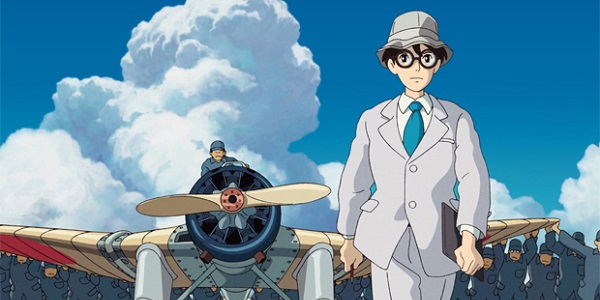
2. The Wind Rises

Hayao Miyazaki is the legendary Japanese animator who was behind such classic animated hits as My Neighbor Totoro, Spirited Away, and Howl's Moving Castle. At age 73, and with an oeuvre filled with some of the most respected animated films of all time, Miyazaki has little to prove in his career, so while not expected, it wasn't all that surprising when he announced a few months back that his next film, The Wind Rises, would be his last. It's sad that we will never have another Miyazaki film to look forward to, but as swan songs go, it doesn't get much better than this. Miyazaki has built his esteemed reputation through gorgeous visuals usually set to fantastic, and unmistakably Japanese, fairy tale-esque narratives. What makes The Wind Rises an interesting detour to the stories Miyazaki usually tells is that, while elements of fantasy and stunning animation are still present in the film (aesthetically, The Wind Rises is probably the most beautiful animated film I have ever seen), it actually is grounded in reality. A fictionalized amalgamative biography of both Tatsuo Hori and Jiro Horikoshi (the designer of the infamous Zero planes the Japanese flew in the Second World War), The Wind Rises follows the exploits of the latter as he dreams of constructing wonderful aeronautic creations even as he abhors the practical and destructive forces that his beloved inventions are ultimately used for. The Wind Rises has a very measured pacing to its proceedings, invoking the tempo of the classic Hollywood biopics of the 1930's and 1940's as well as the work of David Lean. Less focused on plot (the film lacks any real narrative arc) and more concerned with the nature of its characters, time, and place, for many Attention Deficit Disorder filmgoers, The Wind Rises will likely feel awfully slow, but for those more accustomed to the rhythms of pre-21st Century cinema, the film is full of more depth and perception than any film that has been released in quite some time. The Wind Rises has an eerie understanding of the brain of a true engineer (as well as, more generally, the creative dreamers among us), as the film's depiction of its protagonist's motivations and thought processes is the most uncanny representation of the technologists who inadvertently created the society we live in today that has ever graced the silver screen. For those interested in Japanese history, this is an absolute must as well, for beyond an accurate psychological study of the curious brain, the film also has a deep understanding of contemporary Japanese history, particular the crucial pre-war culture that led Japan down the disastrous path of WWII. And lest you think this makes the film sound like a boring history lesson, what is amazing about The Wind Rises is that all this wonderful subtext is worked into a touching story that works as a classic tale of love on the surface level. While not totally ignored by the Oscars (the film is nominated for Best Animated film), it's a shame The Wind Rises is not up for some of the more prominent awards. For whatever reason, with the exception of a few critics (who have ranked it in their top five), the film has not received as positive a response as it deserves. Regardless of its reception, The Wind Rises is a fantastic film and very nearly topped this list. After making a movie this good, its sad we will not see another Miyazaki production (and with a biopic at this level, its sad he didn't work in non-fiction more often), but if going out on top was his goal, then Miyazaki couldn't have done much better.

1. Frances Ha

And finally we come to the film that most deserved to be on Oscar's Best Picture lineup: Frances Ha. Unlike The Wind Rises, which wasn't aggressively heralded by too many critics group, Frances Ha has had its vocal supporters since the film debuted nearly a year and a half ago at the Telluride and Toronto film festivals. Name checked by the likes of Sight and Sound and director Quentin Tarantino as one of the best films of 2013, and receiving a Golden Globe nomination for Greta Gerwig's performance as the titular Frances, the film has gotten a bit of awards traction here and there. Unfortunately though, from the get go, it was clear Frances Ha was never going to be a movie the Academy warmed to. Directed by Noah Baumbach and co-written by Baumbach and the film's star, Greta Gerwig, Frances Ha, shot (technically converted) in beautiful black-and-white, tells the story of Frances, a directionless young New Yorker in her late-20's who is struggling to find her place in the world. Finding safety and meaning in the world only through her friends, particularly her best friend Sophie (Mickey Sumner), Frances kind of, sort of wants to be a dancer and has been half-heartedly trying to make it in a dance company for a couple of years. As friends start finally growing up, becoming "actual people" in the world, Frances is left struggling behind, bouncing from apartment to apartment, address to address, as she tries to find others her age who aren't ready to grow up yet. While films like the previously mentioned Spring Breakers and The Wolf of Wall Street capture the more sexy narrative of the widespread corruption and greed that permeates our contemporary society, it's Frances Ha that captures the current zeitgeist better than any film yet. Specifically, in terms of capturing the Millennial generation, no film has been more accurate in its portrayal of the hopes and insecurities of a group of budding young adults. Frances, as many her age, has lived a sheltered existence, admiring from below, as a child, the accomplishments of the real people, the adults, who she can't contemplate actually replicating. What makes the film work so well on a human level though, is even as the film critique's the flaws of Frances' character, it does so empathetically, never simply playing a situation for awkward laughs. Above all though, the reason France Ha ranks ahead of all the movies of 2013 is that the film is an expression of pure cinema. With its use of scores from the film's of Francois Truffaut (and Frances Ha very much has the feeling of a 21 Century The 400 Blows), its obvious allusions to Woody Allen's classic film Manhattan, and its relation to the previous work of Noah Baumbach, Frances Ha has cinema in the very essence of its DNA. The film makes excellent use of licensed music as well (a phenomenon total specific to the art of cinema) with inclusions of T. Rex's Chrome Star, Hot Chocolate's Every 1's a Winner, and Harry Nilsson's Mrs. Butter's Lament. And in all honesty, as soon as Frances ran through the streets to the sounds of David Bowie's Modern Love, it was going to be hard for any film other than Frances Ha to rank on top of this list.

Contributor
Contributor

A film fanatic at a very young age, starting with the Teenage Mutant Ninja Turtle movies and gradually moving up to more sophisticated fare, at around the age of ten he became inexplicably obsessed with all things Oscar. With the incredibly trivial power of being able to chronologically name every Best Picture winner from memory, his lifelong goal is to see every Oscar nominated film, in every major category, in the history of the Academy Awards.