Oscars: Every Best Picture Winner Ever Ranked From Worst To Best
81. Cavalcade (1933)

It's basically ludicrous for modern audiences to consider that Frank Lloyd's clumsy drama won Best Picture over the Marx brothers' Duck Soup - which, even more absurdly, wasn't even nominated - for though it offers an occasionally agreeable waltz through history, for the most part its well-off protagonists are unlikeable and, worse still, uninteresting.
As such it comes off as especially dated today, and even at a fairly svelte 112 minutes, a bit of a chore to get through. Unless you're especially well-read about the period or desperately craving a cinematic artefact, you should probably look elsewhere.
80. Gentleman's Agreement (1947)

Like so many "issue" movies from decades past, Elia Kazan's post-war examination of anti-Semitic sentiment often plays as facile and stodgy today, and in a year where it faced off against the easily superior Great Expectations and Miracle on 34th Street, it feels like it won Best Picture because of what it said rather than how it said it.
This was also the year that criminally snubbed Powell and Pressburger's Black Narcissus, arguably 1947's best film, for anything more than crafts awards. For shame.
Sour grapes aside, it has a worthy message, especially coming so soon after the end of WWII, though it's layered on comically thick, even if the ever-reliable Gregory Peck does his damnedest to keep things afloat (and often succeeds).
79. The Life Of Emile Zola (1937)

Williem Dieterle's biograhical drama centred on French author Émile Zola (Paul Muni) is only the second-ever biopic to win Best Picture at the Oscars, but it bears all the hallmarks of a genre prototype that's extremely rough around the edges, bloated and overlong even at just 116 minutes in length, and not nearly as interesting as it could be.
The sanitised script - which elided any explicit references to anti-Semitism or Jews - denies its exploration of the infamous Dreyfuss scandal much true power, and though it tells an important story, it's really quite a boring time capsule remnant of a movie.
78. Driving Miss Daisy (1988)

One of just four films to win the Best Picture Oscar without also being at least nominated for Best Director, Bruce Beresford's drama and its exploration of racial dynamics seems head-smackingly heavy-handed by contemporary standards, but the remarkable work by Jessica Tandy and Morgan Freeman ensures it never slides below watchable.
Driving Miss Daisy is a light, sweetly enjoyable film to a point, but an extremely facile, underwhelming pick for Best Picture in a year that also nominated Born on the Fourth of July, Dead Poets Society, Field of Dreams and My Left Foot, all of them superior films.
Again, the acting carries it through, but it plays things snooze-inducingly safe and typifies the sort of milquetoast, agreeable-ish films that so often get nominated for the big one.
And in a year that also saw the release of Spike Lee's Do the Right Thing - which wasn't even nominated - it can't be seen as anything less than a totally undeserving winner.
77. Chicago (2002)

Chicago remains one of the more eyebrow-raising Best Picture triumphs of the 21st century, considering that every other nominee - Gangs of New York, The Hours, The Lord of the Rings: The Two Towers and The Pianist - was a better film, yet the Academy opted to spring for this frothy romp instead.
The first musical to win Best Picture in over 30 years - since 1968's Oliver! - Chicago is well-performed and entertaining, though it's tough to see what awards voters felt was truly Oscar-worthy outside of the crafts categories. Nothing really sticks out, there are a number of legitimately embarrassing scenes and Richard Gere is quite terrible in it at times.
A decent enough film, but Best Picture? Really?
76. Mrs. Miniver (1942)
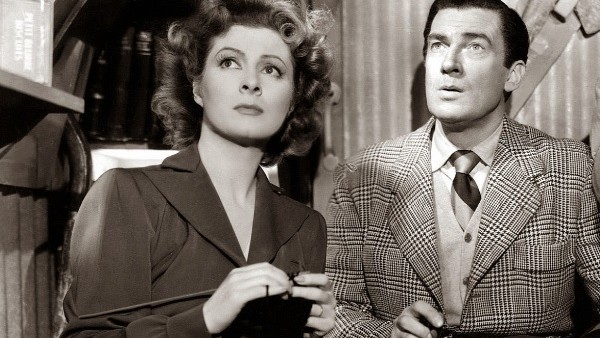
Best Picture winners that are politely referred to as "products of their time" don't come much more blunt than Mrs. Miniver, William Wyler's shameless propaganda piece revolving around a British housewife (Greer Garson) eking out life in the early throes of World War II.
Thanks to Garson's performance, which won the Best Actress Oscar, it's actually pretty watchable. However, while it's especially important to consider movies released around World War II within their proper context, the film is ultimately as subtle as a brick to the face, glacially paced and a ridiculous winner when faced with Orson Welles' effortlessly superior The Magnificent Ambersons.
75. Chariots Of Fire (1981)
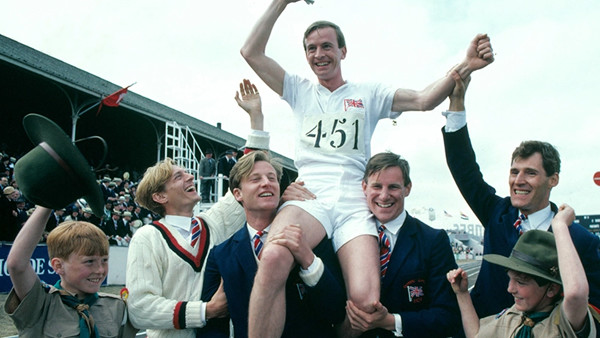
The "Slumdog Millionaire of the 80s", Chariots of Fire is largely only remembered nearly four decades later for Vangelis' incredible musical score, for though the movie entire is a solid crowd-pleaser, it had the misfortune of winning in a year where it faced leagues-ahead competition in Warren Beatty's fantastic Reds and the marvellous Atlantic City.
Even with its diametrically opposed leads, this never really graduates beyond typical feel-good sports film fare, not to mention fairly ho-hum lead performances resulting in Ian Holm being the film's sole acting nominee as Harold Abrahams' acting coach.
It's worth a watch once, but it plods along and hasn't really aged well at all as the supposed best film of 1981.
74. A Man For All Seasons (1966)

Fred Zinnemann's adaptation of Robert Bolt's 1960 play depicts Sir Thomas More (Paul Scofield) bristling up against Henry VIII (Robert Shaw) and his divorce plans, and it's...basically good?
Even at a reasonable 120 minutes in length, A Man for All Seasons feels like a bit of a slog, presented with a certain visual flatness (that didn't stop it winning a Best Cinematography Oscar) which somewhat undermines the strong performances from Scofield, Shaw, Wendy Hiller and Orson Welles.
The subject matter is undeniably fascinating, and it's never less than a solid drama, but as a Best Picture winner it's lacking that special something.
73. Oliver! (1968)

Though an unassailable classic of the musical genre, the 1968 Oliver! arrived with somewhat poor timing, amid a major cultural shift in America, and as such in retrospect it can't help but seem like a rather quaint relic stood next to the glut of edgier - not to mention better - Best Pictures that followed throughout the 1970s.
Carol Reed (The Third Man) is also a bit of a bizarre choice to direct something so effervescent, but he does a totally solid job making the most of the catchy songs, though audience mileage is sure to vary wildly in that regard.
The real sticking point is the comically absurd 153-minute runtime, which makes this Dickens adaptation feel unnecessarily turgid, rather flying in the face of what should probably be a snappy, light-on-its-feet effort.
It's fun to a point and enthusiastically performed, but also merely decent as a Best Picture pick.
72. Tom Jones (1963)

Tony Richardson's adaptation of Henry Fielding's classic 1749 novel prevailed in an extremely soft year for the Oscars, where it ended up going head-to-head with the interminable, four-plus-hour Cleopatra of all movies.
What makes this picaresque adventure fly is Albert Finney's stonking central performance, an agreeably meta-tone which offsets a lot of the potential narrative stodge, and Walter Lassally's marvellous cinematography.
It's a Best Picture winner that's basically just "there", but a solid entertainment all the same, if perhaps too slight for its own good at times. Still, it holds a special place in Academy history for being the only film to ever receive three (!) Best Supporting Actress nominations. Bravo for that.