Philip Seymour Hoffman: 5 Awesome Performances And 5 That Sucked

Above all, he is a man. A hopelessly inquisitive man.
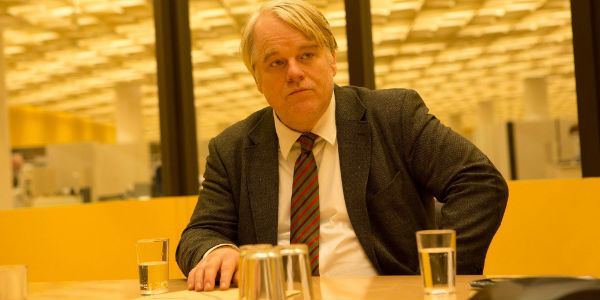
This year the world mourned the loss of quite possibly the greatest actor of a generation. Philip Seymour Hoffman passed away on February 2, 2014 of a drug overdose, leaving a shocked mass of friends, family and fans, alongside a considerably body of work. The guy had an insane work ethic, something that was often commented on, and threw himself into roles in a way no other actor did, often changing his appearance drastically for roles. He remained humble throughout his career, however, never taking it for granted that he would be offered roles, and working hard on whatever project he was involved in. Inspired by a stage production of Arthur Miller's All My Sons, Hoffman new from age 12 that he wanted to be an actor, although he only went after it full time when a neck injury took him away from his first love of sports, particularly wrestling and baseball (he would later appear in the baseball-centric biopic Moneyball). He devoured both theatre and movies voraciously, with an appetite that mirrored the sort he developed when he started appearing in films and plays himself. In the end Hoffman appeared in over fifty films during a career that spanned more than two decades whilst remaining active in the theatre, his last part being a starring role in Miller's Death Of A Salesman on Broadway. He brought a commitment, intensity and realism to every character he inhabited, display a range that other actors would kill for, admitting that he sometimes appeared in low-brow films for money, but €œultimately my main goal is to do good work. If it doesn't pay well, so be it.€ During his twenty years on screen he brought us some of the most memorable characters in cinema history; we can probably forgive him a couple of turkeys, too. This weekend sees the release of one of his final productions, A Most Wanted Man, so seems like as good a time as any to remember five Philip Seymour Hoffman performances that blew our socks off - and five that just plain blew.

5 Awesome Performances...

5. Andy - Before The Devil Knows You're Dead

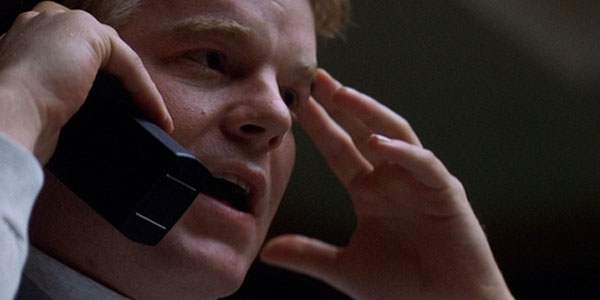
One of the more underrated movies in the Hoffman canon, Before The Devil Knows You're Dead has the distinction of being the last film helmed by legendary director Sidney Lumet - he of 12 Angry Men, Dog Day Afternoon and Serpico fame - before he died a the age of 86. After a few years in the Hollywood wilderness Lumet returned to the sort of gritty, downbeat crime pictures he made his name on with this, the story of two hapless brothers who, finding themselves in a tight spot, decide to rob their own parents' jewellery store to get them some much-needed scratch. It's a tight, gripping drama that manages to be an effective drama about a dysfunctional family, a darkly comic look at a botched robbery in a similar vein to Dog Day Afternoon, and a heartbreaking tragedy about a bunch of messed up people. Principal amongst those messes is Hoffman's Andy Hanson a finance executive at a real estate firm in New York City who's been embezzling company money to pay for his burgeoning drug habit. In light of the actor's death the scenes of him shooting up are hard to take, but the real emotional gut punches come in his interactions with young brother Hank (played by Ethan Hawke) whom Andy tries to dominate and browbeat into following his cockamanie criminal plan. Both actors hold their own in a bunch of emotionally intense scenes (especially when Hank's long-time affair with Andy's wife, played by Marisa Tomei, comes out), but it's Hoffman who really wrings the truth out of them, making good on his assertion that "acting is torturous, and it's torturous because you know it's a beautiful thing. I was young once, and I said, That€™s beautiful and I want that. Wanting it is easy, but trying to be great - well, that's absolutely torturous."

4. Phil Parma - Magnolia

In his obituary for Philip Seymour Hoffman, David Fear of Rolling Stone wrote that "no modern actor was better at making you feel sympathy for f*cking idiots, failures, degenerates, sad sacks and hangdogs dealt a bum hand by life, even as - no, especially when - he played them with all of their worst qualities front and centre." It was something Hoffman excelled at, which is probably why Paul Thomas Anderson thought he would give his pal a break by casting him as a "really simple, uncomplicated, caring character... really takes pride in the fact that every day he's dealing with life and death circumstances". Which is what he did as hospice nurse Phil Parma in Magnolia. One of the actor's many collaborations with director Anderson - Hoffman's part as slightly pathetic lapdog Scotty J in Boogie Nights is another stand out - he manages to not get lost in an ensemble that includes such heavyweights as Julianne Moore, William H Macy and Tom Cruise playing brilliantly against type as misogynistic motivational speaker Frank Mackey. Phil's patient, the dying husband of Julianne Moore's character, asks him to track down his long-lost son: that self-same misogynistic motivational speaker last scene talking about taming and respecting different genitalia. For once, Hoffman isn't playing a character who is a total screw up, or morally compromised in some way. He's just a nice guy. Not just a nice guy, actually, but a guy who really has everything together, is aware of his place in the world, and wants to do what's right. He's the calm centre of a three-hour storm of devastating feeling and emotional catharsis, and his showdown with Cruise - eventually convincing the arrogant douche to come see his dad before he dies.

3. Lester Bangs - Almost Famous

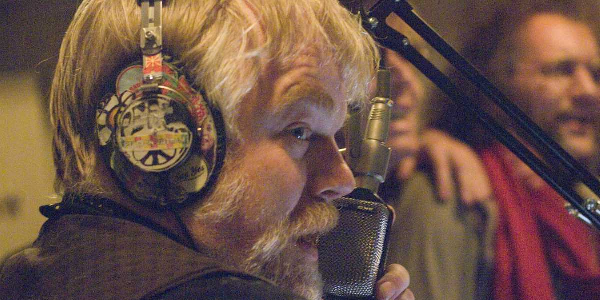
Hoffman's appearance - slightly pudgy, doughy, with thinning blonde hair - wasn't exactly your typical matinee idol look, but the actor was grateful for his appearance as it made him believable in a wide range of roles. It did somewhat limit the number of real-life figures he could play, however, to people who actually looked like him. The actor appeared in only a couple of biopics during his voluminous career, a similarity to former CIA agent Gust Avrakotos getting him cast in Charlie Wilson's War. Before that he embodied one of the most iconic music critics of all time (who just so happened to be a slightly pudgy, doughy guy with thinning blonde hair), playing Lester Bangs in 2000's Almost Famous. Loosely based on writer-director Cameron Crowe's own experience as a teenage journalist for Rolling Stone, Almost Famous blends together a fictitious seventies rock group called Stillwater, real stories Crowe lived through during the era, famous urban legends about groupies and rock star excess, and actual historical figures. Where Stillwater never existed and Kate Hudson's character is a stand-in for an actual infamous groupie of the age, the journalist Patrick Fugit's William Miller goes to for advice about his burgeoning writing career was very real, very influential, and definitely a character. A trailblazing music critic who took the bands of the time more seriously than anyone else, everybody knows who Lester Bangs is. Which makes it all the more impressive that Hoffman's portrayal of him never tips over into caricature or pantomime; instead, he takes a handful of the tics and visual cues of the legend that is Lester Bangs, and spun him into a living, breathing character who you can never quite tell is either a genius or a lunatic. Probably somewhere in between.

2. Lancaster Dodd - The Master

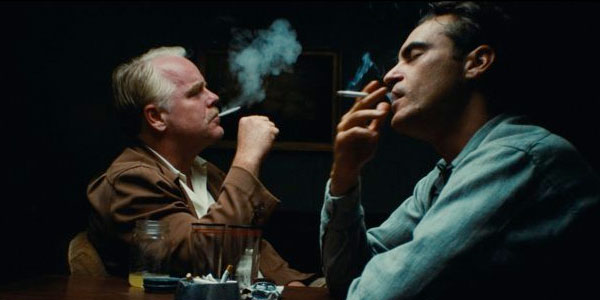
Despite being, as we said up top, the greatest actor of his generation, Philip Seymour Hoffman only one Academy Award acknowledging as such during his lifetime: in 2005 he won the Best Actor gong for the eponymous role in Capote, but besides that, he only got nominated a paltry three times for the same Oscar. After that he was considered for his part in Charlie Wilson's War, his star turn as a priest accused of sexual wrongdoing in 2008's Doubt, and finally for his electrifying presence as the figurehead of a cult that's definitely not Scientology in 2012's The Master. He probably should've won for all of them, too, but especially The Master. Because he's bloody brilliant in it. His sixth and final collaboration with Paul Thomas Anderson, The Master had a troubled production - partially because of legal wranglings with a certain nascent "religion" who don't like it when you appear to be criticising famed science fiction author L Ron Hubbard - but Hoffman remained on board throughout, eventually getting to play the part of the eccentric Lancaster Dodd, leader of a religious movement known as "The Cause", opposite Joaquin Phoenix's dangerously unhinged alcoholic World War II veteran. As per with Anderson's films The Master isn't short of stalwart performances, with Phoenix and Amy Adams also standing out, but Hoffman steals the show. The flipside to the uninhibited ID of Phoenix's Freddie Quell, Dodd is an enigmatic and hard to read figure who slowly worms his way into his charge's psyche, before exploding in the sort of spitting rage the actor could sell far better than any of his more melodramatic peers. Really, though, all you need to watch is the incredible fifteen minute processing scene from the film to get an idea of how special Hoffman was.

1. Caden Cotard - Synecdoche, New York
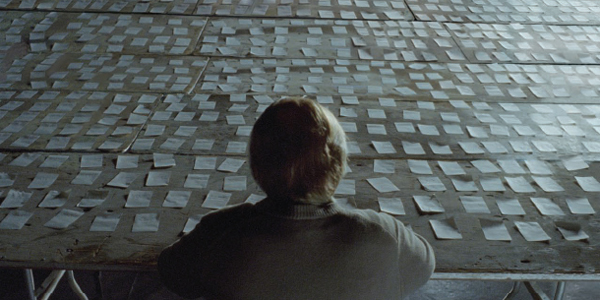
Charlie Kaufman writes weird films. That's what he's best known for, from the surreal and self-referential Being John Malkovich (where John Cusack's frustrated office temp/puppeteer finds a door into the Hollywood actor's head), Eternal Sunshine Of The Spotless Mind (Jim Carrey and Kate Winslet go to a service that will wipe the memories of their failed relationship from their minds) and Adaptation (Nicolas Cage plays Charlie Kaufman, who writes weird films and...hey, wait a minute). He's best known for his post-modern take on cinema, with sharp scripts which turn the form on its head. What people tend to overlook amidst the tricks and deconstruction is that Kaufman write heartfelt (and usually heartbreaking) stories about people trying to muddle their way through a confusing, frightening world, trying their best to find a modicum of happiness and perhaps even leave some sort of impression on history, a sign that they were ever here. He took that ball and ran with it for his directorial debut Synecdoche, New York - don't ask us, we don't know how it's pronounced - where Philip Seymour Hoffman plays an acclaimed theatre director he decides to put on his most daring production yet. Said production is a reproduction of his own life, in real time, in a warehouse which slowly amasses into a full-scale doppelganger of New York City, with actors playing every person in Hoffman's life - including himself. It is, of course, a deeply odd film. It's also one of the most affecting Kaufman has ever written, ably brought to life by Hoffman as the director loses grip on his own life and ultimately has to face up to his own mortality as the final curtain call on his play beckons. Throughout all the kooky weirdness Hoffman stands strong, even as his character crumbles. A truly career-defining performance.

And 5 That Sucked...

5. Sandy Lyle - Along Came Polly
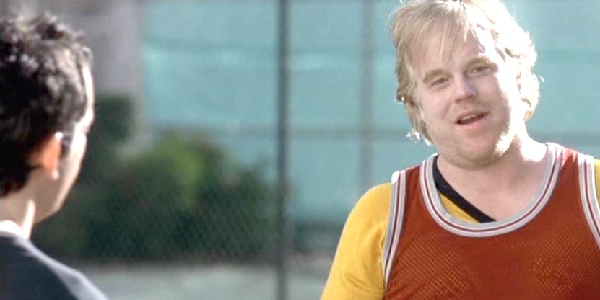
We don't think it's beyond the pale to suggest that this was one of those major studio low-brow films Philip Seymour Hoffman made for money. Everybody's got bills to pay, right? We can't see there being much other draw to this thoroughly middle-of-the-road rom-com from 2004, starring Ben Stiller and Jennifer Aniston as a couple of star-crossed lovers. Oh and there's a ferret in there for some reason, too. From the co-writer of Meet The Parents, Along Came Polly contains very little of the manic energy or wit of that previous Stiller comedy, instead just going off like a damp squib. One thing Along Came Polly had that Meet The Parents didn't, however, is Academy Award winning actor Philip Seymour Hoffman. A year before he was bestowed that honour, but still, this isn't exactly the sort of thing he usually did. He also went for a drastically different role from his usual sort - which, considering he was one of the most versatile performers working, was impressive - as the schlubby Sandy Lyle, comic relief and foil, the best friend to Ben Stiller's insurance risk assessment expert Reuben Feffer. We don't blame Hoffman for his turn in this film. He didn't have a whole lot to work with, and the part of Sandy was clearly written with Jack Black in mind. As such, he ends up putting in a pretty decent approximation of Black's slightly gross slacker persona, and definitely has some standout moments - including an incredibly unathletic game of basketball and the infamous €œsharting€ scene - but it's really not up to par with his usual work.

4. Reverend Veasey - Cold Mountain

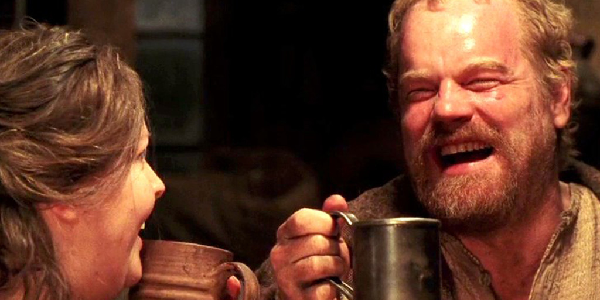
Speaking of terrible films, remember Cold Mountain? No. Nobody remembers Cold Mountain. That's despite it being nominated for more than seventy awards, including seven Academy Awards, upon its release, with Renee Zellweger grabbing a win for Best Actress in a Supporting Role at that year's Oscar ceremony. Despite all the plaudits it received at the time, however, Anthony Minghella's adaptation of Charles Frazier's bestselling novel hasn't stood the test of time. Not only has its reputation dropped considerably, but so has people's recall of it. What's it about again? A soapy Civil War romance, the film tells the story of a wounded deserter from the Confederate army (Jude Law) on his way to return to the love of his life (Nicole Kidman). Along the way he bumps into Natalie Portman, Cillian Murphy, Renee Zellweger and Jack White from The White Stripes, who has a weird double-act with Randy out of My Name Is Earl. It's a bloated, over long historical epic where a lot of talented actors put in uncharacteristically dull and one-dimensional performances, with one of those actors being our beloved Philip Seymour Hoffman. As the corrupt preacher Reverend Veasey - introduced to us as he's about to drown his pregnant slave lover - Hoffman should have gotten a chance to plumb the dark emotional depths of his soul as he never did before. Instead he plays a stereotypical lush, replete with red nose and jolly demeanour, drowning his sorrows in booze and acting more like the dodgy guy you avoid when you go down the local than a morally complex and not particularly sympathetic man of the cloth who should really know better. A wasted opportunity, in all meanings of the word.

3. Mitch - Patch Adams

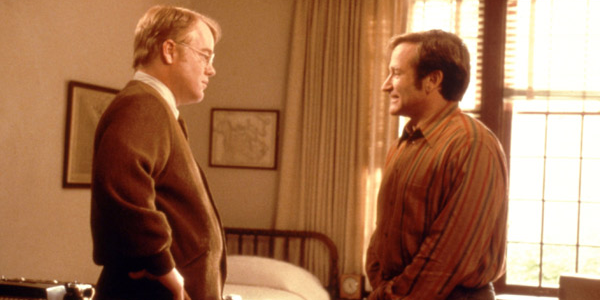
Speaking of films nobody likes, even when star Robin Williams also sadly passed away this year, nobody could bring themselves to say a good word about Patch Adams. Even the actual doctor whose life the movie was based on hated the film, remaining openly critical about it during its release and continuing to bad mouth it years later. It's a complete misfire on all accounts, as it takes the genuinely compelling life of Dr Hunter Doherty "Patch" Adams - social activist, physician, and all-round interesting dude - and reduces him to "doctor who put a clown nose on". With a queasy mix of sentiment of childish humour, the movie Patch Adams manages to hit neither the poignant emotions or belly laughs it required to actually be enjoyable. Instead it was just terrible, almost certainly owing to problems with the script by Steve Oedekerk, who brought us such exquisite fare as Evan Almighty and The Nutty Professor. Which is a shame, because Williams €“ who so often struck the right balance between gravitas and comedy in his films, stand up and even his life €“ looked to be perfect casting for the eponymous role. More surprising amongst the cast list is a young Philip Seymour Hoffman, who plays Patch's former medical school roommate, Mitch Roman. We're not sure what they were going for with Mitch, but whatever it was, they definitely failed. As the man who represents the sort of stuffy bureaucracy Patch Adams is railing against with his pioneering medical techniques (taking "laughter is the best medicine" literally), the filmmakers saw fit to dress Hoffman like a Harvard dean and - for reasons we can't comprehend - insist he do an English accent. Which, bless him, Hoffman only ever half commits to, since he clearly can't quite nail it. It's like a crap, po-faced version of the sycophantic Brandt from the Big Lebowksi. In a much crapper, po-faced film.

2. Freddy Lounds - Red Dragon

The law of diminishing returns is very much in effect throughout the Hannibal movies. Setting aside the massively underrated Manhunter (which saw Brian Cox play the celebrity cannibal), the trilogy of films which saw Anthony Hopkins play the enigmatic Dr Lecter started off incredibly strong, with the rightfully Oscar-worth Silence Of The Lambs. Director Jonathan Demme and star Jodie Foster went onto other things, and the space was filled by the usually-dependable Ridley Scott and Julianne Moore for Hannibal, which was schlocky and cheap in every way the first film wasn't. Things really went off the boil with the third film, however, as the vacant director's seat was taken up by Brett Ratner, the guy who had previously helmed the Rush Hour films and done nothing that would recommend him for a serious, thoughtful psychological thriller. Which is probably why Red Dragon was anything but a serious, thoughtful psychological thriller, despite an able cast which included Hopkins returning as Hannibal, Ralph Fiennes as a terrifying serial killer, and €“ oh yeah €“ Philip Seymour Hoffman as one of the so-called Tooth Fairy's victims. Hoffman plays Freddy Lounds, a tabloid reporter who follows Edward Norton's FBI agent around, hoping for a scoop in the Tooth Fairy story. In the end he becomes part of the story himself as Fiennes glues him to an antique wheelchair, bites off his lips and then sets him on fire outside his newspaper's offices. All the time Hoffman is totally phoning his performance in, as his "oh god"s whilst being tortured by a sadistic serial killer sound about as believable as a sex line operator.

1. The Count - The Boat That Rocked

Look, we're not saying that a drastic re-titling of a film for every country its released in is necessarily a sign that it's a bit rubbish. We're just saying that The Boat That Rocked is an awful excuse for a film and the distributors clearly knew that, which is why its otherwise known as Pirate Radio in America, Good Morning England in France, Radio Rock Revolution in Germany, and I Love Radio Rock in Italy. It doesn't matter how much you try and dress it up or disguise it as something else, it's still The Boat That Rocked, and it's still terrible. Directed by British luvvy supreme Richard Curtis, the movie shows that sort of swinging sixties that doesn't exist anywhere except in nostalgic films by sad old men, BBC Four documentaries starring sad old men, or archival issues of the NME mostly bought by sad old men. Loosely adapted from the true stories of pirate radio shows of the era which avoided detection by transmitting from international waters, what could have been a fun premise ended up being an embarassing shambles of comedy bit-parts and a tacked-on romance between Tom Sturridge and Talulah Riley (us neither). Oh and Philip Seymour Hoffman's in there, too. Hoffman plays "The Count", a brash American DJ loosely based on Emperor Rosko, essentially reprising his role as the intense and obsessive Lester Bangs from Almost Famous. Except now he's had all the interesting and dangerous bits shorn off and been turned into a totally one-dimensional, tedious caricature of the sort he managed to avoid when playing Bangs. It probably helped that the script was written by Cameron Crowe instead of Richard Curtis, and that the film was Almost Famous instead of The Boat That Rocked €“ but whatever the reason, this was one sucky performance.

Contributor
Contributor

Tom Baker is the Comics Editor at WhatCulture! He's heard all the Doctor Who jokes, but not many about Randall and Hopkirk. He also blogs at http://communibearsilostate.wordpress.com/