20 Scariest Horror Movies Of The 2020s (So Far)
The best horror films of the decade that'll scare the pants off you.
Plenty of great horror movies aren't really scary at all, though it's fair to say that the genre is typically associated with unsettling, unnerving, disturbing, and yes, scaring viewers where possible.
Horror films can scare in many ways - it can be purely visceral, terrifying imagery as simple as a monstrous face, or they can dig deep into something about the human condition which we as audiences simply find innately horrifying.
And the 2020s sure have been a banner decade for nerve-shredding horror so far.
Even though we're only barely half-way through it, we've seen so many genuinely scary-with-a-capital-S horror films which tested the nerve and resolve of even the most hardened genre fans.
Everyone's got their opinions and of course different things are scary to different people, but on the balance of everything these are the 2020s horror films which served up the most consistent shocks to the greatest number.
From their sheer unrelentingly bleak atmosphere to their upsetting storytelling and everything else in-between, these are the horrors to watch if you're in the mood for being terrified out of your wits...
20. Oddity

Director Damian McCarthy's follow-up to his memorable debut Caveat is another stellar example of what a talented filmmaker can do with a limited budget but a great handle on tone and atmosphere.
Oddity revolves around Darcy (Carolyn Bracken), a woman attempting to uncover the truth of her twin sister's mysterious murder, as leads both her and the audience down quite the twisted rabbit-hole.
Even at just 98 minutes in length, this is a patient slow-burn of a movie that's less interested in exposition dumps and tired jump scares, keen instead to mine anxiety and unease from that which might be lurking in the shadows.
It doesn't hurt that the wooden golem prop central to the story is innately terrifying, nor that McCarthy gathered one hell of a talented cast to execute his vision, all while keeping us at arm's length from the precise particulars of the supernatural shenanigans.
Even if you figure out the truth of the sister's death before the shoe drops on-screen, the ride is so elegantly, precisely crafted that you likely won't care.
19. Host
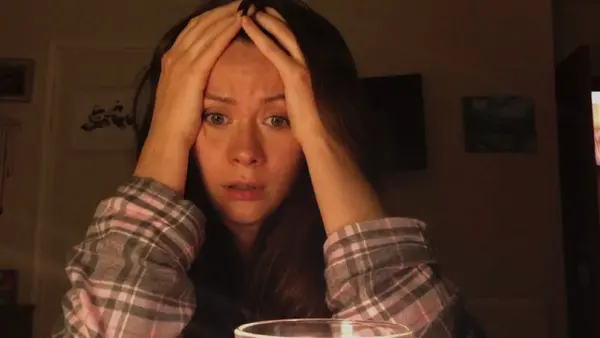
No film on this list is more thoroughly of-its-time than Rob Savage's debut Host - a screenlife horror which was conceived, shot, and released during the early stages of the pandemic, following a group of friends who accidentally summon a demon during an online séance over Zoom.
And while there's no replicating the feeling of being sheltered in place back in 2020 and settling in for Savage's sublimely timely supernatural horror flick, even removed from its pandemic context this is an impressively effective slice of efficient, no-budget genre fare.
That's largely a credit to the credible performances from the little-known cast, Savage's extensive bag of parlour tricks, and a sensibly short 56-minute runtime which ensures it doesn't outstay its welcome.
As both a window into the real-life terror of living through a pandemic and a more familiar supernatural yarn, Host gets under the skin in ways few would've expected from such a minimalist, DIY filmmaking setup.
18. The Empty Man

Considering its generic title and how quietly it was dumped in cinemas by Fox, you couldn't blame anyone for assuming that The Empty Man was just another forgettable horror flick.
But the film gained something of a cult following once it hit streaming, because for as little fanfare as it initially had, it's actually one of the most intoxicatingly atmospheric horrors of the last decade.
And that shouldn't be too surprising considering it's directed by David Prior, a protégé of David Fincher who's clearly taken some strong pointers from his mentor.
The nerve-jangling opening 20 minutes are basically a perfectly formed short film, after which The Empty Man becomes a bewilderingly Lynchian investigation into a missing girl and the cult surrounding the local legend known as the Empty Man.
With its slow pace and spare storytelling approach, basically every frame of this film is absolutely sodden with dread, all while hopping between subgenres and keeping the audience ever on their toes.
17. Talk to Me

Danny and Michael Philippou made one hell of a debut with their 2022 film Talk to Me, centered around the inherently creepy concept of a group of teenagers using a severed embalmed hand to contact the spirits of the dead.
And this is really just a vehicle for the Philippous to serve up an allegory for the dangers of being addicted to anything, even the allure of reaching the spirit world with an embalmed limb, apparently.
The filmmakers hold nothing back in continually turning the screws throughout, pushing our grief-stricken protagonist Mia (Sophie Wilde) and her pals to the absolute brink, with an uncommon level of intensity no less.
This is a classic example of a high concept horror that establishes its simple rules early on and then uses our knowledge of said rules to ratchet the tension up to almost unbearable, must-look-away levels.
It was also a surprise box office hit, enough that a sequel was swiftly announced to be in development.
16. Nosferatu
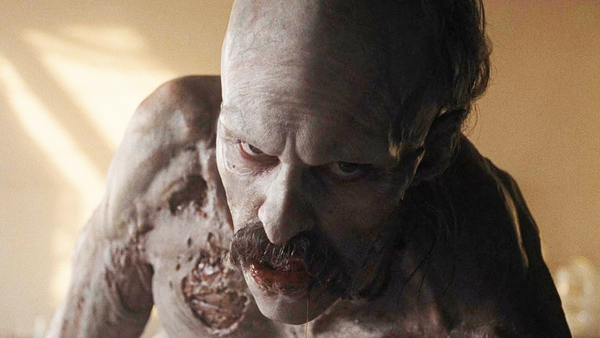
Remaking one of the most beloved horror films of all time is a typically thankless task, but most filmmakers aren't Robert Eggers, whose decade-long quest to remake F. W. Murnau's 1922 German expressionist classic Nosferatu culminated in a film that arguably improves upon its predecessor.
In the very least, Eggers delivers one of the most full-throated gothic horror films ever, per its utterly gorgeous style and pervading atmosphere of dread.
But it'd all be for nought without the brilliantly bold performance from Bill Skarsgård as Count Orlok - a million miles away from Max Schreck's turn in the original, but in many respects a more nuanced and grounded iteration.
Eggers dares to dig deep into Orlok as an entity powered by pure appetite, all while giving heroine Ellen Hutter (a brilliant Lily-Rose Depp) more agency in how her tragic story plays out.
It's tough to make vampires still feel genuinely scary these days, but Eggers' peerless knack for visuals and tone allowed him to make it look effortless.
15. Relic

Much as horror-as-metaphor has been so thoroughly overdone in the past decade-or-so, Natalie Erika James' feature debut Relic is an uncommonly bruising allegory for the destructive power of dementia.
As Edna's (Robyn Nevin) condition worsens over the course of the film, the situation becomes ever-more fraught for her daughter Kay (Emily Mortimer) and granddaughter Sam (Bella Heathcote), Edna's mental decay reflected by unexplained phenomena in her home.
It'd be so easy for a film with this setup to rely on cheap, easy jump scares, but James instead crafts an eerie waking nightmare that feels far more relatable, emphasising the uncanny strangeness of the goings-on in the house alongside a gnarly body horror element.
And above all else, Relic is a genuinely devastatingly sad slice of dramatic horror sure to resonate with anyone who's seen a loved one succumb to dementia. After all, the disease is far more terrifying than monsters or masked killers ever could be.
14. The Invisible Man
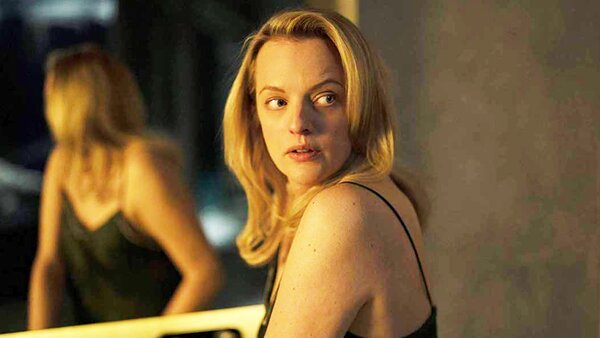
Leigh Whannell deserves enormous credit for taking an incredibly played-out story like The Invisible Man and updating it for the world of today in a smart and unsettling way.
The genius of 2020's reimagining is that it allows the title character's antagonism to double as a drum-tight metaphor for abuse and gaslighting - because after all, when protagonist Cecilia (Elisabeth Moss) claims her believed-dead partner is terrorising her with an invisibility suit, most folk think she's lost her mind.
And so, Cecilia spends the movie desperately trying to both escape her monstrous ex Adrian (Oliver Jackson-Cohen) and then prove to the world that she's not crazy.
It's hard not to feel Cecilia's raging frustration, and despite the film's tiny $7 million budget, Whannell does a fantastic job emphasising Adrian's presence through negative space in the frame.
Yet it's Moss' superb central performance that truly holds it all together, ensuring The Invisible Man is one of the most pleasant surprises of the decade so far.
13. Hell House LLC Origins: The Carmichael Manor

Hell House LLC is one of the most memorable and spine-tingling found footage films of the last decade-or-so, though it's also fair to say that the two immediate sequels categorically failed to recapture the low-fi thrills of the original.
So expectations weren't exactly high for 2023's prequel, Hell House LLC Origins: The Carmichael Manor, which seemed like nothing if not a craven attempt to milk the franchise for another go-around.
What the film lacks in technical finesse it more than compensates for by doing what all great found footage films do - exploiting our most basic lizard brain fears of being unknowingly watched.
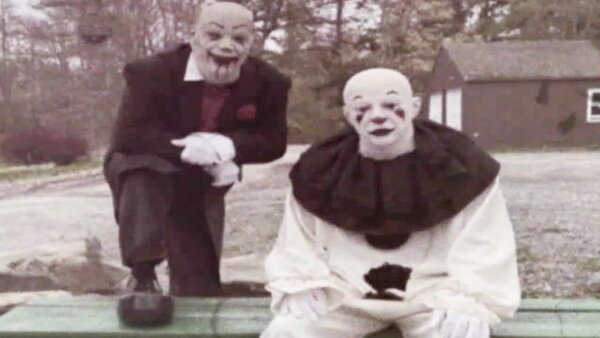
There are so many shrewdly effective moments in this film which, while built off basic ideas, are executed with a deceptive level of skill, and again confirm that creepy clowns will never not be one of the most terrifying of all horror tropes.
The less said about last year's follow-up Hell House LLC: Lineage, though, the better.
12. Barbarian

Zach Cregger's genre debut Barbarian is undeniably one of those films best watched while knowing as little about it as possible.
You can only be surprised by Cregger's twisted, expectation-defying romp once, but on repeat viewings it nevertheless retains its thick pall of extreme unease from first frame to last.
Barbarian seems to start as one movie before, at the end of act one, taking a sharp left-turn to become something quite different, and that's hardly the only time that Cregger boldly snatches audiences away from one narrative thread to suddenly explore another.
Cregger's tonal control feels fully formed from this movie and has evidently served him well since, managing to meld nauseatingly awful horror with moments of joltingly hilarious dark comedy to disconcerting effect.
If you're in the market for a horror film that just bathes in its own off vibes and will make you want to genuinely take a shower afterwards, look no further.
11. Bring Her Back
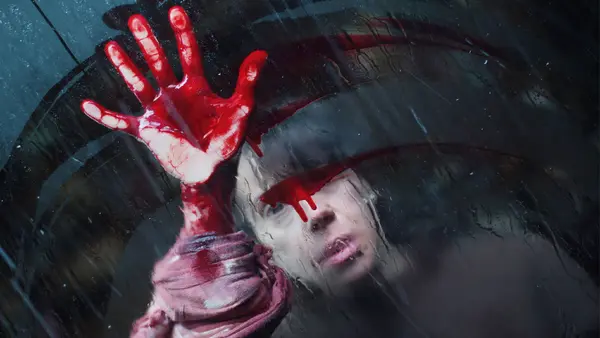
The Philippous sure didn't rest on their laurels with their Talk to Me follow-up Bring Her Back, which impressively managed to thoroughly out-WTF their debut.
This brutally uncompromising, savagely mean-spirited folk horror is smart to keep the particulars of its central lore somewhat vague, but it nevertheless digs deep into the truly dangerous potential of unchecked grief - a scariest of things we can all relate to in some fashion.
Sally Hawkins gives an Oscar-worthy performance as Laura, a grieving mother who wishes to bring her late daughter back to life by any means necessary, and it's her deeply human drive to do this which proves most unsettling of all.
We can relate to Laura's heartbreak even if her plan to invoke a cult ritual to resurrect her child is completely terrifyingly bonkers, ensuring that even in its wildest moments, there's a still a strong tether to the very human feelings compelling the villain's actions.
10. The Sadness

It's quite the understatement to say that 2021's Taiwanese body horror film The Sadness isn't for the faint of heart or stomach.
The film takes place in the midst of a viral pandemic which turns the infected into sadistic maniacs who are driven to carry out their darkest impulses, all while retaining their consciousness, and director Rob Jabbaz sure pulls no punches with the grim follow-through.
As wildly violent as The Sadness is, it also offers a disturbing window into the less-savoury aspects of human nature and how fast the social contract can evaporate during turmoil.
Jabbaz dares to go to places here that 98% of horror films never would - for understandable reasons, honestly - but his uncompromising approach also helps his film stand out in a sea of zombie-adjacent horrors.
Few recent horror films have felt quite so egregiously devoid of hope while facing a threat that positively can't be reasoned with.
9. I Saw the TV Glow

Jane Schoenbrun's I Saw the TV Glow is one of the most distinctive horror films, well, ever - a fascinating dive into the specific horror of not feeling at home in your own skin.
While protagonist Owen's (Justice Smith) sense of dissociation parallels filmmaker Schoenbrun's own journey for identity as a trans woman, it also functions on a far broader level.
Anyone who's ever felt an uneasy sense of self, that the life they're living isn't the one they're supposed to be, will surely identify with this absolutely singular, neon-splashed horror odyssey.
It's also jam-packed with genuinely nightmarish imagery per the young adult TV show central to the story, The Pink Opaque, and its moon-faced antagonist Mr. Melancholy.
By design I Saw the TV Glow is a film whose meaning isn't always crystalline, but that only allows it to better function as a litmus test for each viewer, who will likely come away unsettled by something totally different.
8. 28 Years Later
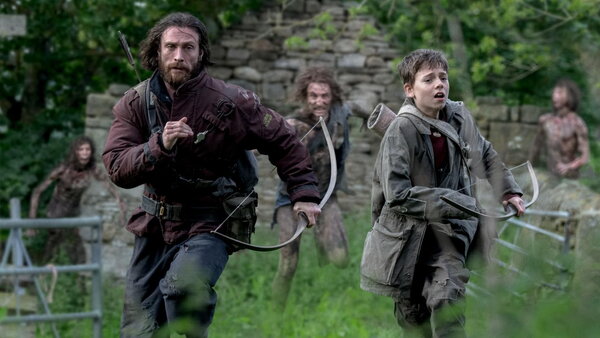
28 Years Later certainly wasn't a home run for everyone, but it did see Danny Boyle return to the post-apocalyptic world he created more than 20 years prior with one hell of an intense and expectation-defying ride.
Above all else, Boyle proved he hasn't lost a step where crafting visceral, nerve-shredding set-pieces is concerned, the Rage-infected being every bit as frightening as they were back in 2003.
But Boyle and writer Alex Garland dared to go further by infusing the story with a surprising amount of emotional heft per the central relationship between young Spike (Alfie Williams) and his unwell mother Isla (Jodie Comer).
Boyle ultimately brought us back to an almost impossibly oppressive world where hope was in short supply, and while its divisive final scene certainly wasn't to all tastes, it nevertheless primed the audience to expect dangerous and unpredictable storytelling for the franchise from this point.
7. Undertone
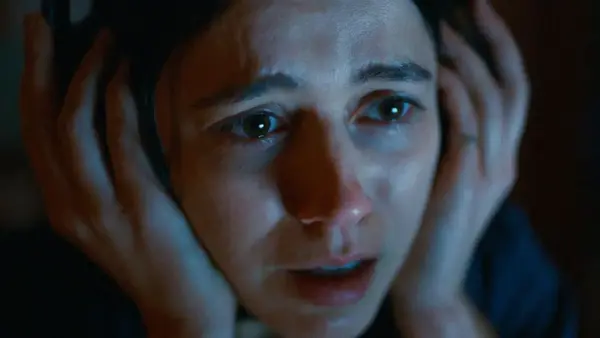
Once again confirming that creativity will always triumph over big budgets, Ian Tuason's utterly chilling debut Undertone took a confined, micro-budget $500,000 setup and produced one of the most uniquely unsettling experiences of the year.
Undertone follows a podcaster, Evy (Nina Kiri), who moves back home to care for her dying mother only to find herself haunted by strange audio recordings sent to her.
More than any other film on this list, Undertone lives and dies on the strength of its tactile sound design, which basically feels like a character in its own right, considering how much attention is drawn to even the faintest environmental sound.
Despite the entire film taking place in a single location with just two on-screen characters, Tuason turns this limitation into a strength, emphasising Evy's sense of isolation as the walls close in.
Nina Kiri gives a superb performance in the lead role, and while it's absolutely a movie best seen on the big screen for maximum aural immersion, the next best choice is watching it late at night with a great pair of headphones.
6. Weapons
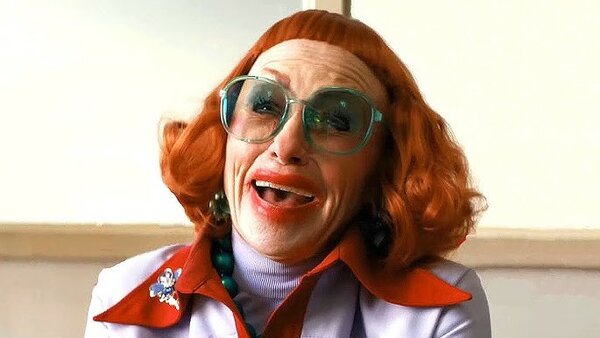
Zach Cregger's Weapons is pulse-quickening in a way entirely unlike his previous film Barbarian, lingering as it does on the uncanny and unexplained surrounding the disappearance of seventeen schoolchildren in an unassuming Pennsylvania town.
Not unlike vampires, witches are tricky to make scary in contemporary horror, yet by colliding witchcraft lore with the sensibilities of a modern suburban town, Cregger makes it feel howlingly fresh - and terrifyingly believable.
While Weapons is absolutely filled with surreal absurdity and black comedy, Cregger crucially never lets it overpower the anxious tension of its central setup.
The result is a wildly unpredictable film which doesn't feel the need to over-explain its witchy antagonist Gladys - played to Oscar-winning perfection by Amy Madigan - but instead let the audience bathe in some incredibly Bad Vibes ahead of a climax that's nothing if not immensely cathartic.
Needless to say, Weapons confirmed Cregger to be an auteur in his own right, ensuring horror fans will be lining up around the block to see anything else he makes from this point.
5. Saint Maud

Saint Maud is one of the most blindingly impressive directorial debuts the horror genre has ever seen - an extremely well-controlled sliver of psychological horror topped by a mesmerising central performance from the great Morfydd Clark.
Clark stars as Maud, a religious private carer who becomes transfixed with saving the soul of her terminally ill patient (Jennifer Ehle), and over the course of a tight 84 minutes we learn the catastrophic extent to which Maud carries out this mission.
Though trauma became thoroughly exhausted subject matter for horror long before we reached the 2020s, Saint Maud stands apart with its uncommonly striking depiction of how PTSD can break a person's spirit, even as the particulars of Maud's predicament remain unfurled until the film's shocking final moments.
The atmospherics are top-notch and the performances perfect, ensuring Saint Maud serves as one hell of a calling card for filmmaker Rose Glass, who can't make a return to the horror genre soon enough.
4. Strange Harvest
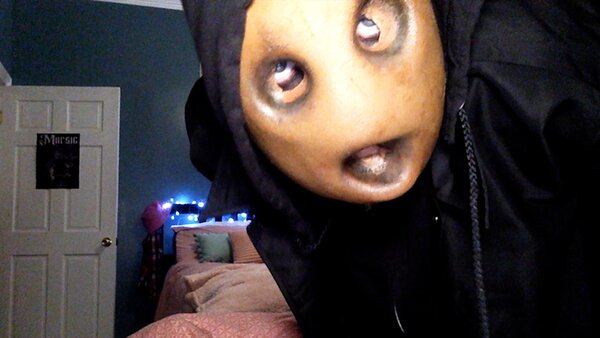
Mockumentaries are incredibly difficult to make scary because, with audiences being as media-savvy as they are nowadays, most of them simply lack internal plausibility - there are too many telltale signs we're watching something fake, causing us to be unconsciously pulled out of the film's world.
But 2024's Strange Harvest is an extremely well-wrought faux-doc about the hunt for a serial killer by the name of Mr. Shiny, and it's clear from early on that filmmaker Stuart Ortiz has extensively studied the stylistic tropes of modern true crime docs.
From moment to moment what we're seeing feels staggeringly real, even though we know it isn't, due to both the film's technical construction and the plausibility of its performances.
Couple this with a genuinely transfixing serial killer hunt and a number of bewilderingly queasy sequences, and you've got the recipe for what's probably the single best horror mockumentary since the legendary Lake Mungo. Believe the hype.
3. Obsession
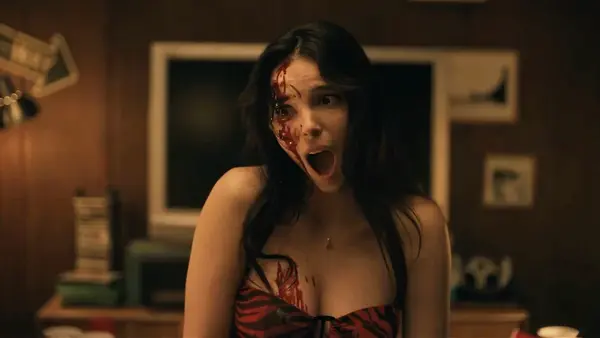
Curry Barker's Obsession has become nothing short of a pop-culture phenomenon, and while its basic premise might suggest it to be a pretty typical riff on The Monkey's Paw, Barker dares to follow this thread down a far darker path.
Yes, "be careful what you wish for" is at the foundation of the story, but protagonist Bear's (Michael Johnston) wish for his love interest Nikki (an astonishing Inde Navarrette) to love him more than anyone else serves as a springboard for Barker to explore thornier issues like consent and loss of bodily autonomy.
After all, a lonely man taking control of a woman and removing her decision-making abilities is all-too relevant for the world we live in - especially the vile corners of the Internet that promote such behaviour.
Barker manages to have his cake and eat it by crafting a horror that's at once absurdly entertaining but also genuinely discomforting and, at times, shockingly violent.
2. Watcher
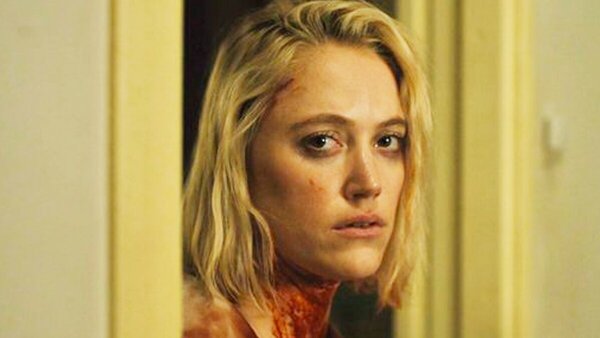
Watcher is a low-key horror film that makes high-key impact through its top-tier casting and perfect summation of the unease of feeling out of place.
Maika Monroe stars as Julia, an American woman who lives in Bucharest with her husband and comes to believe that the stranger (Burn Gorman) watching her from his apartment across the street might be a serial killer.
The feeling of being watched is one of our most innate, universal fears, and filmmaker Chloe Okuno clearly has an acute understanding of this, leveraging her tight, claustrophobic visuals to make the most of Monroe's sublime performance.
The fear and paranoia is only enhanced by Julia living in an unfamiliar place, all while the ambiguous nature of her apparent antagonist means those in her midst don't rush to believe her.
Even though you probably know where the story is going, Okuno makes it feel blisteringly fresh through her intense, suffocating filmmaking, topped by a cracking two-hander from Monroe and Gorman.
1. Beau Is Afraid

And finally, though some might object to calling it a horror movie at all, Ari Aster's bold third feature Beau Is Afraid is one of cinema's best-ever depictions of the utterly crushing, life-ruining potential of anxiety.
Indeed, Aster's film ambitiously leaps from one genre to the next, from horror to surreal tragicomedy and everything else in the middle, but between Joaquin Phoenix's ever-unreliable protagonist and the movie's sheer ballsy unpredictability, we're never able to get comfortable with knowing what might be coming next.
It's an absolute waking nightmare of a movie whose gruelling quality is only exacerbated by its three-hour runtime, as we follow Beau on one of the decade's most unnervingly peculiar cinematic odysseys.
And while Beau Is Afraid requires a certain level of adventurous from audiences and certainly isn't for all tastes, it's tough to argue with the swinging-for-the-fences brio of Aster's filmmaking nor Phoenix's stupendous performance in the title role.