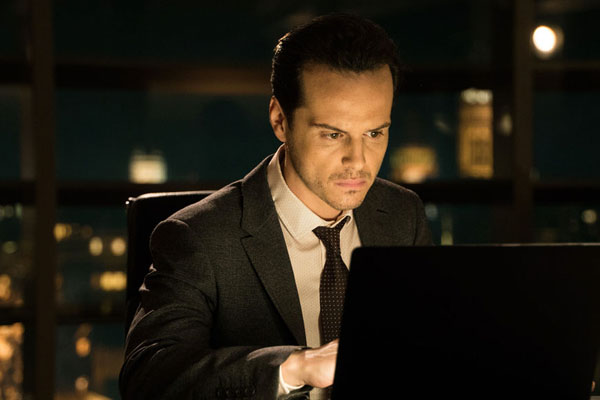
Spectre: 5 Awesome Things (And 8 That Sucked) In The New James Bond

It's better than Quantum Of Solace, but not by much.

Following Skyfall was never going to be easy. Craig's Bond has always been a more introspective and personal beast, and Skyfall represented the apex of that thematic arc. Bond buried the only paternal figure he had left, defeated Silva (his dark shadow) amidst the graves of his parents and saw the traumas from his past go up in flames. He was "ready to go to work" and the reboot of Bond satisfactorily felt like it had all been leading to that single cathartic point. Except no, posits Spectre, directed once again by Sam Mendes, actually everything's been leading to this point. Honest. Pinky square. Despite having reached emotional conclusions to most of the franchise reboot's running themes in the last film, Spectre positions itself as 'the important one', the culmination of Craig's Bond. Nope, not buying it. The film never truly feels as climactic as it's constantly telling us it is, which consequently leaves a hollow void at the centre of the film and all that encircles it are a handful of well-shot but bloodless action scenes, a wishy-washy plot, a forced romance and a by-and-large inconsequential villain. This is all incredibly negative thus far, and it should be pointed out that Spectre isn't a terrible film, not by any means. It's exciting in places, funny in others and looks gorgeous throughout. It's just another mid-level, Tomorrow Never Dies-quality James Bond film, which does itself zero favours by desperately trying to be the be-all and end-all of Bond. Fine ambition, but sloppy execution. But let's cover the good stuff first:


Ups

5. Mr White Is Brilliant

One of the key problems with Spectre is that it's incredibly kack-handed in its attempts to establish connections between itself and the previous Craig Bond films - more on this point later. Many of the connections ring false, but the one that absolutely sings in the stellar use of Mr White, previously seen causing Bond no end of trouble in Casino Royale and Quantum Of Solace. White, played with haunted relish by Jesper Christensen and looking like Jeremy Irons with 50,000 volts running through him, serves as the grim portent of Bond's doom, informing him, with a wisp of fear in his voice, "you're a kite, dancing in a hurricane." White's physical presence throughout much of Craig's tenure is the connecting thread that feels organic, earned. His decayed presence serves as another rich symbol of death amidst the skulls and crows and ruins that are scattered throughout the film. The audience even get to see a slightly softer side to the sinister former-puppetmaster, much-needed backstory fleshing him out from a sneering cipher to a fully-realised, even pitiable character. It's marvellous work, and an example of why you need directors like Mendes helming blockbusters.

4. Moneypenny, M & Q (Almost) Steal The Show
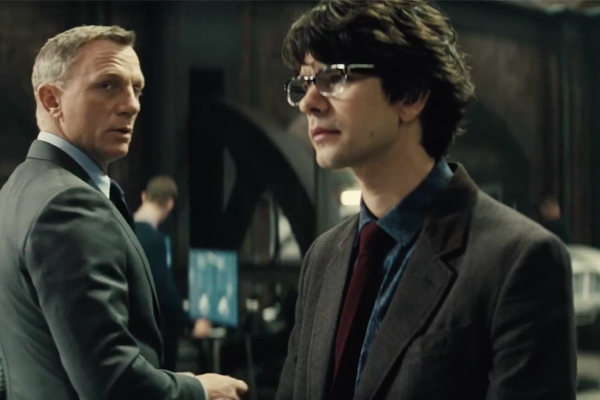
Bond's name is the one above the shop, but nearly all the best moments from Spectre come courtesy from his recurring office-family of supporting players. We see more of Moneypenny's social life (as she's keen to point out to Bond, she actually has one) and this, coupled with her ceaseless loyalty to Bond, makes her much more than just 007's flirt-toy. Q is also a delight. Reedy and gloriously be-jumpered in stark contrast to Bond's effortless charm, the double act between agent and quartermaster has rarely been as warm and as side-splitting as it is here. Wishaw has nearly all the best lines, and his quintessentially British comic timing shines throughout. May Wishaw never be relieved from his post. Ralph Fiennes had a difficult job going into Spectre, it being his first official turn as the new M, but he handles himself brilliantly. A pillar of British resilience, his M provides all the hangdog grump of Bernard Lee, the cutting snark of Judi Dench, and adds his own layer of old-boy military veteran to create a head of M16 who's not afraid to wade in and get physical. Let it never be forgotten, one of the reason why Bond perennially endures, is that he's surrounded by a beloved roster of helpers. The MI6 Irregulars.

3. Batista Provides The Best Action

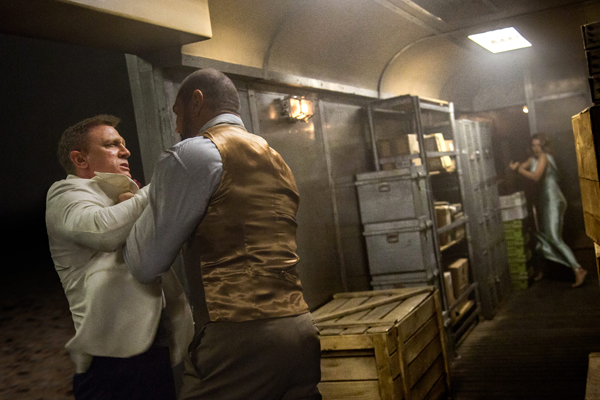
After Guardians Of The Galaxy, it wasn't a case of "Is Dave Bautista (Batista to his WWE fans) going to be good?", but rather "How good is he going to be?" Answer: he's very good. And not in the film nearly as much as he should be. The problem with a lot of the action in Spectre is that it's rather more CGI-reliant than its immediate predecessor. The pre-credits action scene is especially robbed of weight and excitement as a result of notable CG textures and uncanny physics. That's what make the action scenes with Batista so impressive. He doesn't need computers. He just bloody heavy. The former WWE Champion plays Mr Hinx, an assassin of few words and much beard, who is tasked with eliminating Bond using only a small cannon of a handgun and the gigantic bags of bricks he calls fists. The best action scene in the film, bar none, is a physical encounter between Bond and Hinx on a train, which manages to out-perform the train fight in From Russia With Love (no mean feat). Heavy, crunchy and largely CGI-free, the scene relies on two things, the size of Batista, and also, the colossal size of Batista.

2. It Looks Beautiful

This one's hardly surprising. Beautiful, globe-trotting locations are a staple of the Bond franchise and this film doesn't disappoint, jumping around the world from Day-of-the-Dead Mexico to mountainous Austria to opulent Rome to sun-drenched Morocco and back to steely grey London, all beautifully framed by cinematographer, Hoyte van Hoytema. As a film it doesn't quite reach the heights of beauty that Skyfall did, but it's still gorgeous to behold. Special props must go to that first shot. A Goodfellas-style tracking shot, and one of the most impressive in all of Sam Mendes' directing career, the opening crawl of Spectre is achingly good. All it does is follow Bond through a crowd to a vantage point on a rooftop, but it's dripping with exotic details, exquisite framing and deathly menace. It's a shame that nothing else in the film quite matches it in terms of visual panache.

1. Craig Is As Good A Bond As Ever

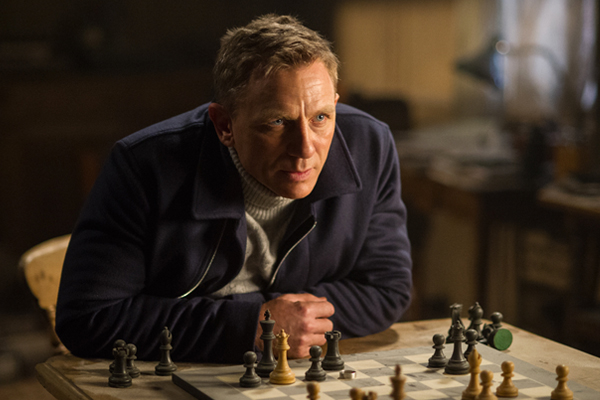
Ultimately, this will always be Bond's show, and the films live and die based on the quality of the lead. Craig stubbornly refuses to disappoint. His Bond maintains that fine, perilous line between winking dandy and thug, between Hollywood leading man and credible physical brute. So many of the tenures of past Bonds descended into camp, a detached comment on Bond itself, but Craig steadfastly inhabits the character deep into his blood and muscles. Much is made Craig's incredibly physical endurance (the man is 47, he shouldn't be able to do this anymore), but it's the little moments that make his 007 so great. It's when Bond, slightly drunk, draws his gun on a tiny rat that scampers into his hotel room and whispers "Who sent you? Who are you working for?" or when he quietly offers his word as his bond (pun intended) to another character. It's these moments of quiet levity and power that hold these films together even when they threaten to fall apart.

Downs

8. Rehash Of Skyfall's Themes

Right then, onto the bad stuff. I take no joy in this. One of the most noticeable problems with Spectre is it's overuse of previously-trodden ground. Ever since Casino Royale, the first Craig movie, Bond has been tempted to walk away from the life of a secret agent. Every single bloody film a characters asks 007 to just stop and walk away, which makes it feel incredibly rote when it crops up as a major, if paradoxically undernourished, theme in Spectre. Secondly, Spectre just straight up repeats the MI6 subplot from Skyfall. Stop me when this sounds familiar. A new government official is questioning M's ability to control the agent's under their control and, after calling the old ways of espionage out-of-date and outmoded in this new computer-savvy world, tries to have M's powers removed. MI6 move their base of operations and go about proving their relevance once again. You should have stopped me ages ago. Spectre makes it so much harder to care about its plot-lines because we've seen them covered (and resolved) so very recently.

7. A Familiar Waltz

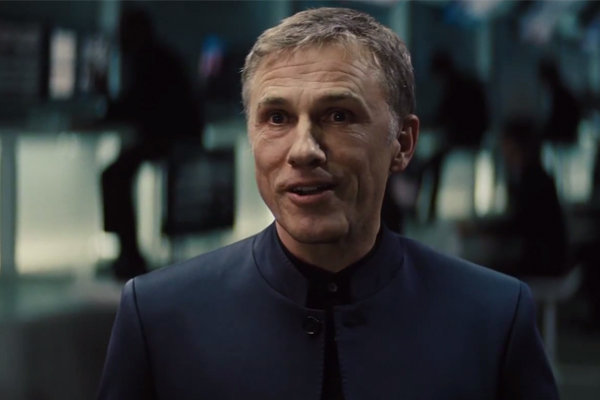
Christoph Waltz is a brilliant actor, but Franz Oberhauser is a paper-thin character. Problem is, he's more of a mystery than a person. His role is to be 'puppet master', shadowy, illusive, so that when he finally does step out of the shadows and starts to talk, it's all a bit... nothing. The filmmakers rely on him being the 'Head of Spectre' way too much, content that because fans recognise the evil cabal as being 'important to Bond's mythos' that it automatically makes Oberhauser a distinct and memorable villain, when it really doesn't. He just stands around and talks about beauty, horror and being the author of James Bond's pain. There's none of the preening sexual menace of Silva, or the staunch, dead-eyed cool of Mads Mikkelsen. He's just Christoph Waltz. It's a clear-cut example of screenwriting laziness. They don't really imbue Oberhauser with personality of his own, rather they expect Waltz to provide all of the character beats by himself. The problem with that is, we've see Waltz be an iconic villain by this point. When Oberhauser giggles or says "Cuckoo" it's just Hans Landa sniggering or saying "Bingo" all over again. We recognise all the affections, and there's very little in the script, so it's all a bit 'been-there, done-that'. A terrible shame.

6. Lea Seydoux Is Passive

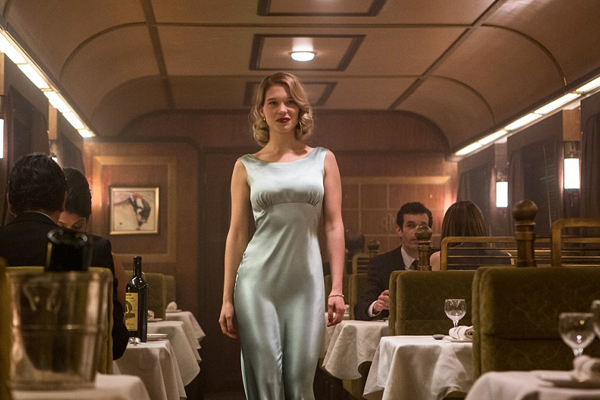
This one might make people angry. Lea Seydoux is brilliant. In Blue Is The Warmest Colour, she's a force of nature, and after showing off her action chops in the Mission:Impossible franchise (Bond's stupider, richer cousin) hopes were high that she would provide an interesting foil to Bond. Of course she's wasted in this film. Don't get me wrong, she turns in a great performance as Madeleine Swann, has bundles of charm, sex appeal, and good chemistry with Bond, but, short of firing one bullet from one gun, doesn't really do anything other than follow James around, fall for him (a romantic angle that goes from 0-60mph in a jarring moment) and then get kidnapped & imperilled in the most contrived way possible. None of Swann's spiritedness, and she certainly has plenty of angry, don't-think-you're-getting-any-here "strong female character" traits, but none of them translate into any actionable change in the plot, short of getting herself kidnapped. She talks a lot but is an almost entirely passive character, which is a huge letdown.

5. The Song Is Rubbish

https://www.youtube.com/watch?v=8jzDnsjYv9A Just listen to it. It never builds to anything remotely resembling a memorable hook. It swells and swells then flattens out into falsetto, there's no true belt moment. Compared to Skyfall, it's a total blue-ball of a song. Also, the credits sequence that accompanies it contains the first example of tentacle porn in the Bond franchise. That's nice. It was missing that.

4. Connections With Other Films Feels Forced
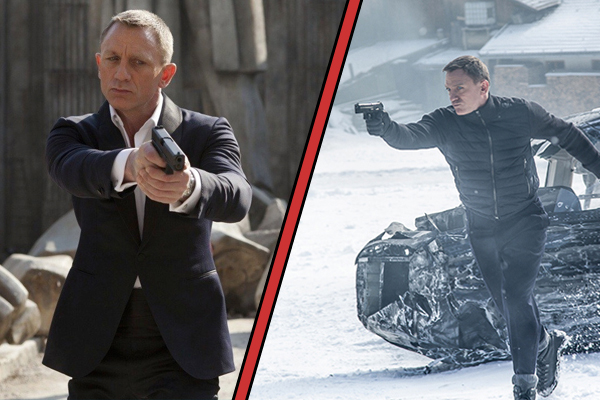
As has been mentioned a couple of times in this article, Spectre paints itself as the pinnacle of the Craig's run as Bond, the grand finale to the sprawling four-part single-continuity saga that been in motion from Casino Royale. Oberhauser points out over and over again how, "It's all lead to this", "It's always been Spectre", "I'M THE MOST IMPORTANT ONE ME ME ME." The problem is, the film can tell us that as much as it wants, but it doesn't mean the audience will feel it. Because of a dispute over the rights to the Spectre name, Bond had to come up with pseudo-Spectre, Quantum, and when Oberhauser informs Bond that "Oh, Quantum was working for Spectre", instead of being a revelation that swells everything around it to new heights of importance, it just lands with an awful clunk. Aside from the ace cameo from Mr White, none of the connections Spectre draws between it and other films feel substantial or even make sense. All they do is show pictures of past villains (there's a scene with actual, no joke, red string linking everything together, and whenever a previous adversary comes up, a character says, "Those guys? They were working for Spectre all along." WHAT? Silva wasn't working for Spectre, his whole deal was that he had a personal vendetta against M. It's revisionist retconning at its most blatant and superficial, and it robs the film of its very reason for being.

3. The 'Snowden Plot' Is Weak

Minor spoilers: if you don't want the ideas behind the villain's plot to be revealed move onto the next slide. It turns out that the Oberhauser's scheme is to, in a quite vaguely-defined way, control all the information in the world via computers. First of all, that was sort of Silva's whole MO wasn't it: controlling the information superhighway, all that inherently undramatic stuff that involves actors looking at bits of code on the screen while pounding music plays. Secondly, it's been two years since the Snowden leak about the NSA and the 'surveillance is bad' drum has been beaten so loudly and so constantly that any satiric parallels or attempts at 'relevancy' all feel a bit old hat by now. Also, it's a bit hypocritical that MI6 is against the concept of drone surveillance when all the human surveillance done by Bond ends with him killing people, murdering hundreds of people in explosions and crashing planes into houses. Thirdly, a large portion of act three ends with plucky heroes trying to break into a glass building to stop a computer system from coming online as a countdown plays. Considering that Terminator Genisys just came out, featured the exact same set-piece, and was awful, that really doesn't make this film feel cutting edge and vibrant. Finally, because of the Snowden parallels, it's incredibly obvious that both the monitoring system and the character who introduces it are going to be evil, to the extent that the audience spends the entire film just waiting for them to turn. "Just reveal you're evil. Come on, we know you are. Hurry up, I'm getting bored!"

2. Blink And You'll Miss Bellucci

Lots of critics were excited about the prospect of Monica Bellucci being a 'Bond Girl' in this film, mostly because she's actually a similar age to Bond for once (in fact, older!) which would make for a deeply refreshing change of pace. She would be a proper 'Bond Woman', which still isn't the best term when you think about it. By contrast, Seydoux is 17 years Craig's junior. Unfortunately, Bellucci's screen-time runs at about 5 minutes, then she's never seen again. Considering it's Monica freakin' Bellucci, that is fairly depressing. Sorry, Monica, but could you get out of shot? There's a French girl behind you who's 21 years younger that we're trying to film. Cool, thanks.

1. A Lack Of Truly Iconic Moments

The final problem with Spectre doing its absolute darnedest to be connected to the mythos of the S.P.E.C.T.R.E. from the 60s (its unclear whether 'Spectre' is an acronym in this film) is that it never comes up with an iconic images of its own. Even all the death imagery (nothing tops the cool factor of the Dias de los Muertos) feels a little old hat considering that skulls and tombstones were all over Skyfall's opening credits. All of the film's cool images feel recycled from previous films, because they purposefully have been. Seeing Oberhauser in shadow at the head of the table, that's cribbed from the S.P.E.C.T.R.E. of the early Bond films, the base inside a crater looks near identical to the base inside a volcano from You Only Live Twice, the train fight is a bigger, punchier version of the one from From Russia With Love. There's precious little for the movie to call its own, and that does nothing to help the overall sensation of emptiness at the heart of Spectre. Are you excited for Spectre? Discuss all things Bond down in the comments.

Content Producer
Content Producer

Adam is a sports writer, comedian and actor, currently living in London.