Spider-Man: Homecoming - 26 New Things We Just Learned
7. Don't Expect The Daily Bugle
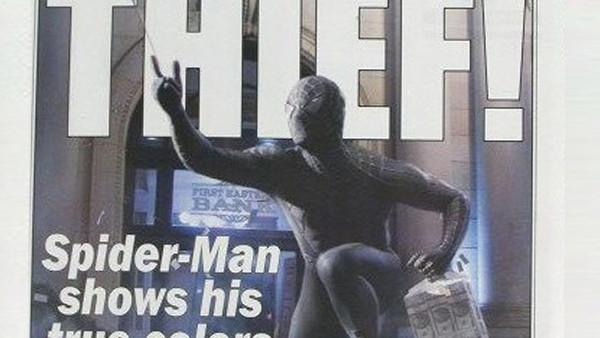
Peter is at school, so counter to early rumours that the film might be about to establish a female J Jonah Jameson, there's no way we'll be seeing him working forThe Daily Bugle. And it's actually for a pretty logical reason as Carroll explained:
“We toyed with it for a while, but again, we didn’t want to go down that road right away, and if we do do a Daily Bugle, we want to do it in a way that feels contemporary. Working in a newspaper while fighting crime and overachieving, it just felt like one of those things where like… maybe it’s in his future? Maybe it’s what he does in college or something like that. But for now, no.”
Given that JK Simmons is now in the DCEU, and is still the best option to play JJJ, that's a smart move all round.
6. Tom Holland Went To School Undercover

As well as Michael Keaton getting inspiration from a couple of young fangirls, Tom Holland also sought some lessons from kids in Queens to get more of a feel for his character. He was sent undercover to a local school to observe and adopt the school kids' behaviour to inform his performance as Peter Parker:
"Marvel actually sent me to a school in the Bronx where I had a fake name, and I put on an accent, and I went for like three days. I basically had to go to this science school and blend in with all the kids, and some of the teachers didn’t even know. It was a science school, and I am in no way a science student [laughter]. Some of the teachers would call me up in front of the class and try to get me to do science equations and stuff – it was so embarrassing. But it was actually really informative because schools in London are so different. I would go to school every day in a suit and tie, with just boys. To be in a school where you can be free and let loose, and be with girls, it was so different. Like SO different. But yeah, it was a really great experience."
He got away with it too - probably because he wasn't actually as famous as most of the rest of the MCU. And who really expects Spider-Man to be a kid in your school really, anyway?
"Nobody knew. I actually have videos on my phone of me interviewing people, and asking them what they thought of the new Spider-Man in Civil War. They were like, Oh he’s great, I love him, and then some people were like, Nah, I don’t love him, he’s not great – and I was standing right in front of them! [laughter] But yeah, no, it was fun. It was really fun."
Holland also revealed what he had to go through to get the role:
"My audition scene, God. The first three weren’t from Spider-Man, they were from, um, it might have been from Whiplash, one of the scenes. The scene between Miles Teller and J.K. Simmons. Then there were a few Spider-Man scenes, and it was funny because my agents at one point were like, we don’t know who you’re auditioning for. I was like, But my lines are for Spider-Man – so who else could I possibly be auditioning for? They were like; we don’t know. So I sort of clocked on then that it was for Spider-Man, but they were so sort of made-up scenes. Nothing from the movie. But then my final audition with Robert was a scene that was in Civil War between the two of us."
5. The Value Of Working With Marvel To Sony
Aside from money, of course, you had to wonder what Sony was getting out of the deal to share rights with Spider-Man - particularly if they aren't using Kevin Feige on the spin-off movies. But according to Amy Pascal, the value of their input - and simply working with them day to day - cannot be underestimated.
She says their drive for excellence was inspiring:
“Everybody did it because they wanted Spider-Man to be great. The character is great and people love him. That’s good for Disney. That’s good for Marvel. And that is certainly good for Sony. So, the fact that all these companies were willing to work together to make that happen..I think that’s pretty miraculous.”
They don't just accept good:
“They are meticulous. They are relentless. One of the great things is you’re in a meeting with them, and they go, ‘Okay, it’s good– but how do we make it better?’ I’ve never heard that before! It’s like,’ Good? Done!’ Or ‘Good? We can’t afford it’… or They’re like, ‘Okay. It’s really good. How do we make it better than this? How do we go tot he next place? How do we–the word I learned from Kevin (Fiege)–how do we plus it?” That’s their favorite word at Marvel. ‘Are we plus-ing a scene?'”
Jon Watts also talked about the creative process being a collaborative one:
“It’s just ‘Best idea wins. That’s been the philosophy on the movie. And it doesn’t matter whose idea it is, it’s always worth trying. Whatever is great, you kind of know it. Being free to explore that and finding stuff has been really fun and it’s been really collaborative on every level.”
4. Spidey's New Power Discoveries
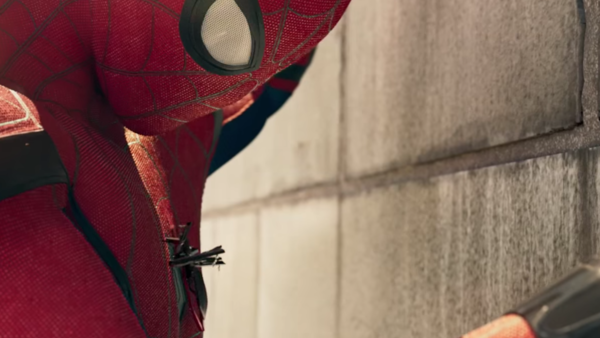
In the Homecoming comic book that Marvel stole the name from - which came after the Secret Wars event and saw Peter debut the symbiote suit - most of the story sees Spider-Man testing out his new powers. In Civil War, his new suit comes with lots of new technological improvements he's not even sure of, and he spends some time testing them out.
In both cases, the comics share a major story element with Homecoming, which will see Peter testing the limits of his new suit, beginning with circumnavigating the "training wheels" protocol. Once the suit it fully his, we'll see all of the new bells and whistles, and as Tom Holland says “I’m definitely excited for you guys to see stuff that Spider-Man has never done before.”
Those changes are part of the agenda to make the film as different as possible, as Carroll explains:
“Scientific accidents gave almost everyone their powers in all five of the previous ones. So when we looked to reinvent the movie, we looked at what sort of tact we could take. And one was that all of the MCU movies try to have this quasi-plausibility, you know what I mean? As much as we can… we try to make it feel like the world we live in. And we felt like if a kid is running around in a skin-tight suit with all of these cool features, it’s probably going to be pretty high tech.”
And specifically, it seems the suit will include AI, web-wings, a parachute, a heater, an airbag, the ability to light up, and a tracking device. The weaponry also has different modes: according to IGN they include "adjusting the spread and type like the swinging web, web ball, ricochet web, a web that functions like a Taser, one that shoots multiple webs at the same time, and so on." In other words, it's basically the Iron Spider suit.
3. Iron Man's Role Is Actually Substantial

It turns out that Tony Stark wasn’t actually originally supposed to appear in Homecoming, but the dynamic between Robert Downey Jr and Tom Holland in Civil War was so good they decided to write him into the story.
And the good news is that he's not just in for a cameo either: he has a strong presence as a reluctant mentor to Peter Parker over around five scenes that establish a big brother sort of relationship and as Holland says "it’s a very different side of Stark than you’ve ever seen before.”
Holland also revealed that RDJ gave him some choice acting advice too:
“I remember doing that scene with Robert, and I asked one of the prop guys, ‘Can you walk me through what we’re doing here? Because I was unscrewing a DVD player,’ and Robert was like, ‘Dude, I don’t know what Tony Stark does. He’s like, just act, dude. You got this.’ It was great!”
2. Why Michael Keaton Initially Turned Down Vulture
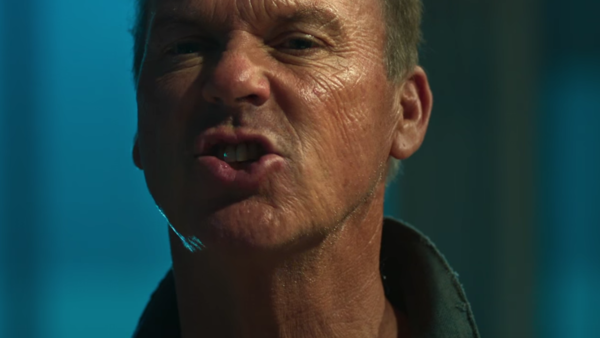
When the first reports of Michael Keaton were revealed, it was also reported that he had turned the role of Adrian Toomes down, with some saying he wasn't keen on making comic book movies any more.
That seems to have been borne solely out of his performance in Birdman, which served as something of a commentary on his time as Batman. But Keaton says it was nothing of the sort:
“The thing about me not doing superhero movies.. That’s not true at all.”
Instead, it was merely a matter of a scheduling conflict: he was set to do press for The Founder at the time Homecoming was supposed to shoot, but once they shifted The Founder to December, it worked out.
“If something’s good, and it works in my life schedule or work schedule, I’m open to it. It just wasn’t working that way when it was originally set.”
1. Spidey Might Leave The MCU Fairly Soon
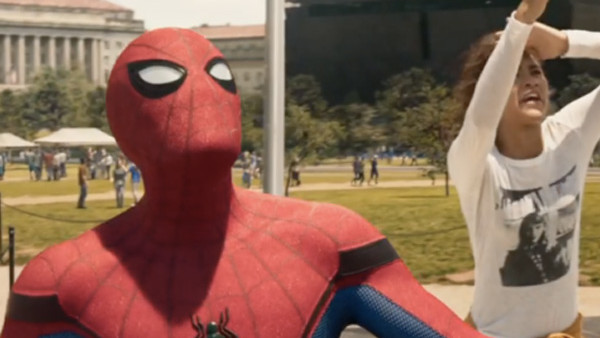
Amy Pascal spoke to CosmicBookNews at CinemaCon recently to cast some doubt on the longevity of Spider-Man's tenure in the MCU, and it doesn't at all sound entirely positive:
“One of the things that I think is so amazing about this experience is that you don’t have studios deciding to work together to make a film very often. In fact it may never happen again, after we do the sequel. Because Sony, and Disney, and Marvel all decided that the right thing to do was to allow Peter Parker and Spider-Man to be in the MCU and to work with the Marvel guys and have them produce this film. And I think that was a very rare thing for three companies to do, and a very brilliant thing for them to decide to do because there are only so many stories that you can tell again and again and again about Spidey, and this is something that we would have never been able to do in any other way. So it was a very selfless thing that very smart on the part of all the companies.”
Maybe it's just a matter of negotiation? Maybe Sony WOULD have their heads turned by the money they could make alone having learned from Marvel down the line?
Contrastingly, she also spoke to the journalists who visited the set to say an extension was eminently possible, as long as it worked for everyone...
“I think we found the right formula and I think everybody is going to want the right thing to continue. And I think that there’s a, as I said, there’s a surprisingly generous and cooperative thing, and if it works for everybody, then it’s going to work for everybody. The thing is, and I always felt this way, if you worry about the movie and you worry about the story, all the politics take care of themselves. They just do. Because when the movies work, there’s enough for more than everybody. It’s when you start making the other stuff first that you start to get in trouble. […] Nothing precludes anything. The sky is open right now. And I think that you know, if we can keep this goodwill going, I think it’s going to be good for the fans and good for the journalists and the nerds and good for the companies.”
Let's hope it's the latter situation.
Are you excited for Spider-Man: Homecoming? Share your reactions below in the comments thread.