Star Trek: 8 Things The Kelvin Timeline Movies Got Right
Star Trek's Kelvin Timeline films often get a bad rap, but here are eight things they did right.

Derisively referred to by fans as the "JJverse" or "JJ Trek" (or even something more profane) and seemingly forgotten in CBS' rapid expansion of the franchise on TV, Star Trek's Kelvin Timeline movies get a bad rap. With the franchise's return to the Prime Universe and resurrection of old favorites like Jean-Luc Picard, it's easy to view these movies as "that other Star Trek".
Yes, a fourth movie has been teased periodically over the past four years since the release of Star Trek Beyond, most recently with Noah Hawley maayyyybe picking up the story JJ Abrams began back in 2009, but for now the Kelvin Timeline films remain a loose trilogy. Collectively raking in over a billion dollars at the box office, Star Trek (2009), Star Trek Into Darkness, and Star Trek Beyond undeniably reinvigorated the franchise after it languished in the post-UPN world and paved the way for your beloved Star Trek: Picard and slightly less beloved Star Trek: Discovery.
Set aside the super blood and lens flares, here's a reminder of the Star Trek Kelvin Timeline movies' successes.
8. The Costumes

Bringing the classic yellow, red, and blue velour uniforms of the classic 1960s Star Trek into the 2000s couldn't have been easy, but somehow costume designer Michael Kaplan made them believable and faithful to the originals. Printing tiny Starfleet insignias on the tunics and pairing them with moto pants (before Justin Beiber started wearing them), Kaplan actually succeeded in making the Starfleet uniforms in Star Trek (2009) and Star Trek Into Darkness flattering and cool.
Picking up a few years into their voyage, Sanja Milkovic Hays redesigned the uniforms for 2016's Star Trek Beyond, making them more structured, more elegant, and more mature – a sign of the Enterprise crew's growth over the course of three movies.
Side note: Take a look at the formal gray dress uniforms in Star Trek (2009) and compare them to Michael Kaplan's First Order officers' uniforms in Star Wars: The Force Awakens. Two universes, one tailor.
7. The Music
Almost anyone can hum the theme tune to Star Trek: The Next Generation, but prior to the Kelvin Timeline movies, the franchise failed to have a consistent musical identity.
That changed when Michael Giacchino was hired to write the music for all three films in this trilogy and gave the Enterprise and her crew the perfect ear worm of a theme. Giacchino also wrote themes for Spock, Nero, Khan, and the Yorktown base, giving the Kelvin Timeline its own unique, consistent soundscape while also incorporating Alexander Courage's theme from The Original Series into the mix.
Skip to the end credits of any of the three films and listen for how Giacchino deftly weaves his new theme into a massive orchestral and choral rendition of Courage's original Star Trek fanfare.
Yeah, we can talk about that Rihanna song or the Beastie Boys and their apparent lingering popularity 200 years into the future, but let's just appreciate Giacchino's rousing scores instead.
6. Production Design

Another one of those impossible tasks these movies actually got right: Translating the cardboard sets of the original Enterprise into something appealing and believable for a 2009 audience.
Shepherded by Production Designer Scott Chambliss, the redesign of the Enterprise's interior for Star Trek (2009) payed homage to Matt Jeffries' classic sets... embracing the 1950s and 60s "Googie" aesthetic and also feeling believable as far flung futuristic design. The production utilized a series of interconnected sets (including the Enterprise bridge, the corridors, sickbay, and transporter room) at Paramount Studios in addition to shooting on location at Budweiser's Van Nuys, California brewery for the more industrial bowels of the ship.
The production of Star Trek Into Darkness also ventured to the Lawrence Livermore National Laboratory in Livermore, California to stand in for the Enterprise engine room and warp core.
For Star Trek Beyond, the late Production Designer Thomas E. Sanders oversaw the construction of Krall's base of operations in Vancouver, painting a rock quarry blue to recall The Original Series' more colorful locales.
5. Character Arcs

Chris Pine's Kirk is a bit of a douchebag in Star Trek (2009) and Star Trek Into Darkness. But over the course of three movies, Kelvin Timeline Kirk faced the loss of his father (Chris Hemsworth's George Kirk), his mentor (Bruce Greenwood's Captain Pike), and nearly his entire crew before coming into his own in Star Trek Beyond.
When we met Kirk and company in The Original Series and especially the TOS films, the characters were already more or less established personas with their own established relationships. The Kelvin movies gave us an opportunity to watch this set of characters grow from cadets to unlikely crew of the most advanced ship in the fleet.
Kirk and Spock especially evolve and change over the course of three movies; their identities coalescing and their relationship forming to become what we know of them from the classic incarnations of these famous characters. Throw into the mix the fact that Spock has his Prime Universe counterpart to play off of, these movies present a unique dynamic for these iconic characters.
4. The Ships

"Souped up" and "badass" aren't words generally associated with Star Trek's more stately fleet of ships. But JJ Abrams' dictum that the Enterprise be a hot rod pushed the classic, comfortable design of the iconic starship into a streamlined, muscular new form.
Designed by Ryan Church, the Kelvin Timeline Enterprise is an immediately recognizable, bold image that (like the characters) matured over the course of the trilogy. By the time of Star Trek Beyond, designer Sean Hargreaves had tweaked the ship to be more elegant, fitting the more grown up feel of the crew themselves.
While the Enterprise herself might've been a departure from previous incarnations, the films also featured starships firmly rooted in Star Trek's history: Both the USS Kelvin and the USS Franklin recall Star Trek's earlier ships, while featuring distinctive configurations.
And of course there's Star Trek Into Darkness' USS Vengeance: The "Black Enterprise", the Decepticon of starships. A forbearer to Star Trek: Discovery's USS Discovery and Section 31's Stealth Ship, the Vengeance is a twisted, angular version of the sleek Enterprise that remains a beautiful, aggressive feat of production design.
3. The Aliens

Remember when Suicide Squad won an Oscar? It was up against Star Trek Beyond's 50 (count them) new alien species for Best Make Up. Yeah.
Anyway, the Klingons in Star Trek Into Darkness were pissing fans off before Star Trek: Discovery made it cool. After years of Lieutenant Worf's goodnatured grumpiness and General Martok's pirate-like personality, the Klingons had been defanged. Neville Page's redesign reintroduced them as both formidable and striking, with bright blue eyes and pierced ridges.
Joel Harlow's make up for Jaylah in Star Trek Beyond gave that film a relatable, beautiful alien alongside the aforementioned 50 new aliens, including an unbelievably complex, seashell-inspired lady seen flirting with Ensign Chekov at the film's conclusion.
Suicide Squad, though, really.
2. The Cast

The Original Series cast were titans, indelibly linked to their characters for the better or worse of the actors' careers. Up until 2009, William Shatner and Leonard Nimoy were the only Kirk and Spock, but there's now a new generation of fans who know Chris Pine and Zachary Quinto first (Ethan Peck who?). This is in no small part due to the actors' inhabiting of these roles and their ability to make them their own distinct takes.
They're alternate versions of the classic characters we know and love; they're the same but different. And also, somehow, lovable in their own right.
Casting Directors April Webster and Alyssa Weisberg's choices of Pine and Quinto alongside John Cho, Simon Pegg, Zoe Saldana, Karl Urban, and of course Anton Yelchin were simply perfect. The best argument for the continuation of the Kelvin Timeline films (and for Noah Hawley to make his potentially, maybe upcoming installment a sequel to Star Trek Beyond) is so we can spend more time with this cast.
1. Rebooting Star Trek
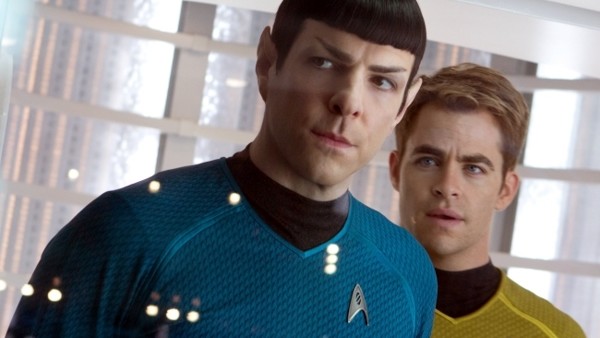
Reboots are notoriously terrible, hence the era of the soft reboot we currently inhabit. But with more than 40 years of canon and history behind it, the Star Trek franchise was bloated and impenetrable when Abrams and Bad Robot took on the unenviable task of reintroducing it to audiences.
By retaining the old timeline and carving out a new continuity in a new universe, Abrams and writers Roberto Orci and Alex Kurtzman were able to walk a fine line between homage and hard reset.
At the time the biggest box office take for a Trek film, Star Trek (2009) clearly succeeded in drawing in new viewers by tweaking the tried and true formula and making these films fun again (imagine that). The confluence of the charming cast, beautiful production design and photography, and a warm, inviting new take on an old universe, made the Kelvin Timeline films the rare reboot success.
Nevertheless, these films became a case of diminishing returns after only three installments. It's possible the resurrection of Star Wars meant audiences only had room in their wallets for one "Star"-based franchise. Or it's the fact that Paramount waited a whopping four years before releasing a sequel to the 2009 crowdpleaser. Or that they released Star Trek Beyond in Summer 2016, a bloodbath for nostalgia franchises including Ghostbusters and Teenage Mutant Ninja Turtles.
Despite all that, there's a reason Star Trek: Discovery and even Star Trek: Picard feel more akin to these films than they do "classic" Trek. The Kelvin Timeline paved the way for CBS' current Star Trek-palooza, so you know, try not to just remember the part where Spock screams "Khaaaaaaaan." These are good.