Star Trek Into Darkness: 5 Pros & Cons Of Benedict Cumberbatch As Khan

5 Pros
5. Cumberbatch Is Well-Cast
 Benedict Cumberbatch has proved his acting chops in a number of films including the recent cold war thriller Tinker Tailor Soldier Spy, but he has garnered celebrity and a following with his revolutionary take on a modern day Sherlock Holmes in the BBC series Sherlock. It comes as no surprise that his casting in Star Trek Into Darkness is inspired. The deep-voiced actor easily dominates nearly every scene he appears in, and Cumberbatch has the presence here of a rising star. His performance is at times cold and chilling; as a genetically engineered superhuman Cumberbatch plays cunning and calculating like its second nature. Other actors could have played the part, but Cumberbatch adds several layers to his portrayal of Khan which prompt audiences at times to wonder if Khan is actually a sympathetic character this time around. The ambiguity of his villainy is a nice touch, and it works for the film.
4. Space Seed And ST2:TWOK In Into Darkness

There were rumors early on that J.J. Abrams second Trek flick would deal with the popular villain Khan, but the producers and Paramount did a great job at hiding that fact. Cumberbatch himself denied the rumors on multiple occasions. His best denial (and most amusing) was made on The Late Show with David Letterman just as the movie opened in theaters.
The screenwriters did a commendable job incorporating the storyline from the original series episode Space Seed into Star Trek Into Darkness. The major plot points are all there: the discovery of an old ship with people in cryogenic freeze, their genetically modified leader taken out of freeze first, and a burning desire on the part of Khan to rule in the 23rd century as he had on Earth of the past. While the events from Space Seed are incorporated into the back story, the major plot elements of Star Trek II: The Wrath of Khan are present in Into Darkness, including Khans treachery, a sacrificial effort to save the Enterprise, and the introduction of Carol Marcus. Cumberbatch fills the bill here. Like Ricardo Montalban before him, Cumberbatch is no slouch when it comes to chewing up the scenery. He's a fine actor delivering a fine performance.3. Faithful To The Original Timeline

Is it not fitting that Khan appears in the second of the new Star Trek films? There are several reasons why.
In the 2009 Star Trek reboot, the planet Vulcan is destroyed and Spock Prime shares the screen with Spock. Director J.J. Abrams nudged the film away from canon just enough to allow the reboot to explore new territory. Using a methodology that only science fiction can, 2009s Star Trek preserves the canon of the original television and film series while allowing for the fact that the young enterprise crew is off on a similar but slightly different path than the crew of the original series. Having Leonard Nimoy as Spock Prime more or less state this placated the Star Trek fan base. It therefore makes perfect sense that the second film in the Star Trek reboot franchise follows a path similar to that of the original film series by making Khan the films villain. And given the logic of similar but separate timelines, having plot elements from Star Trek II cross over into Star Trek Into Darkness makes for some interesting moments. The climactic scene in the radiation chamber and the delivery of the line Khaaaaaaan! remain, but are rendered with some bold differences here.2. Cumberbatch Is True To The Character of Khan

1. Cumberbatch Adds The Right Chemistry To The Cast

The biggest challenge for J.J. Abrams in rebooting the Star Trek movie franchise was the casting. The characters created by Gene Roddenberry in the 1960s are now part of our popular culture. Abrams had once chance to get it right, and he succeeding in bringing together a crew of up-and-coming actors who were able to espouse the characteristics Roddenberry instilled in the Star Trek crew while at the same time allowing each actor's own take on his or her character. While the new Star Trek cast is familiar to audiences, there is a freshness to the characters that lends them credibility to a new audience.
Benedict Cumberbatch manages to do the same. He fills the shoes of a timeless villain with respect to the character as originally created while adding his own twist to Khan. Cumberbatch is a great fit here. His youth, screen presence and acting chops serve to benefit the film as he interacts with the rest of the cast. Seeing Khan and Kirk, in the last act, working together toward what appears to be a mutually shared end-game is demonstrative of chemistry important to the dramatic success of a motion picture.5 Cons
5. What The Heck Were They Thinking?
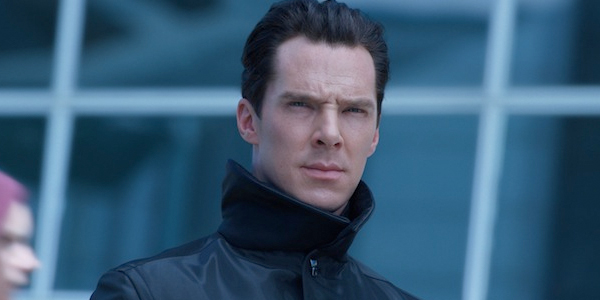 The big risk for the filmmakers in bringing back Khan: how will his return be viewed by the Trekker faithful? After all, of the films featuring the original crew, The Wrath of Khan is not only a fan favorite but arguably the best of the original Star Trek films. It rescued the franchise from the immobility of Star Trek: The Motion Picture and made a geek hero out of its director, Nicholas Meyer. Now Abrams has gone and reinvented a character who has stood unwavering as the best of all the Star Trek movie villains. That move was bound to elicit comparisons, and threatened to divide the Trek faithful, which to a certain extent, it did. There are a number of die-hard Trekkers out there who have been vocal about J.J. Abrams bringing Khan back into the picture. The secretive nature of the character and the reveal, midway through Darkness, has the unsettling makings of a cheap stunt. Mr. Beaks at aintitcool.com laments that Abrams fan service is the films undoing. One might argue, if you're going to make a Star Trek movie about Khan, then make it about Khan. The cloak and dagger was not necessary. And Khan in disguise as John Harrison, a Starfleet officer? Really?
4. Cumberbatch Is No Montalban

3. Khan Serves No Purpose

It can be argued that the presence of Khan in Into Darkness is a stunt staged merely for the fans. The broader story of a corrupt Starfleet admiral who wants war with the Klingons (a throwback to Admiral Cartwright from Star Treks 3-6) is a solid idea and worthy of a Trek feature. But Into Darkness doesnt give us a Starfleet/Klingon conflict story. It gives us a hint of one before throwing Khan in the mix.
While Star Trek II was a story about Khan, about his revenge against Kirk, Into Darkness merely uses the character as a plot device. That so much work was put into making Khans presence a secret in this film, and then introducing Khan as a Starfleet officer before the big reveal seems kitschy. In the end these overlapping plot elements serve to focus screen time on the relationship between Kirk and Spock, but leave the rest of the crew with little to do. Scotty quits and goes to a bar, McCoy is hardly in the film, Chekov spends his scenes running around the engine room in a red shirt pretending to be Scotty with a Russian accent, and Sulu just gets to sit there on the bridge, sometimes in the center seat and sometimes at his regular post. Would a film about Kirk and crew squaring off with Admiral Marcus (Peter Weller) have been a better film? Without Khan there would be more time to develop these characters. Well never know.2. Into Darkness Lacks The Elegance Of The Previous Story Arc
 Between the original series episode Space Seed and the film Star Trek II: The Wrath of Khan there is a lot of story. The arc is epic and graceful, and the success of the second Star Trek feature relied heavily upon linking its plot with one of the original series most popular episodes. That a feature film in 1982 would draw its plot from a television episode 15 years removed is remarkable considering it was not merely a remake but a continuation of that original series story. Fifteen years gave Khan more than enough time to seethe in his hate for James T. Kirk. The set up was perfect. When Khan returns in Star Trek II he is bitter and bent on revenge. Khans anger and hatred lead ultimately to his undoing, as he could have easily escaped with the Genesis device had his revenge against Captain Kirk not gotten in the way. Into Darkness, on the other hand, continues the story and timeline established in the Star Trek reboot while at the same time absorbs the Khan plot and character elements that made Space Seed and Star Trek II so popular. To that end, Into Darkness lacks the elegant story arc that worked so well for the original crew. Cumberbatchs Khan is disproportionately smaller than Montalbans Khan in both scale and importance. Which is too bad, really, given the potential inherent in the character.
1. The Khan Plotline Seems Forced

Star Trek Into Darkness is a thrilling two hours at the cinema. Few would dispute that. A film doesnt have to be perfectly made to be perfectly watchable. But as many fans and critics have pointed out, Into Darkness seems crowded with too many characters and too many plot threads. The end result is this: the development of many of the central characters gets lost in the shuffle.
There is a lot going on in Star Trek Into Darkness: Klingons are introduced, the story arc and relationships established Star Trek are dealt with, Kirk runs afoul of his mentor Admiral Pike, Spock and Uhura are together, theres a sinister plot within Starfleet, and so on. Trying to fold the Khan story line into such a rich batter makes for a sometimes uneven film. While Benedict Cumberbatch delivers a fine performance in Star Trek Into Darkness, was his presence there really necessary? The movie has enough going on without him. Had Abrams dropped the Khan story line, the secondary characters could have been given more screen time, more could have been made of the relationship between Carol Marcus and Jim Kirk, and the plot involving Admiral Marcus attempts to start a war with the Klingon Empire would probably have made more sense. It would have been a very different movie indeed.