Star Wars: 10 Insane Force Powers That Literally Make No Sense
Even if the Force is always with you, it doesn't mean that's always a good thing...

In his hut on Tatooine, located in the Jundland Wastes, Obi-Wan Kenobi describes the Force to a starry-eyed Luke Skywalker as "an energy field created by all living things. It surrounds us and penetrates us, it binds the galaxy together."
This mystic energy, which set Star Wars apart from other sci-fi franchises, continued to grow, with brand new applications of the Force being constantly added to the saga across the subsequent years since 1977.
Even by the end of the Original Trilogy, the Force had gone from an energy which can be used to choke or mind trick people, to allowing ghostly apparitions, and shooting lightning out of your hands. Despite the Force being intrinsic to Star Wars' identity, it is not always used properly by the writers, who introduce new powers into the projects that they're working on, without considering how these new abilities might retroactively damage Star Wars' galaxy, plot and lore.
Seemingly, George Lucas and Disney have crossed this line when it comes to the Force, with the two parties developing new abilities, which are either completely nonsensical, or overly strong, with it usually ending up being both.
10. Force Bellow

Perhaps one of the strangest Force powers Star Wars has to offer is Force Bellow. The ability is strangely specific, and offers no tangible use, other than allowing the user to significantly amplify their voice. Force Bellow has only been seen in legends, such as in the 2003 micro-series, Star Wars: Clone Wars, where an Ithorian Jedi utilises the power to crush building walls onto General Grievous during the Separatist invasion of Coruscant. The power was also used by Jedi Master Saba Sebatyne when reading their eulogy at Mara Jade Skywalker's funeral.
Basically, the ability is the Force's equivalent of a microphone, even though microphones have been seen frequently in Star Wars, making Force Bellow even more useless than it initially seems to be. Since this bafflingly pointless ability found its way into the then Star Wars Expanded Universe (EU), George Lucas has made it very clear that, to him, Star Wars canon does not consider the EU at all.
In an interview with Starlog in 2005, Lucas said, "that’s [the EU] a different world than my world. When I said [other people] could make their own Star Wars stories, we decided that, like Star Trek, we would have two universes: My universe and then this other one. They try to make their universe as consistent with mine as possible, but obviously they get enthusiastic and want to go off in other directions."
So, at least to Star Wars' creator, stories and powers added in the EU do not belong in the main Star Wars continuity, with Force Bellow surely not being missed that much by fans.
9. Battle Meditation

Battle Meditation increased morale and support, and so became heavily used across the space opera. Introduced in 2003's Knights of the Old Republic, Battle Meditation was utilised by Bastila Shan, first during the Jedi Civil War, then again during the Battle of Rakata Prime, ultimately allowing the Republic to destroy the Star Forge.
The power has also managed to make its way into canon, with it briefly appearing in The Clone Wars TV series, though it has been used far less than it was in legends. Battle Meditation seems to be a little more complex than simply being a morale boosting ability though.
According to Grand Admiral Thrawn in Timothy Zahn's Heir To The Empire, the Rebellion was able to emerge victorious at the Battle of Endor because Palpatine overused Battle Meditation, making Imperial forces mindless puppets who then could not make independent tactical decisions once the Emperor stopped using the power.
So, not only does Battle Meditation seem to be a morale boosting ability, it can also act as a light form of a mind trick, in which you can spread across as many people as possible.
8. Force Freeze

A power that has become frequent in Star Wars since Disney's acquisition of the franchise in 2012, Force Freeze, or Force Stasis, allowed its user to halt objects and people. The power is mostly associated with Kylo Ren, though others have seen to use it in canon, like Cal Kestis and most recently, Darth Vader in the Obi-Wan Kenobi Disney+ series. The ability has also appeared in legends, and was an unlockable power in both of the Knights of the Old Republic games.
With the ability being as powerful as it is, it's confusing as to why more Jedi and Sith do not use the ability more often, since it very clearly grants the user a major advantage in a battle. Perhaps, the answer to this question is that this ability, alongside a plethora of others, cannot be used against a Force-sensitive person, since those who are in tune with their senses are able to cast Force Barriers or Force Shields, which protects the user against all incoming attacks.
Still, Rey and Kylo Ren use this ability against one another during their duel amongst the ruins of the Second Death Star, making the power's mechanics somewhat inconsistent, at least in Disney's sequel trilogy.
7. Mind Trick

Probably one of the most popular Force abilities in Star Wars, the Mind Trick allows the user to influence their victim's mind, persuading them to do something they otherwise would not want to do. Mind Tricks were first seen in the eponymous 1977 film, in which Obi-Wan Kenobi used it to bypass a squad of Stormtroopers, in order to reach Mos Eisley.
Despite Mind Tricks being used frequently in Star Wars, its actual workings are poorly explained. Upon its use by Kenobi on Tatooine, he explains to Luke that "the Force can have a strong influence on the weak-minded." Logically, the strong-minded should remain unaffected by a Mind Trick, as Luke later experiences in Return of the Jedi, when he attempts and fails to use the power on Jabba the Hutt.
What doesn't make sense about the Mind Trick is what a weak mind actually is, and who and why someone is weak-minded. In The Phantom Menace, Watto resists a Mind Trick from Qui-Gon Jinn, though the film does nothing to suggest Watto is particularly intelligent. There is also no reason why the Mind Trick Jinn used on the Gungan leader, Boss Nass, should have worked, since Nass is later seen to be tactically and strategically competent during the planning of the Battle of Naboo. Overall, Mind Tricks in Star Wars are not wholly consistent, and need a bit more explaining for them to make total sense.
6. Force Drain

Potentially one of the most sinister powers Star Wars has to offer is Force Drain. Force Drain is a power closely linked to dark side users, simply because the ability grants the user to remove all life from an organism, until the organism is completely dead.
The most famous practitioner of Force Drain was the ancient Sith Lord, Darth Nihlus, who constantly hungered for Force energy, after he was exposed to the Mass Shadow Generator during the Republic's war against the Mandalorain Neo-Crusaders. Nihlus became a wound in the Force, and constantly used Force Drain to feed his endless hunger. The Sith Lord became so skilful in the ability, that he was able to drain whole planets of life in an instant.
With how exceptionally strong Force Drain can be, the power likely falls under the category with other abilities, like Force Plague, of being moves that are fun to mess around with in Star Wars games, but are too powerful for them to exist in the mainline Star Wars continuity at large, at least in their legends form. Still, a version of Force Drain exists in Star Wars canon. Palpatine used the ability on Rey and Ben Solo to restore his strength in The Rise of Skywalker, and the Dathomirian Witch, Mother Talzin, was able to utilise a form of Force Drain on Count Dooku during the Clone Wars.
Even so, the ability in canon is a shell of its capabilities in legends, luckily for our heroes.
5. Force Bond
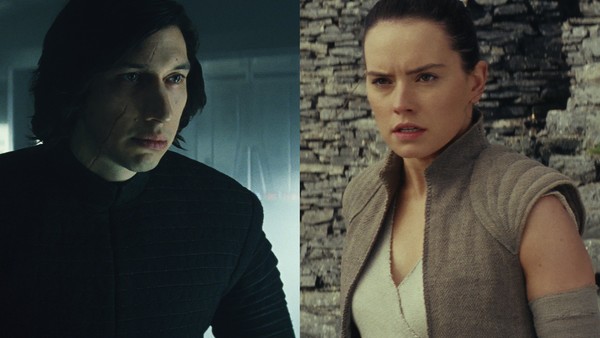
A Force Bond, or Force Connection, allows Force users to speak, see and hear one another, no matter where they are located in the galaxy in relation to the other. If the users also shared a Force Dyad, it was possible for the pair to also be able to touch and feel each other, and interact with their surroundings. The power was introduced into the Skywalker Saga in The Last Jedi, though this power had appeared before the 2017 film.
Although not explicitly either a light or dark side ability, it was considered by Luke Skywalker to be a innately dark-leaning power, since a bond could be created in secret to gradually corrupt someone or break their mind. In the case of The Last Jedi, Supreme Leader Snoke (or Palpatine, ultimately) created a Force Bond between his apprentice Kylo Ren and Rey in order to lure her closer to the Master of the Knights of Ren, in the hopes that she would follow the fallen Jedi to Snoke, who planned on killing her.
The power has also been seen in the sixth season of The Clone Wars, where Darth Sidious and Darth Tyranus used Tyranus' bond with his old master, Yoda, to attack the Jedi Grand Master - though were unsuccessful in their efforts.
4. Essence Transfer

Arguably the most controversial Force power in Star Wars, Essence Transfer permits the user to transfer their spirit, or essence, into another body, essentially giving the user a form of invincibility. This power was famously used by Palpatine in the legends comic book line, Dark Empire, and was heavily implied to have been what the late Emperor used to preserve his life in The Rise of Skywalker. Other users of the ability are Exar Kun and the Sith Emperor, Vitiate, who was able to rule for over a millennia thanks to the power.
Like Force Heal, Essence Transfer has massive consequences for Star Wars, and the workings of the Force. With Palpatine using the power in Episode IX, there is now precedent for him to continue living, even after Rey defeated him in the film's climax, since only his body was destroyed, not his spirit.
So, thanks to Essence Transfer, and the way it was handled in The Rise of Skywalker, the end of the Skywalker Saga is not as definitive and impactful as it should have been, since there is no opposing evidence to suggest that Palpatine couldn't transfer his essence into yet another body after the Final Order's fall.
3. Force Speed

First seen in The Phantom Menace, Force Speed allowed a Force user to travel at dramatically fast pace. The power has appeared in both legends and canon, with The Force Unleashed and Jedi: Fallen Order using the power frequently throughout the games' stories.
Even though this power has been used countless times in Star Wars, its existence in the Star Wars Universe has quite a lot of implications that George Lucas likely did not plan for. For instance, since Obi-Wan was clearly seen to use the power in the opening of The Phantom Menace, it is virtually unexplainable as to why he did not later use the power on Naboo to catch up to his master during their duel with Darth Maul, which then could have prevented Jinn's death.
There is also no reason as to why Kenobi did not use it to catch Jango Fett on Kamino, which could have potentially prevented the outbreak of the Clone Wars, had Fett revealed Count Dooku hired him to be the donor of the Republic's Clone Army.
2. Force Dyad

Introduced in The Rise of Skywalker, a Force Dyad was an exceptionally rare power that was shared amongst a pair of Force users. The Dyad ties into other powers, like Force Bond and Force Heal, essentially joining the two together across space and time. In canon, the only time a Force Dyad has been seen is between Rey and Kylo Ren. Whilst in concept, a Force Dyad sounds interesting, and even somewhat logical in Star Wars, when extra thought is given to the power and its working, many questions begin to seep through.
What is possibly the most confusing aspect of a Force Dyad is how and why this ability comes to fruition. According to The Rise of Skywalker Visual Dictionary, a Force Dyad can only be formed with a light and dark side Force user, as the power requires total balance. Since Rey and Kylo Ren perfectly balance out in the Force, a Dyad between the two could make sense.
Even so, Rey and Kylo Ren having the only Force Dyad known in Star Wars is questionable, especially when looking at other candidates who are more deserving of the link, like Luke and Anakin Skywalker. Ultimately, the Force itself chooses who will share a Dyad, making the choice of Kylo Ren and Rey even more perplexing, as other Force users have a much bigger stake in the Skywalker Saga than them.
1. Force Heal

This power has been seen several times in Star Wars, in both canon and legends. The Rise of Skywalker liberally used Force Heal throughout the film's runtime, first on Pasaana, where Rey used it to heal a vexis, then on the ruins of the second Death Star, after Kylo Ren was mortally stabbed, and once again by Ben Solo to save Rey on Exegol. Force Healing was not a Disney addition however, and had been used somewhat frequently under Star Wars Legends, such as in the Knights of the Old Republic games.
Even so, the power was used differently in legends than in canon. In legends, the power was used mostly to cure yourself and others, with a far lesser focus on being able to fully resurrect the dead. In canon, the power seems to only be used to prevent death, or to outright revive the dead, as seen in the Mandalorian, where Grogu uses the power on a dying Greef Karga.
Not only does this power merely get a vague explanation of transferring "Force energy [from me to him]" in The Rise of Skywalker, but it breaks Star Wars. With the introduction of this power into canon, suddenly a myriad of questions present themselves to keen-eyed Star Wars fans, such as why this power wasn't used by Obi-Wan Kenobi to save Qui-Gon Jinn after Darth Maul had mortally wounded him, and whether Luke Skywalker could have used this power to save his dying father, after Anakin Skywalker betrayed and killed his master, Palpatine.
Now that Force Healing has made its way into canon, suddenly, dead is mostly meaningless, as anyone and everyone can now be fully resurrected, as long as there is a Jedi on hand.