Star Wars 7: 10 Major Lessons Disney MUST Heed
 With the 2015 new dawn approaching for Star Wars and Disney, and early 2014 slated as the commencement for shooting, news will no doubt begin to tumble on with pace, with plot details, new and returning cast and locations likely to leak in the coming months for Star Wars VII. It is an exciting time to be a Star Wars fan, but with a number of large scale crimes committed in the name of the franchise since George Lucas took up his clapper board again to make the Prequel Trilogy, it is equally natural to feel some trepidation. Both Pixar and Marvel have benefited for their association with Disney, and hopefully Lucas Film can similarly profit from the power of the Mouse House behind them, and a new singular focus on giving new life to the space opera to end them all. But it would be foolish to think that Disney don't have an almighty mountain to climb, and they would do well to take heed of some of the lessons offered both by past Star Wars films, and more recent blockbusters...
Honourable Mention
Striking The Right Balance...
One of the single most important elements for Disney's potential success with Episode VII is the balance between established characters from the Original Trilogy and new characters and storylines entirely. Quite how much of each element Disney should or will depend upon remains up for debate: there may be concerns regarding the return of Luke Skywalker and Co with the actors advancing in age (and only Harrison Ford having enjoyed much of a career since the trilogy ended.) Disney need to decide how much of the original universe they need to bring back, with the spectre of disastrous returns to legendary properties looming large, and right now, there's no easy answer to that question.10. Get A Better Marketing Team
 It's fair to say that Disney's most recent and most notable forays into tent-pole live action film-making haven't exactly made the kind of waves the studio might have expected. John Carter was hampered by a wayward marketing campaign, which unnecessarily changed the title of the film, and both it and The Lone Ranger suffered for less focused marketing than any of the Marvel films enjoyed, or indeed the Pixar slate. Or at least that's how it felt from the audience side of the screen. Neither film is particularly bad, and John Carter in particular can be counted as one of the most unfairly underrated films of recent years. It deserved to be seen by more, and part of that undoubtedly came down to the mishandling of the pre-release marketing campaign. If Disney can pour thousands into continuing to mass produce Cars products, they need a smarter strategy for pushing Star Wars, and certainly, they need to ensure that they don't lazily trade on the brand appeal, and fail to capture new audiences.
9. Don't Persevere With The Wrong Director
 If there is one over-riding lesson from the prequel trilogy that Disney need to heed quickly it's not to stick with the same director, regardless of diminishing returns in quality. George Lucas may have created the Star Wars universe himself, and written some of the most compelling characters, but his directing work on the Prequel trilogy was limited at best, and comically woeful at worst. Lucas was protected by his status as creator, and by the handy fact that it was only he who really had any say on who should be handed the reigns for Episodes I-III. To be fair to him, Episode IV was a great film, and Lucas proved himself worthy of tackling the considerable requirements of an unprecedented space opera, but by the end of Episode I, it was clear that the director had over-achieved. Or perhaps it is fairer to say that Episode IV's successes lead to Lucas' ego inflating to such a degree that self-importance replaced restraint, discipline and intelligent writing. Either way, Disney must heed the precedent, and make sure they move on to other directors if JJ Abrams proves to be the wrong choice after Episode VII.
8. Grit Is No Substitute For Drama
 It would perhaps be easy for Disney to follow the model established by recent comic book movies, especially considering the success of the Avengers ensemble and its individual component movies, and how much money they will have made Disney, but they need to heed one lesson more than any from those films. Modern comic book movies have taken a serious turn towards grit, in some cases to the detriment of the source, or at least to the spirit of the characters. It might be popular, but Disney need to be careful to channel only the appropriate elements of the comic book successes of the past decade, such as the commitment to spectacle in the right places, and the necessarily smart character balance (especially in The Avengers.) And while grit will certainly have a place, because of its enduring popularity in blockbusters now, superficial darkness is not the same as complex drama, and only the latter has enduring impact.
7. Make Sure Writing Trumps All Else
6. Don't Believe The Hype
 Linked very much to the point concerning marketing, Disney need to develop the Star Wars brand rather than simply assuming they have bought a property that requires no investment for maximum likely return. Star Wars may still be a hugely bankable brand, but it has been neglected since the end of the Original Trilogy, with more merchandise and spin-off atrocities than most franchises could ever survive. George Lucas was hardly against selling his trademarks to high bidders which is why Yoda's latest appearance has been as a phone sales man, and Darth Vader (albeit in miniature) has been selling cars. Disney need to account for those missteps, and make their own efforts to grow the brand beyond what it has already become. Obviously there is some faith that it is possible and that potential lies mostly in the possibilities of the universe but Disney cannot rely on slapping the Star Wars label on an undercooked, under-marketed film series and expect immediate, massive returns.
5. Don't Overdo The Special Effects
 It may sound like an impossible task, but Disney need to make sure they don't go too far down the special effects road with Episode VII. Or more specifically, they should attempt to avoid using too much soulless green screen to capture entire backdrops and environments, when location scouting and practical effects have a more authentic feel. The news in August that Abrams' team would be looking to recapture the aesthetic of the original films is good news, but that doesn't necessarily mean they won't rely too heavily on supplementary effects. They need only look at DC's Green Lantern adaptation to see the limitations of too much green screen that film's issues were not simply down to poor characterisation, or an inadequate script. It was too difficult for audiences to relate to the film. Even in a film set in a galaxy far, far away, there has to be something grounded on Earth. Equally, no matter how much money is invested in making advancements in special effects, over-use still shows how far live action special effects are from being seamless. Though John Carter was a great, and massively underrated film, the few beats that were wrong related to the special effects (and Taylor Kitsch occasionally forgetting how to deliver lines properly.) Carter's jumping skill was somewhat over-played, and frequency showed of the slight inadequacies of the technology not to make
4. Put Faith In The Right Characters
 By the time Disney have released their trilogy, and hopefully subsequent story arcs under the Star Wars banner, Jar Jar Binks will have been relegated to an unfortunate footnote in the history of the franchise. He is not the only terrible character in the Star Wars films by any means, and the Prequel Trilogy was pock-marked by the misguided faith in supporting characters who simply were not worthy of as much attention. Young Anakin Skywalker may have been a crucial part of the evolution of the Prequel trilogy, but he was not worthy of as much attention as he gained in Episode I, Jar Jar Binks and his kin were given significantly too much screen time, and villains like Disney and JJ Abrams need to build up the right heroes and villains, and not kill off the likes of Darth Maul before they reach the potential of their establishing mythology. Too many times in the past both in the Star Wars universe and with other tent-pole films, film-makers have gambled on the wrong characters, and the results have been underwhelming.
3. Spectacle Is Not Enough
 Empty spectacle has failed to derail even the biggest film projects in recent years: The Dark Knight Rises may receive blind, unending adulation from certain quarters, but that film was hamstrung and unable to realise its own expectations by an imbalance between the finer details and spectacle. The space opera label, and the precedents set by each of the first six Star Wars episodes both mean that spectacle is part and parcel of any subsequent movies under the same franchise. Indeed, any Star Wars film without impressive set-pieces would be an abomination, but substance is as important an element to give the films heart. Abrams' approach to Star Trek Into Darkness was well-balanced, with both elements pushing against one another to good effect, even if there were some superfluous romantic details that were unwelcome distractions. And that too is key Star Wars fans have now had two grand romances, with the latter given more focus than the drama of the story somewhat fatally, and Disney would do well to avoid turning Star Wars into a love saga, as opposed to a sci-fi one.
2. Don't Tease Too Much
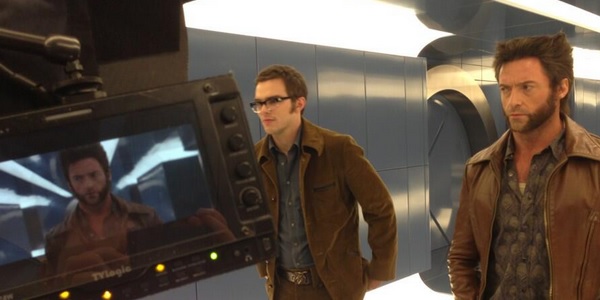 X-Men: Days Of Future Past and The Amazing Spider-Man 2 may be two of the biggest properties currently closing in on completion and release, both have been the subjects of over-zealous teaser campaigns, in different ways. Set shots from The Amazing Spider-Man 2 have all but confirmed the major event at the end of the film as the death of Gwen Stacy, and Bryan Singer's annoyingly frequent morsels of pictorial information have turned the Days Of Future Past campaign into something of a self-parody. Disney need to take a leaf out of Christopher Nolan's book, and resist the urge to release too much information to preserve the sanctity of the plot and the project. As much as fans may clamour for details of the biggest films and game releases, the slow-drip approach to pre-release material is an infuriating aspect of modern releases that merely opens up the possibility for spoilers and uncomfortably close interpretation. And while The Dark Knight Rises was spoiled somewhat by one callous extra and his camera phone, the narrative twists and turns of that movie were preserved for the most part, to the benefit of the film, and the only way to capture that sort of impact on a film as big as Episode VII will be to keep as many doors closed as possible.
1. Play Up To The Geeks
 The Dark Knight Rises was not a Batman film in traditional terms, and Man Of Steel was not as much of a typical Superman film as some fans might have wished ahead of release, but both were undoubtely successful on their own terms. Regardless of his success in retranslating Star Trek into something different, and appealing to new fans, JJ Abrams cannot approach Star Wars the same way. Accusations have already been levelled that the director will simply make a third Star Trek film under the Star Wars banner with new characters, but that must be avoided at all costs. Though the idea of a Star Wars film is arguably more fluid than those of a Batman or Superman film, there are certain essential elements, and a general tonal conviction that might not fit with Abrams' work, but which must be channelled. If he hasn't already and it seems likely Abrams needs to spend as much time as possible studying the Star Wars canon, because he and Disney both face unprecedented fan scrutiny, and the only way to ensure success is to consciously play to those fans. That may mean bringing in Han Solo, Luke Skywalker and Leia, or it may mean focusing on fan favourite wider universe characters and events, but the fans are the most important element to this particular dynamic. Do you think Star Wars Episode VII can possibly live up to the hype? Mouth off in the comments thread below.