Star Wars: The Force Awakens - 12 Reasons It's Better Than The Prequels

Mysticism over midichlorians.
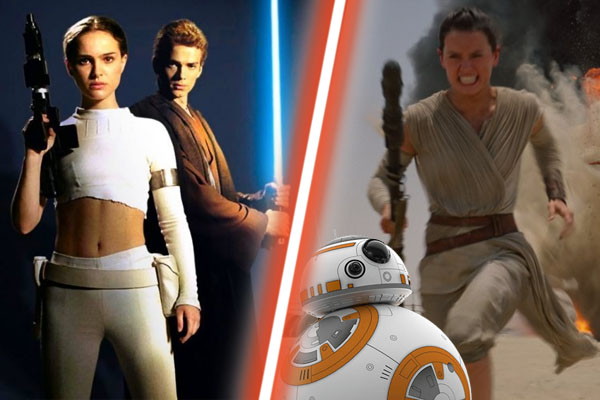
After years of anticipation, Star Wars: The Force Awakens has finally been released, and to nobody€™s surprise, it has shattered box office records. Critical reception has also been excellent, as the film is currently standing at a 94% on Rotten Tomatoes, the highest in the franchise. In addition to that, fan response has been generally positive, although some have been critical of the overabundance of fan service and similarity to the original trilogy. Overall, The Force Awakens is a great movie. It is a perfect blend of the old and the new, bringing us back to Lucas' familiar universe alongside returning characters and excellent new heroes and villains. The movie has successfully relaunched the franchise for a new generation and generally lived up to most fans€™ expectations. As expected, the movie is now being compared to all of the previous films in the franchise. The jury is still out on whether it holds up to any of the original trilogy, but most fans would agree that The Force Awakens is far superior to the disappointing, dull, and overall mediocre prequel films. And here's precisely how...

12. We Don't Know What's Going To Happen Next
Making a good prequel is very difficult (there arguably has never been a good one), mostly because we know what€™s coming next. It can be hard to get invested in certain scenes or feel tension when characters are in peril, because we know who is going to survive and that the films are tied to an established continuity, which significantly limits the story opportunities. Every time Anakin, Obi-Wan, and Yoda are in any kind of danger, we know there is no way they can die. We spend three whole movies just waiting for Anakin to get into the Darth Vader suit, and the final act of Revenge of the Sith is primarily cramming the storyline to fit the beginning of A New Hope. And the €œtwist€ of Palpatine being Darth Sidious, was not much of a twist given that everyone knew the truth after watching Return Of The Jedi. However, since The Force Awakens is a sequel, literally anything can happen: any character can die at any moment. The possibilities are endless. We don€™t yet know if Kylo Ren will switch over to the Light Side, or if Rey will become a Sith, or if Poe Dameron will slip on some ice and crack his skull and die. And that all gives the creators more freedom to tell engaging stories, which is all good news.

11. The Original Trilogy Characters Weren't Ruined

The prequels unforgivably ruined several fan-favorite characters from the original trilogy. They turned Anakin Skywalker into an annoying, whiny teenager, but never once showed the heroic yet flawed military leader that The Clone Wars series perfectly managed. Boba Fett was no longer one of the coolest guys in the galaxy; wise old Yoda, who preached about how €œsize matters not€ and €œluminous beings are we, not this crude matter€, pulls out a lightsaber and does CGI flips in the prequels, completely betraying his underlying beliefs. And although Obi-Wan wasn€™t ruined per se, his character wasn€™t improved in any way in Episodes I-III as Ewan McGregor essentially replicated Alec Guinness€™s performance. The Force Awakens could have easily fallen into this same trap, specifically failing to progress Han, Luke, and Leia in any way, but they were perfectly handled. Luke has a new complex backstory, and Leia has risen through the ranks to become a General, but her relationship with Han hasn€™t worked out, because of course it wouldn€™t. But the best example of this is Han Solo€™s story. Han initially seems to be right where he left off in the original movies, off on a smuggling adventure with Chewie, but it€™s revealed that in the past thirty years, he has raised a child with Leia, watched that child turn to the dark side, and essentially regressed to what he best knew how to do. This was a very interesting and tragic turn for the fan-favorite scoundrel. He then served a very important role in this film, helping our heroes and attempting to bring back his son from the darkness, but ultimately failing and dying. It allowed us to see more depth to Han Solo than we have ever seen, and it made the movie so much better.

10. The Force Is Mystical Again

One of the most popular ideas of the original Star Wars films was the idea of The Force as faith-based dogma and the idea that the spiritual will always dominate over the physical. The Force taught us that there€™s more to this world than meets the eye, and that sometimes people need to let go and trust in their instincts and feelings. However, the prequels infamously tarnished this by introducing €œmidichlorians€. Instead of The Force being a magical and mystical force that can be practiced and developed over time through training, it was turned into genetic cells. Although The Clone Wars tried to rectify this error by explaining how midichlorians are just an attempt to explain and justify The Force using their own science (which is actually a pretty interesting idea), it was too late; the damage was done. The title of The Force Awakens did not lie, as the titular spiritual concept was not only reawakened in the plot of the story, but it was also reestablished to be the mystical energy field it was always meant to be. There is no mention of midichlorians, and the entire sequence with Maz Kanata and Rey€™s cryptic dream sequences just screamed classic Star Wars. All throughout the film, Rey gradually used The Force more and more, until she truly believed in the epic lightsaber duel and was able to use it to its full potential.

9. No Boring Politics

The Star Wars prequel trilogy concentrated way too much on politics, especially in The Phantom Menace, with discussions about trade taxes, votes of no-confidence, and senate negotiations. The problem was obvious: if so much of the films is reliant on the political dialogue, those discussions should at the very least be engaging and easy to understand, but they were neither. The politics ended up seriously slowing down the films and created scenes that bored the kids and confused the adults. The Force Awakens could easily have included politics in it; after all, we are told there is a New Republic, a First Order, and a Resistance, and we still have no idea how the three overlap. If the heroes lead an actual government, why do they have rebels? And why do the villains have a government of their own? We never get answers to these questions, but ultimately the filmmakers decided that it really doesn€™t matter. And in a possible jab at the prequels, the First Order destroys a large portion of the Republic, including a planet (Hosnian Prime) that looked suspiciously like Coruscant, A.K.A. the planet of boring Jedi Council and Senate meetings.

8. Humor That Lands

Perhaps the most surprising takeaway from The Force Awakens was just how funny it was. In the prequels, much of the humor was forced, most prominently shown with Jar Jar Binks, who, besides being a questionable racist caricature, is clearly just there to make poop jokes and pander to the little kids, offering no entertainment to anybody over the age of nine. As George Lucas infamously said, €œJar Jar is the key to all of this. Because he€™s a funnier character than we€™ve ever had before.€ Sorry, George, but he€™s really not. The comedy in the original trilogy didn€™t always land. C3PO was comic relief, but he was often overused and eventually got annoying. The real genuine humor came from the character interactions, especially those involving Han Solo. The Force Awakens found a perfect amount of humor, with nearly every character having funny moments. Han and Chewie had a fun running gag with the Bowcaster. Finn and Han had great comedic chemistry. (€œDid you just call me Solo?€ and €œThat€™s not how The Force works!€ are two of the best lines). Poe Dameron was one of the comedic standouts, making light of a torture scene by asking Kylo Ren who was supposed to start talking first. And, of course, BB-8 was an excellent blend of humor and cuteness, and became an instant fan-favorite character.

7. No Forced Romance

Attack Of The Clones is by far the worst Star Wars prequel, primarily because a large majority of the film is devoted to a love story that doesn€™t work. Lucas attempted to replicate the Han and Leia romance from Empire, but between the lack of chemistry between Hayden Christensen and Natalie Portman and the unconvincing, god-awful dialogue, he failed. To say the romance was forced is an understatement. It was also incredibly rushed, with the characters instantly falling in love, even though they showed no emotional connection and merely had a physical attraction. Sure, two attractive single people living in close quarters to each other on a lush and romantic planet helps set the mood, but that typically leads to one-night-stands, rather than getting married to somebody you've known for a week. The true emotional connection between Padme and Anakin was never felt, and the wedding never felt earned. We see very little romance in The Force Awakens, but there are some hints. John Boyega and Daisy Ridley have great chemistry, and their characters grow over the film to become genuine friends. Finn clearly has an immediate attraction to Rey, as seen by his boyfriend comment, and there are some genuine cute moments between the two of them. Their relationship was more of a friendship than a romance, and the closest it got to the latter was a kiss on the forehead from Rey to Finn. However, a genuine connection and bond was formed, and if a romance were to blossom in Episode VIII, it would feel completely natural and earned.

6. Show, Don't Tell

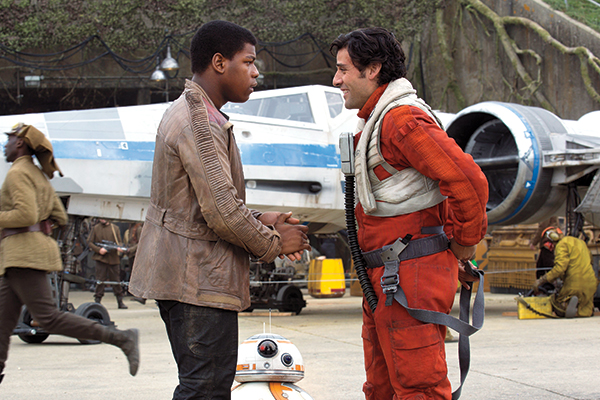
A golden rule of screenwriting is the concept of €œshow, don€™t tell": the audience should be able to figure out plot details, character motivations, and other basic story concepts, simply by watching the movie and observing the action, rather than being force-fed heavy-handed exposition. One of the reasons the Star Wars prequels are so dull is because they prefer to tell, rather than show, when it comes to plot elements. At times, the exposition in the prequels trilogy make them seem more like a play, where characters walk in, recite their lines, and walk out. A more common violation of €œshow, don€™t tell€ in the prequels is through character relationships. We are always told how great of friends Anakin and Obi-Wan are, but never once do we see a true brotherhood between them. Obi-Wan constantly seems fed up with Anakin€™s immaturity, while Anakin is always disrespecting his master and talking badly about him behind his back. This can be easy contrasted with The Force Awakens, where, in just one scene with Finn and Poe, we see a true friendship grow between them based on how they act, and it makes their reunion feel so much more real. We never have to be told that they are friends; we see it from the events of the movie. In just one scene, The Force Awakens established a better friendship than the prequels failed to do in three whole movies. Similarly, we are able to figure out parts of Rey's backstory through the flashbacks and bits of dialogue, but nothing feels forced.

5. A Villain With Depth

Every good movie needs a good villain, and the prequels don€™t exactly deliver on that end. Darth Maul looks cool, but he has very few lines in The Phantom Menace and is more a plot device than an actual character. In fact, we know next to nothing about his personality besides the fact that he€™s a Sith with a double-bladed lightsaber. It also doesn€™t help that he gets immediately killed off, ruining any chance of learning more about his character in the sequels. Count Dooku is slightly better, as we know he€™s a former Jedi and was once Qui-Gon€™s master, which could have made for a very interesting moral and physical conflict. However, that idea is squandered and Christopher Lee is totally wasted, as his backstory is very rarely mentioned, and his character is little more than another evil guy. And there€™s no real need to mention General Grievous, as he has very little to do. The only somewhat interesting villain in the prequels is Darth Sidious, but even he has very little depth. All he really wants is power and to destroy the Jedi. In contrast, Kylo Ren is a complex villain with an interesting backstory. He is initially portrayed as a powerful figure, but as the movie progresses, it€™s revealed that he€™s just a regular guy with some serious anger issues. He so desperately wants to be evil and to be like Vader, and he wears the mask and cloak to overcompensate for the fact that he€™s not very powerful or scary, but he is constantly being pulled back to the Light Side. He can€™t even win a lightsaber duel against a first-time Jedi, showing just how ill-prepared he is. Also, the fact that he reveals his face so often makes his character so much more human, something that we didn€™t even see from Vader himself until Empire and Jedi. And of course, his scene with Han Solo is so emotional, and even though he ends up murdering his father, Adam Driver expertly portrays the conflicted character, as a shadow of regret is seen flickering on Ben Solo€™s young face.

4. It Doesn't Overuse CGI

One of the most popular talking points about The Force Awakens for the cast and crew is the €œviscerality€ of the film and the usage of practical sets and effects. While CGI is an excellent and useful tool for making movies, especially sci-fi action flicks, it shouldn€™t replace everything. Nearly every location in the prequels had a CGI background. Sadly for Lucas, the human eye is adept at noticing fakeness: we can subconsciously tell that something computer-generated looks slightly off, even if we can€™t quite put it into words, and it often takes the audience out of the movie. Plus, an overuse of CGI can lead to other problems, such as actors not knowing what they€™re supposed to be seeing and acting against in a shot, and actors not having enough space in the sound stage to do what the scene requires of them The Force Awakens tried very hard to get back to basics. The crew went into painstaking detail to create real models, puppets, and mechanical robots to use for shooting, and many scenes were filmed on actual locations, with backgrounds that couldn€™t really be replicated by computers without something inevitably looking fake. The movie still used green screen and CGI, of course, for creating several CGI characters, shooting scenes that took place in space, removing wires and cables in post-production, and so on, but the important part was that the filmmakers only used it when necessary, striking a perfect balance between the real and the digital, and their passion and hard work really shone through.

3. Lightsaber Fights With Emotional Weight
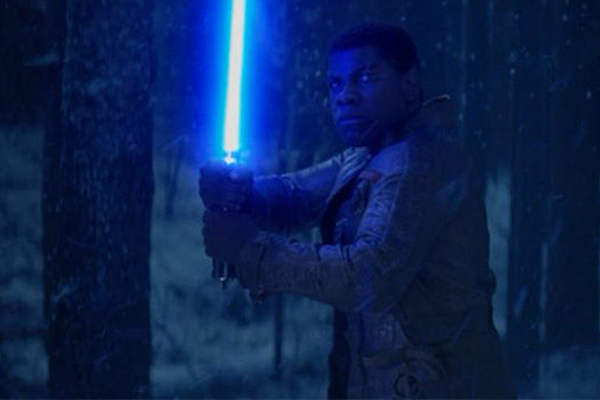
Every Star Wars movie needs a good lightsaber duel: not only do they provide an entertaining and tension-filled action scene, but they can also offer some serious character development for those involved. The lightsaber fight in A New Hope is admittedly not very good. Although it provides more depth and backstory to Obi-Wan and Darth Vader, the duel is still a battle between a man in his 60s and a man in a robot suit, so the mobility of the major players is severely limited. However, the later fights between Vader and Luke are both excellent. In Empire, Luke is inexperienced and unsure of himself with Vader is simply toying with him and taunting him, while in Jedi, Luke is more experienced and at one point snaps and tries to kill his father. The prequel fights all have at least one player who the audience knows next to nothing about, between Darth Maul, Count Dooku, General Grievous, and Mace Windu. This dissolves any tension from the scene, since we have no knowledge of character motivations. On top of that, the fights are the opposite of the one in A New Hope, in the sense that they are way too over-choreographed and feel more like a dance planned in advance than a real battle. The only prequel fight that has real emotional weight and great realistic choreography is the one between Anakin and Obi-Wan in Revenge of the Sith, but that fight has way too much going on visually and continues for much longer than necessary. Both of the climactic battles in The Force Awakens strike a fine balance between emotional depth and realism. In the first duel, Finn is shown to be extremely inexperienced and out of his element, while Kylo Ren is slashing out in rage at his traitor. Between the terror on John Boyega's face, the fact that he's always on the back foot, and the fact that he gets destroyed pretty quickly, we learn a lot about his character in a short sequence. When Rey later joins, in an epic shot of her grabbing Luke's saber out of Ren's force pull, she starts out on the back foot as well. As Kylo Ren punches his chest to feel pain and fuel his rage and dark side, he corners Rey, at which point she takes a turn, believes in The Force, and starts to take the lead. Through this fight, we see Finn's inexperience, Kylo Ren's rage and surprising inexperience, and Rey's strong connection to The Force, we learn so much about their characters with very little dialogue.

2. An Exciting And Simple Story

A movie without a good story to tell isn't much of a movie at all. It goes without saying that a film needs a plot to propel the characters into new action and different situations. The plots of the Star Wars prequel trilogy are not very strong. They are bogged down with boring political dialogue, disputes about trade, discussions about prophecies, but overall, not much actually happens. The prequels managed to strike an incredible balance between having a story that was convoluted, yet nothing of significance actually happened. The Phantom Menace is about discovering Anakin on Tatooine and a blockade on Naboo, and Attack of the Clones is concerned with an assassination attempt on Senator Amidala and the secret creation of a clone army. Nothing really happens until Anakin's fall to the dark side and the destruction of the Republic and the Jedi in Revenge Of The Sith, and even that is incredibly rushed. Overall, the dialogue scenes have such poor writing, unrealistic dialogue, unclear character motivations, and lazy camera work that it's clear that the writing was incredibly rushed and Lucas just wanted to get those scenes out of the way to get back to the action. In The Force Awakens, events of significance actually occur. Sure, the story is pretty derivative of A New Hope, but the story is simple enough that it works. Just the opening title crawl was a relief, with one of the most concise and clear summaries: Luke is missing, the First Order are the bad guys, the Resistance are the good guys, Leia sent a pilot to find Luke. Everything else that follows is a direct result of earlier scenes, and the movie moves at a very fast pace. There's never a moment to breathe, and for an action movie, that's not a bad thing.

1. Complex And Likable Characters

The most important part of a movie is its characters. An overabundance of CGI and a mediocre story could all be forgiven if the lead characters are interesting and relatable. Seeing a relatable character begin the movie with one set of beliefs, and over the course of the film watch them grow and develop is a great experience. Every sin the prequels made would not have been as big a deal if the characters were well-written, however, many of the major players seem to be in the movie to simply deliver lines of dialogue and move along the story, rather than be actual people. Anakin is the only character who has somewhat of an arc throughout the trilogy, but his fall to evil is much less tragic than it could be, since he was never such a great guy to begin with. The Force Awakens has very strong characters, each with their own unique traits and interesting arcs. Rey is the classic hero, but she actually happens to be a clever inverse of Luke, where she wants to stay on her planet and is reluctant to use The Force. As the movie goes on, she ventures outside of her home planet and eventually accepts the ways of The Force to help her escape captivity and later defeat Kylo Ren. She was badass, charming, a good fighter, a great pilot, and overall a relatable hero. Finn showed us under the stormtrooper helmet, something we had never seen before, and we got to see the nameless soldiers as actual people. Horrified with his friend's death and the slaughter of innocents, Finn leaves the First Order behind and starts looking out for himself. He only pretends to be part of the Resistance to impress Rey, and is actually a coward at heart, but as the film progresses, he learns to put others before himself, and work in a group with friends. Poe Dameron was another fun character, and Kylo Ren, as mentioned above, was a good villain, but another character that surprisingly had an arc was Han Solo himself. Solo began The Force Awakens as a smuggler who had left behind his wife and the Resistance after his son turned to the dark side, but after teaming up with Finn and Rey, he eventually gains the courage to confront his fallen son, which ultimately does not end well for our favorite scoundrel. Do you agree with my list? Do you prefer The Force Awakens or the prequels? What is your favorite Star Wars movie?

Contributor

Systems Engineer by day. Writer of movie articles by night.