The Hunger Games: Catching Fire - 10 Mistakes The Filmmakers Shouldn't Repeat
 The Hunger Games began with an ever-popular series of young adult novels and has quickly expanded to include films and merchandise. Looking around bookshops today, it's interesting to see the number of other young adult titles which refer to the Hunger Games in their author testimonials. Take "Uglies" by Scott Westerfield, for example, a book which became famous long before the Hunger Games, but is now using Suzanne Collins' novels as a selling point. This leads to a fascinating point: if the books are so popular and the films are so eagerly awaited, why do so many fans of the novels hate the movie, and what could be done to change this? People like to say that the book is always better than the film, but it doesn't have to be this way. At least, there are a few things that I can see the filmmakers easily doing to change Catching Fire for the better when it comes to the big screen adaptation. To support this, here are 10 mistakes the filmmakers can learn from the last Hunger Games movie to help make the next one better...
10. Stop Using Shaky Cam

9. Embrace The Subtleties
8. Don't Forget Crucial Plot Details
 In the books, Peeta is unfortunate enough to lose a leg. Ouch! Some people might think that the version of events shown in the film is better. For a start, after their reconciliation in the caves and the end of the Games, Peeta is lucky enough to be saved with no - or very little - lasting physical injuries. While this view might for some be preferable to details of teenage mutilation, it doesn't really fit the theme of the books. As one fan recently remarked to me: "What is the magical healing potion in the film?" Magical healing potion. That phrase makes you think: how is it possible for Peeta to recover so well? If that were possible - if such quality medication were available - then how come the issue of food isn't better addressed in Panem? Surely if places like District 12 weren't starving they'd be so much less likely to rebel. This one simple change, likely done because of financial constraints on effects or length of the film, makes a lot of difference to the overall meaning. If Peeta loses his leg, then the effects of the Hunger Games on the survivors is easy to see. In a film that has already lost a lot of depth through simple cuts and omissions, something as simple as that would be an explicit link to the suffering caused by the Games. When it is clear that a victor isn't safe, it adds a brutal reminder of the true cost of the regime in Panem. The psychological effects of the Games on Katniss, which are addressed in the later books, would be much more believable if there were a permanent physical reminder of their suffering that remains evident throughout.
7. Special Effects
 Now, this is something that I know for a fact has already been picked up in other articles and blogs, so I know I'm not the only one to think this. One issue which struck me as odd in The Hunger Games and needs to be addressed in Catching Fire is the use of special effects. The use of Katniss' dress on fire was cheesy enough, but when it came to the costumes-on-fire-in-the-chariot, it was all a little weird. The effects weren't believable enough and nor was the emotion there to match the shock and excitement that this would bring. Sometimes special effects such as these can bring something new to the movie, but it can also take away. Perhaps in this it might have been better to move away from the fiery dress of the book and create an actual dress design that is unique and fits the occasion rather than rely on effects that fell a little short. This could have been useful, allowing the budget to be used elsewhere while also allowing subtle changes from the books that may be of interest to viewers. Hopefully any effects that are used in the exciting next film will be more successful and will create another film we can all become immersed in for a few short hours.
6. Let Us Feel It

5. Pacing, Pacing, Pacing...

In the book, there was little wrong with the pacing: after all, it's important to build up the tension and make sure that everyone actually cares about the characters before they are cruelly slaughtered on the battlefield. But the movie version doesn't achieve such heights. There is way too much time spent on the build-up to the Games and not enough on the tournament itself. The results in a long period of the film in which you are led around locations like the Seam in District Twelve. While at first this is interesting and important for backstory purposes, it grows a little tiring.
This is a movie where the wider population of Panem are important, though the focus should largely centre around the lives and experiences of our young tributes. In the book, we are given a first-person limited narrative which works well. We see the world through Katniss' eyes and slowly we grow to understand its craziness. In the film, there are frequent juts in and out of her view, such as to the room where the gamemakers are deciding what happens, for instance. At times this works well, but it's only really shifting the focus away from the tributes.4. Give The Secondary Characters More Screentime
 This may seem a bit hypocritical when used in conjunction with the previous mistake, but bear with me. While it can be irritating to move out of the Games once they have begun, it is nice to see the development of other characters. Cinna and Haymitch are my personal favourites. For the sake of this argument, I'll stick to discussing Haymitch. So, he's an alcoholic. That is his primary character trait. But when this is explored deeper you get a great sense of his personality and past, starting with the horrific way he won the games. In the film and in the book, he is a crucial and loveable character. "Embrace the probability of your imminent death," he tells Katniss and Peeta. Based on that line alone, surely this character deserves a little more airtime. Can you imagine how interesting a spin-off about him would be? At this point you can probably tell that I am daydreaming about the idea of more of Haymitch's dry humour, but the point still stands.
3. Be Wary Of Changes
 Look. It's the Mockingjay pin.One of most beloved and recognised symbols within the franchise, inspired by the pin that was given to Katniss by Madge Undersee, the mayor's daughter. A little backstory: the pin is given for luck by Madge but you later find out that it originally belonged to Madge's aunt who happened to be Katniss' mother's friend. And died in the Hunger Games. So yeah, this pin is quite unlucky! The fact that the pin's backstory is changed dramatically in the film version may seem insignificant, though the title of the third book is - yes - Mockingjay. Aside from this very obvious link, there's also the issue that something given as a good luck gift by Prim is a lot less poignant than the idea of a dead tribute's favourite item of jewellery being passed down and becoming the symbol of a major rebellion. C'mon... what would you prefer? Perhaps it would be a good idea to keep such major changes limited because they really can take away from the viewer's enjoyment.
2. Don't Ignore The Little Things
 Some of the smallest things can become the most important to a viewer's enjoyment. You know the kind of thing: scenes that get you to sit up and stop munching on the the popcorn. It's those moments that seem as if they have been transcribed directly from the author's imagination to the screen. Moments that mark a film as brilliant, which seemed a little lacking in The Hunger Games. Take, for instance, the Reaping. It wasn't how I imagined it at all. Though I enjoyed the video clip style introduction to the events, I felt like more could have been made of it: the opening scenes of the film took place that same morning, but felt so detached from events. This one may be a matter of personal opinion, but I would have to say that one of the most important things to remember for Catching Fire is that those vital scenes are rendered close to the way they occurred in the book.
1. Be Mindful Of The Future
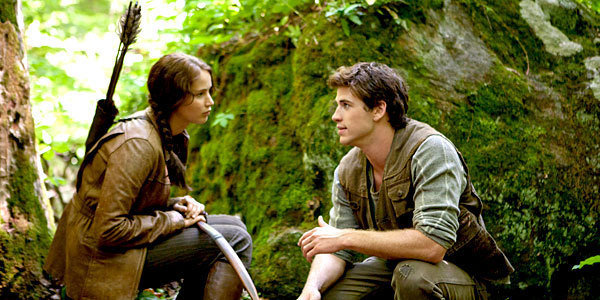
 The love triangle aspect between Peeta and Gale both vying for Katniss' attention was exciting within the books, even for someone who is part of a generation jaded by the love triangles depicted in films such as Twilight (like me). In the films, I felt that this aspect needed to be worked on a little more. The chemistry between Katniss and Gale was far more noticeable and "real" than the chemistry we were asked to buy between Katniss and Peeta. For me, at least, this is something which should be of concern to the producers. If they mean to follow the path of the books, then surely Peeta must begin to emerge as the most likely candidate for her true affections; otherwise when the truth about Gale's actions during the events of Mockingjay become clear, wouldn't it look strange if she decided Peeta was for her? Like this article? Agree or disagree? Let us know in the comments section below.