The Main Issue With Each MCU Phase 4 Entry (So Far)
Marvel's latest journey on the big and small screens is intriguing yet flawed.

Much has been said about the MCU's commercial dominance and its impact on big-budget filmmaking (for better or for worse), and Phase 4 seems to be no different. Marvel's latest stage of its grand experiment is currently focused on the fallout from the Infinity Saga's epic events and setting up a multiversal conflict which may top the expansive and interconnected nature of Phases 1 through 3.
Films such as No Way Home and series such as WandaVision have captured the cultural zeitgeist, and entries such as Loki and Moon Knight are pushing the envelope in regards to the MCU's narrative and filmmaking sensibilities.
As much as critics and audience appreciate a more experimental and unconventional MCU, that is not to say that this new approach has been flawlessly executed. To be fair, this new stage of the MCU's development is still in its infancy, and comparing 11 years of tried and tested storytelling to a year or two of a more experimental approach is rather unfair.
That said, what audiences have gotten so far is intriguing, but still plagued by issues that the first three phases faced in addition to newer and (hopefully) easily rectifiable ones that currently prevent Phase 4 from living up to its lofty ambitions.
11. Wandavision - The Story Outside Westview Is Not As Compelling

The first Phase 4 entry began Marvel’s new saga in bold fashion and its homage to sitcoms and exploration of grief captured the attention of fans worldwide in early 2021. Led by Elizabeth Olsen and Paul Bettany’s enthralling performances as the titular couple, Wandavision and the sitcom world it created made for nostalgic and emotionally riveting television.
However, this could not be said for the world that existed outside Wanda’s Hex as the efforts of S.W.O.R.D to understand the anomalous barrier surrounding the town and ultimately stop Wanda were nowhere as interesting as Wanda and Vision’s relationship and their interactions with the trapped residents of Westview.
To be fair, the trio of Monica Rambeau, Darcy Lewis and Jimmy Woo were fun to watch but were sadly placed next to a dour antagonist in S.W.O.R.D director Tyler Hayward. In addition to this, their individual stories were not properly fleshed out as Wanda and Vision’s were.
Some fans have understandably expressed their qualms with the show's uneven finale and its clumsy attempts to justify Wanda's actions but at least the buildup to this resolution was entertaining to watch. The same cannot be said for the S.W.O.R.D. storyline, which ultimately felt like an afterthought from the word go.
10. The Falcon And The Winter Soldier - Generic Antagonists Undermined Thematic Potential

A spiritual successor to the Captain America trilogy, The Falcon and the Winter Soldier explored the legacy that came with wielding the iconic hero’s mantle and how his actions shaped the lives of its eponymous leads following his retirement from superheroics.
In addition to this, the series attempted to explore America’s troubled relationships with race, trauma and power/influence in a post-Blip world. Unfortunately, these laudable narrative ambitions were hampered by the series’ decision to use the Flagsmashers as a vehicle for these themes. Led by Karli Morgenthau, they tasked themselves with trying to support those displaced by the Blip's impact regardless of the cost it took on bystanders and themselves.
Their motivations were understandable enough and sympathetic to a degree, but the development of these villains gradually worsened as the show progressed and by its conclusion, their place in the narrative was murky (especially with the inexplicable involvement of the Power Broker) and detrimental to the show’s original goals.
It should be noted that the series was originally poised to have a nine-episode count, but was unable to reach this due to budget restrictions, and this means that the show may have some crucial narrative threads missing from its final form.
9. Loki - Its Middle Episodes Are A Bit Of A Drag

The first Phase 4 that hinted towards the MCU’s greater universe-hopping ambitions, Loki was an impressive combination of an astonishing visual palette, an eerie yet propulsive score by Natalie Holt, interesting discourses on free will, identity and shifting moralities and of course strong performances, especially by Tom Hiddleston as the titular God of Mischief and Owen Wilson as likable TVA agent Mobius.
Its first two episodes got affairs off to a dizzying start with the introduction of the TVA and the main conflict at hand, but things fell off by its third episode. Despite featuring strong visuals and Sylvie’s backstory, the episode felt disconnected from what came before and essentially functioned as a bottle episode despite having some narrative significance.
Things did not improve with the fourth episode, as it was too beholden to the secrets behind the TVA and the payoff to these questions were somewhat underwhelming due to the involvement of the less interesting likes of Ravonna Renslayer and the Time Keeper decoys.
Luckily, the show was able to pick itself up in its final stretch and deliver an unusual but poignant reckoning for Loki with his alternate selves and a new villain in Kang the Conqueror.
8. Black Widow - The Film's Antagonists Are Woefully Underdeveloped

One of Phase 4’s most anticipated entries back in the before times, fans had hoped that Natasha Romanoff’s first (and frustratingly only) solo story would fill in certain gaps in the Avenger’s life before she began saving the world alongside her teammates.
To its credit, the film gave audiences a glimpse into Natasha’s family dynamic and the ramifications of her early days in S.H.I.E.L.D and how these experiences forged the assassin into the hero she became. Characters such as Red Guardian (David Harbour) and especially Yelena Belova (Florence Pugh) instantly became scene-stealing favourites due to their colorful personalities and complex backstories.
It is a shame that the antagonists lack such narrative depth, or any kind of depth for that matter. Taskmaster, while fun to watch in the film's action scenes, lacks any personality and the twist behind her true identity is not captivating in any way and raised questions on why the character's backstory was changed for the film. The less said about Dreykov and his questionable Russian accent, the better.
7. What If... ? - The Series Does Very Little With Its Intriguing Premise

The animated adaptation of the fabled comic storylines was highly anticipated due to its intriguing concept and possible implications for future stories. The notion of seeing beloved characters in unfamiliar settings or watching storylines unfold in an unexpected manner initially seemed like a slam dunk, but this was not the case.
The nine-episode storyline did little more than the bare minimum with the concept of the multiverse. While it was interesting to see the likes of Star-Lord T’Challa and the Watcher come to life, most of the series’ episodes (especially 3, 5 and 7) were lacking in clever writing or emotional impact.
In addition to this, the tonal balance in some of these episodes (the zombie episode in particular), repetitive plot beats took away (Killmonger's constant double-crossing) and bare-bones story (Captain Carter's tale resembling Steve's to a fault) served as unwanted distractions from the series' exploration of alternate realities.
To be fair, the series had shortened episodes (and was shorter overall by one episode) so it is possible that season 2 will rectify its predecessor’s issues and deliver more fleshed out stories by the time it is completed.
6. Shang-Chi And The Legend Of The Ten Rings - Its Third Act Belongs In Another Film

One of the franchise’s most compelling origin stories, Shang-Chi and the Legend of the Ten Rings benefitted from expert pacing, interesting depictions of Chinese mythology, well shot and edited action sequences and strong lead performances from Simu Liu and Tony Leung as the titular hero and his villainous father, respectively.
Its first two acts expertly laid out Wenwu’s time as the Mandarin, Shang-Chi and Xialing’s resentment of their warlord father and the mythic nature of the Ten Rings (both the organization and artefacts). The combination of mythological lore and the impact of a father's grief on his children held significant promise and would have elevated the film to the upper echelons of the MCU.
Unfortunately, its third act devolved into standard MCU shenanigans with sprawling armies clashing with CGI beasts and suddenly elevated stakes with the introduction of the Dweller-in-Darkness.
The world-ending beast was crammed into the film late in the game and its presence distracts from the more emotionally resonant conflict between Shang-Chi and Wenwu. The film is not completely ruined by this switch in narrative structure but suffers a bit because of it.
5. Eternals - Struggled To Balance Worldbuilding And Character Development

Although most fans and critics consider Eternals to be the worst MCU film, this is far from the truth. It benefits from being a less conventional MCU feature in its expansive storytelling, tangible visuals and sombre tone, but unfortunately this is all it has to differentiate itself from some of its more generic franchise siblings.
Its narrative was jam-packed to the gills with the backstories of ten distinct characters, additional supporting characters, antagonists and the exploration of the MCU's cosmic realms. Characters such as Makkari and Kingo were given the short end of the stick in regards to development, and the reason behind the Eternals' existence and purpose (especially in light of Thanos' actions on Earth) were poorly thought out.
These many moving components proved to be the film’s undoing as its runtime failed in balancing so many plot lines and characters. The film would have benefitted from being a Disney Plus series where the additional runtime would have given the storylines more time to breathe and achieve the desired narrative and emotional impact.
4. Hawkeye - Its First Two Episodes Are Dull Compared To What Follows

Clint Barton’s first headliner is a relatively low-key affair compared to the other Phase 4 entries but it served as an entertaining and satisfying coda for everyone’s favourite (?) archer. Unfortunately, the series’ first two episodes were lacking in excitement value compared to the latter four (especially episodes 3 and 5).
They did their job in setting up Kate’s backstory, the primary conflict and Clint’s current status but beyond that felt very perfunctory in their existence. In addition to lacking excitement value, the opening episodes did not do the best job in fleshing out how Clint's time as Ronin would come into play in the show as well as Kate's connection to this beyond her discovery of the former's suit.
This was not a deal-breaker as the series came into its own fairly quickly with the introduction of characters such as Maya Lopez and Yelena and inventive action set pieces. All this said, the series could have benefitted from a stronger start that would have felt in line with its future installments.
3. Spider-Man: No Way Home - The Filmmaking Is Lacklustre
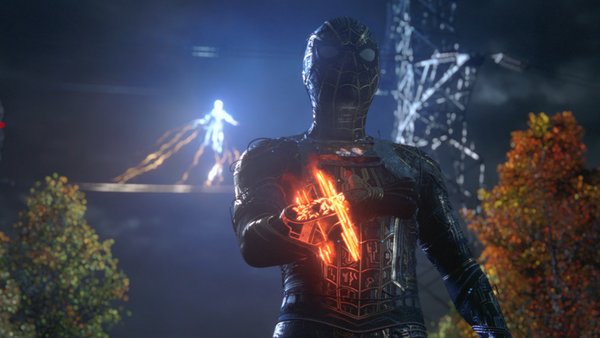
No Way Home absolutely annihilated pandemic-era box office records and served as a culmination of all things Spidey-centric in cinema over the last 20 years. Although the nostalgic payoff was undeniably satisfying to see play out, it was just a shame that the filmmaking used to depict the web-slinging team-up were frustrating and baffling in equal measure.
Plot beats such as an out-of-character Doctor Strange and flimsy multiversal mechanics were undeniably annoying, but they would have been far more palatable in the hands of a director with a strong command of their craft and a distinct style.
Unfortunately, Jon Watts did not add much in the way of filmmaking flair to the film aside from mostly unnecessary tracking shots in the film's first act, and the rest of the film lacked the visual excitement of the Raimi or even the Webb Spidey films.
The one scene Watts directed with actual verve was Peter's first meeting with the Green Goblin, and even this was hampered by excessive editing as expertly explained in this video. As much as the film was impacted by pandemic restrictions, other films have been shot under similar circumstances and they turned out to be more visually dazzling than No Way Home's mostly bland presentation.
2. Moon Knight - The Story's Resolution Was Underwhelming

Marvel’s exploration of Egyptian mythology and living with DID was both intriguing and respectful, and ultimately served as another largely successful expansion of the massive franchise. It helped that the series was led by an outstanding Oscar Isaac, whose portrayal of a man with a fractured psyche ranks among the MCU’s best performances, leading or otherwise
Unfortunately, the season finale was underwhelming compared to its preceding episodes, especially its heart-wrenching fifth episode. This was due to its focus on the inevitable clash between Marc/Steven/Khonshu and Ethan Hawke’s Arthur Harrow/Ammit.
The differences between the two parties were clearly laid out in earlier episodes, but the conflict always felt like padding/a distraction from the more interesting dynamic between Marc and Steven. The show was clearly more interested in exploring the Marc/Steven dynamic as well as the former’s tragic past.
This meant that the eventual resolution of the season's story was always going to be lacking, and despite Hawke's best efforts to imbue Harrow with some degree of complexity, his defeat as well as that of the god he revered felt a bit too tidy and underwhelming.
1. Doctor Strange In The Multiverse Of Madness - The Pacing Hurt The Film's Emotional Impact

The sequel to Stephen Strange’s debut is definitely one of the MCU’s most eccentric and visually compelling features and this is due to Sam Raimi’s always capable directing and masterful horror sensibilities. In addition to this, the film benefits from strong performances from Benedict Cumberbatch and Elizabeth Olsen and is not afraid to get weird or unsettling (at least as far as MCU properties are concerned).
Unfortunately, the film’s narrative structure is built on a rather weak foundation and seems to be a victim of dreaded studio notes and/or reshoots. Its pacing is all over the place and does not give the film’s events to breathe and settle in, thus ensuring that their impact is lessened by a story that is too eager to get to the next action set piece, cameo or reveal.
Furthermore, the film's emotional component felt rather inert due to its dizzying pacing. While Wanda's story was gripping (mostly due to Olsen's performance), Stephen's musings on his happiness and choices as a Master of the Mystic Arts fell a bit flat.
In hindsight, the film may have been more compelling had it placed a sharper focus on plot beats such as Stephen and Christine Palmer (Rachel McAdams)'s relationship and his antagonistic connection to Baron Mordo (Chiwetel Ejiofor), and then work towards a multiversal conflict with the likes of Wanda and America Chavez in a later film.