The Matrix 4: 9 Things Need To Happen

Is it worth jacking back into the Matrix again? Only if these changes are made...

The Matrix 4 The Matrix Revolutions was pants. Audiences knew it, critics knew it, and if the crew behind the film had any sense, they knew it too. Over the course of the trilogy, it seems the Wachowski siblings increasingly lost sight of what made the first film so memorable to fans of the first film. Instead of treating us with deep, interesting, philosophical and existential questions about human existence like in the first (and arguably the second) film, Revolutions went off the rails and focused almost entirely on war scenes that bloated the running time of a film that forgot about the point it was trying to make. Rumours have persisted ever since the release of Revolutions that the Wachowski's would make a return to the series that made them famous, but what exactly a Matrix 4 would be about is largely anyone's guess. For a reboot to succeed, certain changes are necessary to warrant a return to the virtual reality world of the Matrix. Should the narrative explore the very beginning of the machines and how they gained sentience, or should it focus on events following Revolutions, with the human race attempting to restore its civilization above ground? What about the characters? With the Neo/Smith storyline concluded at the end of Revolutions, is there any reason or need to bring their characters back? All of these questions and more are explored below. Check it out, and see if these changes are ones you'd love to see yourselves.

9. Set It Before The Events Of The Original Trilogy

Agent Smith has been defeated, the humans and machines have formed an uneasy truce and anyone still connected to the Matrix is allowed to leave if they so desire. If we're to believe that all of the events that unfold at the end of Matrix Revolutions hold true, then there's little reason for us to return to a period set after the events of the last trilogy. Of course, it wouldn't be the first time that writers have conjured up some superficial excuse to continue a franchise beyond any reasonable limit, but doing so with the Matrix series would just be silly considering the huge potential for prequels that the franchise holds. Throughout the course of the original trilogy, we're only treated to small moments of exposition (usually from Morpheus) that explain what happened to the real Earth during the rise of artificial intelligence. Yeah, we know that it was our own fault that there's no sunlight anymore, and that the machines eventually revolted against mankind for fear of its own extinction; but that's pretty much it. The animated collection of the Animatrix goes into past events in more detail, but if they're not considered canon, then we'd love to see a new trilogy that begins at the very dawn of man's creation of A.I. The films could naturally progress from there, showing us what happened between man and machine, and how our race eventually became almost entirely subjugated through the invention of the titular Matrix itself.

8. Don't Revive Agent Smith

As great as Agent Smith was as the antithesis of the One, the rogue computer program has had his day. He's assimilated the entire population of the Matrix, played God and actually kills Neo (albeit, after he realises he needs to die to destroy Smith). One can only hope that Hugo Weaving's excellent portrayal of the out-of-control metaphor for a computer virus goes down in cinema history as one of the greatest villains ever, but that won't happen if the Wachowski siblings decide to 'resurrect' the character if they pen a new series. It would be much more interesting to see the machine or program responsible for the creation of the Agents come to the forefront. We know the men in black were created as silent overseers of the human race within the Matrix itself, but who created them and who did they take orders from? Depending on how back a prequel film would be set, we could even be privy to the process of how the first program for the Agents was written. Most importantly of all though, do Agents actually have individual personalities and agendas? Smith is seen to have some rather human-like emotions when he's interrogating a captured Morpheus which suggests that they do. However, at what point Smith's function as a virus is established is unclear so he could be the exception.

7. Show Us Earlier Versions Of The Matrix

In the scene from the first Matrix film in which Morpheus is captured and interrogated, Smith goes off into a giant commentary about the history of the Matrix itself - explaining that there were several different versions of the computer program prior to the current one in which the machines settled on. Smith only gives us one example: a utopian Matrix where nothing bad happened and everyone led perfect lives. The version was ultimately a failure due to the human race's apparent inability to accept a perfect world with no negatives built into it. Smith tells us that there were several versions of the life simulation program, six, to be exact. Humans would know no different due to their history being long forgotten (and partially fabricated by the machines) and the Agents could have potentially been non-existent in earlier versions. The possibilities of what the Matrix could look like are potentially massive. If the machines have total knowledge of human history, then they could code one that exists in a medieval, Roman or even ancient period of time. The 20th century setting of the Matrix seen in the films may have been chosen because it was viewed by the machines as the peak of human civilization, but why would they want us to have access to technology and hence be more intelligent?

6. How Exactly Did The Machines Convert Humans Into Batteries?
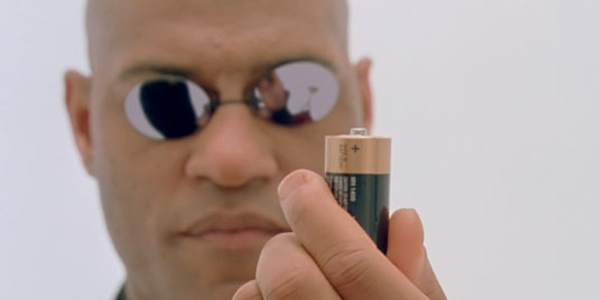
So we know that, at some point prior to the events of the films, that the machines enslaved the minds of a large portion of the human race, plugged their brains into a computer program and simulated real life, but how did they do it? There's an important distinction to make that's only briefly touched upon in the films, and that's the difference between humans that are unplugged from the Matrix and ones that are born straight into the real world. The latter group have no plug holes or ports in which to connect themselves to computer programs hence their inability to enter them. Everyone else on the other hand, can re-enter the false world in which they came from. This is all speculation though, and the way in which the machines are able to "grow" humans is never really explained. Did they somehow discover a way in which to clone human DNA? Are humans born naturally and then physically modified after birth with the plugs required for insertion? If the former is the answer, does that mean that that any and all humans that come from the Matrix are all just test tube babies and not actually human? The concept gives rise to some very interesting philosophical questions that were missed in the first trilogy, and it could provide an interesting subject matter for a fourth film.

5. Do Away With Giant Robot Wars

The Matrix series was never about ridiculously long action scenes that entailed humans piloting battle suits with guns the size of houses. If that's what fans of the original (and arguably the second) film wanted, then they'd all migrate to Michael Bay's Transformers franchise. No, the reason why the first Matrix has become so iconic, historical and revered is because it explores a huge amount of themes and is layered so thick with concepts, analogies, metaphors and allegories that critics today are still dissecting its many meanings. Sure, even the first film had its fair share of action scenes (who could forget the shoot-out in the lobby), but they were stylistic, not over-long and crucial in forwarding the film's narrative. Reloaded upped the amount of action by quite a large margin in this regard, but still managed to somewhat keep its head in telling a story. By the time Revolutions rolled around, action became just another screen-filler, eschewing interesting imagery and dialogue in favour of watching an hour-long scene of bullets and exploding robots. If Matrix 4 is to happen, the Wachowski's need to return to the roots of what made the series so great in the first place. Sure, have some action, but please give it meaning, and don't make it boring and unnecessarily long.

4. More Interaction Between The Machines And Humans
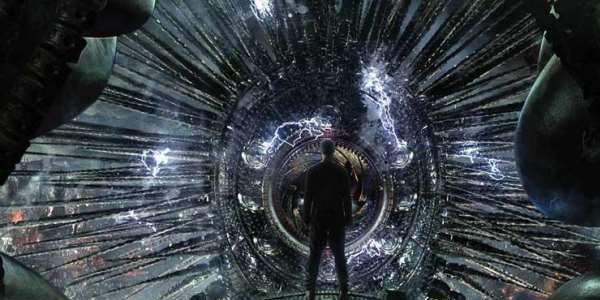
Okay, so over the course of three films about sentient machines enslaving the human race, we only ever get one scene (at the end of the third film when Neo converses with the Deus Ex Machina) where the machines actually interact in any meaningful way with the humans. Computer programs don't count either. The Architect, and many of the genius programs within the Matrix may have been created by him, but he's simply just a representative of the true evil that caused the collapse of human civalization. In the very brief sequence at the end of Revolutions where Neo speaks with the Deus Ex Machina, we learn very little about how they function - other than they like to model their faces on human babies for some, presumably unsettling reason. Aside from it's complete arrogance and superiority complex over Neo though, we learn that the machines (or at least this one), can be reasoned with when faced with the threat of extinction. As we learn throughout the series, the machines are only concerned with self preservation, which they see humans as a threat to. As Neo manages to broker a truce between the two races at the end of the third film, it would be nice to see just a tad more interaction between humans and their own creations.

3. The War Is Over, But Earth Still Lies In Ruin
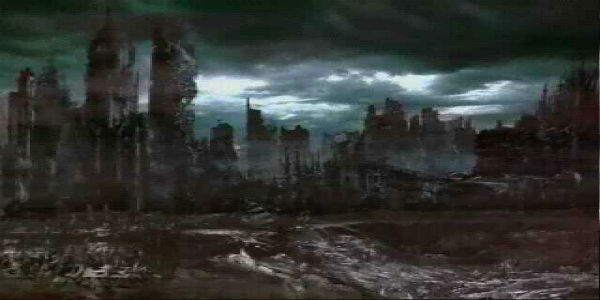
This entry presumes that the first change proposed in this list will never happen. If the Wachowski's do start work on a new Matrix trilogy and decide not to go with a prequel idea, then this is what their films should focus on i.e. the rebuilding of human civilization. We're shown only briefly in the first film what the remnants of the old human cities look like on present-day Earth, and while what we see is in fact a computer program, you can bet that the real version doesn't look much better. Without sunlight, the Earth's surface would be devoid of both plant and animal life, unable to sustain anything except inorganic organisms. We know that it was us that "blackened the skies" in an attempt to destroy the original power source of the machines, so if another film does continue on from Revolutions, we could easily see the narrative focus around human efforts to clear the eternal darkness, thus giving the machines back their original power source and ending their reliance on brainwashing humans.

2. Stop With The Weirdness

We get it. The scene in which all of Zion throws a massive, sexually suggestive, sweaty party is supposed to represent the emotions and compassion of humans when compared with the logic-bound machines. Whether the Wachowski's thought the scene was a clever way in which to explain that concept or not is unclear. But what is clear is the scene just didn't fit the tone of the movie, and it wasn't clever. In fact, it was just downright weird to watch for most people and went on for far too long. It's not the only example of missteps in the series though. For seemingly no reason whatsoever, the scene in which Trinity attempts to rescue Neo from the Trainman in Revolutions takes place in what appears to be an S&M nightclub. Well, good for you if you're into that sort of thing, but the imagery and setting has absolutely nothing to do with the film's narrative, and appears to be there just for the sake of showing some skin. We're not saying abolish the slight strangeness seen in some parts of the films, but at least give reason to have them or tone them down.

1. Do NOT Bring Neo Back

Just like with the entry dealing with Agent Smith, Neo's story is done. Complete. Finished. Concluded. There is absolutely no reason for Neo to return in any future Matrix films, especially ones that are set after the events of Revolutions. If the Wachowski's go with the prequel route, then it's possible that they'll set the film's during the events of other, previous Ones. If they go with the post-revolutions route though, then the function of the One no longer has purpose. The Neo/Smith equation has been rectified, and Neo is the first One out of six that has managed to break the repeating cycle of the machines destroying and rebuilding Zion over and over again. With the One no longer having any purpose, or even needing to exist, that also means we'd have to wave goodbye to Keanu Reeves which, to be fair, would give the potential sequel a chance to go in new directions. Many fans will point to the closing lines from the Oracle when by Sati if they'll ever see Neo again. "Oh, I suspect so", is her answer, but unless the human/machine war were to reignite (which would be awful), then we hope we don't. Unless the character is resurrected for reasons unrelated to the One, then he should certainly stay very much dead. What are your views on the Matrix series continuing? Do you think Revolutions should remain the final film, or do you think a Matrix 4 is needed to rectify past mistakes made by the last film in the trilogy? Let us know in the comments below.


Contributor
Contributor

Joe is a freelance games journalist who, while not spending every waking minute selling himself to websites around the world, spends his free time writing. Most of it makes no sense, but when it does, he treats each article as if it were his Magnum Opus - with varying results.