Why Men In Black: International Failed
A director who wanted to leave, script rewrites and absolutely NO sense of humour.
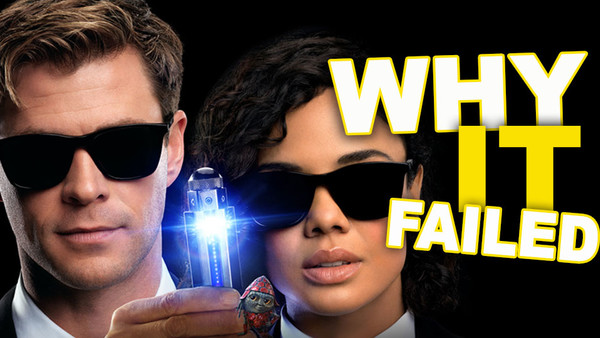
It's been a bad year for Hollywood blockbusters. Sequels to ailing franchises like X-Men: Dark Phoenix and Godzilla: King of the Monsters, alongside would be reboots like Hellboy and Men in Black: International have failed miserably both critically and commercially, and it's that latter sci-fi adventure that's the latest victim.
Sony have tried to get a brand new MiB film off the ground for years, originally greenlighting a crossover with the then recently-revived 21 Jump Street franchise, and later morphing into a soft-reboot starring Tessa Thompson and Chris Hemsworth. Though it had plenty of talent behind and in front of the camera, with Straight Outta Compton's F. Gary Gray directing and a star-studded cast including Liam Neeson, Emma Thompson, Rebecca Ferguson and Kumail Nanjiani, but a damning 24% approval rating from critics on Rotten Tomatoes and a $30 million opening weekend indicates something went terribly wrong.
The film itself isn't great; it's not terrible, but it's completely devoid of exciting moments, original ideas, and totally wastes the chemistry between its two leads. Apparently it didn't always have to be this way, though, and thanks to a report from THR chronicling the flick's troubled production, we now know why Men in Black: International turned out to be such a disaster.
7. The 21 Jump Street Crossover Fell Apart Because Money

The crossover event nobody realised they needed, when the e-mails of Sony executives leaked in 2014 and confirmed that the studio was interested in blending the worlds of Men in Black and 21 Jump Street, fans of both franchises realised it was a match made in heaven. The former franchise had suffered through two underwhelming sequels, while the latter showed the entire world how to reboot an older property into something deeply contemporary.
Even better, with the final credits sequence in 22 Jump Street, a conventional sequel was all but eliminated, meaning that, weirdly, introducing space aliens into the universe would have felt surprisingly natural. Channing Tatum and Jonah Hill weren't exactly obvious stand-ins for Tommy Lee Jones and Will Smith, but they could have brought in a new audience, and undeniably played off each other well both dramatically and comically.
After seeing the response, Sony apparently jumped back into gear, announcing MiB 23, and attempted to get the deals in place to make it a reality. The project was short lived, however, and communications broke down, according to THR, because of the lucrative deals for big-name producers on both sides.
Their sources claim that Jump Street producer Neal Moritz held out to retain his first-dollar deal (which would see him taking a percentage of the box-office from the day the movie launches, regardless of whether it turns a profit or not), which was enough to give Sony cold feet on the whole thing.
In its failure to make the crossover happen, the studio scrambled and turned its attention onto rebooting the franchise, but the problem was...
6. Sony Had No Idea How to Reboot The Franchise (And Wasted The Two Leads)

Once MiB 23 was dead, Sony turned their attention to rebooting/reviving the franchise on their own terms, but apparently didn't have a clear direction in mind. Again, THR reports that the studio struggled with landing on a single vision, unsure whether to bring back Will Smith (or if the actor would even come back) or attempt to usher in a new, riskier era with a new set of stars to lead the franchise forward.
Tessa Thompson and Chris Hemsworth were eventually chosen as replacements, essentially with the thought that they worked so well together in Thor: Ragnarok, and that they'd do a similarly good job here. Of course, in the actual movie, the talents of both actors feel totally wasted.
The pair's natural chemistry helps carry the script through, but neither were given the kind of material that suits them best. Thor: Ragnarok worked because it felt like there was trust between the director and the actors to improvise and collaborate, whereas Men in Black: International feels like both actors were forced to deliver one-liners at gun point.
There's the sense that Sony simply assumed fans would flock to see the two MCU staples together again, without understanding that it was more than their natural chemistry that made their other pairings so successful.
5. The Narrative And Characters Are A Meandering Mess

While the two leads struggle to make their mark, the biggest problem is that the arcs for Thompson's Agent M and Hemsworth's Agent H's both vanish halfway through the film. There's a theme in there about how the two learn to become better agents after teaming up, with M learning to let her gut emotions occasionally override her book-smart, logical approach to every situation, while H realises that sometimes, not every problem has to be solved with his fists.
That should be the start of both their character arcs, a great foundation to build off, but in the final film, that's literally all there is. Their partnership doesn't work because the characters learn from each other or grow emotionally throughout the movie, it works because Chris Hemsworth and Tessa Thompson are naturally charismatic and look damn good in black suits.
Even away from the underdeveloped character arcs, the story of Men in Black: International is a total mess. Though it starts off relatively simple enough, with clearly-defined character motivations, it eventually spirals into nothingness, somehow becoming increasingly convoluted and messy despite having a threadbare story.
Even the idea of the Men in Black going "international" seems half-baked. Though the previous movies had stuck to an American setting, the scope was inherently intergalactic. When your franchise is all about dealing with threats from outer space, setting your movie across Europe hardly feels noteworthy.
Plus, the filmmakers do nothing with the expanded international scope. The only other MiB office we get to see is the one in London, which functions identically to the one in the US.
Yes, Chris Hemsworth and Tessa Thompson look cool wielding guns in the middle of the desert the same way Daniel Craig did in Quantum of Solace, but that one image is meaningless if it loses nothing when it's plastered on a poster, context-free.
4. Hasty On-Set Rewrites Altered The Original Script

Unsurprisingly, the frustrating plotting apparently has a lot to do with the fact the script was hastily rewritten.
According to THR, the original screenplay for the movie was "edgier, and more timely", dealing with contemporary topics while still delivering the laughs. F. Gary Gray's take on the story would be more focused on using the aliens as an immigration allegory, with far more overtly progressive themes (remnants of which remain in the eventual film, as one of the alien races is seeking refuge rather than destruction - though it's never actually explored). Sources claim it was a good screenplay, and at the very least good enough to attract two major stars not lacking job offers.
In a lot of ways, it sounds like the original Men in Black. Though that movie is remembered for its Big Willie Style, Tommy Lee Jones' deadpan performance and talking pugs, there was real heart to it. It used an intergalactic framing to tell a deeply human story about family, and you could tell it had a real fondness and reverence for ideas and concepts bigger than humanity.
This version, however, was apparently dogged by rewrites both in pre-production and during filming, all oversaw by longtime producer Walter Parkes, who didn't like Gray's vision for the movie. Apparently this led to new script pages turning up on the day said scenes were set to film, as Parkes attempted to soften the story's edges and get his vision made.
Allegedly, it got so bad that while the script was already being rewritten on a daily basis, Tessa Thompson and Chris Hemsworth brought in their own dialogue writers to change up their lines and salvage their own roles.
3. All Of The Interesting Themes Were Cut Out (And It Shows)
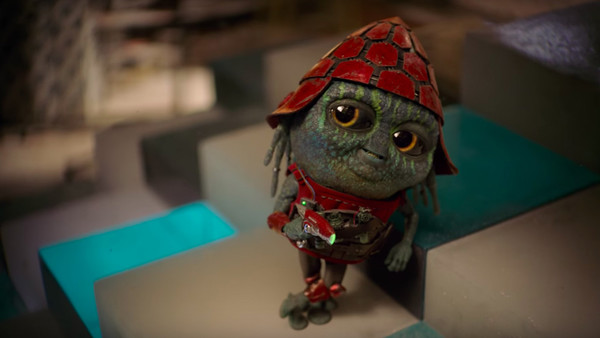
Though these reports are of course unconfirmed, the idea that the movie's story was chopped up and changed mid-filming would explain the glaring flaws in the final cut. As mentioned earlier, the character arcs for M and H both disappear about halfway into the movie, paid lip-service to in the final scene like either hero had a profound journey or fundamentally changed as people.
It's the villains that suffer the most, though. The original intention to bait-and-switch the main antagonists and reveal them to have been looking for a way to save their world rather than destroy others kind of comes through, but it's obfuscated by poor storytelling. The shape-shifting baddies sit out huge chunks of the movie, showing up only to provide a quick set-piece, with the movie never bothering to explore their origins or motivations in any detail.
Likewise, the real bad guy, the mole inside MiB, is at once obvious and, again, confusing. Their motivation, and even the species they belong to, is never made totally clear, even when they're offed in the climactic battle.
How much these storytelling issues had to do with the alleged rewrites and how much they were already baked into the DNA of the original script may never be known, but either way it's clear the more interesting themes and narrative points were stomped out for something safe and, ultimately, boring.
2. The Director Tried To Leave (Several Times)
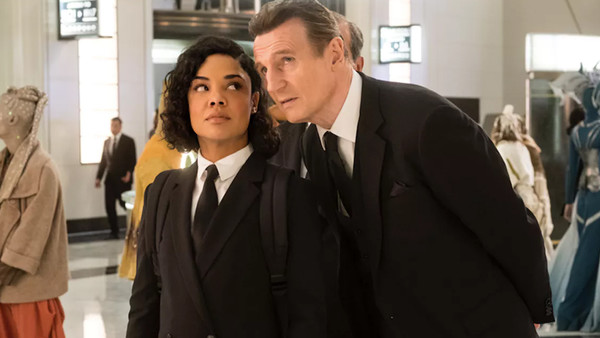
According to THR's report, the friction between the director and Parkes boiled over during filming, to the point where F. Gary Gray tried repeatedly to leave. Every time, Sony talked him down, though they apparently did nothing to stop the producer exerting control, both over the rewrites and even occasionally stepping in to direct certain sequences.
Even without pointing fingers as to who was in the right, having two creative forces not only fighting for their version of the script to be made, but even individually directing scenes without the input of the other, can only lead to disaster.
This clash of creatives has become an all too common story this year, with virtually the same rifts and issues causing Hellboy to become such an unfocused mess a few months ago. The problems tanking blockbusters this year are not unique, and point towards an industry that no longer trusts individual directors to make unique pictures, but rather puts control in the hands of longtime producers who think they know best.
1. It Doesn't Understand Its Own Franchise
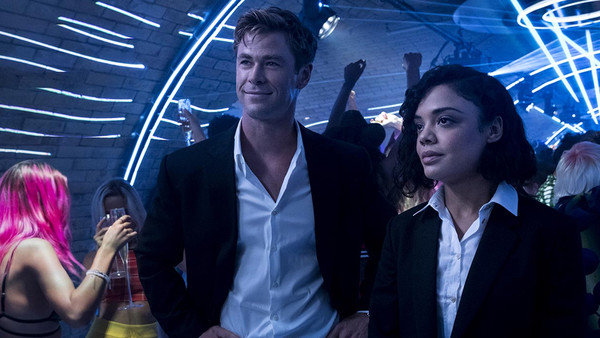
While there were clear production woes with Men in Black: International, the main issue seems to stem from the fact that the finished product - and potentially Sony at large - has no idea what Men in Black actually is.
Sure, at a glance, the latest movie couldn't be more enveloped by the brand. There's a quirky, oddball central partnership, the neuralysers, the suits, the cars, the technology, the futuristic headquarters, the celebrities who are aliens in disguise, but there's nothing beneath the surface.
The iconography screams Men in Black, but movie franchises are more than iconography. It's an issue we've seen crop up over the past few years, where sequels and reboots understand the images and symbols that define their brands, but not the ideas behind them.
It's why Godzilla: King of the Monsters amounted to little more than action figures being smashed together, why Aladdin had the songs you loved as a kid, but somehow they weren't as catchy, and why Men in Black: International has the sick suits, but none of the wonder that made the original so resonant.
Again, there's no saying whether this is because of the troubled production or whether the original script also misunderstood the franchise's identity, but the important thing is that either way, it was completely absent in the finished product.