Why You Will Never Watch The Truman Show The Same Way Again
The Truman Show is even more important now than it was in 1998.

When you think of Jim Carrey, chances are his comedic films immediately spring to mind. Classics such as Dumb & Dumber, Ace Ventura: Pet Detective, The Mask, and Liar Liar enshrined Carrey as an icon of ‘90s cinema, developing his reputation as a brilliant comedic actor. But one film in particular stands out amongst his incredible run during that decade - the film which proved that Carrey is also a phenomenal dramatic performer too: The Truman Show.
Peter Weir’s 1998 masterpiece The Truman Show celebrates its 25th anniversary this year. It's a truly special film - perhaps Jim Carrey's most important - and one that feels strikingly prescient in today's digital age.
In a 2020 interview with Collider, Carrey reflected on the impact of The Truman Show and how a sequel may be approached, and it gets at why the original film is arguably more salient today than it was in 1998:
"I think The Truman Show is something that exists on a micro level now. It was kind of a story about that on a macro level. But now everybody has a subscriber channel. Everybody has their own little Truman Show world. There’s something to be had there. I often think, and am asked about, what would have happened to Truman when he goes outside the wall. It took me a while to realise that basically, he was alone out there, too, because everybody went back inside. They all wanted to be in the dome."
In today’s society of YouTube vloggers, TikTok celebrities and Instagram stars, we have immediate access to view the ‘real’ lives of others. Reality TV also sits at the forefront of popularity and often presents a faux reality for both participants and viewers of the shows themselves. Today, we can easily access our own ‘Trumans’ and watch their lives unfold - almost in real-time - exposing their personal journeys to public scrutiny, which highlights The Truman Show’s themes of surveillance, manipulation, and the loss of privacy as being ever more prevalent.
Why The Truman Show Is More Important Than You Realise
Have you ever felt like the star of your own staged reality show? That everyone around you is playing a role in a world of fabrication and keeping you out of the secret? And that everywhere you go, your every action is being monitored by cameras? These are symptoms commonly associated with the delusion ‘Truman syndrome’, which takes its name from the film of the same name.
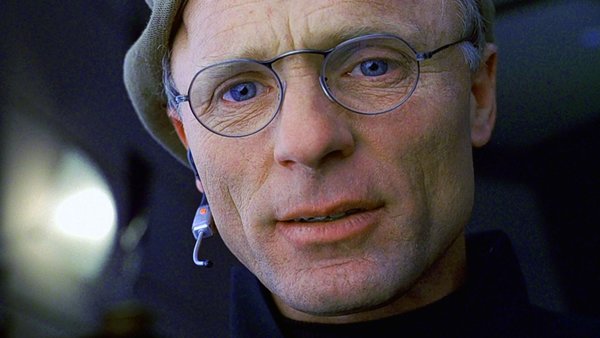
The Truman Show follows Truman Burbank played by Jim Carrey, the star of the reality television show, The Truman Show. To Truman, his life in Seahaven is normal. The one difference? Everyone is aware that they are part of a television show - everyone except Truman. Every person around him is an actor who works under the direction of creator Christof (Ed Harris). The movie is an allegory to Plato’s Cave in that Truman makes his reality from what is shown to him - he has no reason to question anything as he has never known anything different.
That is, until, he does.
The Truman Show poses questions, ideas, and themes which are just as important today as they were in 1998. Our quest for truth comes when significant moments happen that destabilise our expectations, displacing the reality of what we once knew and therefore pushing us to discover the reality of a given matter.
And who hasn’t had a moment of existential crisis in which we question our autonomy? Are we truly the narrators of our own lives if everything has been chosen for us? If the actions we make are ours, but the environment we exist in is designed and controlled by others, then how free are we? Just how does an individual take back control of their life after living for so long without that footing? And, more importantly, what does that control even look like?
Of course, these hefty existential questions may not have been at the forefront of your mind when watching The Truman Show for the first time. However, when rewatching with a current-day perspective, the questions that Weir’s film asks become evermore urgent. So much has changed in the two decades since Truman escaped Seahaven, and it recontextualises the viewing experience in key ways.
The Truman Show Foreshadowed More Than Just Reality Television
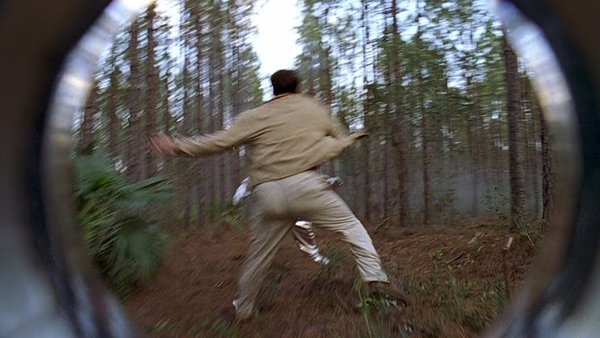
Truman’s quest for truth is influenced initially by seemingly insignificant ‘accidents’ that happen around him. A studio light falls from the sky and smashes to the ground near Truman and a shower of rain falls only on him as he runs in and out of it. At this point, he’s never had a reason to question his reality and therefore finds these things weird and comical; certainly not questionable, but perhaps anomalies in his real world, unaware of their significance.
Everything takes a turn for Truman when he sees a homeless man on the street who turns out to be the same actor who played his father. Having ‘lost’ his father in a boating accident as a child, Truman is perplexed at his presence in the street before he is quickly ushered onto a bus by ‘pedestrians’. This is the moment that gives momentum to Truman’s questioning of his reality as his own family tells him he is mistaken and newspapers suddenly have headlines pertaining to the town cleaning up the homeless from the street.
In essence, Truman is battling against the “fake news” everyone is telling him to believe versus what he is beginning to understand for himself. Christof and his team orchestrating how Truman's life unfolds to achieve high viewer engagement is also reflective of our digital media landscape. These concerns aren’t new, and were very much a fixture of the political context The Truman Show released into in 1998. However, they have been augmented with the advent of social media, with news organisations and “content creators'' chasing greater engagement via search engines and social media with the rise of Google and sites like Facebook, Twitter, and Instagram, which reward sensationalist, inaccurate reporting, as well as shock-value content.
Authenticity in the digital era can be difficult to come by, and Truman’s engagement-hungry director is a prescient example of the algorithmic cycles driven by search engines and social media.
In a world of superficiality, Truman experiences authenticity in his feelings for Sylvia before she is quickly removed from his life. She openly tells him that she's not supposed to talk to him, before whisking him off to the beach in an attempt to reveal the truth. Truman’s passion to travel to Fiji is fuelled by his feelings for Sylvia, a truth and reality in his feelings that cannot be controlled or taken away from him. Truman hides (or believes he is hiding) a collection of images torn out of magazines and placed together as a jigsaw to replicate her face - a true message to Christof and the production team that you can remove the things Truman loves and shows interest in, but his feelings cannot be controlled.
In the current era of curated online personas and social media-applied filters, Truman highlights the importance of staying true to yourself in a contemporary world that so often promotes a distorted version of reality.
What The Truman Show Has To Say About Freedom & Control

The climax of the movie involves Truman attempting to sail away from Seahaven and crashing his boat into the edge of the studio set. Carrey - in a career-defining moment of acting - gently touches the wall before slamming his fists repeatedly against it, feeling shock, anger, sadness and acceptance in an amalgamation of emotional discovery. His questions have finally been answered - to great distress.
Truman’s existential crisis is seen in this emotional climax as Christof speaks down to him from the sky in almost biblical imagery. After Christof introduces himself as the creator of the show, Truman asks “Who am I?” to which Christof tells him “You are the star”, the only real thing in a world he created for him.
Truman’s response, “You never had a camera in my head!” holds such weight for the entirety of the movie. Truman’s thoughts have always been his own. The engineered reality around him has influenced his thoughts and actions, but he’s always been the one to make them. So, therefore, the question rises to the surface - do we have true autonomy in a life controlled by the actions and the decisions of others?
This is also explored in Truman’s fear of the water, which comes from ‘losing’ his father in a sailing accident at a young age. This fear-inducing emotional manipulation is orchestrated by Christof to instill a barrier in Truman from wanting to explore beyond the sea. When Truman realises his fear was birthed from a fabricated incident, does his fear of the water now disappear? The scene plays beautifully against the ending of the film in that, just as his belief in his father dying from a sailing accident is eradicated, his crashing into the studio wall in a boat also eradicates his belief in this world he has always known.
The Truman Show 25 Years On - How The Digital Age Has Made Trumans Of Us All

Seahaven is governed under the leadership of Christof who controls everything within the world. Nothing happens without his say - after all, he knows Truman "better than he knows himself", meaning every decision he makes is for Truman. He tells Truman that “there is no more truth out there than there is in the world I created for you”, but this is Christof’s truth and his perception of what truth is, which Truman has been victim to. When Marlon talks to Truman after his emotional breakdown, he says “and the last thing that I would ever do…is lie to you” whispered into his ear by Christof, who controls the emotional impact of the scene with a sweeping score.
Christof’s downfall comes in that final moment after revealing everything to Truman and thinking he has convinced him to stay. He wants Truman to say something meaningful to the watching world as he yells, “say something god damn it! You’re on television!” Only, Truman does the opposite, and instead gives his iconic line: “in case I don’t see ya, good afternoon, good evening and goodnight!” Truman is finally free to choose his own destiny, free from the rule of a tyrant, and embrace a new reality.
Apart from being an entertaining story in its own right, The Truman Show effectively foreshadows our desire to continue watching our own ‘Trumans’ today - vloggers, social media personalities and traditional celebrities who are more online than ever before. Apps such as Instagram and TikTok allow us to become our own Trumans and Christofs in their encouragement to share every facet of our lives and monitor the engagement of each post - effectively opting into a system that The Truman Show shows us can be psychologically damaging.
In a modern world of “fake news”, algorithm governed content and a data-driven landscape of media, The Truman Show reaffirms why it's important to understand where that information is coming from and why it's being presented in the way that it is. It's not always easy to find that 'exit door' and break free. But, in a way, knowing why it's difficult to do just that is a victory in itself.
Watch Next
Can You Name These Jim Carrey Films From Just One Image?
